


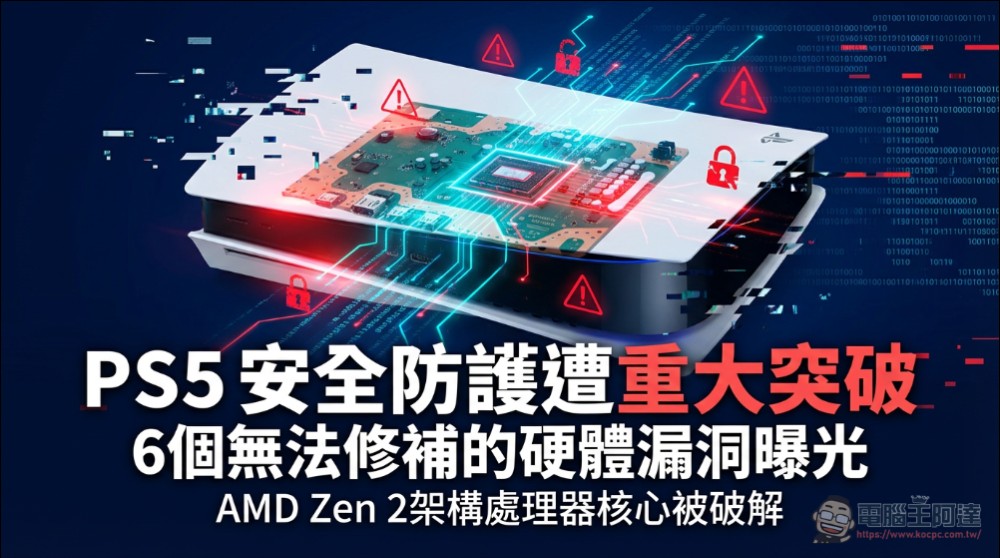
Recently, at the 39th Chaos Communication Congress in Germany, renowned security researcher tihmstar presented a groundbreaking research finding that shook the world: he successfully cracked PlayStation 5 The technology used in game consoles AMD Platform Security Processor (PSP), and found that at leastSix Hardware Issues That Cannot Be Fixed Through Software UpdatesVulnerability. This study not only affects PS5…and has also affected several processor models based on the AMD Zen 2 architecture.
Reason for Cracking: Just wanted to play custom songs in *Beat Saber*
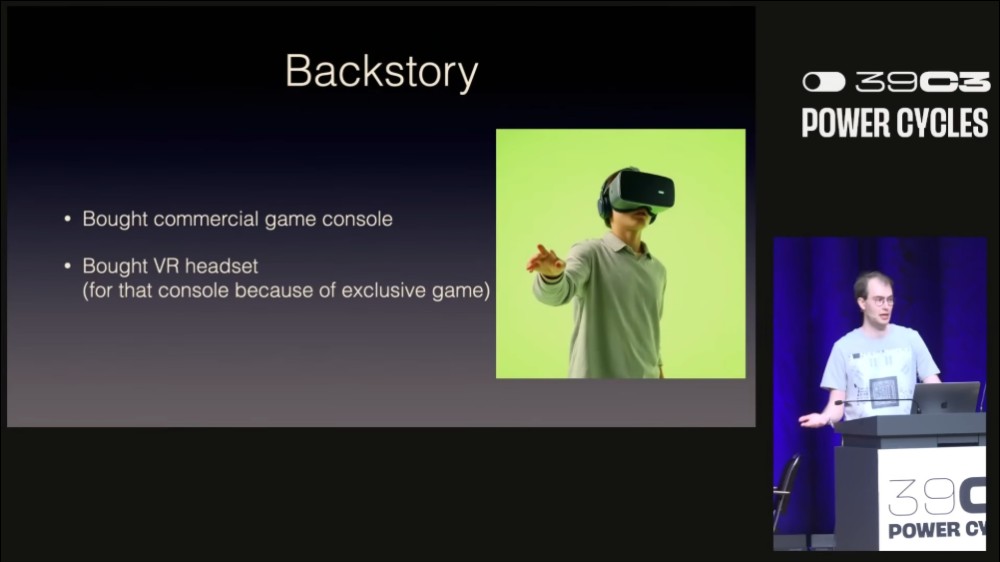
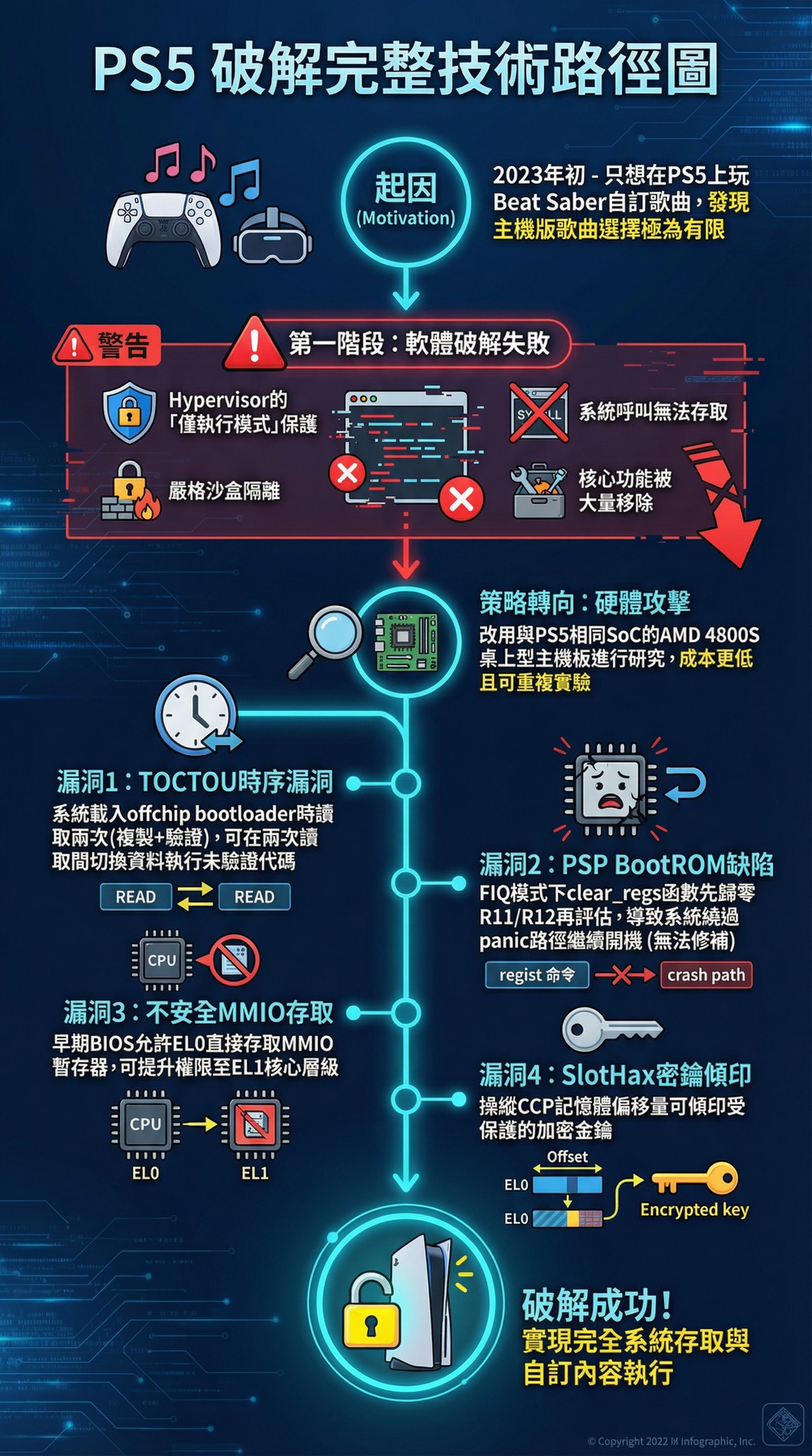
This research project stemmed from a seemingly trivial need: tihmstar purchased a PS5 console and a VR headset to play the rhythm game *Beat Saber*, but found that the selection of built-in songs on the console version was very limited, and the vast library of community-created custom tracks available on Steam was incompatible with the PS5. Unwilling to purchase a second VR headset just for this purpose, he decided to hack the console himself to port the community-created custom tracks.
Initially, tihmstar attempted a traditional software exploitation approach: gaining an entry point through a browser vulnerability and then compromising the kernel. However, the PS5’s hypervisor features a core text protection mechanism known as “execute-only mode,” making blind exploitation of vulnerabilities extremely difficult. Coupled with strict sandbox isolation, inaccessible system calls, and the removal of numerous core functions, the path to software cracking was fraught with obstacles at every turn.
In the end, he decided to take more drastic measures:Directly attacking the security kernel at the hardware level…by using physical fault injection technology to bypass the PS5’s security measures.
Research Strategy: Start by Cracking Desktop Motherboards
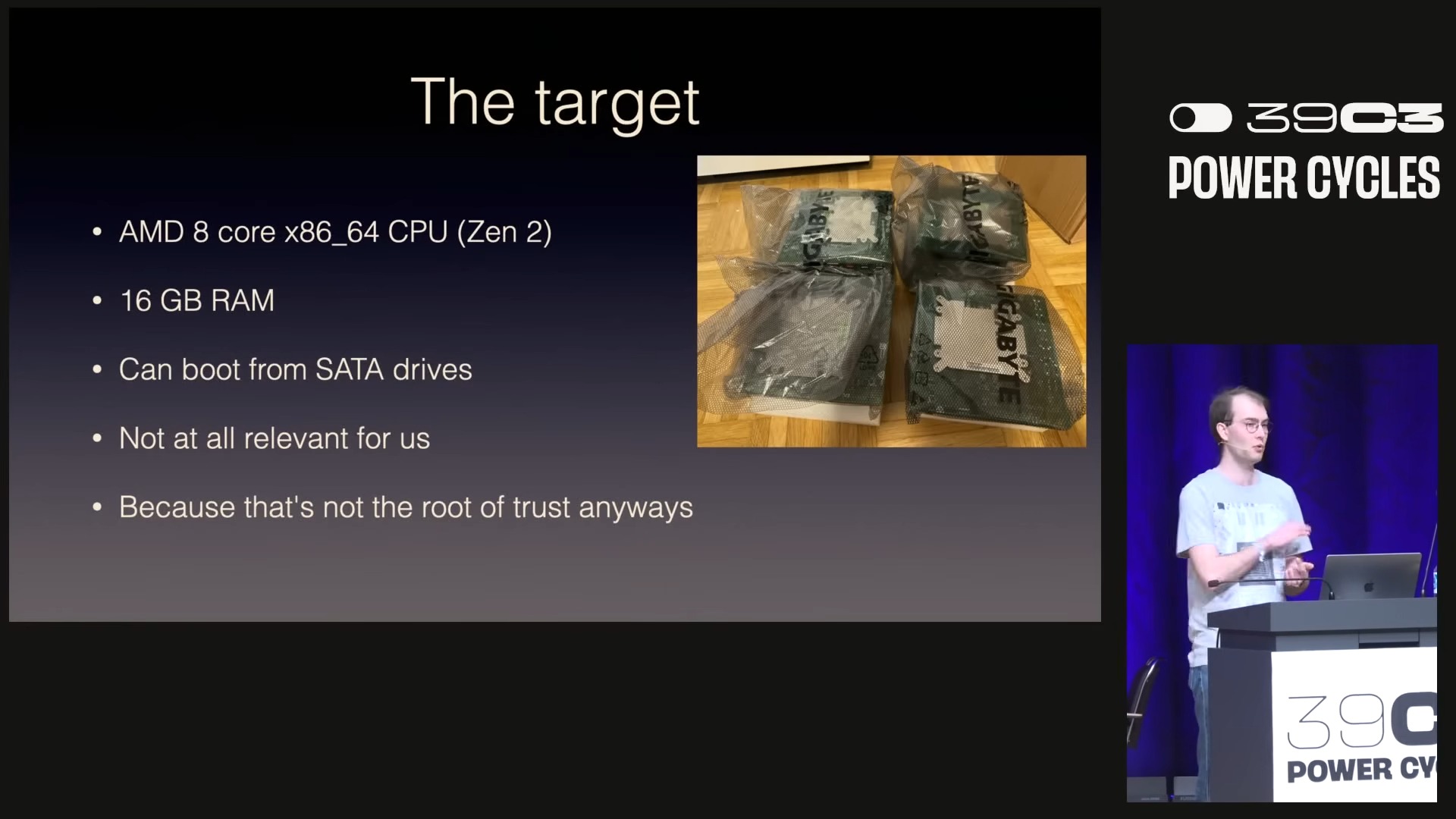
Since conducting hardware experiments directly on the PS5 console is costly and extremely risky, tihmstar came up with a clever alternative. He discovered that when AMD produces chips with faulty GPUs during the manufacturing process, the company repurposes these chips (after disabling the GPU) into derivative desktop motherboards for sale, rather than discarding them outright. These motherboards use the exact same system-on-a-chip (SoC) as the PS5 but are much cheaper—especially when purchasing defective units on eBay. By hacking these desktop motherboards (such as the AMD 4800S), the research team was able to test various attack methods at a lower cost and then port successful techniques to the PS5 console.
Major Security Vulnerability Discovered
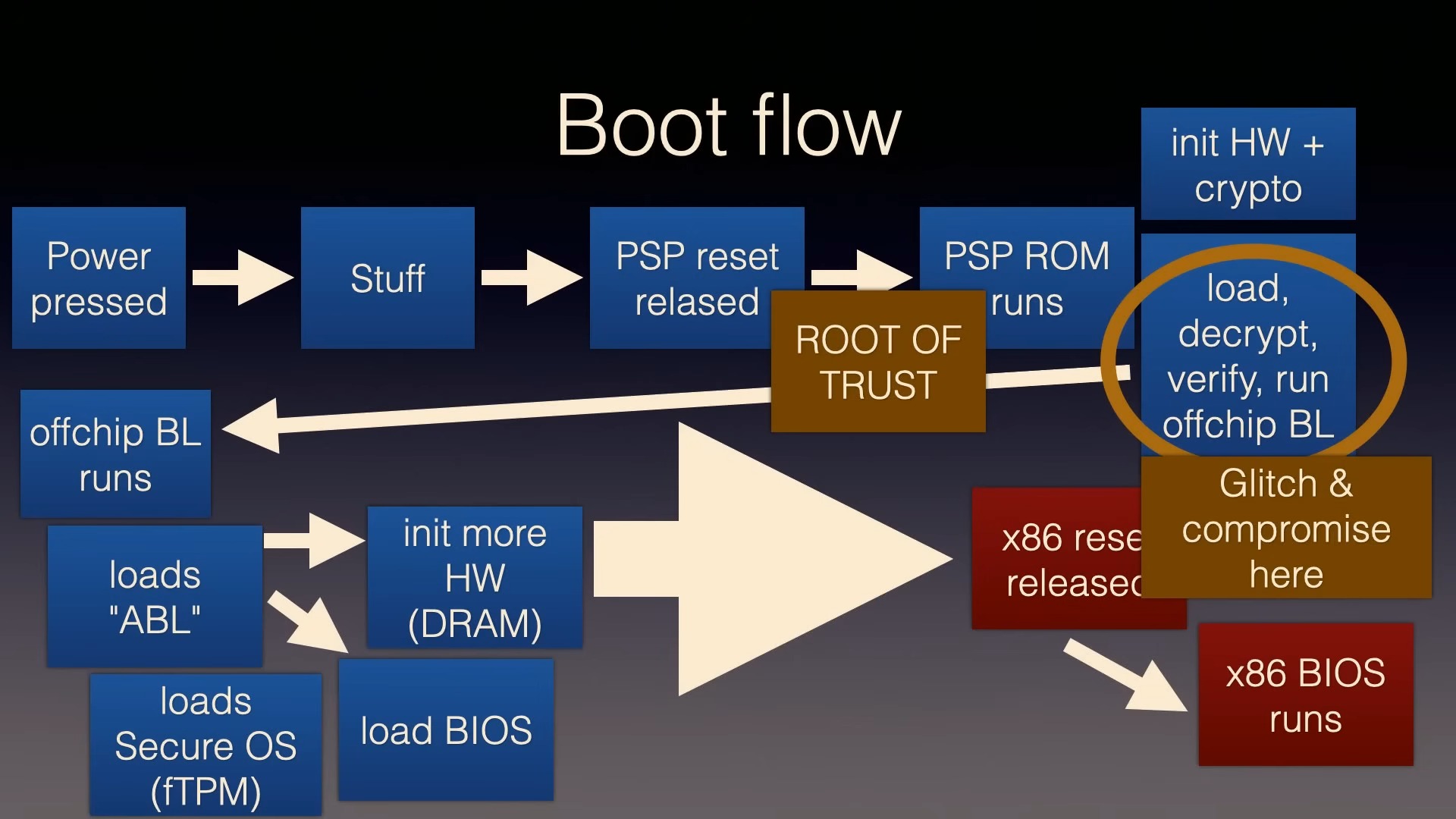
1、 PSP BootROM Vulnerability
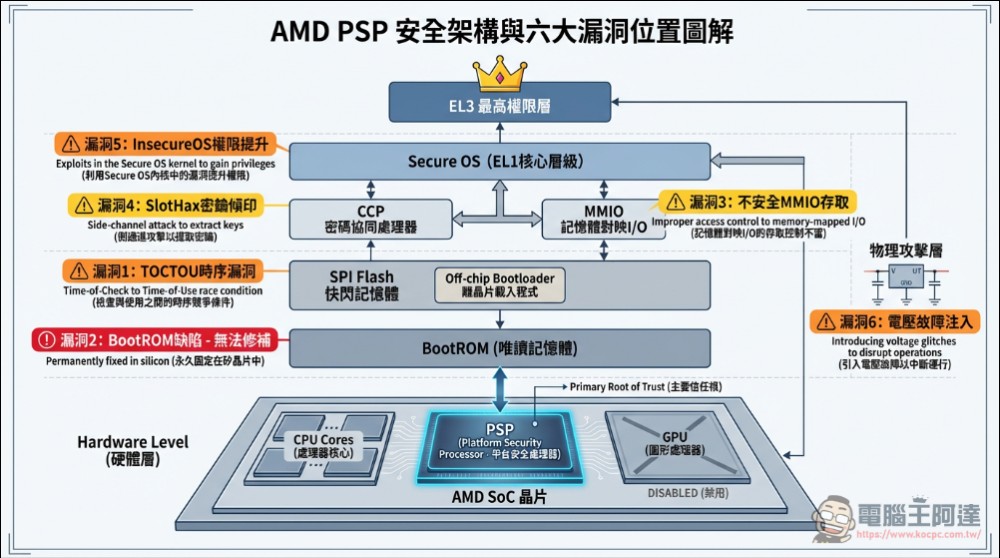
This is the most critical finding. There is a design flaw in the BootROM (Boot Read-Only Memory) of the AMD platform’s secure processor: when the system enters Fast Interrupt Request (FIQ) mode,clear regs & stack then boot or hang The function first clears registers R11 and R12 to zero before proceeding with the evaluation. As a result, even if an error occurs, the system bypasses the emergency shutdown path and continues with the boot sequence.
Degree of Impact: This is aCannot be repaireda hardware vulnerability, because the BootROM content is burned into the chip during manufacturing and cannot be fixed via a firmware update.
2、 TOCTOU (Time-of-Check to Time-of-Use) Vulnerability
Researchers discovered a timing vulnerability in the system when loading the off-chip bootloader. The system reads the code twice: first to copy it into memory, and second to verify its integrity. An attacker could swap the data between these two reads, causing the system to execute unverified, custom code.
3、 Unsafe MMIO Access
Early BIOS versions allowed user mode (EL0) to directly access memory-mapped I/O (MMIO) registers, enabling an attacker to escalate privileges to EL1 (kernel level).
4、 SlotHax: Key Dump Vulnerability
By manipulating memory offsets within the Cryptographic Co-Processor (CCP), researchers have developed a technique called “SlotHax” that can dump protected cryptographic keys.
Attack Techniques: Precision Operations at the Physical Level
The research team has developed a variety of innovative hardware attack techniques:
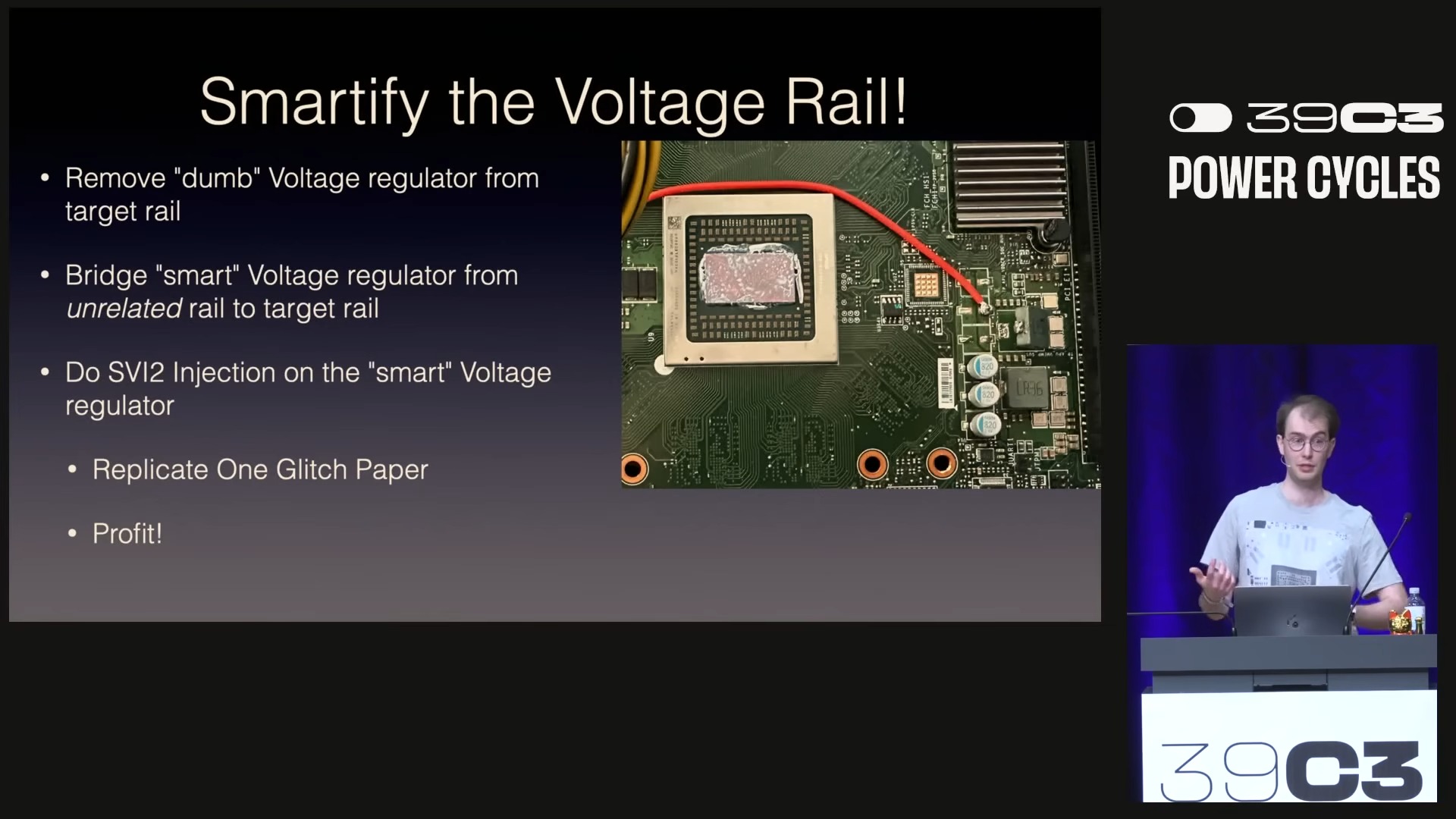
Voltage Glitching
By hijacking the SVI2 protocol or “smart” base voltage regulators, precise voltage glitches are injected at the exact moment the processor executes critical instructions. This technique requires “stepwise” reduction of the voltage to an unstable level, followed by the application of “micro-steps” or “clipping” to disrupt the execution of specific instructions.
Custom Modchips
Build a hardware device to intercept signals and manipulate the processor’s power supply, thereby gaining control over the boot process.
Microcontroller Integration
By using the RP2040 (Raspberry Pi Pico) microcontroller to act as a proxy for the SPI (Serial Peripheral Interface) bus, a malicious payload is injected while the system is loading the bootloader. This “dual-chip method” exploits the aforementioned TOCTOU vulnerability.
Reverse Engineering and Memory Manipulation
Dump the bootloader from the chip and reverse-engineer the BootROM to identify exploitable code paths. At the same time, use available system calls to write to restricted registers.
Current Status and Results of the Crack
As of the time of the presentation, the research team had achieved the following milestones:
✅ Successfully ran custom code on a retail PS5
✅ How to Play Custom Songs in *Beat Saber*(Combining publicly available jailbreak tools with custom research findings)
✅ Developing Custom Payloads for InsecureOS, which operates at the EL1 level, monitors the SPI bus, and outputs debug information via POST codes
✅ Successfully flashed the BootROM and off-chip bootloader
The presentation included screenshots showing the system outputting custom POST code during startup, as well as footage of a custom song being played in *Beat Saber*, demonstrating that the initial goal had been achieved.
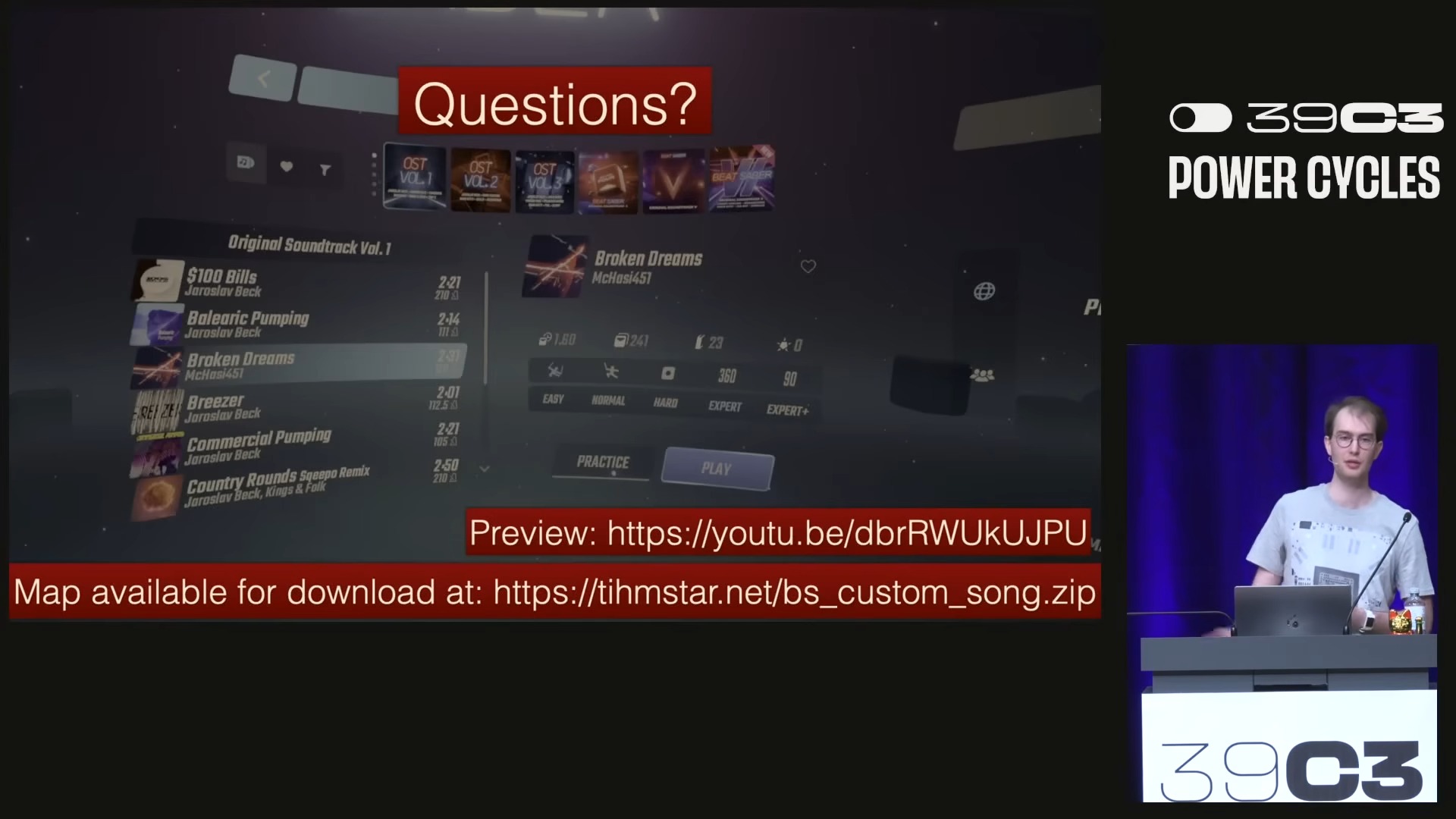
Footage of a hacked PS5 running *Beat Saber* with custom songs:
⚠️ Goals That Have Not Yet Been Fully Achieved: Full BootROM code execution can be achieved through an FIQ vulnerability; however, this is currently limited by the inability to trigger an FIQ interrupt that does not involve the watchdog timer.
Scope of Impact and Effects on Industries
Affected Hardware
- PlayStation 5 Console (All Hardware Versions)
- Processors based on the AMD Zen 2 architecture
- Various AMD processors based on the same PSP code base
What This Means for PS5 Players
- Fully open-source homebrew support: Users can run programs that have not been authorized by Sony
- Game Modification Capabilities: Such as custom songs in *Beat Saber* and modifying game settings, etc.
- Cracking the Root Trust Hierarchy: Compromising the BootROM means gaining persistent access that cannot be patched via software updates
A Challenge for Sony and AMD
Since these vulnerabilities exist in the hardware-level BootROM,Cannot be fixed via a system update. This means:
- All existing PS5 consoles could theoretically be hacked, and the vulnerabilities cannot be patched (the only solution would be to release a new hardware version, such as the PS5 Pro+).
- AMD must address these issues in its future chip designs.
- Sony may need to reevaluate its content protection strategy
Future Development and Related Constraints
Possible Directions for Development:
- Further research into how to trigger the FIQ interrupt could lead to a permanent, unpatchable BootROM vulnerability affecting all affected AMD systems.
- Develop more stable hacking tools and modified chips
- Investigate similar vulnerabilities on other AMD platforms (including the Xbox Series consoles)
Technical Limitations:
- Injecting a fault into the BootROM is much more difficult than doing so with code in SRAM, because the ROM bus is more robust.
- Certain encryption keys are overwritten during the secure boot process, making them difficult to extract.
- Replicating these attacks requires specialized hardware knowledge and equipment.
This research demonstrates a variety of innovative hardware attack techniques, including novel fault-injection strategies targeting high-power MOSFETs and large numbers of capacitors. In his presentation, tihmstar not only shared specific vulnerabilities but also provided a wealth of attack methodologies and discovery strategies, offering the security research community a valuable knowledge base. It is worth noting that the disclaimer for this presentation specifically emphasized:This is not a guide on how to hack a game console.. The research primarily focuses on a security analysis of the secure processor on the AMD platform; although some of the findings cannot be directly applied to the PS5, they are still significant for understanding the security architecture of modern processors.
You can watch the full video of the lecture with closed captions enabled:
Conclusion
What began as a simple desire to “play custom songs” evolved into a comprehensive breakthrough in AMD’s underlying security architecture. tihmstar’s research journey not only achieved his personal goals but also opened “pAMDora’s box” (AMD’s Pandora’s box), prompting the industry to reevaluate the importance of hardware security.
This incident proves once again that, in the field of information security, there is no such thing as truly “uncrackable.” Especially when it comes to the potentially serious consequences (just kidding) of preventing a group of geeks from enjoying their games to the fullest. However, in my personal opinion, given that today’s games are massive in size and almost always require online updates to play, “cracking and playing pirated versions” actually offers very poor value for money these days (not to mention the risk of getting your console banned or account suspended). and hardly anyone does it anymore. Plus, since this is still in the very early stages of research, the impact on casual gamers, Sony, and game developers isn’t actually that significant—so just treat it as a news story.
Source: KOCPC Chinese