


Google is pushing Gemini to evolve toward being “always on and proactively helpful,” and Magic Cue on Pixel phones has already given a glimpse of this vision—it can automatically push relevant information based on your ongoing conversations. Next, Google appears ready to expand this concept into a complete system through Gemini Proactive Assistance.
Google Gemini aims to become a more proactive assistant through “proactive assistance”
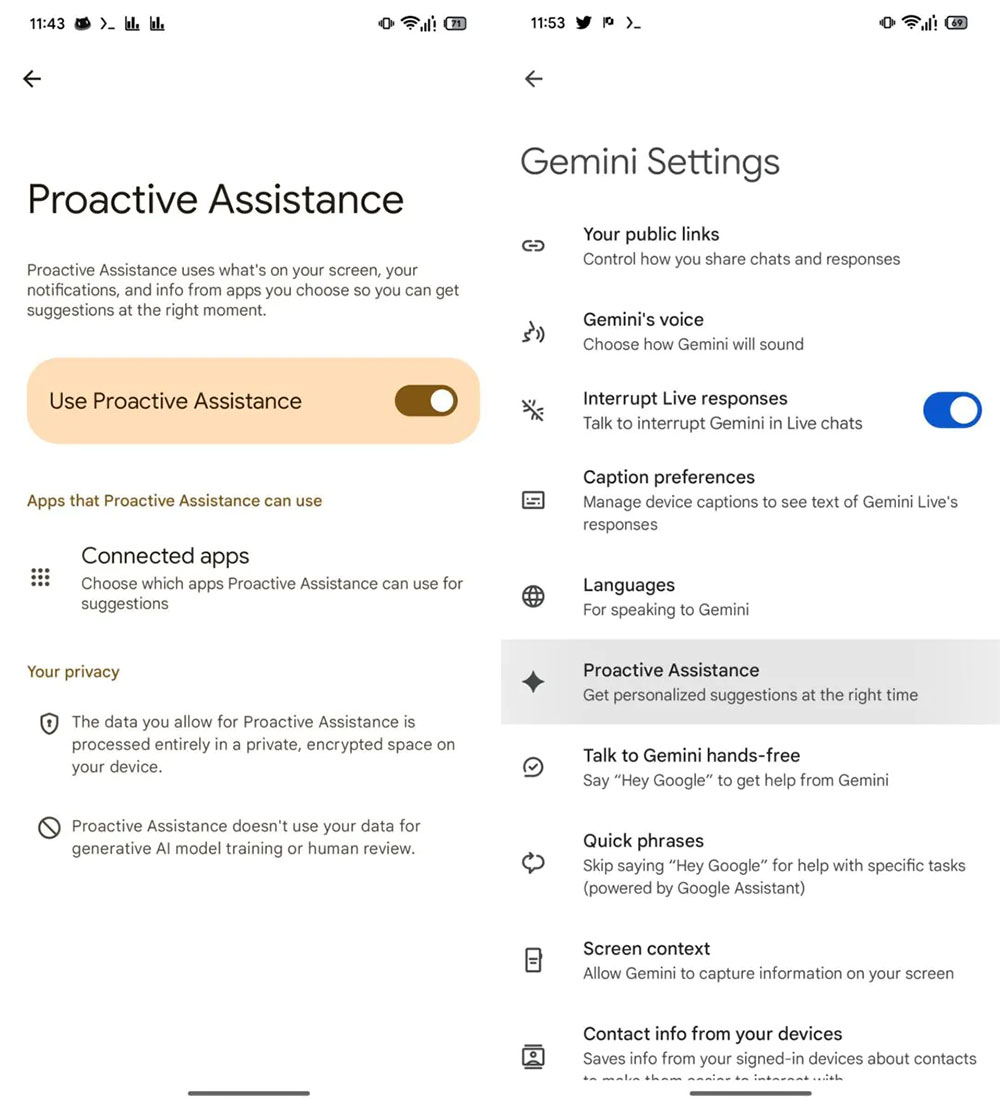
According to 9to5Google An analysis of the latest Google App beta v17.18 reveals a new feature called “Proactive Assistance” in the code, described as “providing personalized suggestions at the right time.” The strings indicate that this feature can pull information from specific apps such as Gmail, Contacts, Messages, and Calendar, and use it to provide reminders like upcoming appointments, important dates, or locations. It can also read notifications and screen content to gather more contextual clues.
Android Authority The team successfully enabled this hidden setting and revealed more operational details. Before you start worrying about privacy, Google has emphasized that all data for proactive assistance is processed on-device and stored encrypted on the phone, without being uploaded to the cloud or used for model training. Due to the heavy on-device computation required, this feature will initially likely be limited to Pixel devices. With just weeks until Google I/O 2026, Google will likely officially introduce the full capabilities and technical architecture of proactive assistance at the conference.
While not everyone is comfortable letting Gemini access their personal information and notifications, this deep integration is precisely what allows AI assistants to truly blend into everyday life. For instance, it can read your calendar and factor in real-time traffic to remind you to leave 30 minutes before a meeting, or automatically display your boarding pass when you arrive at the airport—no extra steps needed.
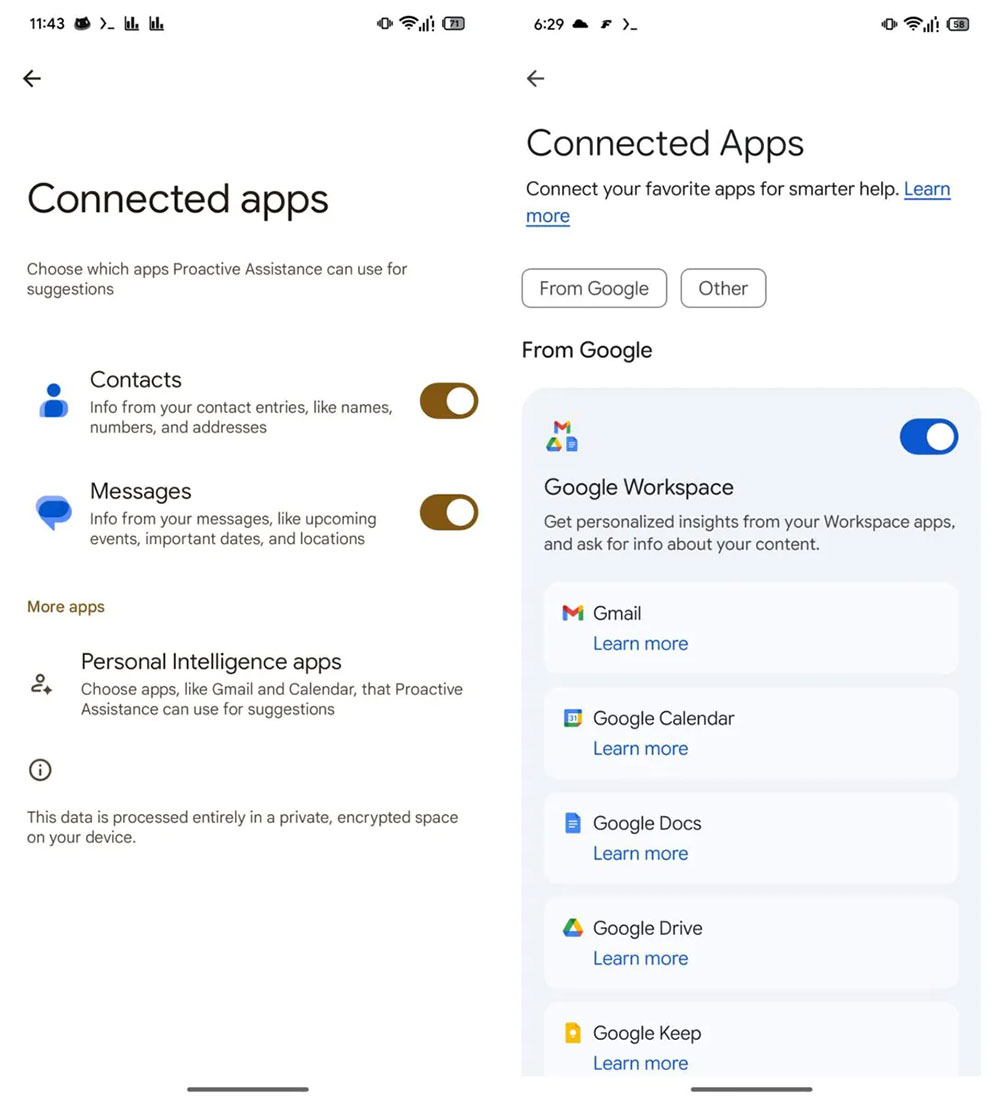
Proactive assistance may initially only support Google’s own apps, but it’s expected to expand to third-party apps down the line, enabling it to access more diverse contextual information and further improve its utility. That said, we still know very little about this feature at this point. While the teardown data suggests its potential is quite staggering, whether it can deliver real convenience in everyday use remains to be seen—it’s not just about being powerful in theory.
Source: KOCPC Chinese