


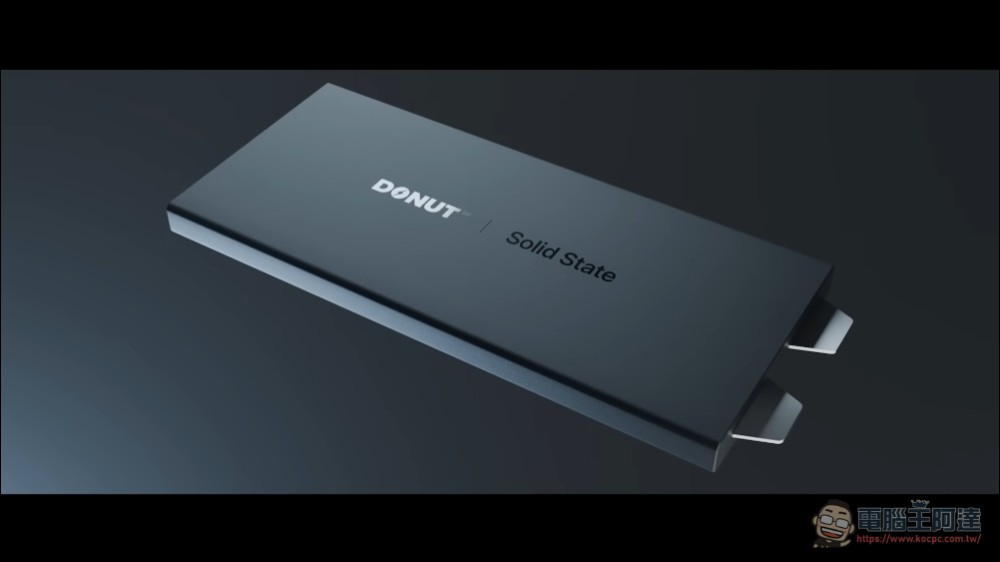
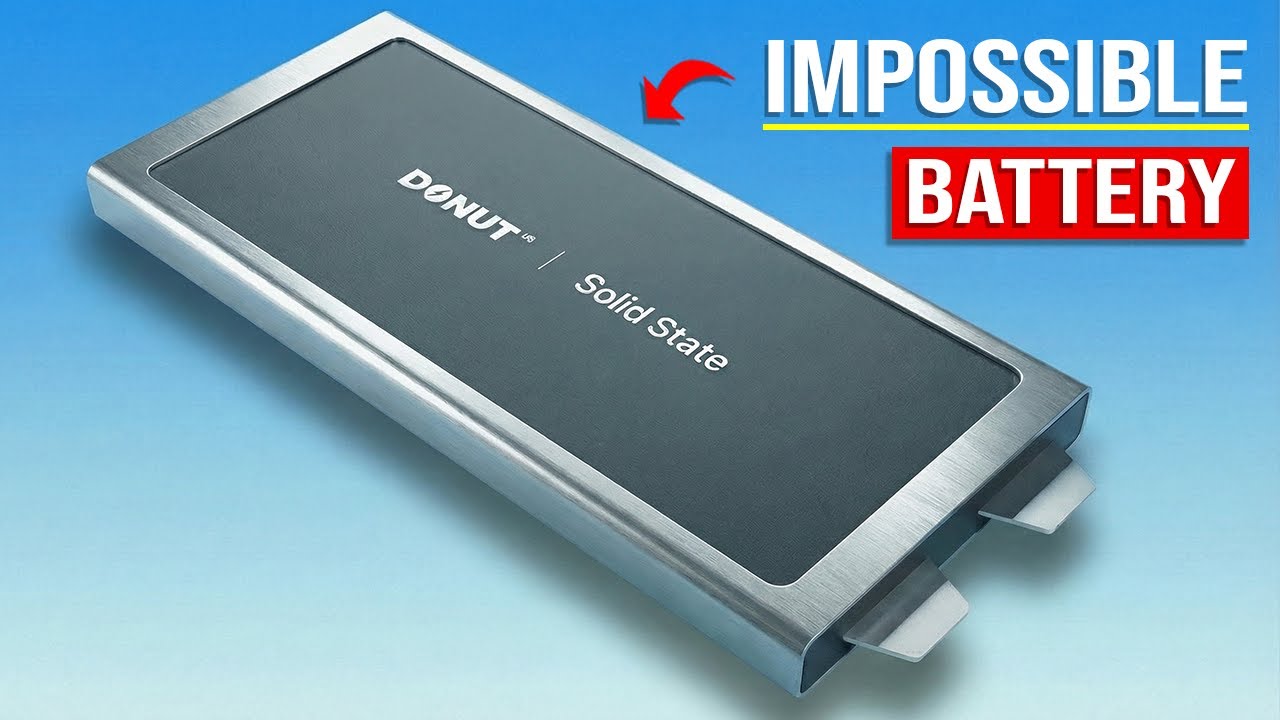
At this year’s CES 2026, Finnish startup Donut Lab made an announcement that sent shockwaves through the industry: they have successfully developed the world’s first mass-produced solid-state battery, which will be immediately integrated into Verge Motorcycles’ electric motorcycles. However, this seemingly groundbreaking technological announcement has sparked controversy among tech media outlets. Is their solid-state battery truly the holy grail of energy, or is it just another pipe dream designed to lure investors?
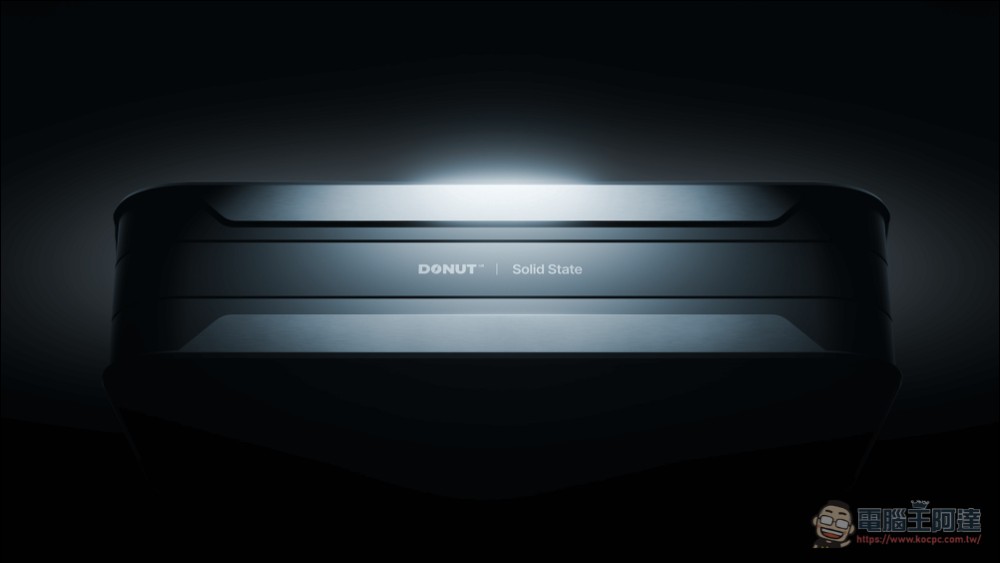
Near-Perfect Solid-State Battery Specifications
According to Donut Lab CEO Marko Lehtimäki at CES, this solid-state battery, called the “Donut Battery,” boasts incredible performance metrics: an energy density of 400 watt-hours per kilogram (Wh/kg), a charging time of just five minutes, a cycle life of up to 100,000 cycles, and a manufacturing cost lower than that of traditional lithium-ion batteries. More importantly, Lehtimäki emphasized that this technology is not confined to the laboratory or proof-of-concept stage, but has already entered mass production and will be delivered to consumers in the first quarter of 2026, installed in the Verge TS Pro electric motorcycle. This stands in stark contrast to the repeated promises of “mass production in two years” made by most major companies currently developing solid-state batteries (such as Toyota, CATL, BYD, etc.).
“When asked when solid-state batteries will become a reality, many companies always cite a future goal that keeps getting pushed back,” Lehtimäki said. “Donut Lab’s answer to solid-state batteries is: now—today, not someday.”
This battery is claimed to have exceptional thermal stability, retaining over 99% of its capacity at -30 degrees Celsius and showing no risk of fire or capacity degradation when heated to over 100 degrees. Furthermore, the battery materials are completely free of rare or sensitive elements such as lithium, cadmium, lead, and cobalt, and are manufactured using only abundant and geopolitically secure materials. For more details, please watch the official video below:
Technical Mystery: Solid-State Batteries or Supercapacitors?
However, when Ziroth, a postdoctoral researcher and YouTuber, delved deeper into this technology, he uncovered many questionable details. The most critical point of contention is that the specifications of Donut Lab’s so-called “solid-state battery” actually align more closely with the characteristics of a supercapacitor than with those of a solid-state battery in the traditional sense.
The main difference between supercapacitors and batteries lies in how they store energy. Batteries store energy in the form of chemical energy; they have a higher energy density but charge and discharge more slowly. Supercapacitors, on the other hand, store energy electrostatically; they charge and discharge extremely quickly and have an extremely long cycle life, but their energy density is typically only about 1.5% that of batteries. Traditional lithium-ion batteries can achieve an energy density of up to 650 Wh/L, while high-end supercapacitors reach only about 10 Wh/L.
In the video, Ziroth points out that Donut Lab’s claims of 100,000 charge-discharge cycles, five-minute fast charging, and stable performance under extreme temperatures are all characteristics that closely align with those of supercapacitors. In fact, South Korean research institutions have already developed supercapacitors with an energy density of 418 Wh/kg, which makes Donut Lab’s figure of 400 Wh/kg seem less impressive.

Further evidence comes from Nordic Nano’s technical documentation. Nordic Nano is a Finnish renewable energy company specializing in nanotechnology solutions; Donut Lab is an investor in the company, and Lehtimäki himself serves on Nordic Nano’s board of directors.
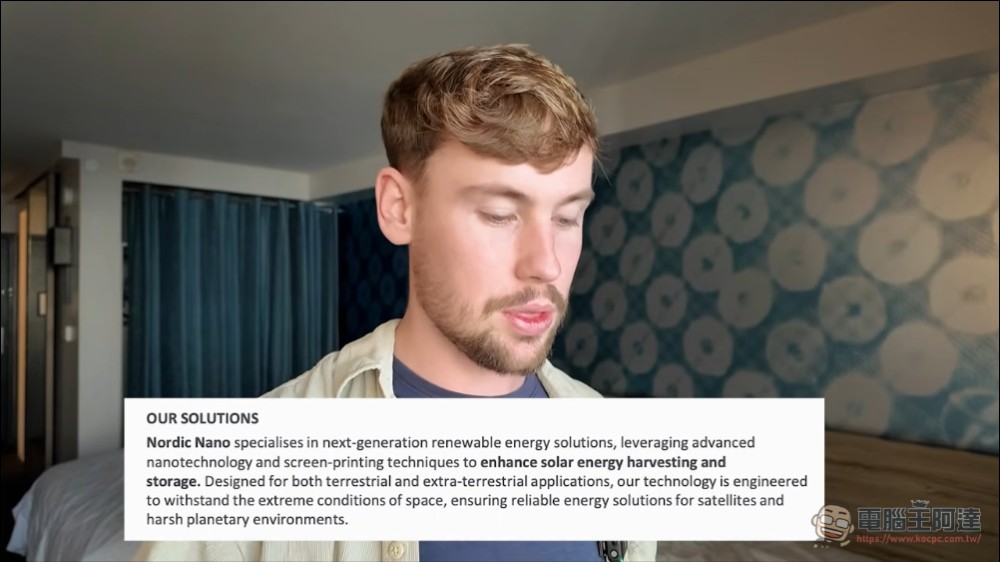
However, inReddit DiscussionSome people have also questioned why Donut Lab CEO Marko Lehtimäki appeared at another event that claimed to have created the world’s firstLaunch Event for “The World’s First True Artificial Superintelligence”Come to think of it, how is it such a coincidence that he’s involved in every single groundbreaking technological innovation? This also casts some doubt on the authenticity of Donut Lab’s all-solid-state battery.
Is It a Solid-State Battery? Or a Solid-State Supercapacitor? The Truth Behind Nordic Nano’s Technology
According to a presentation document by Nordic Nano delivered in September 2025 at the European Space Agency Business Incubation Center (ESA BIC Finland), the “solid-state energy storage solution” developed by the company is actually described as a “solid-state supercapacitor.” The document explicitly states that Nordic Nano’s technology features include: “an energy density of up to 400 Wh/kg and support for over 50,000 charge cycles.” These figures are almost identical to the specifications claimed by Donut Lab, with only a slight difference in the number of charge-discharge cycles (50,000 versus 100,000).
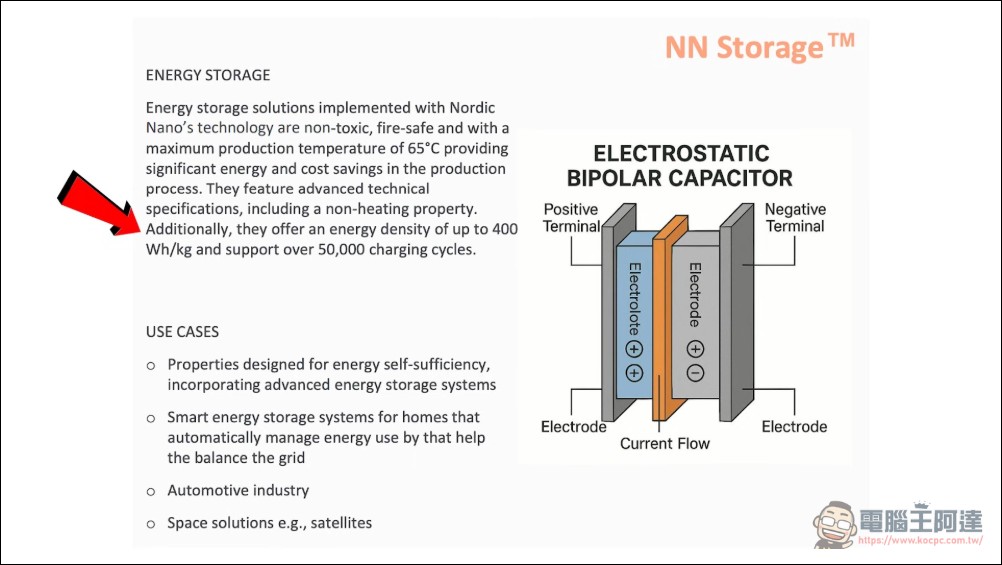
Nordic Nano’s technology uses carbon-based materials manufactured via nanofluid screen printing and does not use liquid electrolytes, thereby avoiding issues such as thermal runaway and dendrite formation. While this technology is indeed innovative, it is essentially an improved version of supercapacitor technology rather than a solid-state battery as traditionally defined. In the video, Ziroth also mentioned that he has a friend who works at Donut Lab, and he does not believe his friend would be an accomplice to such a scam, though he also noted that he does not rule out the possibility that Donut Lab was “duped” by the battery manufacturer (implying that the battery was not developed by Donut Lab, but rather supplied by a third-party manufacturer, such as Nordic Nano). Although Lehtimäki, in an interview withInterview with *The Verge*The company denied using Nordic Nano’s technology, claiming, “This technology does not come from them,” and stated that engineers at Donut Lab and Verge Motorcycles have been developing the battery design since 2018. However, given the close relationship between the two companies and the high degree of similarity in their specifications, this claim is not very convincing.
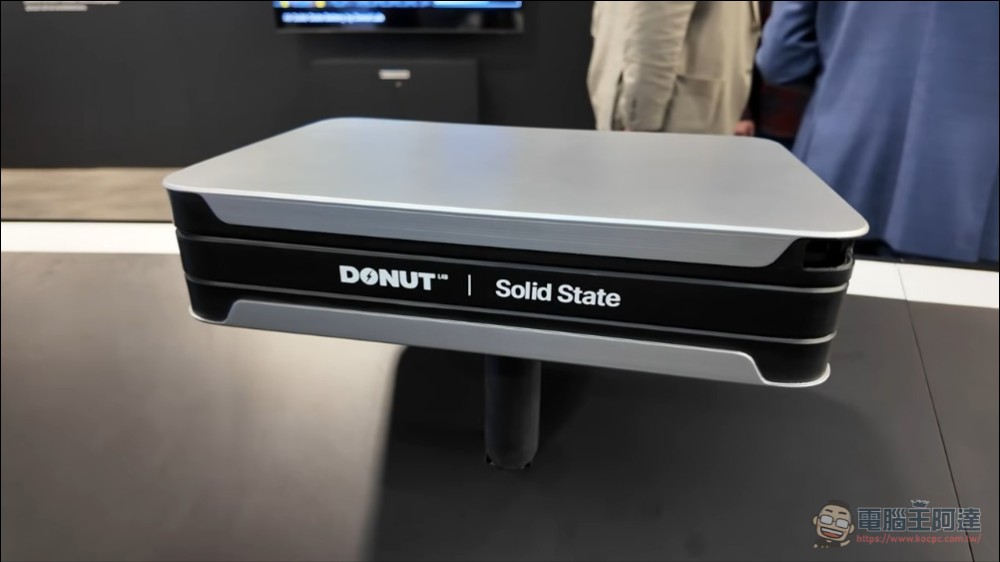
The issue lies in the ambiguity of the term “solid-state battery” itself. Strictly speaking, a “solid-state battery” refers to a battery that uses a solid-state electrolyte instead of a liquid electrolyte, whereas a supercapacitor is a different type of energy storage device. However, when a technology features both a solid-state electrolyte and ultra-fast charging and discharging capabilities, how should it be classified? From a technical standpoint, Nordic Nano’s solution does indeed use solid-state materials and contains no liquid electrolyte, so calling it “solid-state” is not inaccurate. The issue, however, is that when Donut Lab promotes “the world’s first mass-produced solid-state battery” to consumers and investors, the public generally understands “solid-state battery” to mean next-generation battery technology capable of replacing lithium-ion batteries and offering higher energy density and safety—not a variant of a supercapacitor.
This semantic ambiguity may mean that Donut Lab is not technically lying, but it is misleading from a communication standpoint. Supercapacitors and batteries differ significantly in terms of application scenarios, performance characteristics, and market positioning; confusing the two could lead consumers and investors to make decisions based on misinformation. The tech industry has good reason to be highly skeptical of such claims. In 2018, electric vehicle entrepreneur Henrik Fisker similarly claimed at CES that his team had cracked the key technology for solid-state batteries and promised mass production by 2020. However, the EMotion electric vehicle never made it to market; by 2021, the company had abandoned its solid-state battery ambitions, and in 2024, the entire company filed for bankruptcy.
This pattern—announcing stunning technological breakthroughs at trade shows, setting a mass production timeline for two years later, and then having the technology fade into obscurity as the deadline quietly approaches—is known as “CES Syndrome,” and it has happened several times in the past. Therefore, when Donut Lab claims its technology is “ready now” rather than “in two years,” this is indeed a noteworthy distinction. However, “ready now” does not equate to “the technology is truly as claimed.” If the Donut Battery is essentially a high-performance supercapacitor rather than a solid-state battery in the traditional sense, then while it may be a valuable technological innovation, it is certainly not the solid-state battery revolution the industry has been anticipating.
The Test of Practical Application
Verge Motorcycles announced that the TS Pro electric motorcycle, equipped with the Donut Battery, will feature a 30-kilowatt-hour (kWh) battery pack, offering a range of up to 600 kilometers (approximately 370 miles) on a single charge and a charging time of just 10 minutes. These figures are indeed impressive, especially for the electric motorcycle segment. Priced starting at $29,900, the Verge TS Pro is expected to begin deliveries in the first quarter of 2026. This means that within the next few months, actual products and real-world user test data will become available. This will be the most direct way to verify Donut Lab’s claims.

If these electric motorcycles can indeed deliver the claimed performance and remain reliable over the long term, then regardless of whether the underlying technology is solid-state batteries or supercapacitors, this will represent a significant advancement in the field of electric transportation. However, if product deliveries are delayed, performance falls short of expectations, or the cycle life is significantly lower than the promised 100,000 cycles, this would once again demonstrate that technology claims made at CES should be viewed with caution.
When asked by reporters about patents and technical details, Lehtimäki stated that patent applications are currently in progress and promised to share more details in the coming months. While such statements are not uncommon among startups, they also leave room for skepticism from the outside world. In the absence of published patents, peer-reviewed papers, or independent third-party test data, the industry and consumers can only rely on the company’s unilateral statements. Particularly given the close relationship between Donut Lab and Nordic Nano and the high degree of similarity in their technical specifications, the refusal to clearly explain the origin and nature of the technology has further deepened external concerns.
The Value and Limitations of Supercapacitors
Even though the Donut Battery is essentially a supercapacitor rather than a traditional solid-state battery, this does not mean it lacks value. Supercapacitors offer unique advantages in certain applications: extremely fast charging and discharging speeds, an exceptionally long cycle life, a wide operating temperature range, and a high level of safety. For applications requiring frequent charging and discharging—such as electric motorcycles, drones, industrial equipment, and regenerative braking systems—supercapacitors may be more suitable than traditional batteries. If Nordic Nano’s technology can truly achieve an energy density of 400 Wh/kg, it would indeed represent a major breakthrough in the field of supercapacitors, as this is already approaching the performance levels of some lithium-ion batteries.
Conclusion: We’ll have to wait for the truth to come to light.
The coming months will be critical. If the Verge TS Pro electric motorcycle is delivered on schedule and meets its promised performance specifications, Donut Lab will be able to prove its critics wrong. However, if the product is delayed, fails to meet performance expectations, or the company continues to avoid transparency regarding technical details, this will once again become another example of overpromising and misleading marketing in the tech industry.
For the entire electric vehicle and energy storage industry, a breakthrough in true solid-state batteries remains a goal worth looking forward to. Major corporations and specialized battery companies such as Toyota, Samsung, and QuantumScape are still investing significant resources in the research and development of true all-solid-state lithium-ion battery technology, which is not expected to achieve large-scale commercialization until 2027–2030 (yes, another five-year period). Until then, the industry and consumers should maintain a stance of “cautious optimism” and “skepticism” toward any startup claiming to have solved the challenges of solid-state batteries. Personally, I believe that if Donut Lab’s solid-state battery is genuine, then small devices like smartphones and wearables—which have small battery sizes and high unit costs—would theoretically see widespread adoption first. The technology would only truly reach maturity once yield rates and production efficiency have improved. However, since the company insists that products featuring its solid-state batteries will hit the market in the first quarter of this year, at least we won’t have to wait another 2–5 years to find out.
Source: KOCPC Chinese