


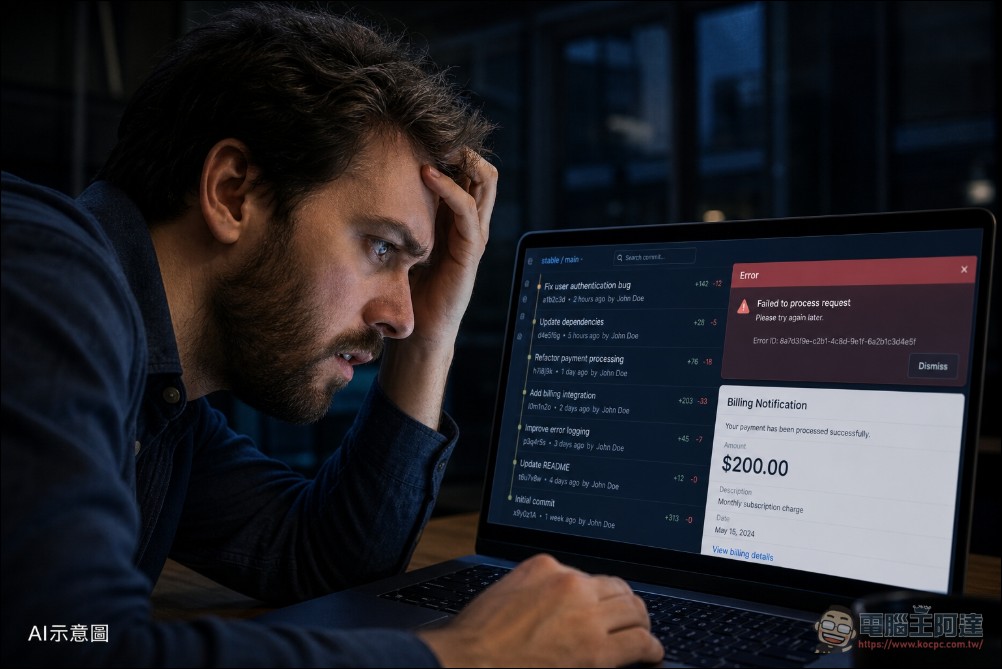
Anthropic escalates its blockade against OpenClaw! According to test reports from multiple developers on X and Hacker News, Claude Code appears to actively scan the Git commit history of the current project during execution. If it detects the string “OpenClaw” in any commit, it will either directly refuse to execute the request or redirect the request to an expensive API billing model. Even more shocking, even a completely empty repository where OpenClaw appears in just one commit message can trigger the blocking mechanism.
The Beginning: Theo’s Discovery
The starting point of this incident was a post on X by Theo (t3.gg), the founder of the AI chat service T3 Chat. He wrote:
「有趣的事實——如果你最近的 commit 中有一個 JSON 片段提到了 OpenClaw,Claude Code 要嘛會拒絕你的請求,要嘛會向你收取額外費用。這是個空的儲存庫,我只是直接呼叫 Claude Code 而已。太瘋狂了。」
Fun fact – if you have a recent commit that mentions OpenClaw in a json blob, Claude Code will either refuse your request or bill you extra money.
This is an empty repo, I’m just calling Claude Code directly. Insanity. pic.twitter.com/JKthsztu1X
— Theo – t3.gg (@theo) April 30, 2026
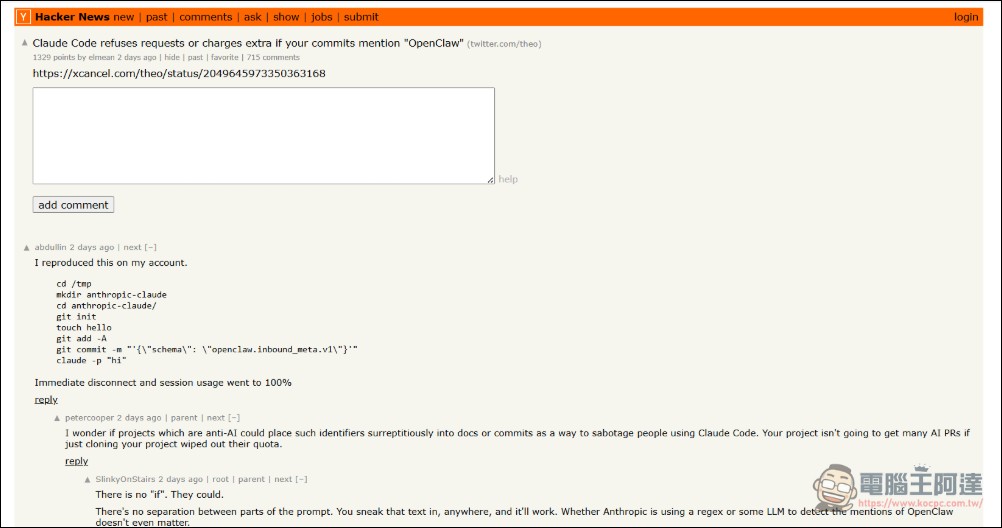
Theo’s tweet quickly sparked heated discussion, with Hacker News received over 1,328 points and 715 comments, with total views exceeding one million. To verify the validity of this approach, Hacker News user abdullin directly did the same—created a Git repository in an empty temp directory and wrote in the commit message {'schema': 'openclaw.inbound_meta.v1'}and then just send claude -p "hi" This command caused the connection to immediately drop, with daily usage instantly reaching 100%.
Not Just Theo: Another Developer Overcharged $200
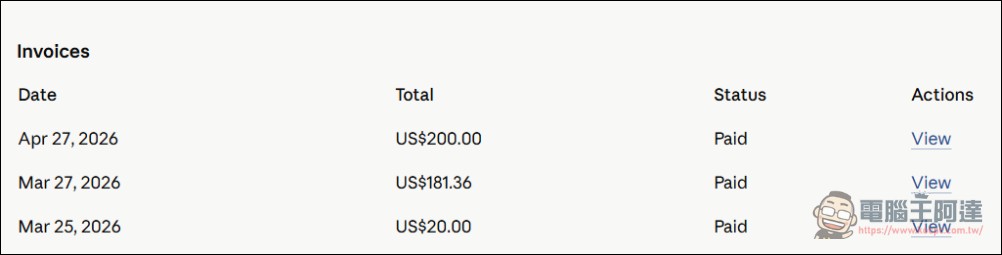
If Theo’s test was a “proof of concept,” then the experience of Reddit user On Patel was a hard “real-world lesson.” Patel was on the Claude Max 20x plan, a premium subscription costing $200 per month (approximately NT$6,500). One day he discovered he’d been charged an extra $200.98 in overage fees, even though his dashboard clearly showed weekly usage at just 13%, current session usage at 0%, and a full 86% of his quota completely unused.
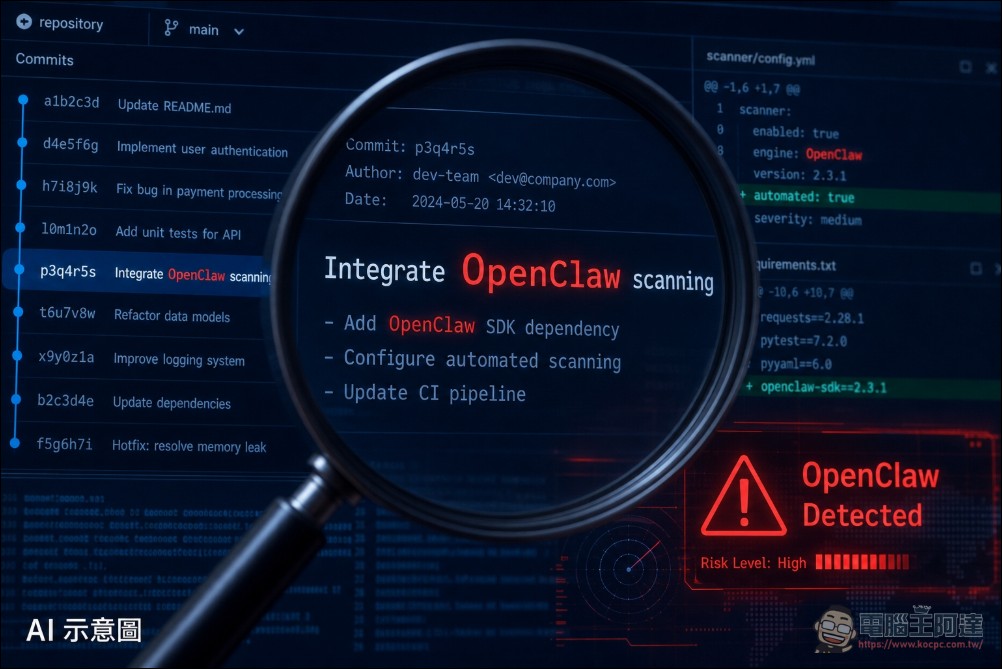
Where did the bill come from? Patel channeled his engineering spirit, conducting a binary search on his own repository and commits, narrowing down the scope step by step until he finally caught the culprit: a line that once mentioned openclaw.inbound_meta.v1 a commit message. This commit has nothing to do with Claude Code usage; it just happens to have this string appear in a project file.
What’s more troubling is that when Patel filed a complaint with Anthropic’s customer service, the representatives acknowledged three times that this was an “authentication routing issue” and thanked him for finding the problem, but still refused to issue a refund. Their response was: “We cannot provide compensation for overage charges caused by technical errors.”
After Theo and Patel’s posts combined reached approximately 2.4 million impressions, Anthropic’s Tariq finally responded publicly, eventually agreeing to a refund plus one month of credit. Theo’s comment on this was spot-on: “There’s a certain type of bug that inherently suggests what you’re doing is a bad idea.”
It’s not just those two guys—my own Claude also mysteriously got charged $200 (I was originally subscribed to Max for $100). I was just too lazy to dispute it, already cancelled Claude. Also, Anthropic seems to have issues with Hermes Make the same movement:
Technical Principle: String matching on commit message triggers billing conversion
How does Anthropic manage to pull this off? MindStudio’s…請提供要分析的文章。exposed how it works behind the scenes
When Claude Code starts a session, it pulls the environment context into the system prompt—this is standard practice for coding agents, letting the model know which repo it’s in, what branch, and recent commit history. The problem is that Anthropic has layered a “third-party tool detection” logic on top of this: scanning the git status output for whether something appears. hermes、OpenClaw and other keywords. If the match is successful, the system automatically switches that session from the subscription plan to API billing mode, without any notification or confirmation.
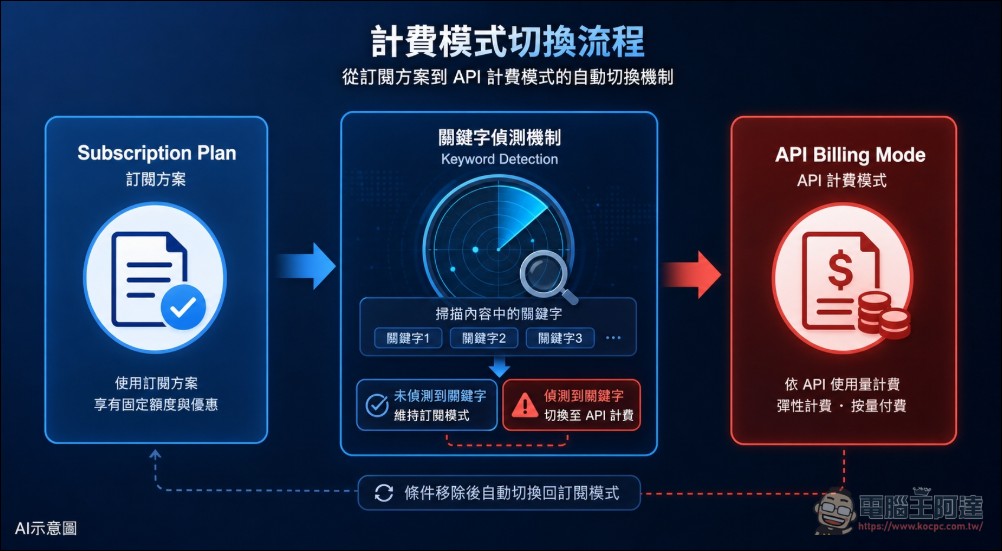
Anthropic’s Tariq himself confirmed: “This is a bug stemming from the third-party tool detection mechanism and our pulling git status into the system prompt.”
But as multiple reviewers have pointed out, this isn’t just a bug: it’s by design. The intent behind the detection is reasonable—preventing third-party tools from heavily consuming subscription resources—but the implementation (string matching on commit messages) is fundamentally flawed. Anthropic researcher Boris Cherny has also stated: “Subscription plans were never designed for third-party tool usage patterns.”
Developer Community Backlash: From Collateral Damage to Potential Weaponization
The discussion sparked by this incident goes well beyond a billing dispute. Multiple developers on Hacker News have raised deeper security concerns.
User petercooper proposed a highly imaginative attack scenario: “If AI-opposed projects deliberately embed these identification strings in documents or commits, they could be used to sabotage developers using Claude Code—just by cloning your project, they’ll burn through their quotas.”
Another user, SlinkyOnStairs, went further: “No need to hide it—just write it directly in the README in black and white. It’s a denial of service attack, and it can even be automated.” Since Claude Code injects git status directly into the system prompt, any string appearing anywhere—README, commit message, JSON blob—will be scanned. There’s no isolation mechanism to speak of.
Timeline: The Year Anthropic Blocked OpenClaw
To understand the full picture of this incident, we need to zoom out and look at Anthropic’s attitude toward AI agents like OpenClaw:
- February 2024Terms of Service Article 3.7 explicitly states that OAuth login credentials are only for use with official products and prohibited from use with third-party tools, but this has never been strictly enforced.
- November 2025Austrian developer Peter Steinberger released the initial version under the name “Clawdbot”, which would later become the predecessor of OpenClaw.
- January 2026Clawdbot goes viral on GitHub; Anthropic quietly deploys server-side blocking to prevent subscription OAuth credentials from working outside Claude Code CLI
- January 29, 2026Due to Anthropic’s legal requirements, the project has been officially renamed to “OpenClaw”
- February 2026Official terms updated with clearer wording; Peter Steinberger joins OpenAI
- March 2026Anthropic is demanding that OpenCode, an open-source tool with over 120k stars on GitHub, forcibly remove Claude integration — with the maintainer directly writing “anthropic legal requests” in the commit.
- April 4, 2026Official announcement: Claude subscription plans will no longer cover usage credits for OpenClaw and other third-party tools.
In the same week the ban took effect, Anthropic rolled out Claude Code Channels (an agent interface integrating Telegram and Discord), Claude Cowork (an enterprise agent platform), and Claude Dispatch (remote desktop control from your phone)—all features that heavily overlap with OpenClaw. This leaves people suspecting that Anthropic’s motivation for blocking OpenClaw may not be entirely straightforward, but rather an attempt to preemptively eliminate a potential future competitor.
Subscriptions Meet Agents: The Math Doesn’t Add Up
From Anthropic’s perspective, this issue follows a clear business logic. The $20/month Claude Pro plan was designed with typical personal users’ conversational usage in mind. However, an agent’s operational pattern is completely different: a single automated task can burn through millions of tokens within a few hours, with equivalent API costs potentially exceeding $1,000 (approximately NT$32,500). Anthropic engineer Thariq Shihipar also pointed out that traffic generated by third-party tools lacks the telemetry data of official tools, making it difficult for Anthropic to predict usage patterns. There have even been cases of tools spoofing official Claude Code client identification codes to evade detection.
But shifting the business model problem onto commit message string matching sparked outrage in the developer community. Critics include Ruby on Rails creator DHH (calling it “extremely user-unfriendly”), The Pragmatic Engineer founder Gergely Orosz (“Anthropic API costs are much higher than competitors, and it seems they’re happy to let Claude have almost no ecosystem”), and renowned hacker George Hotz (“This won’t bring users back to Claude Code, it’ll just push them toward other model providers”).
Conclusion
OpenClaw was born in November 2025 as Clawdbot, and after renaming in early 2026, it went viral on GitHub. In just a few months, its star count surpassed the decade-long accumulation of many classic projects, and the community also spawned thousands of custom skill templates. Even more dramatically, OpenClaw founder Peter Steinberger joined OpenAI in February 2026, with Sam Altman personally announcing this hire. This tool creator, who had been drawing significant traffic from Claude subscription plans, is now an employee of Anthropic’s most direct competitor.
Perhaps the most disturbing thing about this incident isn’t the $200 bill, but rather: your AI tools are secretly reading your Git history and altering their behavior based on the strings they find. Anthropic has apologized and refunded for the “friendly fire,” but whether the architecture that uses commit strings as a basis for billing decisions has actually changed remains an open question. Compared to OpenAI’s openness about OpenClaw and Hermes, Anthropic’s arrogant and野蛮 (barbaric/crude) actions may cost it quite a bit of developer goodwill.
Source: KOCPC Chinese