


Since its introduction more than 20 years ago, HDMI has gradually replaced old video interfaces such as VGA and become the mainstream standard for home and commercial equipment. Whether it is TVs, monitors, game consoles, streaming players, almost all devices that need to output images use HDMI as the main connection method. Even if you don’t know the full name of HDMI, you probably know its purpose, which is to send high-definition images and audio to the screen. This “natural” status has been maintained for many years, but last year, HDMI ushered in a fierce new challenger “GPMI”. What is it?
What is GPMI? Will it replace HDMI?
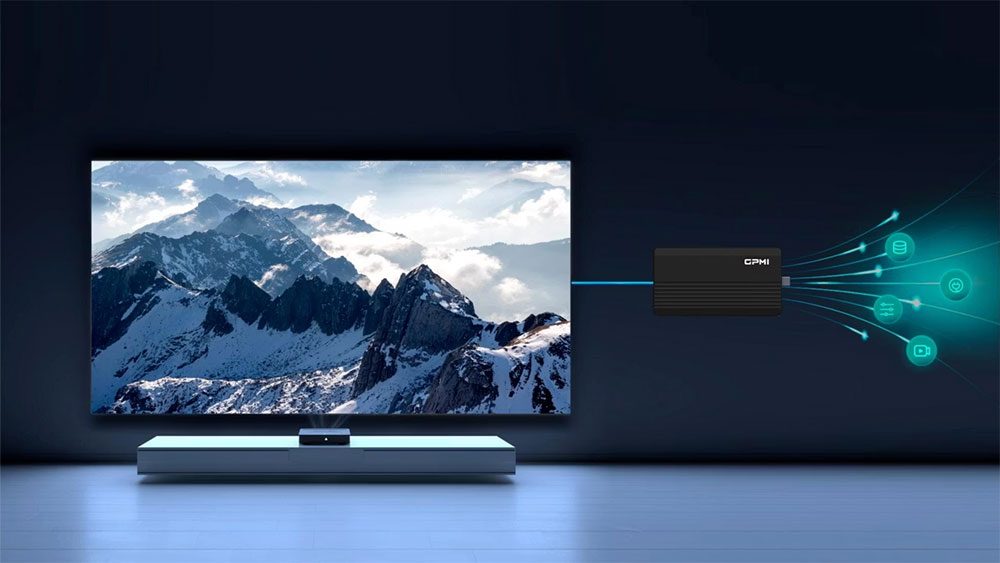
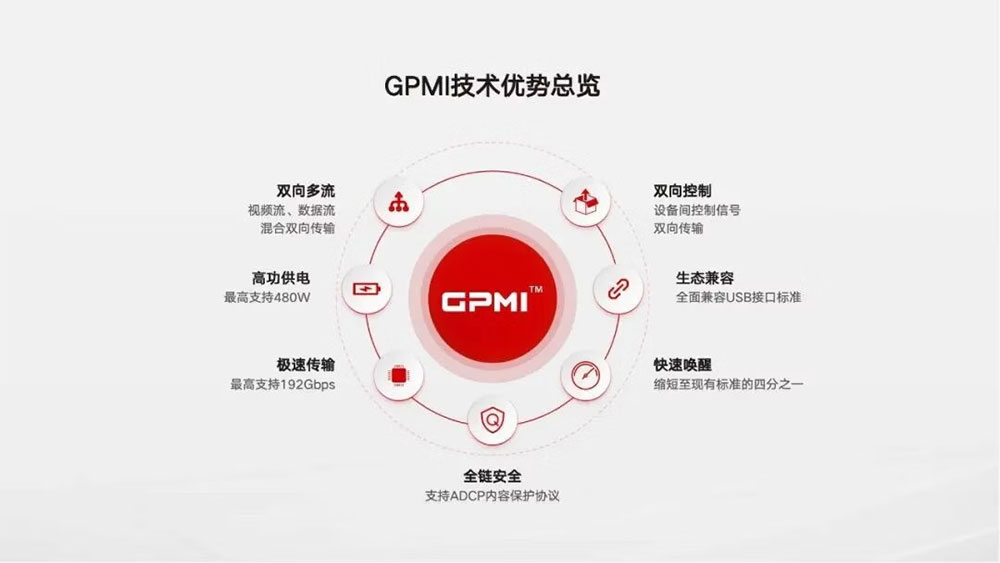
This new standard is called GPMI (General Media Interface) and was launched by the Shenzhen 8K Ultra-High Definition Video Industry Cooperation Alliance, which is composed of more than 50 Chinese companies, including large TV brands such as Hisense and TCL. The most attractive thing about GPMI is that it attempts to solve all transmission needs with “one line”. Images, audio, data, control signals, and even power can all be completed through the same line. This integrated design will undoubtedly appeal to anyone who has ever struggled with tangled wires.
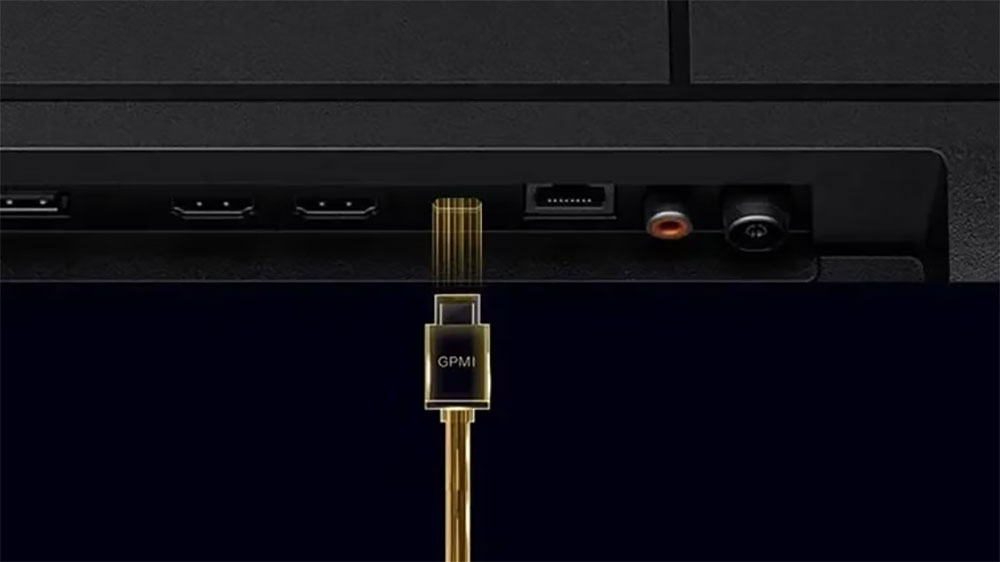
In addition to reducing wires, the GPMI specification itself is also quite eye-catching. It provides two interface forms, one uses the common USB‑C standard and supports up to 96Gbps bandwidth and 240W power supply; the other is a Type‑B cable specially designed for GPMI, which is more efficient and can reach 192Gbps and 480W power supply. In contrast, although the latest HDMI 2.2 has also been upgraded to 96Gbps, it is still only equivalent to the USB‑C version of GPMI, and the specification gap with Type‑B is even more obvious.
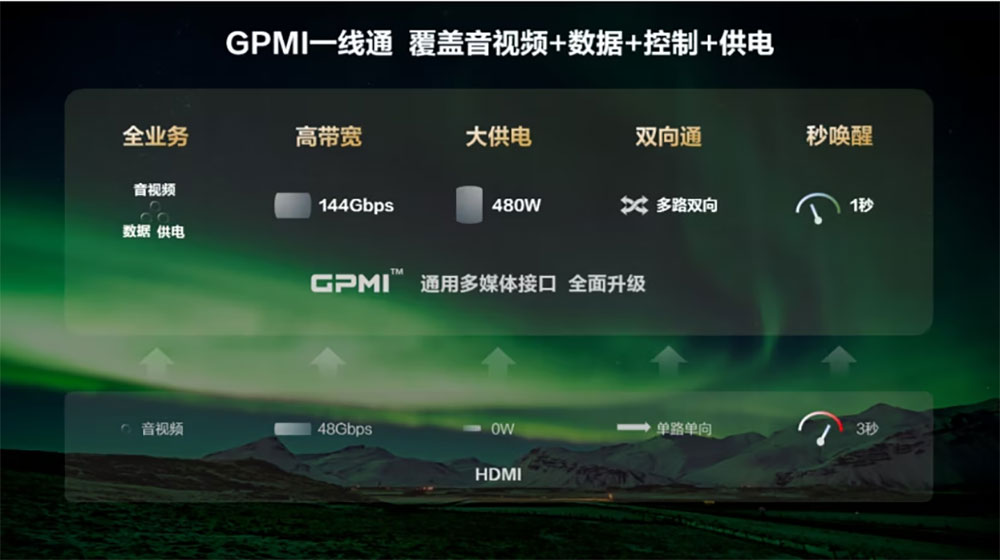
It is worth noting that HDMI 2.2 was only officially launched last year and is currently the most advanced HDMI standard. From a purely technical perspective, GPMI’s bandwidth, power supply capabilities and integration are superior, and the user experience is also simpler. However, HDMI’s advantage lies in its “popularity”. It has been deeply embedded in the global consumer electronics industry. From chips and motherboards to TVs and monitors, the entire supply chain is built around HDMI. This ecosystem cannot be replaced in a short time. Therefore, in the next few years, perhaps even until 2027, new TVs will still use HDMI 2.2 as the main interface instead of GPMI.
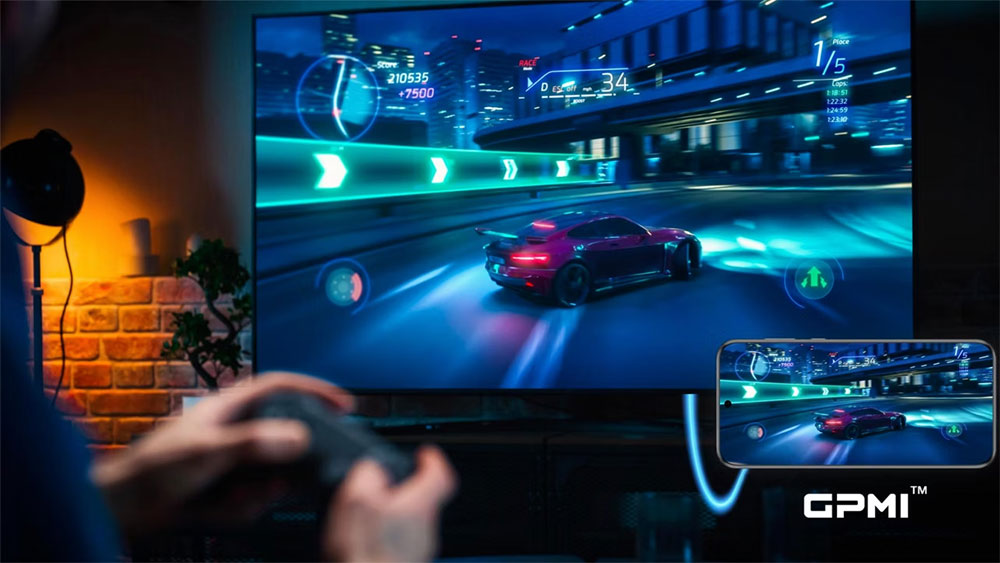
Of course, we are talking about the global market situation here. In China, as a large number of local companies support GPMI, it is likely to become rapidly popularized in the short term and become the standard interface for domestic devices. But for GPMI to gain a firm foothold globally, more international companies need to join in, including manufacturers of graphics cards, game consoles, streaming devices and other fields. Chinese companies may be willing to adopt GPMI, but it is still unknown whether Western companies are willing to invest resources in supporting this new standard.
Still, the emergence of GPMI is symbolic. For a long time, imaging and connection standards have been dominated by Western companies, and GPMI represents China’s competitive alternative in this field. The competition between HDMI and GPMI is worthy of close observation in the next few years. At this stage, although you may be dissatisfied with HDMI due to reasons such as cable management, bandwidth limitations, or device compatibility, it will continue to exist in most homes and devices for a long time.
Source: KOCPC Chinese