


Boris Cherny, who leads Anthropic’s AI programming tool Claude Code, recently delivered a speech at Sequoia Capital’s AI Ascent 2026 conference held in April.LectureHe not only revealed that he hasn’t written a single line of code himself since 2026, but also demonstrated in detail how he used AI agents to complete the development of 49 complete features in just two days.

Claude Code’s lead admits they didn’t write a single line of code in 2026
Boris Cherny is a heavyweight figure at Anthropic, known in the industry as the “father of Claude Code.” At a panel discussion during Sequoia Capital’s AI Ascent 2026, he revealed to a packed audience of tech investors and developers that Claude Code was already capable of being 100% AI-generated as early as October to November 2025, and that he personally has “not written a single line of code by hand” since 2026.
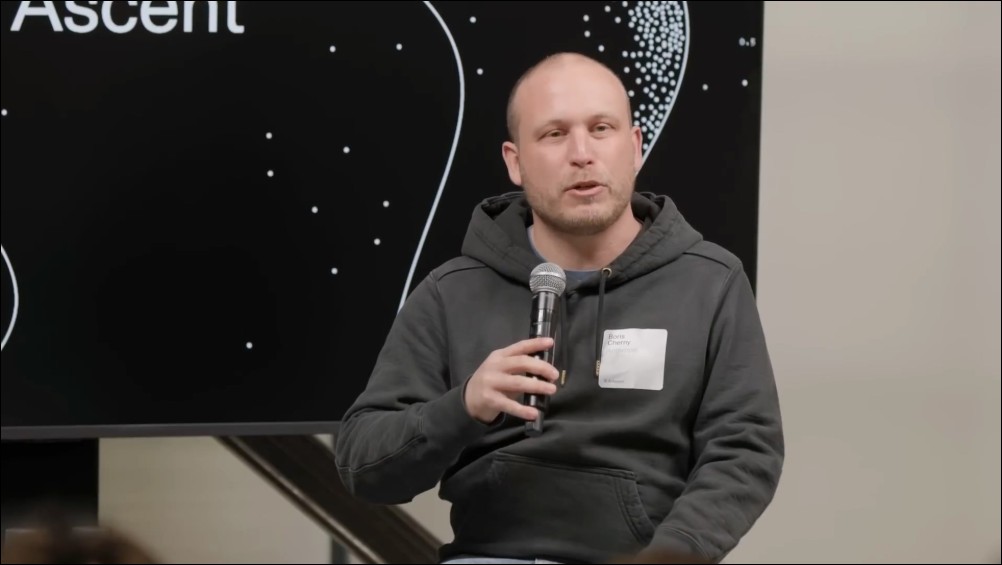
Cherny further stated that most of his work is now done on his phone. Every morning starts with reviewing code automatically generated by Claude Code, followed by merging dozens of Pull Requests (PRs). He revealed that on his busiest recorded day, he merged a total of 150 PRs, all with code written by Claude Code, while he was only responsible for reviewing and merging them.
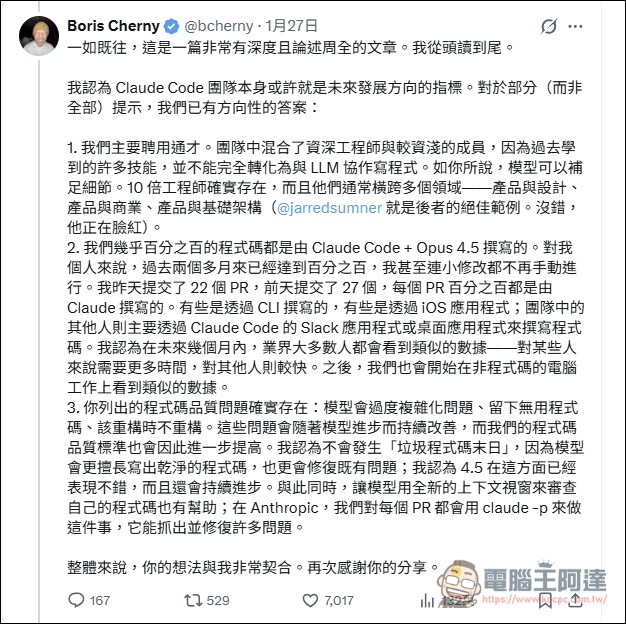
This is not the first time Cherny has publicly discussed the efficiency of AI-generated code. As early as earlier this year, he was responding to AI researcher Andrej Karpathy’spostAt the time, they stated: “For me personally, I’ve been coding 100% with AI for over two months now. I don’t even make small manual edits anymore. I submitted 22 PRs yesterday and 27 the day before, each one written 100% by Claude.”
Cherny boldly declared at a symposium that “the problem of programming has essentially been solved,” arguing that what enterprises truly need to compete on isn’t who can write better code, but “the speed of organizational process refactoring.” This remark sparked polarized reactions in the developer community: supporters see it as an inevitable trend in the AI era, while critics argue it oversimplifies the complex challenges of software engineering.
Cherny further predicts that the importance of auxiliary layers like “Harness” in development tools will continue to diminish, and Claude Code’s core code may eventually shrink to just around 100 lines, because the real value will shift to “Loop” architecture and agent collaboration patterns.
Claude Cowork: Making AI Automation Accessible to Non-Technical Users
Alongside Cherny’s speech, Anthropic also promoted its Claude Cowork feature launched in January. This tool can be understood as a graphical version of Claude Code, bringing the originally developer-oriented terminal capabilities to general users, allowing non-technical people to delegate complex document and workflow tasks to AI through an intuitive interface.
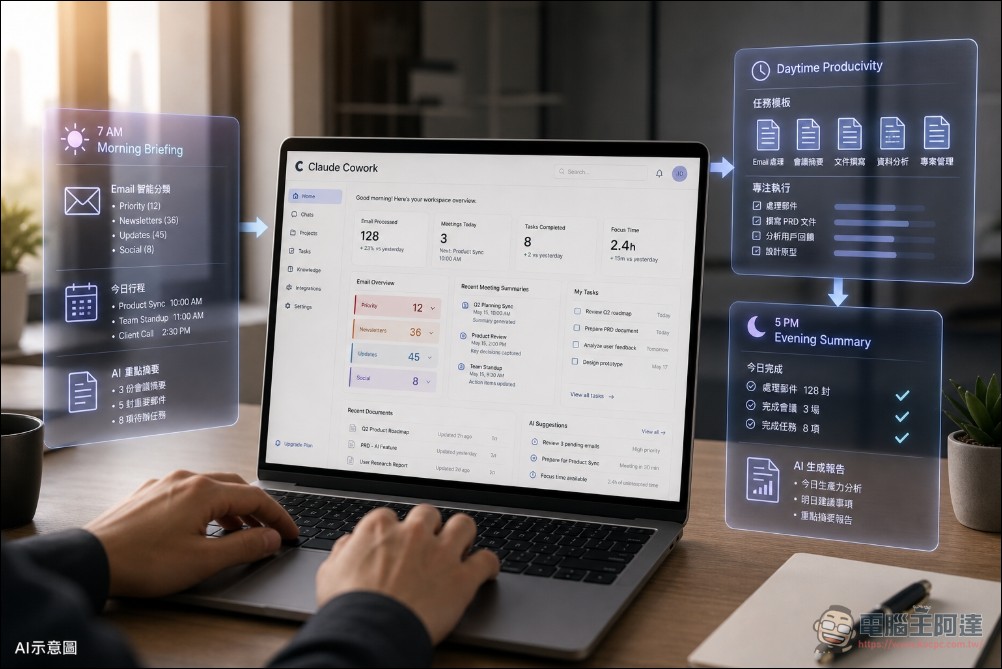
During his speech, Cherny provided detailed instructions on how to use Claude Cowork to build a complete daily work automation system, including:
Morning briefing (7 AM)Claude automatically scans the email inbox, categorizes messages by urgency, drafts routine replies, checks the calendar and creates one-page summaries for each meeting, reviews overnight Slack messages, and finally compiles everything into a “Morning Briefing” document on the desktop. The user simply opens their computer and reads one document to know all the priorities for the day.
Daytime Productivity BlockUsers can create template libraries to templatize the most common work tasks, such as extracting data from spreadsheets, generating reports, creating presentations, processing documents, research compilation, and more. Claude Cowork can process multiple tasks in parallel in the background, allowing users to focus on high-level thinking work.
End-of-day summary (5 PM)Claude automatically compiles the day’s sent emails, completed meetings, modified documents, unfinished tasks, and work to carry over to the next day, generating a structured end-of-day report. This report also serves as background information for the next day’s morning briefing, creating a continuous information cycle.
Anthropic continues to expand Claude Cowork’s application footprint
Anthropic further added plugin functionality to Claude Cowork in February, allowing users to extend tool capabilities through custom plugins. Plugins can include MCP integration, enabling Claude Cowork to access external applications, as well as sub-agents optimized for specific tasks. Users can also create custom slash commands to launch automated workflows with a single click.
By the end of February, Anthropic had expanded Claude Cowork’s reach into core business areas such as investment banking and human resources, signaling that rather than trying to disrupt existing work patterns, Anthropic aimed to become a “reliable partner” for enterprises. This series of new feature releases overall boosted its partners’ stock prices.
We have also created Chinese and English translations for this video. Feel free to check them out:
The future of commanding thousands of agents from your phone
The most striking moment of the talk was when Cherny demonstrated how he could directly orchestrate hundreds, even thousands, of AI agents working simultaneously right from his phone. He noted that by 2026, software development has shifted from “I’ll write the code myself” to “I’ll coordinate a team of agents to write the code” — a change that affects not just programmers, but also product managers, designers, and everyone involved in the software development process.
Cherny emphasizes that people who can invest 15 minutes weekly in system optimization will have AI workflows that are worlds apart from those who “set it once and never touch it again” after three months. “Claude Cowork is not a tool you use, but an infrastructure you build. Build it once, optimize it weekly, and let it compound continuously.”
As Claude Code and Claude Cowork continue to evolve, Anthropic is redefining the boundaries of software development—from engineers who write code, to commanders who manage agents, to non-technical users who don’t write code at all—AI agents are gradually infiltrating every aspect of work.
Source: KOCPC Chinese