


CryptocurrencyThe market is facing a “Black Friday” today,Bitcoin(Bitcoin) The price suffered a devastating sell-off over the past 24 hours, falling more than 10% in a single day and breaking through the $67,000 threshold. This plunge not only broke through multiple key technical support levels but also signaled that the gains from the “Trump Trade”—accumulated since Donald Trump’s election—have been entirely erased. Market analysts point out that hawkish remarks by U.S. Treasury Secretary Scott Bessent were the direct trigger for this collapse.
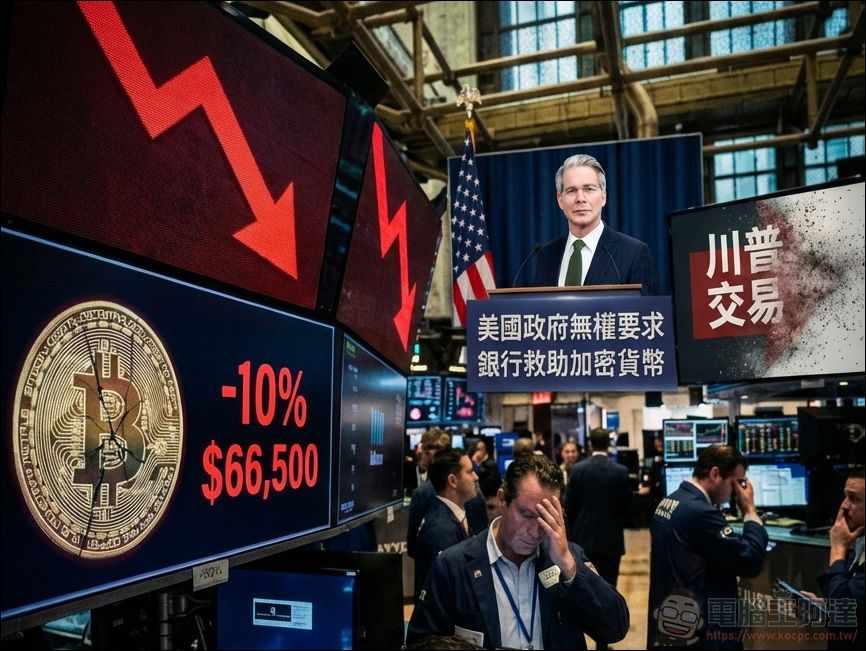
Bitcoin Plummets 10% in a Single Day, Dipping Below $67,000: Bessent Dashes Market Hopes
The main reason for the market panic triggered by this Bitcoin crash stems from Bessent’s latest statement, in which he explicitly stated, “The U.S. government has no authority to require banks to bail out cryptocurrencies.”
The market interpreted these remarks as signaling that the U.S. government would adopt a “hands-off, no bailout” approach toward the cryptocurrency industry, standing in stark contrast to the previous market optimism that the Trump administration would strongly support the crypto sector. Investors had originally hoped the new administration would ease regulations or even include Bitcoin in the national strategic reserve, but Bessent’s remarks undoubtedly poured cold water on those hopes, directly dousing speculative enthusiasm. As Bessent’s remarks took hold, the price of Bitcoin plummeted, falling from its high and dropping as much as 10% during the trading session, hitting a low below $67,000—a new recent low.
The Trump Rally Comes to an End: Market Confidence Crumbles
Another significant implication of this sharp decline is that it symbolizes the collapse of the “Trump trade.” Since Trump won the presidential election, Bitcoin had embarked on a sharp rally fueled by market expectations of his pro-cryptocurrency policies, at one point approaching its all-time high. However, as policy implementation following the inauguration fell short of expectations and regulatory uncertainty resurfaced, market patience gradually wore thin. This sharp decline means that Bitcoin has “given back all the gains it had made since Trump’s election.”
This is a severe blow to retail investors who bought in at the peak. Many investors had originally bet that policy benefits would drive Bitcoin past $100,000, but now face significant losses. Market sentiment has rapidly shifted from extreme greed to extreme fear.
Wave of Margin Calls Sweeps Through the Market: Bulls Suffer Devastating Losses
The sharp price volatility triggered a chain reaction in the futures market. When Bitcoin fell below the key psychological threshold of $68,000, it triggered the forced liquidation of a large number of long positions. Although specific real-time liquidation data is still being compiled, based on past experience, a 10% single-day price swing in a market with a $10 billion market capitalization is typically accompanied by contract liquidations ranging from hundreds of millions to billions of dollars. Data from Coinglass shows that liquidity rapidly dried up below $70,000, causing the price to plummet in a free fall after breaking through support.

This sell-off not only weeded out highly leveraged speculative capital but also forced some institutional investors to implement risk management measures, further intensifying the selling pressure.
Is a Market Downturn Coming, or Just a Technical Correction?
The Bitcoin market is currently facing a severe test. After falling below $67,000, the next key support level will be the $60,000 mark. If there is no positive news on the policy front, or if the macroeconomic environment (such as inflation and interest rates) deteriorates, the cryptocurrency market may enter a new winter. Investors should closely monitor upcoming personnel appointments and policy announcements from the U.S. Treasury Department, as well as whether the market can establish a new bottom at this price level. For leveraged traders, volatility risks are extremely high at this time, and a conservative approach may be the best strategy to weather the storm.
Source: KOCPC Chinese