


“I use GPT-5.4 and Opus 4.6 to write code every day, burning through over 100 million tokens in a single day, with a cost of only about $1.” This isn’t an exaggeration—it’s the real daily routine of a Chinese CS student sharing on Reddit. This post is the r/vibecoding communitySparking heated discussion, while European and American developers are still complaining that Claude Code’s 5-hour Pro plan limit runs out in just 20 minutes and GPT API costs remain high, Chinese programmers and CS students have already been using the most advanced AI models for coding at prices 96% to 97% below official pricing.
How the Gray Market Works
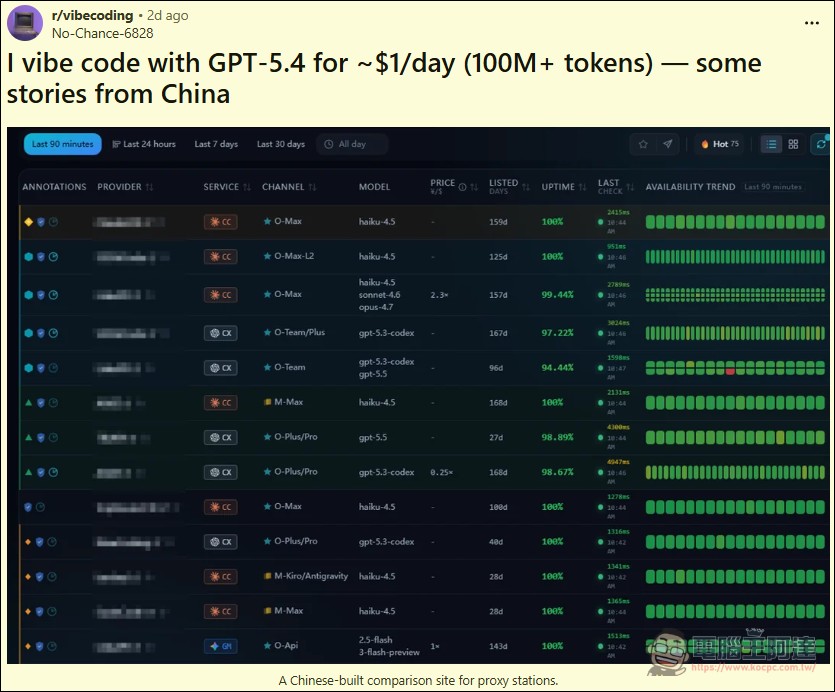
According to u/No-Chance-6828 (who claims to be a Chinese computer science student), sellers on Xianyu (China’s version of eBay) and Taobao are openly selling GPT API proxy services at prices of just 0.2 to 0.3 RMB per 1 USD, equivalent to approximately 3% to 4% of the official pricing. Due to Anthropic’s stricter safety mechanisms, Claude’s gray market pricing falls at around 10% to 20% of official rates.
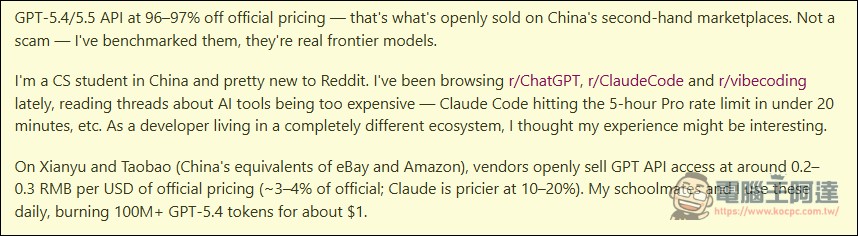
Such low prices come from a mature arbitrage supply chain. The key tool is an open-source project on GitHub. CLIProxyAPI(router-for-me/CLIProxyAPI), which converts subscription services like OpenAI Codex, Claude Code, and Gemini CLI into proxy endpoints with standard OpenAI API format. Operators purchase subscription accounts in bulk from low-priced regions like the Philippines, even exploiting ChatGPT Plus free trial programs, pooling these quotas together for redistribution to form a large-scale account pool.
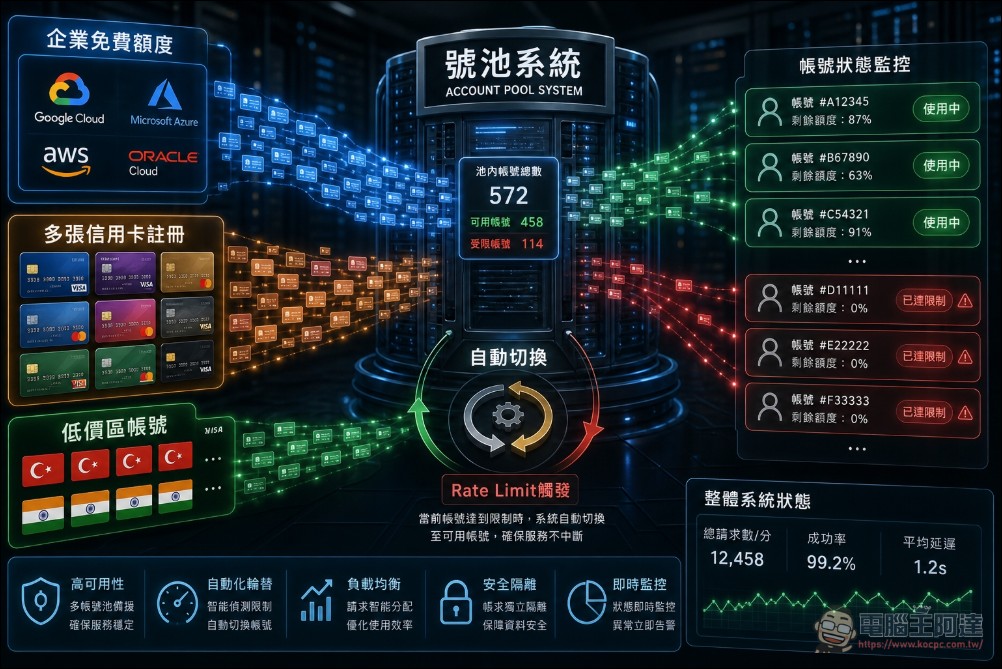
“Among programmers and CS students in China, almost 100% use this, as normal as using GitHub,” the poster wrote. “Even engineers at large Chinese tech companies use proxied Codex or Claude Code for non-sensitive work.”
“The ‘Hub Economy’: An In-Depth Investigation by Oxford Researchers”
This is not an isolated incident. Zilan Qian, a researcher at the Oxford China Policy Lab, published an article on May 5.long text, deeply examining this gray API proxy economy known as “Transfer Station”
Qian pointed out that the White House issued a memo on April 23, 2026, warning that Chinese entities are launching “industrial-scale” distillation attacks on U.S. frontier AI models, using “tens of thousands of proxy accounts” to bypass detection. Anthropic also reported in February 2026 that a single proxy network managed over 20,000 fraudulent accounts.
However, Qian argues that both official documents misread the proxy economy they describe. Behind this lies a much larger market—the publicly operating API proxy ecosystem on GitHub, Taobao, Twitter, and Telegram. Participants far exceed lab researchers: university professors, students, tech professionals, independent developers, and hobbyists, all using API proxies to access more advanced models. These intermediaries have developed price comparison sites and quality testing platforms that track each proxy’s uptime, latency, and pricing in real-time.
Why not use Chinese domestic models?
A noteworthy phenomenon: on the gray market, GPT’s price is nearly as cheap as DeepSeek’s. The poster stated outright: “When the best model costs about the same as a budget option, most developers I know will go with the best.”
This has completely transformed the competitive landscape. The biggest selling point of Chinese domestic models was their price advantage, but under the proxy site economy, this advantage has vanished entirely. When Opus and GPT-5.4 can be obtained through proxies at costs comparable to DeepSeek, developers naturally gravitate toward the more powerful models. The poster also mentioned that some developers still use domestic models, but the gray market has already shifted the default choice.
Costs and Risks
Such a low price naturally comes at a cost—the biggest controversy centers on data privacy. Users’ code passes entirely through the proxy servers, and rumors suggest some operators sell interaction data to Chinese AI labs for model distillation and further training. This echoes the “industrial-scale distillation” described in the earlier White House warning.
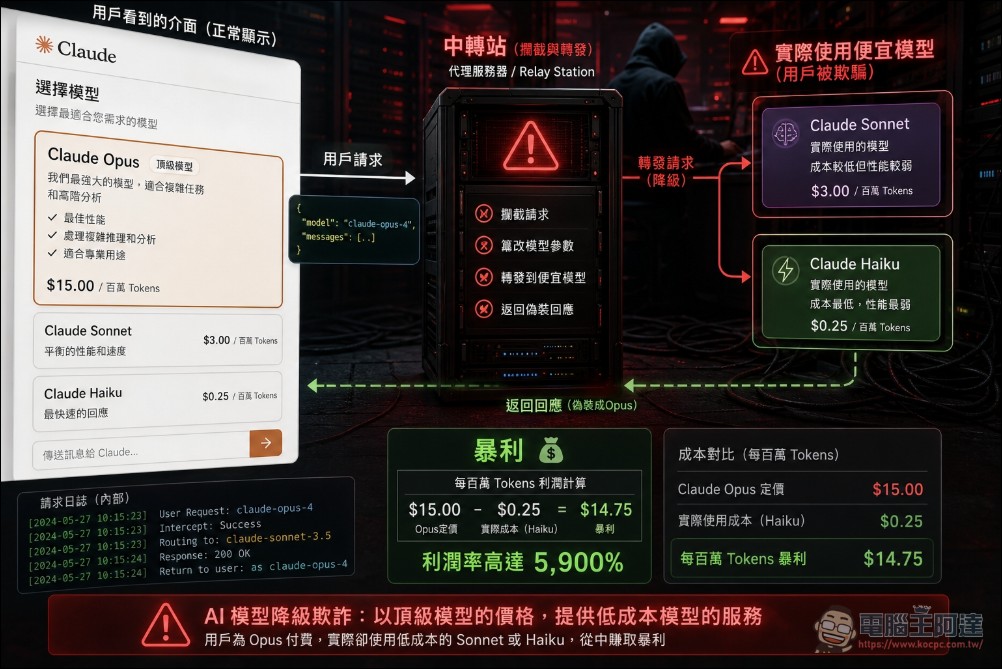
Additionally, reliability is a major issue. Accounts are constantly being blocked by OpenAI or Anthropic, forcing operators to continuously replenish their account pools. Commentators have also pointed out that users may pay for GPT-5.4 but actually receive responses from cheap models, since proxy sites can freely switch models on the backend, leaving users none the wiser. (Editor’s note: Personally, I lean toward believing this trick is being used.)
However, the general attitude among Chinese developers is: “I already handed my data over to OpenAI and Anthropic anyway, so what’s one more middleman?”
Massive Arbitrage Gap in AI Pricing Structure
This entire situation reveals a massive arbitrage opportunity in the pricing structures of both OpenAI and Anthropic. The Codex quota that OpenAI provides to paid subscribers is worth more than ten times the subscription cost when calculated at API rates. When gray market prices fall to just 3% of official pricing, it indicates a serious structural flaw somewhere in the chain.
According to Prof G Media’s analysis, Silicon Valley is actually highly dependent on China’s cheap token supply. As AI agents go mainstream, the value of cheap tokens is becoming increasingly prominent, and China holds structural cost advantages in electricity costs (40% lower than in the US) and certain algorithmic advantages.
However, vendors aren’t sitting idle either. Anthropic’s latest security levels include: geo-blocking, phone verification, credit card requirements, and even real-time biometric KYC verification. But each layer of verification has also spawned corresponding workarounds: from SMS farms to biometric data collection, forming an escalating game of cat and mouse. Qian warns in the article that the impact of these bypass infrastructures extends far beyond the US-China tech competition, eroding AI vendors’ ability to trace users and potentially being exploited by malicious actors.
Summary
When a Chinese computer science student can burn through over 100 million GPT-5.4 tokens for coding at a cost of less than NT$35 (US$1) per day, while European and American developers are still weighing every line of their prompts against API costs, the cost barrier to accessing AI development tools has reached a massive asymmetry. This gray market operating openly on Xianyu and Taobao not only exposes arbitrage loopholes in OpenAI and Anthropic’s pricing structures, but also reveals deep blind spots in the current AI safety framework.
For young developers in China, they’ve gained “cost freedom”—no longer needing to count every token in their prompts, allowing AI agents to run without limits. But this freedom comes at the cost of data privacy and model traceability. As the White House and AI companies intensify their crackdown, this cat-and-mouse game is set to escalate further.
Source: KOCPC Chinese