


Following the previous day’s “I Dount Believe“The upcoming announcement of…”Solid-State BatteriesFollowing the release of the test report, the Finnish startup Donut Lab On February 23, 2026, the company officially released the first independent third-party test results for its solid-state battery. This report, conducted by the Finnish state-owned VTT A test report conducted by the VTT Technical Research Centre of Finland rigorously verified the fast-charging performance of what the company claims is the “world’s first mass-producible solid-state battery.”
First Round of Independent Test Results for Donut Lab’s Solid-State Battery Released: 0–80% Fast Charge in 4.5 Minutes
To get straight to the point, the test results show that Donut Lab’s Dount Battery The solid-state battery successfully passed tests at both 5C and the extreme 11C charging rates without an active cooling system, confirming that its previously stated fast-charging goals are indeed achievable.
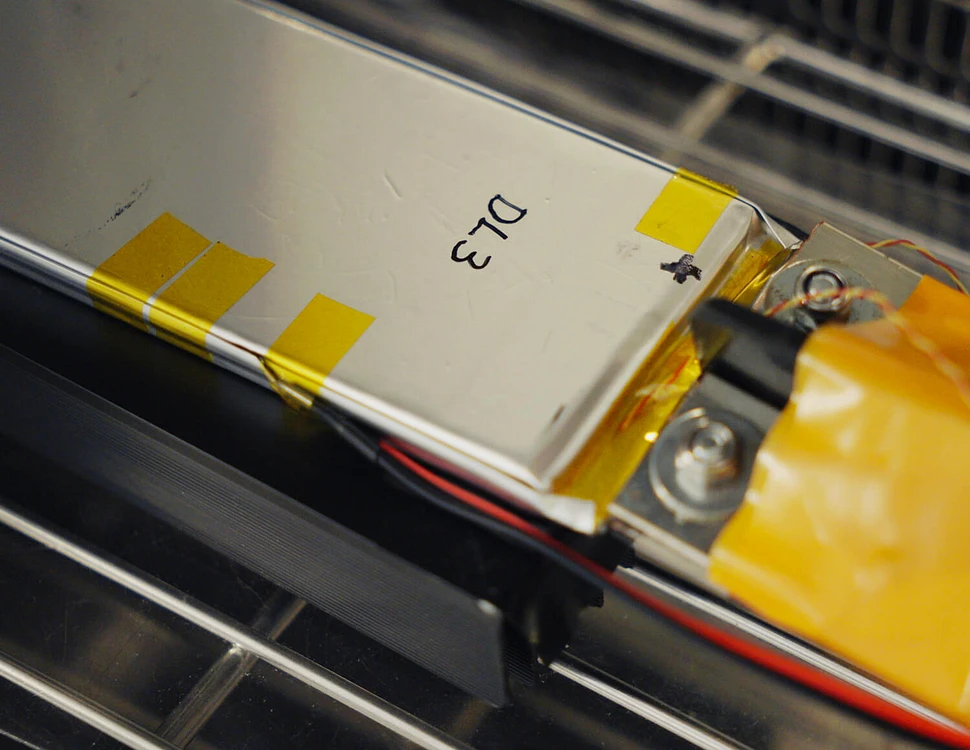
Background of the Testing Organization VTT Technical Research Centre of Finland
VTT Technical Research CentreVTT is a Finnish national multidisciplinary research organization founded in 1942 and headquartered in Espoo. As one of the largest multidisciplinary research organizations in the Nordic region, VTT possesses extensive testing experience and international accreditation in fields such as battery technology and energy storage. This testing was conducted independently by VTT; Donut Lab was solely responsible for commissioning the testing and providing the test samples, thereby ensuring the objectivity and credibility of the test results.
Test Items and Results
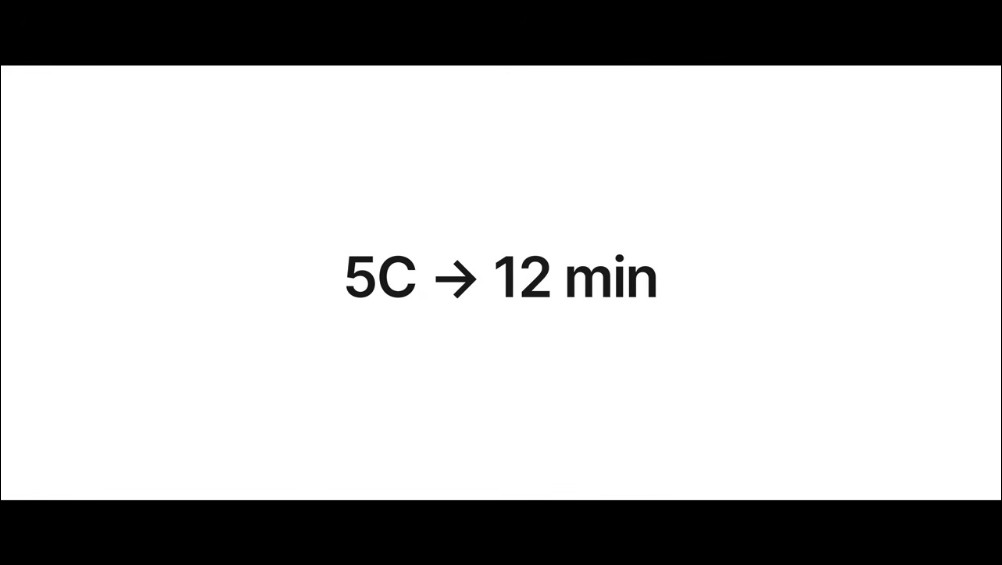
Since we’ll be using some terms related to charging rates, here’s a brief explanation: The “C” (C-Rates) simply refers to the time it takes to charge a battery from 0% to 100%—one hour (this is actually related to battery capacity and charging current; for example, 1C means charging or discharging at a current equal to one times the battery’s capacity, but we won’t go into that here). 2C takes half an hour, 3C takes 20 minutes, and 5C takes 12 minutes to fully charge. You can think of it as the time required to charge at a rate of 60/C; the higher the value, the shorter the time to a full charge. However, faster charging speeds generate more heat, which can cause deformation of the battery’s internal structure (which is particularly critical for solid-state batteries) and lead to systemic safety issues such as thermal management problems. Therefore, lithium-ion batteries on the market are typically charged at rates between 2C and 4C.
Based on the published test reports and video content, this round of testing focused primarily onFast Charging PerformanceandThermal Management PerformanceThere are two key metrics. For thermal management, the system is tested twice—once with dual-sided cooling and once with single-sided cooling—to evaluate its thermal management capabilities under different cooling conditions. The distinction between dual-sided and single-sided cooling is based on the fact that automakers may employ different cooling solutions when designing battery packs:
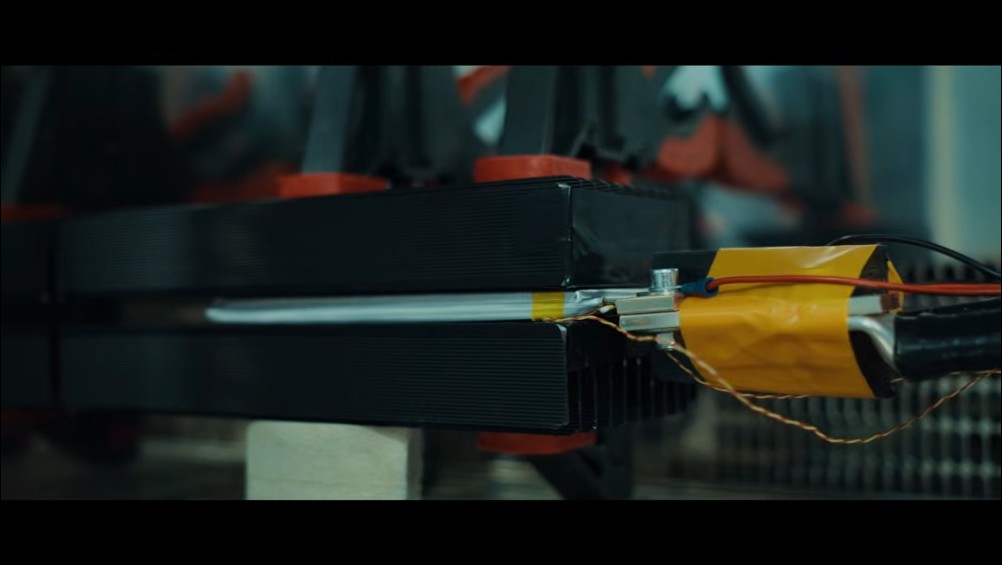
5C Standard Fast Charging Test
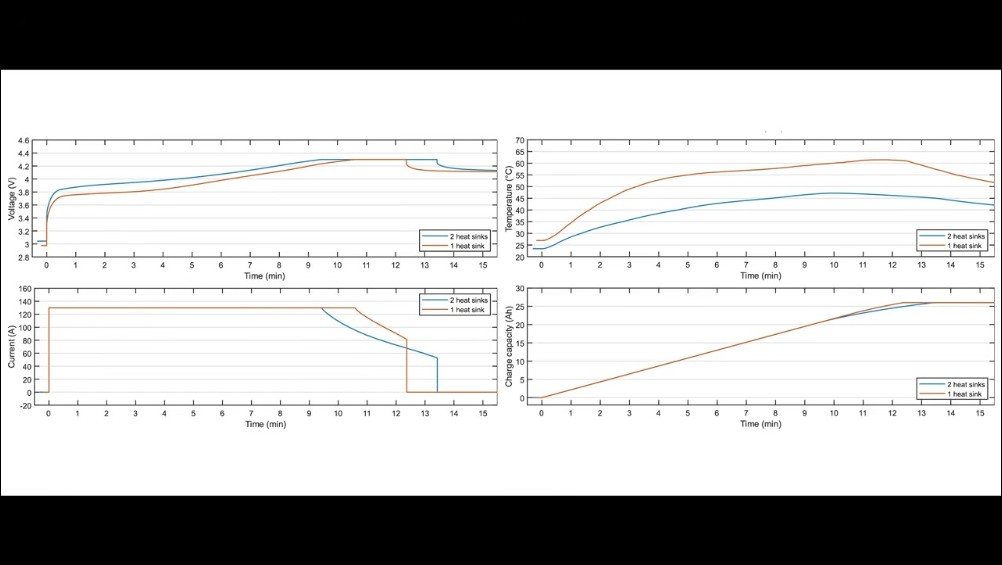
- Charging Rate:5C(4.3V/130A)
- Test Results: Full charge successfully completed
- Thermal Management: Remains stable without active cooling (the blue line shows values for dual-sided heatsinks, while the orange line shows values for single-sided heatsinks)
11C Extreme Charging Test
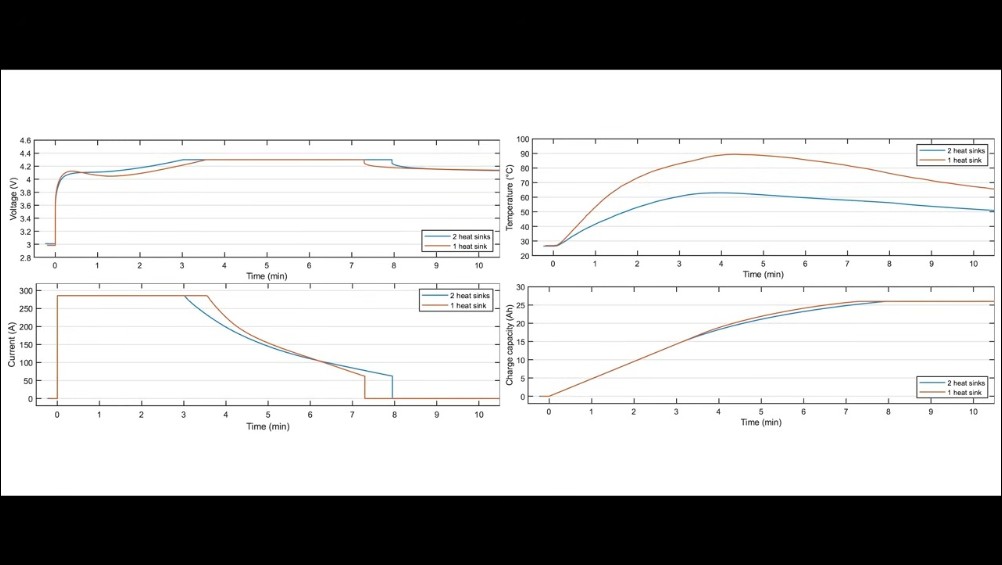
- Charging Rate: 11C (where “1C” refers to charging at a current equal to 11 times the battery’s capacity for one hour)
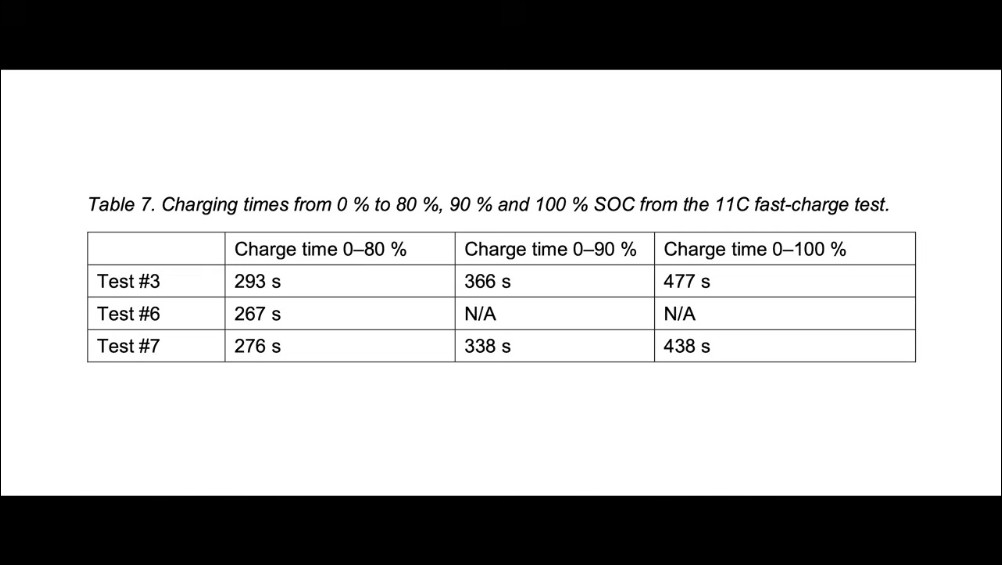
- Charging time from 0 to 80%:4.5 minutes
- Test Conditions: No active cooling system
- Thermal Performance: Temperature fluctuations were stable, and no overheating occurred.
The Significance of Passive Cooling
Traditional lithium-ion batteries generate a significant amount of heat during fast charging and rely on complex liquid-cooling or air-cooling systems to control temperature. Donut Lab’s solid-state batteries can withstand 11C charging without active cooling, which means:
- The battery pack has a simpler design and is lighter in weight.
- Significant reduction in manufacturing costs
- Significantly improved safety (no risk of coolant leakage)
The detailed test results and reports have been published at VTT Official Website…If you’re interested, feel free to check it out. Below is the test video released by Dount Lab. They’ll continue to release other test results in the future (though, to be honest, I’m more interested in seeing test results of the product actually installed in a car, and whether it’s truly in mass production or still just a lab prototype). For more information, visitOfficial WebsiteView:
Summary
Solid-state batteries are regarded as the “Holy Grail” of the electric vehicle industry. Their theoretical advantages include higher energy density, faster charging speeds, better low-temperature performance, and a complete solution to the problem of thermal runaway. However, despite decades of R&D investment by major battery manufacturers worldwide, large-scale mass production has yet to be achieved. Donut Lab’s decision to release independent test data is a direct response to external skepticism. From the sensation caused by the announcement of its specifications at CES 2026 to the subsequent avalanche of skepticism from the industry, this Finnish startup experienced a dramatic turnaround—from the peak to the trough—in just one month.
The release of this VTT test report at least confirms the credibility of this key metric—fast-charging performance. If the figure of 80% charge in 4.5 minutes can be consistently achieved in mass-produced vehicles, it will completely revolutionize the electric vehicle charging experience. However, validation through a single test item does not equate to overall success. Other core metrics of interest to the industry include cycle life (claimed to be 100,000 cycles) , energy density (claimed to be 400 Wh/kg), low-temperature performance (claimed operating range of -30°C to 100°C), and mass-production feasibility (cost, supply chain, and production scale), all of which remain to be revealed in subsequent test reports.
It is worth noting that even if all the technical specifications are accurate, there remain significant engineering challenges between laboratory samples and large-scale mass production. The history of the battery industry is rife with examples of “laboratory stars that turned into mass-production disasters,” so cautious optimism may be the most rational approach.
Source: KOCPC Chinese