


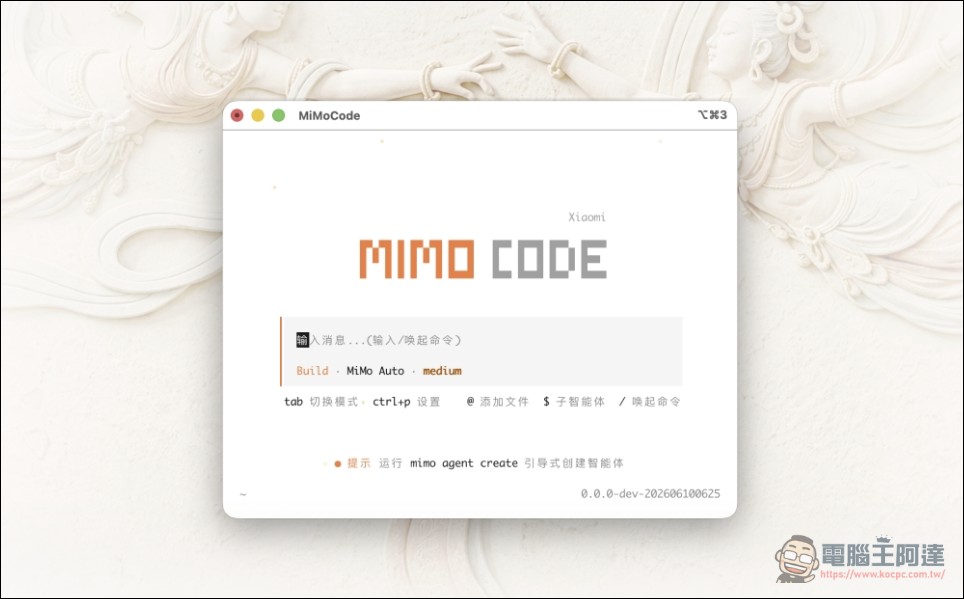
What do you most often encounter when using AI-assisted coding? It’s probably not that the model isn’t smart enough, but rather that it “can’t remember.” When conversations get long, all the architectural decisions discussed earlier, the bugs you’ve fixed, and the features you were halfway through writing are all forgotten—you have to re-explain everything repeatedly. Xiaomi’s MiMo team officially open-sourced on June 10th… MiMo Code V0.1.0It tackles this exact pain point: a terminal AI coding agent with cross-session persistent memory, released under MIT license, featuring a built-in MiMo-V2.5 multimodal model available for free during a limited time, ready to use with a single command.
From Model to Agent: The Next Step in the MiMo Product Line
Xiaomi’s AI open-source journey can be traced back to the MiMo-7B reasoning model launched in 2025. After more than a year of iterations, MiMo-V2.5 has become a multimodal model with visual understanding capabilities. MiMo Code wraps this model into a complete programming agent—not just code completion, but the ability to read entire projects, execute terminal commands, manage Git, autonomously debug, and maintain deep understanding of the project across multiple work sessions.
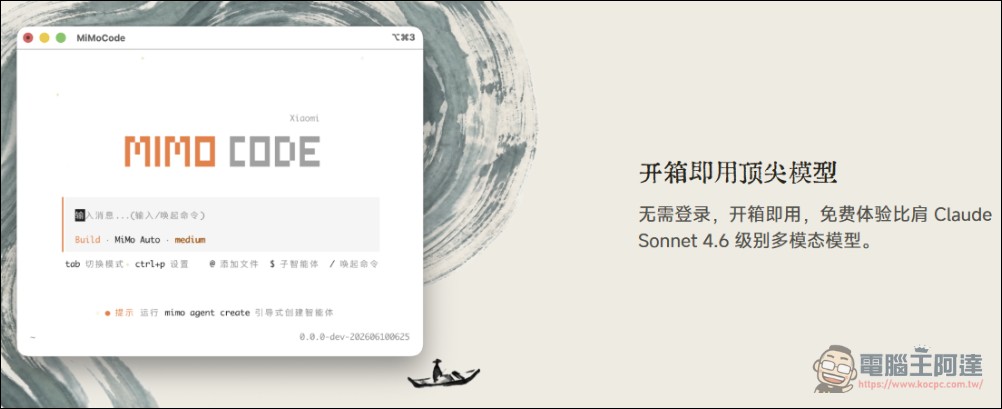
Technically, MiMo Code is based on an open source project OpenCode This fork construction retains core capabilities like multi-vendor support, terminal TUI, LSP integration, and MCP server connectivity, while layering on Xiaomi’s self-developed memory system, context management, sub-agent coordination, goal-driven loops, and Compose workflow features.
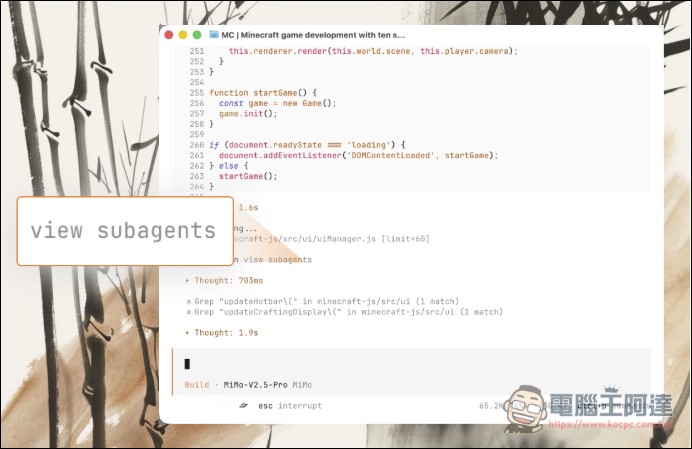
Core Features Overview
Persistent memory systemThis is the biggest difference between MiMo Code and most AI coding tools on the market. Most tools rely entirely on the model’s context window, and once the limit is exceeded, they start forgetting. MiMo Code has designed a multi-layer memory architecture:
- Project Memory(
MEMORY.md): Stores long-term project knowledge, architectural decisions, and team conventions - Session Checkpoint(
checkpoint.mdA structured state snapshot maintained automatically by a background sub-Agent - Temporary notes(
notes.mdAgent Draft Area - Task Progress(
tasks/<id>/progress.mdIndividual log files for each task
When the conversation approaches the context limit, the system automatically compresses and rebuilds context from checkpoints, allowing the Agent to continue its current task without losing critical information, officially marketed as having “unlimited context” capability.
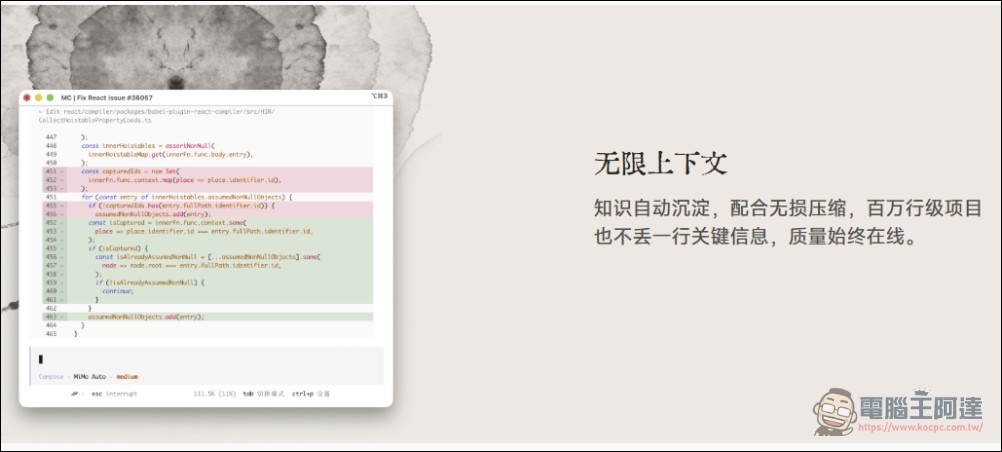
automatic maintenanceAutomatically executes once every 7 days, launching an independent maintenance Agent to review old Session records, removing duplicate memories, verifying whether file paths still exist, compressing outdated information, and ensuring the quality of long-term memory. In combination with /distill The system can also identify repetitive manual workflows from your daily tasks and automatically package them into reusable Skills or sub-Agents.
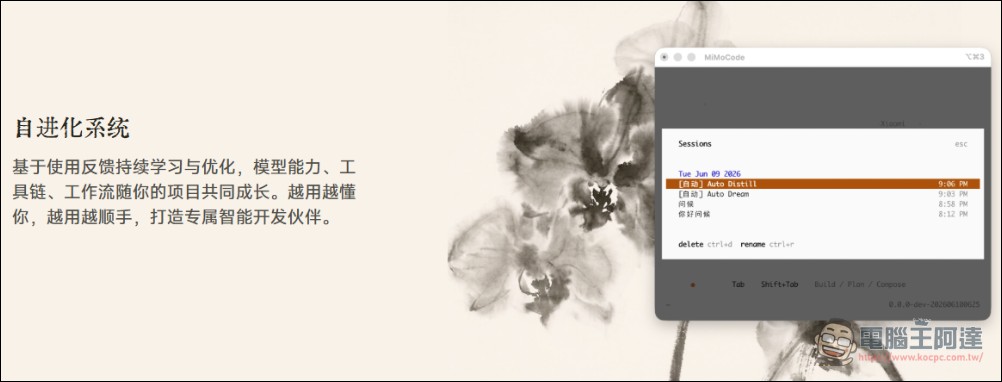
Three Agent ModesPress Tab to switch:
- buildDefault mode with full tool permissions, ideal for daily development
- planRead-only analysis mode, ideal for code exploration and solution design
- composeA specification-driven orchestration pattern that starts from a goal description and automatically completes the entire pipeline: planning, design, coding, testing, and review.
Among these, the Compose mode is particularly suitable for the “single-person development team” scenario. You only need to provide rough ideas or goals, and the Agent will attempt to handle the complete workflow from conception to delivery. Xiaomi refers to this approach as producing “industrial-grade deliverables.”
Parallel Sampling – Select Best (Max Mode)In each round of reasoning, generate N candidate solutions simultaneously (default is 5), with the same model serving as the evaluator to compare the reasoning process and action plan before selecting the best one to execute. This mechanism trades off speed, but can significantly reduce the error rate at each step in long-horizon tasks.[4]
/goal Goal Stop ConditionsAfter defining a stopping condition, when the Agent attempts to conclude the task, an independent evaluator model judges whether the condition is actually met. This prevents the Agent from prematurely “optimistically stopping” during autonomous work.
Voice inputBuilt-in real-time streaming speech recognition based on MiMo-V2.5-ASR. Starting /voice After that, just speak directly. The system will automatically segment based on pauses and transcribe your speech in real-time as text input, supporting voice-triggered commands such as “Send” and “Execute.”
Performance benchmarking
Xiaomi’s published test data shows that MiMo Code achieves a 62% pass rate on SWE-Bench Pro and 73% on Terminal Bench 2, outperforming Claude Code by approximately 5 percentage points respectively when using the same base model.
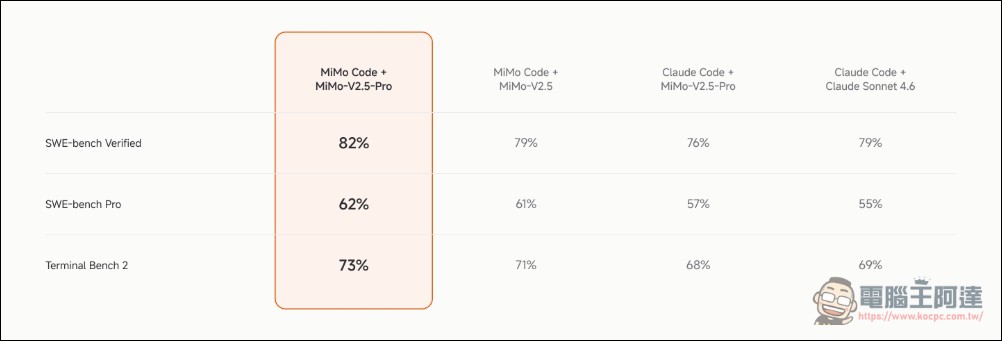
These numbers need to be understood in context. SWE-Bench Pro measures an Agent’s ability to solve real GitHub Issues, while Terminal Bench 2 measures task completion rates in terminal environments. Both benchmarks lean toward long-horizon, multi-step task types, which are exactly the target scenarios MiMo Code was designed for. The 5% improvement compared to Claude Code using the same base model indicates the advantage comes primarily from the Agent framework’s design (memory, context management, parallel sampling), not the model itself.
Installation and Usage
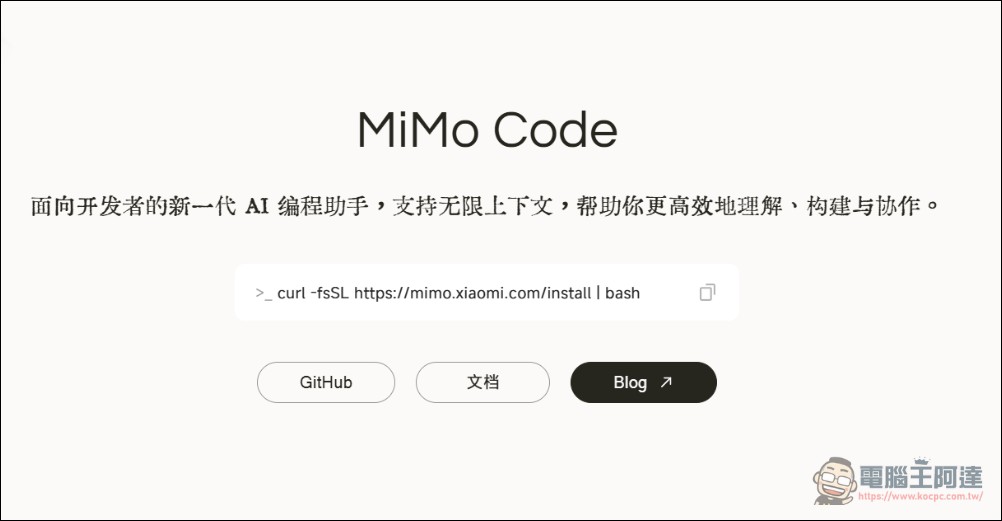
MiMo Code’s installation process is quite simple. macOS and Linux users only need one command:
curl -fsSL https://mimo.xiaomi.com/install | bash
Windows users can install it via npm:npm install -g @mimo-ai/cli
Initial launch will automatically guide the setup. Supported options include:
- MiMo Auto (Free for a Limited Time)Anonymous channel, zero configuration required
- Xiaomi MiMo platformOAuth login
- Import from Claude CodeOne-click migration of existing authentication
- Custom SupplierAdd any OpenAI-compatible API in TUI
The free MiMo Auto channel doesn’t require account registration, making it extremely accessible for developers who want a quick experience. If you’re not satisfied with MiMo model’s performance, you can also connect to third-party services like DeepSeek, Kimi, or GLM, avoiding lock-in to a single provider.
Positioning and Competitive Landscape
Terminal-based AI coding agents grew rapidly between 2025 and 2026. Players in this space include Anthropic’s Claude Code, Google’s Gemini CLI, and OpenAI’s Codex CLI. MiMo Code differentiates itself as one of the few open-source options offering both “free model access” and “cross-session persistent memory.” According to the official site, MiMoV2.5 is free for one month after installation (MiMo also has a Token Plan for under $6 per month). 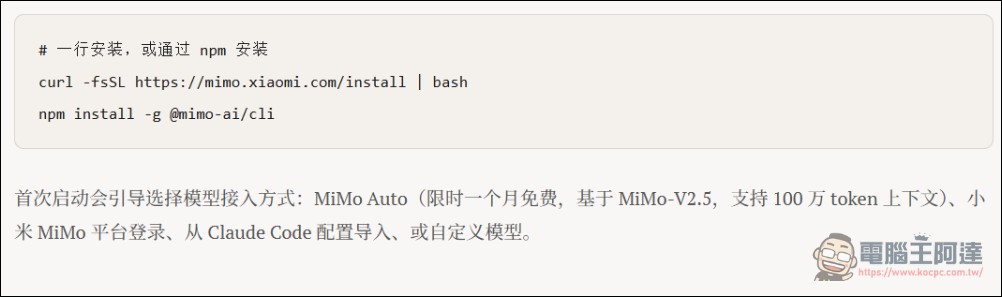
Claude Code’s memory mechanism is relatively simple (primarily relying on CLAUDE.md files), while Gemini CLI leans more toward Google ecosystem integration. MiMo Code’s multi-layer memory architecture (project memory + session checkpoints + task progress + /dream automatic maintenance) is more complete in design, but this also means it has more requirements for project directory structure (automatically creating .mimocode/ Contents
For developers already using Claude Code or other tools, MiMo Code offers a migration option to “import from Claude Code,” reducing switching costs. The MIT license also means enterprises can freely modify and deploy without worrying about commercial licensing issues.
MiMo Code Official Website
Summary
MiMo Code V0.1.0 is Xiaomi’s first product in the AI coding tools space. Its core selling points are clear: persistent memory to solve context forgetting in long tasks, free model access to lower the barrier to entry, and MIT licensing to ensure openness. The scores of 62% on SWE-Bench Pro and 73% on Terminal Bench 2 demonstrate the effectiveness of the framework design.
However, as a V0.1.0 version, it still has room for growth. The current /dream and /distill features are still in early stages, and the quality of long-term memory needs to be continuously validated in real development scenarios. Compared to models at the level of Claude Sonnet 4.6, MiMo-V2.5’s actual coding ability and user experience ratings remain to be observed.
Source: KOCPC Chinese