


According to the Seoul Metropolitan Office of Education’s bulletin, the office issued a notice on June 11 to all elementary and secondary schools in the city, requiring that AI smart glasses be officially added to the list of prohibited items in exam rooms. The notice clearly requires all schools to inform students and parents in advance that carrying such glasses into exam rooms will be treated as cheating, and any subsequent disciplinary actions will be handled according to student enrollment management regulations.
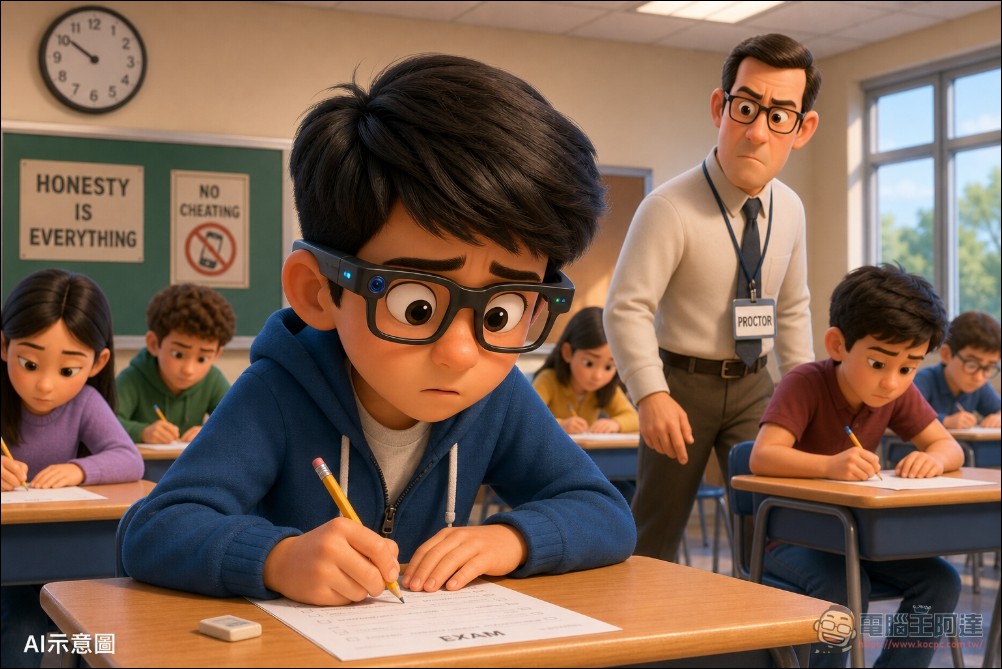
Cheating Runs Wild! Seoul Bans AI Glasses from All Elementary and Middle School Exams
The reason Korean education authorities are so alarmed is that two shocking large-scale AI glasses cheating incidents occurred consecutively this May. According to what the Korea TOEIC Committee announced on June 10,newsIn the TOEIC exams held on May 10 and May 31, proctors discovered candidates who appeared to be wearing AI smart glasses during the test. To avoid disturbing other test-takers, the committee did not interrupt the exams. Instead, after reviewing the evidence and confirming the cheating, they invalidated both candidates’ scores and banned them from taking the TOEIC exam for the next four years.
A TOEIC committee official stated: “Shortly after the exam began, the proctors notified us that a test-taker was suspected of wearing AI smart glasses. To avoid affecting other candidates’ performance, we only conducted verification after the exam ended and confirmed the cheating.” This has also become South Korea’s first detected case of exam cheating using AI glasses.
Why AI Glasses Are Becoming the Ultimate Cheating Tool
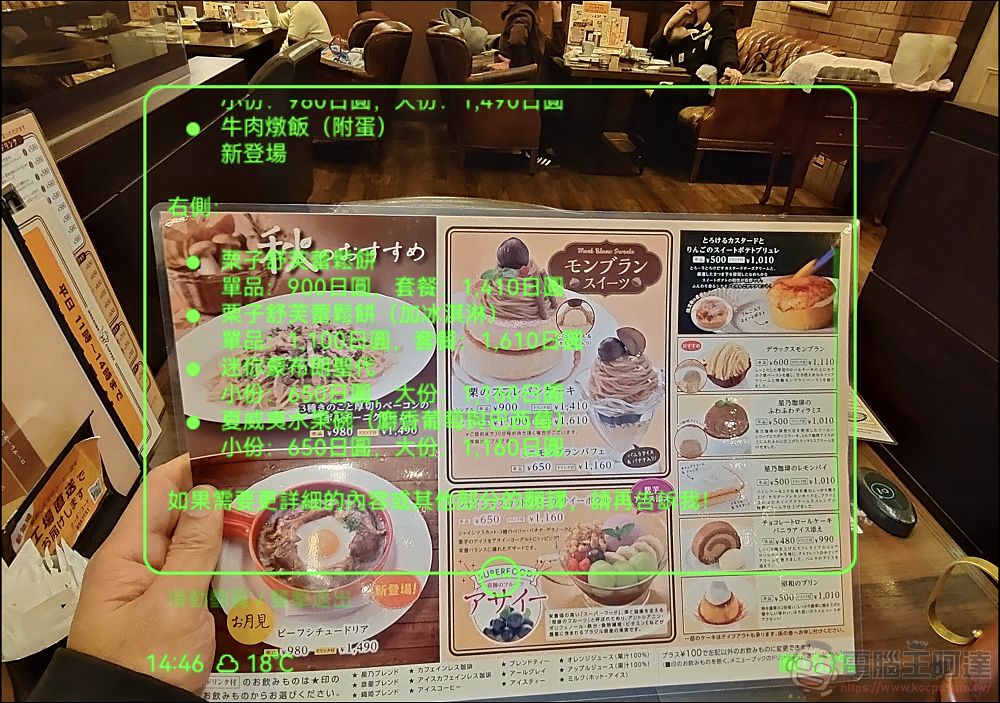
AI smart glasses are wearable computing devices that have rapidly emerged in recent years, integrating cameras, microphones, and computer vision AI technology. Unlike earlier models that only had photo and voice capabilities, the new generation of AI glasses can perform real-time image analysis, multilingual translation, and navigation, with some models also capable of projecting text information directly onto the lenses or delivering it through built-in speakers.
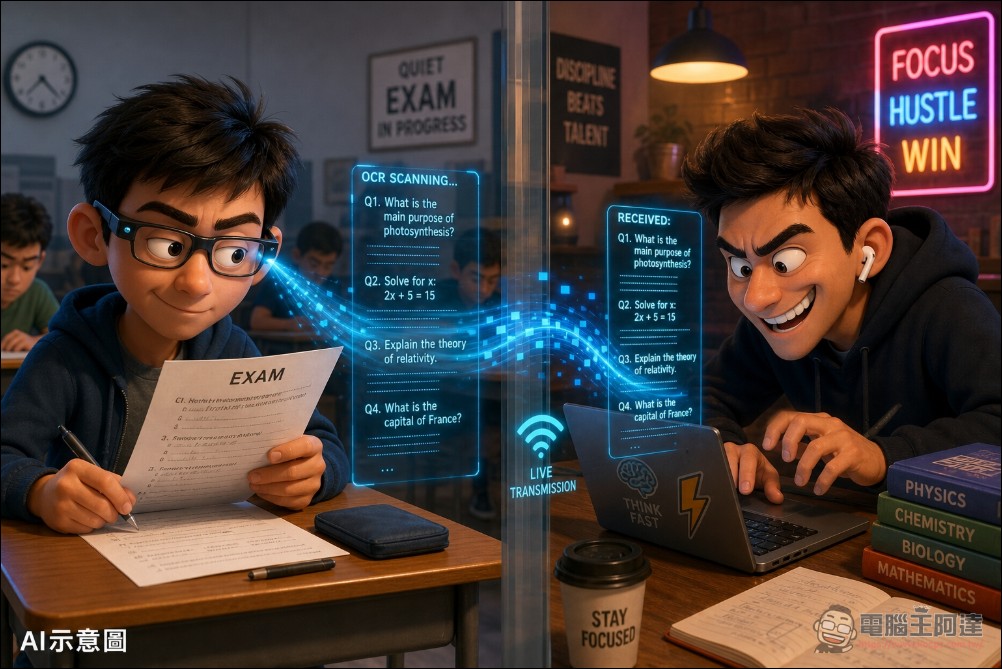
This technology poses a serious cheating risk in exam settings: examinees can use hidden cameras embedded in glasses to photograph exam questions, transmit them to accomplices outside the venue via optical character recognition (OCR) technology, and then receive answers through built-in speakers or displays. In other words, a seemingly ordinary pair of glasses can execute the complete cheating process—photograph, transmit, receive answers—right under the noses of proctors.
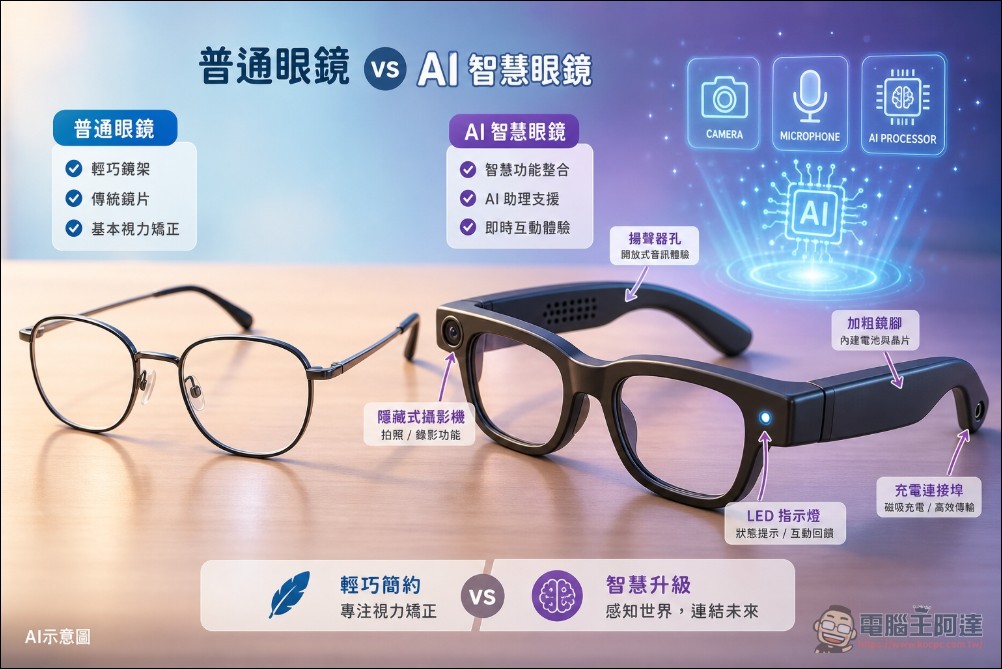
How to distinguish AI glasses from regular glasses?
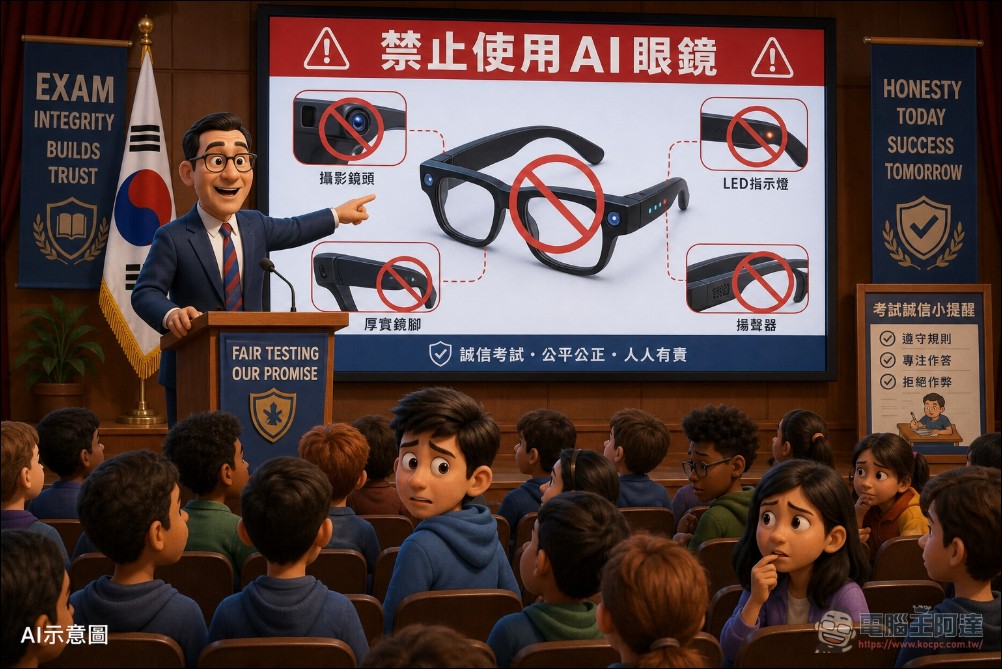
The Seoul Metropolitan Office of Education also attached detailed identification guidelines in the notice to help proctors distinguish AI glasses from regular optical glasses. AI glasses typically have the following characteristics:
- The temples are thicker and more blocky: Because they need to house batteries and the control motherboard inside, the temples (arms) of AI glasses are typically much thicker than those of regular optical glasses, rather than being simple thin metal or plastic frames.
- Lenses contain hidden cameras and sensors around their periphery: miniature cameras and sensing components are often tucked away at the edges or sides of the frame, capturing footage ahead in an inconspicuous manner.
- Speaker vents on the inner temple: Most AI glasses deliver sound through bone conduction or micro speakers, so you can spot small speaker grilles or charging ports on the inside of the temple arms.
- Indicator lights or touch controls: Many models feature LED indicator lights, physical buttons, or touch-sensitive areas on the sides of the temples as the interface for operation.
In addition, the notice also reminds invigilators to pay special attention during exams to candidates who repeatedly touch their eyeglass frames, as this could be an indication that they are operating eyewear functions or adjusting camera angles.
South Korea considering following suit with a ban
The impact of the AI glasses cheating scandal continues to expand. South Korea’s Ministry of Education has stated that it is developing clearer management measures for this year’s College Scholastic Ability Test (CSAT), scheduled for November. Although electronic devices have long been prohibited from exam halls, authorities are concerned that new AI glasses bear too close a resemblance to regular eyewear, potentially creating gray areas in enforcement. As a result, officials are considering explicitly adding AI glasses to the list of prohibited items to avoid disputes arising from uniquely designed devices.
Global Education Sector Raises the Alarm in Unison
South Korea is not the only country struggling with AI glasses cheating. The College Board has explicitly banned test-takers from wearing smart glasses during the SAT starting March 2026. Britain’s exam regulator Ofqual also earlier this yearIssue a warningNote that smart glasses and invisible earbuds could enable cheating.
The TOEIC Committee stated that it has begun providing AI glasses recognition training to exam supervisors, and will continue to update their knowledge of various emerging electronic devices. Officials from the Seoul Metropolitan Office of Education emphasized that the purpose of this notice is “to protect the fairness and integrity of examinations by alerting schools in advance to new types of electronic devices that could be used for cheating.”
Taiwan also has a similar case: First AI glasses cheating at NTU
Taiwan has not been spared from this wave of AI cheating. During this year’s second-stage entrance examination, National Taiwan University uncovered three major violations, including one case where a candidate used AI glasses to cheat—marking the first such incident since NTU was founded.
According to Li Hongsen, Section Chief of the Registration Division at NTU’s Office of Academic Affairs, the candidate was applying to medical or dental programs. During the chemistry exam, the candidate wore a hoodie with the hood up, which caught the attention of the exam supervisors. At that time, no abnormalities were found upon inspection. Unexpectedly, during the biology exam, the supervisors noticed the candidate had maintained a lowered head posture for an extended period and had switched to a pair of black-framed glasses. Upon approaching for inspection and touching the glasses, they found them to be hot, confirming the use of AI glasses for cheating. This subject was ultimately scored as zero.
Additionally, two other candidates who applied to the electrical engineering department exaggerated their domestic Olympiad preliminary round “silver” and “bronze” awards into international competition “silver medals” and “bronze medals” in their written application materials. The professors reviewing the applications noticed something was off, since international silver medalists typically already qualify for guaranteed university admission and would not need to participate in application-based admissions. After verification, both candidates also received a perfect zero on all their application review scores.
Li Hongsen reminded candidates not to try their luck in exams. Anyone caught cheating or providing false information will receive a zero, equivalent to losing admission qualifications and years of effort going to waste. NTU has already reported the situation to the College Entrance Examination Center and the Ministry of Education. The Center is currently developing standard operating procedures for AI glasses violations in future academic aptitude tests and specialized subject tests—this marks Taiwan’s first time addressing AI glasses cheating at the national examination level.
Conclusion
From South Korea’s Seoul banning final exams at elementary and middle schools, to China’s upgraded full security screenings for the gaokao, and Taiwan’s first university case of AI glasses cheating, the challenge that AI smart glasses pose to exam fairness has become a common issue for educational institutions worldwide. As consumer AI glasses like Meta Ray-Ban and Rokid become increasingly powerful and more discreet in appearance, technology itself has no inherent right or wrong—only people sometimes apply it to the wrong purposes. Finding the balance between encouraging technological innovation and maintaining the bottom line of exam integrity will be an important challenge that education policy must continue to face.
Source: KOCPC Chinese