


Just this past Friday (June 13th), the U.S. government, based on export control regulations, issued an unprecedented directive to Anthropic: demanding that the company immediatelyCompletely blocking its two most advanced AI models, Claude Fable 5 and Mythos 5, from use by all non-US citizens worldwide.Without obtaining any concrete national security evidence details, Anthropic was forced to completely take down these two flagship models, which had been launched less than a week ago, shutting them off from all users. And just before this incident occurred, Anthropic had just updated its consumer privacy policy on June 8th, adding a clause that appears to have been prepared in advance for this incident:Identity verification data,Require users to upload age or identity verification documentsPutting these two things together, the whole picture becomes clear: Anthropic seems to have known this situation could arise early on, and is preparing to build identity verification for a “US-only” AI model.
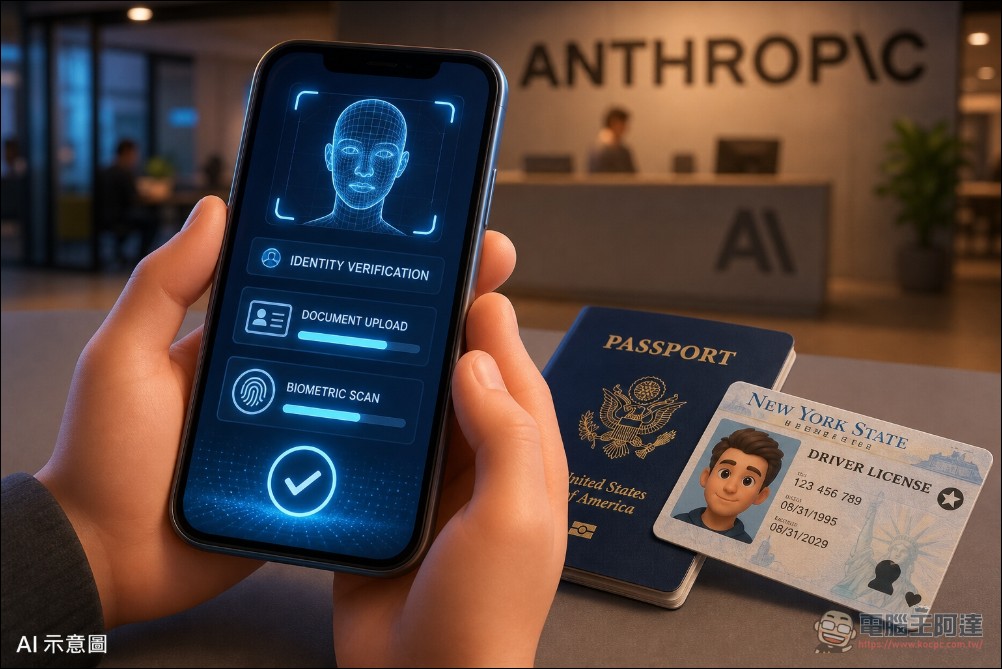
For the first time in history, the US government directly blocks an AI model
This export control directive was issued by the US Department of Commerce on 6/13, requiring Anthropic to immediately revoke access to Fable 5 and Mythos 5 for all foreign nationals: including non-US citizens, non-US permanent residents (green card holders), and non-citizens physically present in the United States. Anthropic stated in its announcement that this was based on “national security considerations,” but the government did not provide specific details about the security threat.
Anthropic 最強模型 Fable 5 / Mythos 5 遭美國禁止外國公民存取,連大神 Andrej Karpathy 也無法使用
Anthropic’s understanding is that the government believes there exists a method to bypass Fable 5’s safety guardrails that could be used to identify software vulnerabilities. However, Anthropic emphasizes that the government only provided “verbal evidence describing a potential, narrow, non-generalizable jailbreak method,” Anthropic stated in the filing:We disagree that a narrow potential jailbreak method should be a legitimate reason to recall a commercial model deployed to hundreds of millions of users.
In the past, US AI export controls focused primarily on chips—such as export bans on NVIDIA H100/B200—and computing tools. This marks Washington’s first direct targeting of AI models themselves, restricting foreigners’ access. It also represents a significant escalation in the US government’s AI national security policy, moving from “controlling hardware” to “controlling model weights” themselves.
Fable 5 and Mythos 5: Anthropic’s Myth-Level Models
Claude Fable 5 is Anthropic’s latest flagship model just launched in early June, belonging to the company’s newly defined “Mythos-level” computing capability tier. Anthropic set up guardrails in high-risk areas like information security upon launch, with some users even complaining these restrictions were “overly broad.” However, experts warn that Mythos-level models in the wrong hands could significantly accelerate sophisticated cyberattacks, particularly in critical infrastructure sectors like banking that rely on legacy systems.
全球最強 AI 模型 Claude Fable 5 與 Mythos 5 正式登場!能力全面碾壓 GPT-5.5、Gemini 3.1 Pro
Ironically, just earlier that same week, Anthropic had publicly called on the US government to strengthen AI regulation, including establishing a blocking mechanism for “models with unacceptable risk.” Little did they know, their own product would be the first one named.
The True Significance of Privacy Policies: Laying the Groundwork for US Citizen Verification
Returning to Anthropic’s privacy policy update released in early June (which will take effect on July 8, 2026), the most noteworthy addition among the seemingly routine revisions is the newly addedVerification DataTerms
To help ensure the safety and reliability of our services, we may ask you to confirm your age or identity. We explain what information is involved in this type of verification and how we process this data.
The timing of this clause’s appearance doesn’t seem like a coincidence. Right when Fable 5 and Mythos 5 were ordered to be blocked, Anthropic faced a practical problem: if it wanted to bring these two models back to the market but could only offer them to US citizens, it would need a set ofReliable identity verification systemTo verify each user’s citizenship. This cannot be solved by simple account registration information: users need to upload their passport, driver’s license, or other government-issued identification documents.
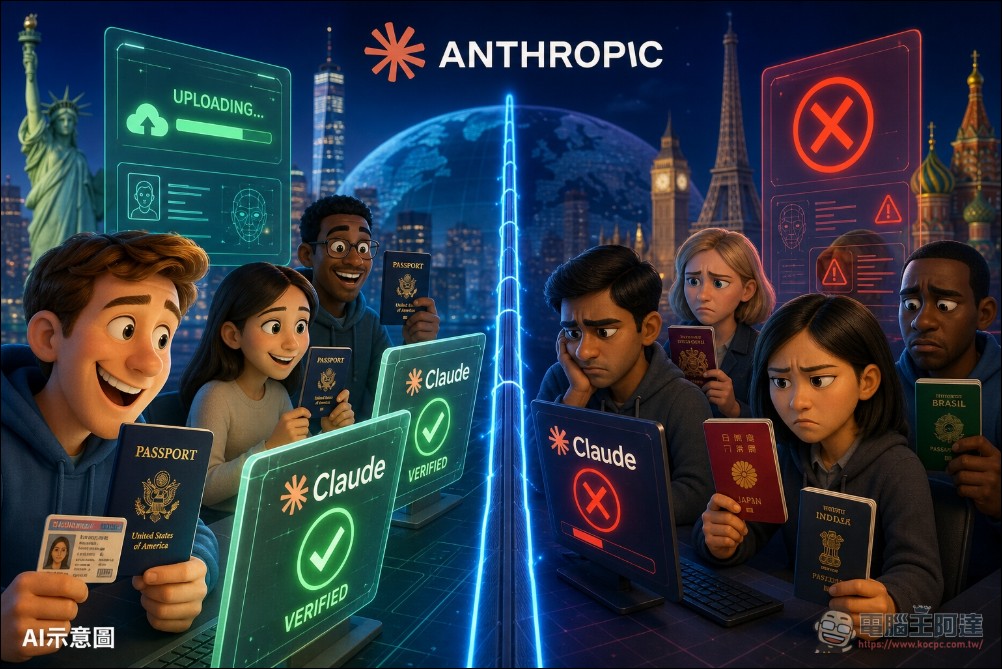
on Reddit Claude Community ForumUsers have already pinpointed this trend:Whoever can truly build identity-aware access control wins. And Anthropic is better prepared for this than almost any company.
My take: the Fable 5 suspension is a deemed export problem, and that points to how Anthropic gets it back
byu/Sweet-Helicopter2769 inclaude
Tensions between the US government and Anthropic
This incident is not an isolated case. Since the beginning of this year, relations between Anthropic and Washington have remained tense. Earlier this year, Anthropic refused to allow the US military to use its AI models for domestic surveillance and fully autonomous weapons systems, drawing criticism from the Pentagon. In response, the Trump administration placed Anthropic on a supply chain blacklist, expected to take effect by the end of the year.
On February 27, Trump went further and signed an executive order requiring all federal agencies to “immediately cease use of Anthropic’s technology.” Ironically, however, the Department of Defense’s Chief Information Officer Kirsten Davies posted on X: “Some things are more important than revenue cycles, click rates, and pre-IPO valuations. America First. Always.”
Anthropic secretly filed for a US IPO last month, leapfrogging rival OpenAI in the race to go public. How this government-business tug-of-war over export controls will affect its IPO valuation remains to be seen.
Other Privacy Policy Updates
In addition to the identity verification terms, this privacy policy update that takes effect on July 8 also includes several other important changes:
- Multi-step tasks and third-party application integrationWhen Claude performs multi-step agent tasks across third-party services on behalf of users, it clearly defines data flow and sharing boundaries
- Research ParticipationAdd data collection information regarding voluntary participation in Anthropic research programs (surveys, user interviews, etc.)
- Promote communication transparencyExpanded the explanation of personalized service recommendations and user communication methods
Anthropic also reiterated that its core commitments remain unchanged: it will not sell user data, Claude will not introduce ads, and users can freely choose whether to allow their conversation content to be used for AI model training.
Summary
On the surface, this appears to be just a routine privacy policy update. But placed in the historical context of the U.S. government first using export controls to directly block an AI model, the “identity verification data” clause Anthropic added takes on entirely new significance: this is not a passive compliance update, but a proactive preparation for the arrival of an “AI models for U.S. citizens only” era. When Fable 5 and Mythos 5 are someday back online, you may need to upload your U.S. passport before you can use them. But personally, I find this restriction absurd—why would the U.S. government assume its own citizens wouldn’t use AI models to do bad things? That said, it’s also possible this is an Anthropic self-staged IPO promotional stunt, given that similar marketing tactics have been used before.Steve Jobsand PS2 Everyone’s tried it (forgive my conspiracy theory, I hope I’m just overthinking).
Source: KOCPC Chinese