


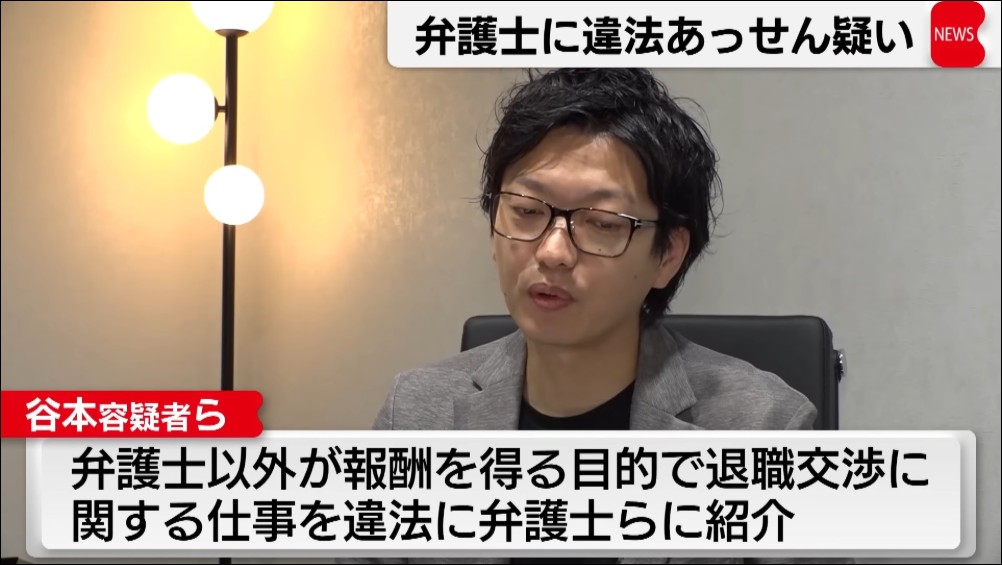
When it comes to the Japanese workplace, outsiders often think of “lifetime employment” and “worker spirit.” However, behind these beautiful labels, a special industry that is rare in the world has been born: the “retirement agency” (agency for resignation) industry. This service allows workers to complete the resignation procedures through a third party without having direct contact with the company. But it sparked controversy today. On the morning of the 3rd, the Harajuku Division of the Japan Metropolitan Police officially arrested Shinji Tanimoto (37 years old), the president of Albatross (Albatross), the operating company of the well-known domestic retirement agency service “Momuri”, and his wife Shiori (31 years old). The case involves a violation of Japan’s Lawyers Law (Benden Nurse Law), accusing him of illegally engaging in legal affairs referrals and profiting from them. As an iconic leader in the industry, the arrest of the head of Momuri not only symbolizes the legal community’s comprehensive liquidation of the industry’s “gray area,” but also triggered a fierce debate in Japanese society about labor rights and workplace order.

Illegal Media Legal Matters: Retired Retirement Agent Mari is stuck in “remuneration” and “introduction”
According to the investigation by the Metropolitan Police Department, Shinji Tanimoto and his wife were accused of illegally introducing legal matters involving labor disputes and resignation negotiations to specific lawyers for the purpose of profit without being qualified as lawyers. Article 72 of Japan’s Lawyers Law clearly stipulates that non-lawyers are not allowed to engage in agency, arbitration or settlement of legal matters, nor are they allowed to receive remuneration for doing so; while Article 77 prohibits non-lawyers from engaging in mediation (illegal media) in legal matters.
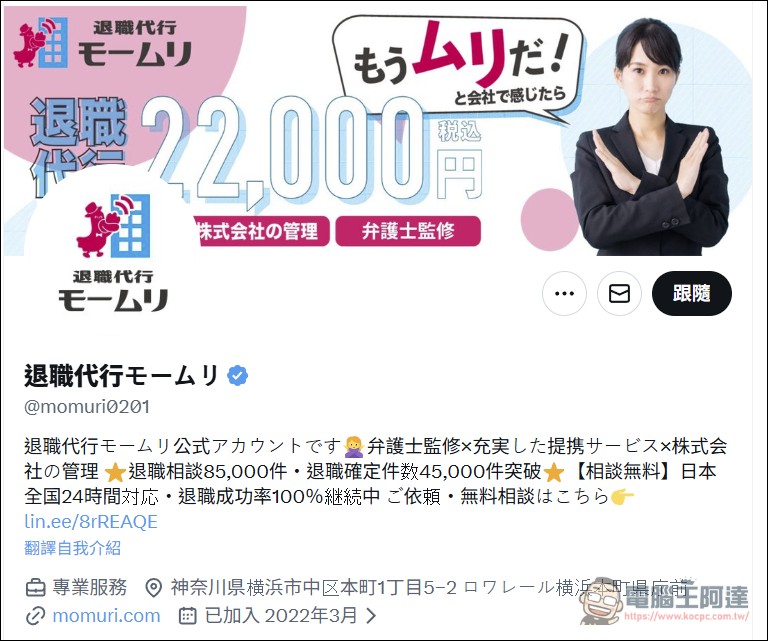
Momuri was known for its “price transparency”, “24-hour response” and high transparency on social media in the past. It claimed to be a savior to help workers get rid of “shady enterprises”. However, the investigation unit found that when the company handled certain complex cases involving wage recovery, paid leave commutation, etc. that required “negotiation” with the company, although it claimed that it would introduce them to cooperating lawyers, it actually received high “commissions” or “handling fee” kickbacks from the introduction. This kind of behavior is considered a typical illegal behavior of “non-lawyer activities” (non-ben activities) and seriously touches the red line of Japanese law.
The rise of the agency industry: shady companies and Japanese workers who “dare not mention leaving their jobs”
The rise of the “retirement agency” industry in Japan is inseparable from Japan’s harsh workplace culture (such as death by overwork, bullying, and difficulties in leaving the company). When many workers submit their resignations, they often face difficulties such as threats from their supervisors, refusal to accept resignation letters, and even forced compensation. Therefore, spending about 10,000 to 30,000 yen (approximately NT$2,000 to NT$6,000) to make a phone call or send a letter to an agency is a “life-saving straw” for many young workers whose psychological pressure has reached the limit.
Momuri, a leader in the industry, once claimed to process thousands of resignation applications every month and has worked on TikTok and X(formerly Twitter) to promote its achievements. President Shinji Tanimoto often appears in the public eye as a hero “protecting labor rights,” which makes today’s arrest seem out of place and extremely ironic.
Controversy over legal boundaries: Who has the right to speak on behalf of labor?
Japanese law has very strict definitions of resignation procedures. In theory, a general retirement agency (non-lawyer type) can only play the role of a “mouthpiece” and can only convey the intention to resign and cannot participate in any negotiations or legal advice. Once salary disputes or contract termination negotiations are involved, a lawyer or a specific labor union (union) must intervene.
The Momuri case exposed the long-standing “false separation” phenomenon in the industry: On the surface, the company handles general procedures for a fee, but privately it forms a chain of interests with specific lawyers and “resells” cases that require legal negotiation for profit. This approach not only damages the purity of the legal profession, but may also put workers at greater legal risk without adequate legal protection.
Fierce discussion between labor and management: Necessary evil and breakdown of order
The arrest sparked polarizing discussions online:
- Labor perspective(Supporting agents): Many netizens posted on For these workers, Momuri provides a “psychological haven.” If this service disappears, it may increase the tragedy of committing suicide because they are unable to leave their jobs.
- Employers’ perspective (supporting legal crackdown): Many business owners and HR directors welcomed the arrests. They complained that the emergence of agency companies destroyed the “communication contract” in the workplace, causing employees to suddenly disappear and handovers to be unclear, placing a huge burden on the remaining employees. They believe that agency services to combat illegal activities can help return to normal communication channels.
- Legal perspective: Most lawyers agree with this and believe that the dignity of the law cannot be violated. Illegal media legal affairs not only disrupt the legal order, but also easily lead to consumer disputes (such as the agency company failing to successfully leave the company after collecting the money, or the quality of the lawyers being insufficient).
Future Outlook: Reshuffling of the Agency Industry and Transparency of Regulations
The arrest of the person in charge of Momuri will undoubtedly trigger a major reshuffle in the retirement agency industry. It is expected that the Japanese government will formulate clearer operating regulations for such emerging services in the future. There are still hundreds of similar agency companies operating, many of which are in a regulatory vacuum.
For workers, this case reminds them that when using related services, they must confirm the legal boundaries of the other party. If complex contract disputes are involved, seeking real legal support or trade union assistance is still a safer choice than seeking “gray agency”. For Japanese society, the fundamental solution is to improve the workplace environment so that workers no longer need to rely on external organizations to exercise their “right to resign.”
Editor’s note: You have to find an agent even when you leave your job. Japanese society is so tough. In Taiwan, most people can just follow normal procedures.
Source: KOCPC Chinese