


China’s low-altitude economic market has another major breakthrough. Shanghai AutoFlight Company completed the public flight demonstration of the world’s first five-ton electric vertical take-off and landing aircraft (eVTOL) “Matrix” in Kunshan, Jiangsu Province. The flight time was about 20 minutes, marking a new milestone for manned aircraft. Known as the “world’s largest flying car”, this huge aircraft not only breaks industry records in terms of size and load, but also demonstrates China’s ambitions in the new energy aviation field.
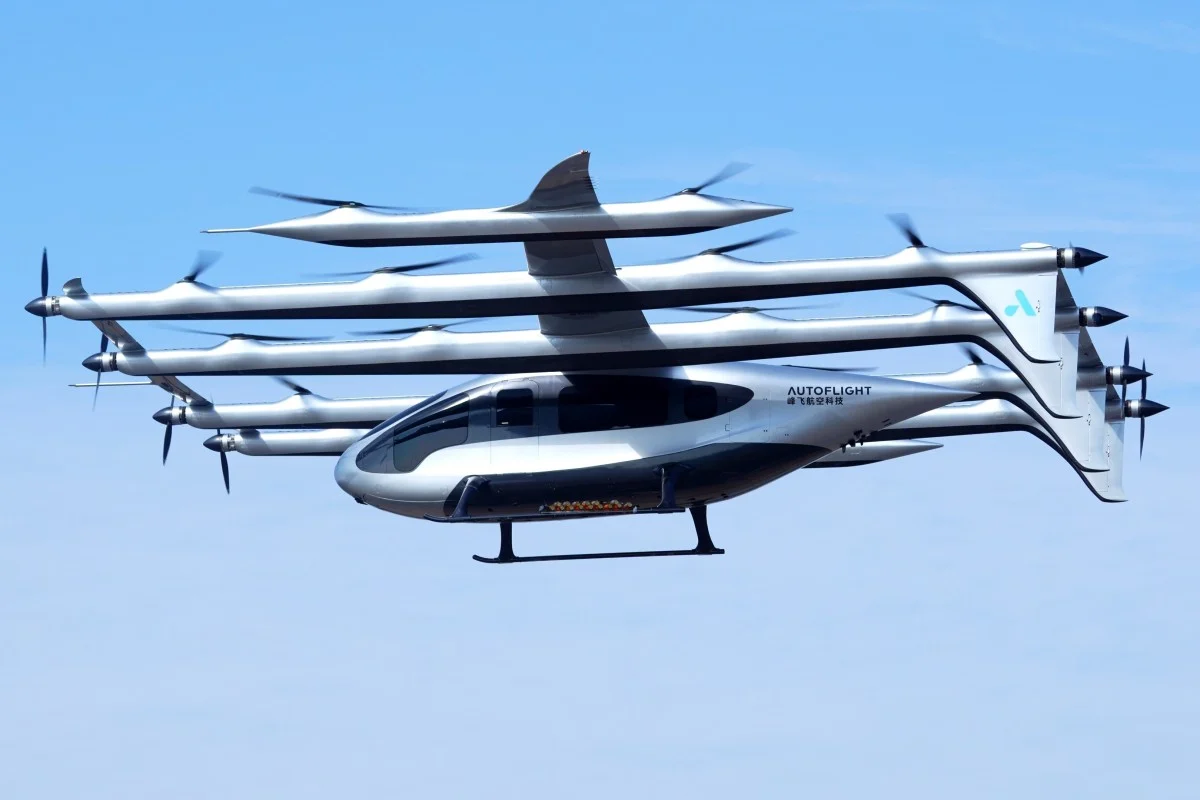
The world’s largest flying car “Matrix” debuts in China, seizing low-altitude economic business opportunities
AutoFlight was founded in 2017 and is headquartered in Shanghai. The “Auto” in the company name is taken from the combination of autonomous driving (Autonomous) and aviation (Aviation), highlighting its core vision of developing autonomous aircraft. The founder of the company has worked for a well-known Chinese aviation company and has a profound background in aviation engineering. Moreover, AutoFlight has received strategic investment from CATL, the world’s leading power battery company. The two parties have conducted in-depth cooperation in battery technology and power systems, providing solid technical support and financial guarantee for the research and development of Matrix.
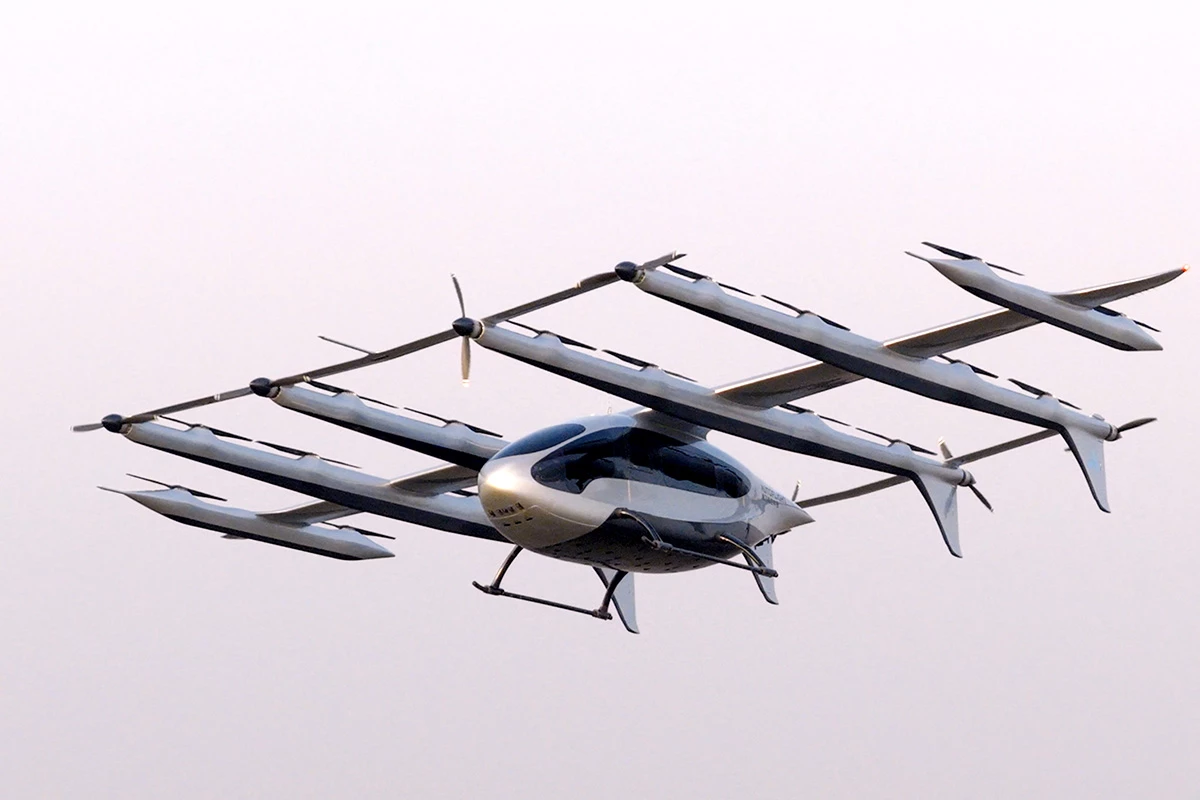
After years of technology accumulation and repeated testing, AutoFlight will finally bring Matrix to the public stage in 2025. The launch of this aircraft is not only an important milestone in the company’s development, but also a concrete manifestation of China’s low-altitude economic industrial cluster effect. According to the order structure announced by the company, passenger demand accounts for 70% of the overall orders, indicating strong market demand for manned aircraft.
The huge body makes a shocking debut, and the specifications are stunning
The Matrix’s body size is second to none among aircraft of its type. The fuselage has a wingspan of 20 meters (about 65 feet), a total length of 17.1 meters, a height of 3.3 meters, and a maximum take-off weight of about 5,700 kilograms (about 12,566 pounds). This type of size is extremely rare among traditional helicopters, and even large helicopters cannot match it. Judging from the appearance design, Matrix adopts a triplane configuration and is equipped with twenty lift motors and eight propulsion motors to form a complete power system.
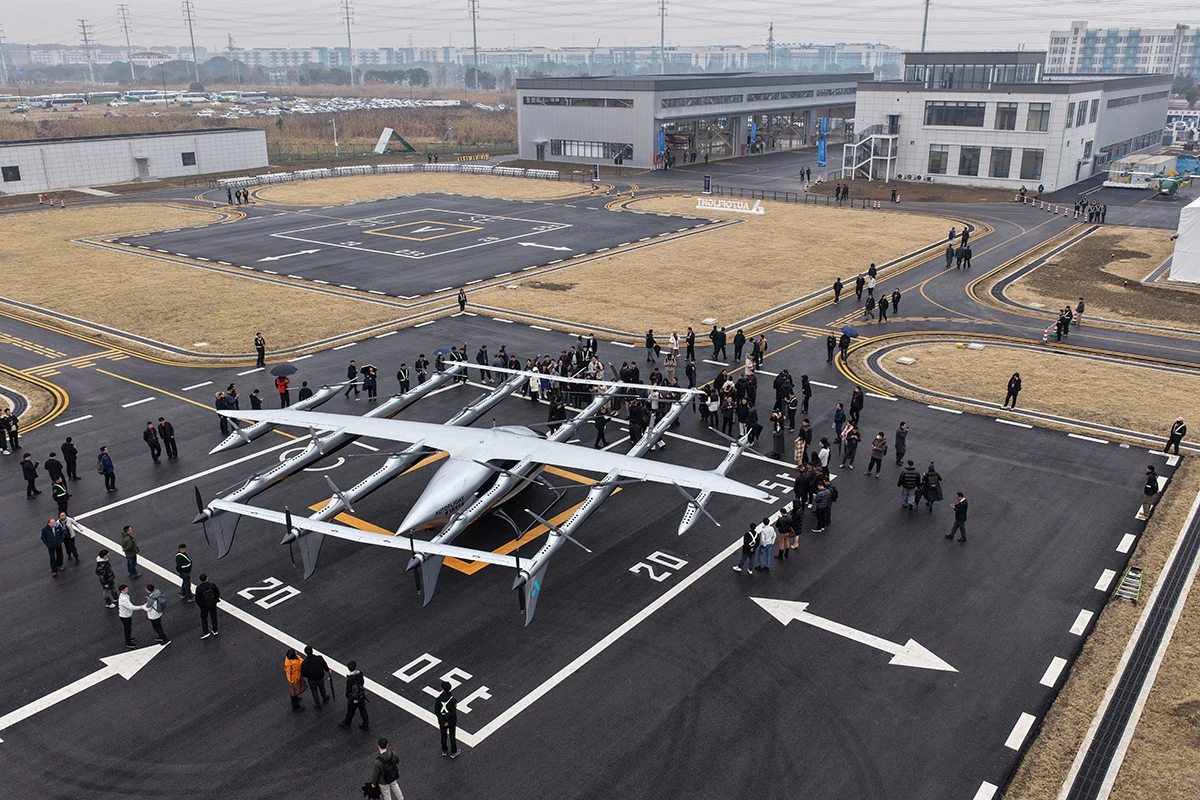
This unique power configuration gives Matrix excellent flight capabilities and stability. The lift motor is responsible for generating lift during vertical takeoff and landing, while the propulsion motor provides propulsion during the horizontal phase of flight. Through the precise coordination of its flight control system, Matrix is able to achieve smooth transitions between different stages of flight.
Diverse passenger configurations, taking into account both business and leisure needs
The Matrix offers a high degree of flexibility in passenger configuration. The standard business class configuration can carry ten passengers, and the seating arrangement emphasizes comfort and efficiency; the VIP configuration is reduced to six passengers, focusing on providing a more spacious private space. The interior of the cabin is equipped with complete living facilities, including restrooms, air-conditioning systems, mood lighting and large windows, allowing passengers to enjoy a comfortable ride during the flight. The lighting design can be adjusted according to different situations to create a warm or professional atmosphere, while large windows allow passengers to overlook the ground scenery and experience unprecedented views from the sky.
In addition to the passenger version, AutoFlight is also developing a freight version. The cargo version of Matrix has a load capacity of up to 1,500 kilograms and can accommodate two AKE/LD-3 standard aviation containers. This standardized design allows it to be seamlessly integrated into the existing aviation logistics system and greatly improve operational efficiency. For logistics operators, this means being able to directly use existing container handling processes and equipment, reducing the threshold and cost of introducing new technologies.
Power system innovation, pure electric and hybrid power go hand in hand
In terms of endurance performance, Matrix offers two power configuration options. The pure electric version has a maximum range of 250 kilometers, which is suitable for short- and medium-range intercity transportation tasks; while the hybrid version can extend the range to 1,500 kilometers, greatly expanding the application scenarios of the aircraft, extending from urban air transportation to regional air transportation.
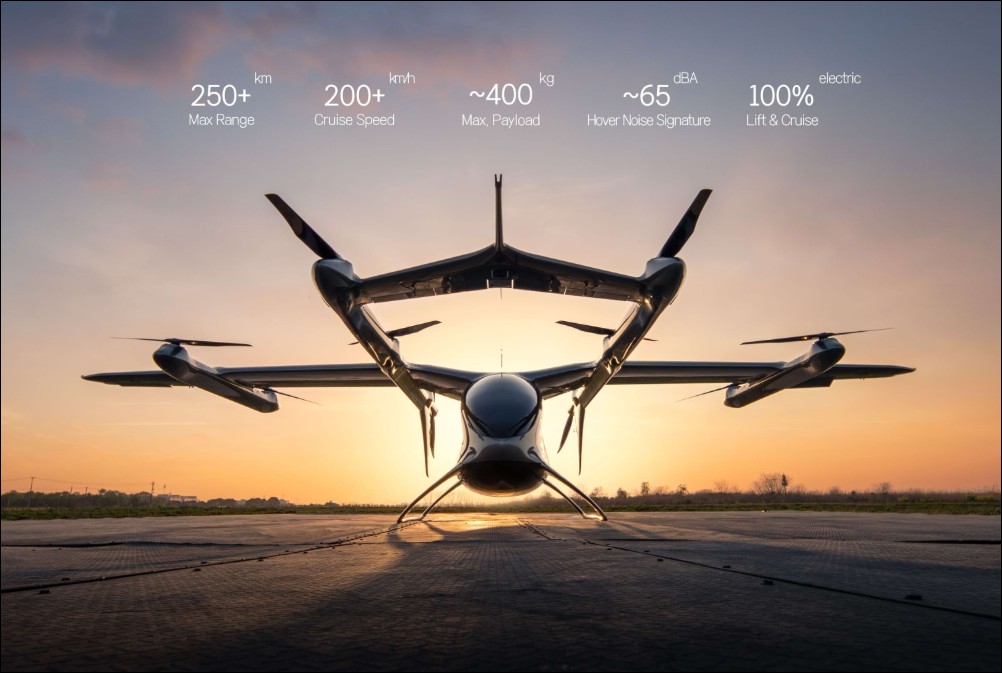
In terms of regulatory certification, AutoFlight’s cargo version of the eVTOL “CarryAll” has obtained three important certificates issued by the Civil Aviation Administration of China (CAAC), namely Type Certificate, Production Certificate and Airworthiness Certificate. The passenger version of the Matrix is still in the certification process and is expected to require more time to complete the tedious testing and review process. Passenger flights involve the safety of passengers, and civil aviation authorities in various countries have always had strict review standards for manned aircraft. Matrix must prove its safety and reliability under various extreme conditions before it can be approved to provide commercial passenger services.
The government actively promotes the acceleration of low-altitude economic standardization
The Chinese government’s emphasis on the low-altitude economy continues to increase. According to the latest news, ten government departments in China have jointly issued guidelines for standardization work in the field of low-altitude economy, clearly proposing two-stage goals: to basically establish a low-altitude economic standard system by 2027, and to have more than 300 standard projects by 2030. This policy plan provides a clear direction and timetable for the development of the eVTOL industry, helps unify technical standards, standardize market order, and promote the formation of industrial clusters.
The low-altitude economy is listed as one of the strategic emerging industries by the Chinese government, covering multiple application scenarios such as urban air transportation, logistics and distribution, tourism, and emergency rescue. As policy support increases and infrastructure gradually improves, the industry predicts that China’s eVTOL market will experience explosive growth in the next decade.
Market competition situation: many companies are vying for layout
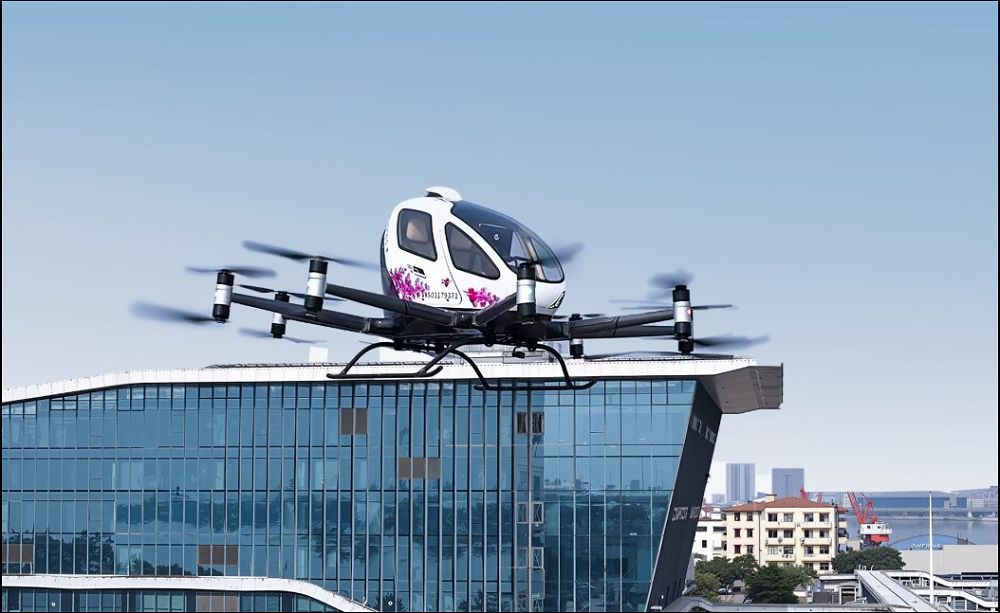
AutoFlight is not the only player in the Chinese eVTOL market. EHang is an early entrant into this field, and its autonomous aircraft has conducted multiple public demonstrations and obtained regulatory approval in some countries; Aridge is backed by China’s new energy vehicle giant Xpeng Motors, extending its automotive manufacturing experience to the aircraft field; Geely Aerofugia relies on Geely’s resources and industrial chain advantages to actively develop a new generation of aircraft.
In the long term, the development of the eVTOL industry depends on the joint action of multiple factors such as technology maturity, regulatory framework, business model and social acceptance. This emerging industry still faces many challenges. The first is safety issues: any aircraft involved in transporting people must prove that it is safe, and any accident may severely damage public confidence and industrial development; secondly, operating costs, including aircraft cost, maintenance insurance, pilot training and other expenses, will directly affect service pricing and market acceptance; thirdly, infrastructure construction, the location and construction of takeoff and landing stations, the deployment of charging networks, and the upgrading of airspace management systems are all supporting projects that must be promoted simultaneously.
Source: KOCPC Chinese