


quilt Intel The latest generation with high hopes Panther Lake The processor has finally begun to have commercially available products recently. Recently, a well-known foreign hardware YouTuber used Intel Core Ultra X7 358H The processor-based ASUS ExpertBook P5 Ultra and Apple’s latest M5 chip MacBook Pro conducted a complete performance and battery mode test covering 17 items. The results were surprising. The battery life of the Windows laptop actually caught up with the MacBook.
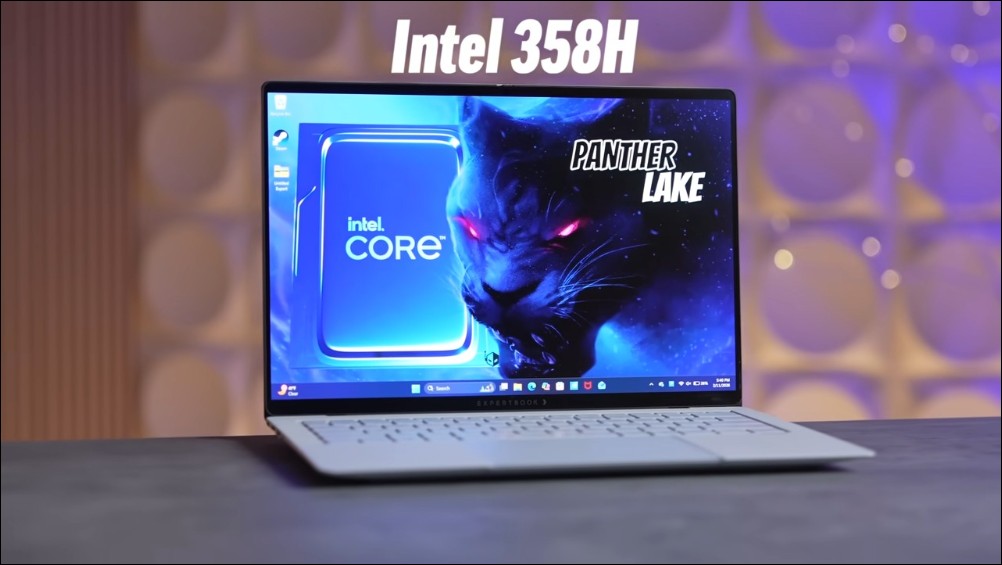
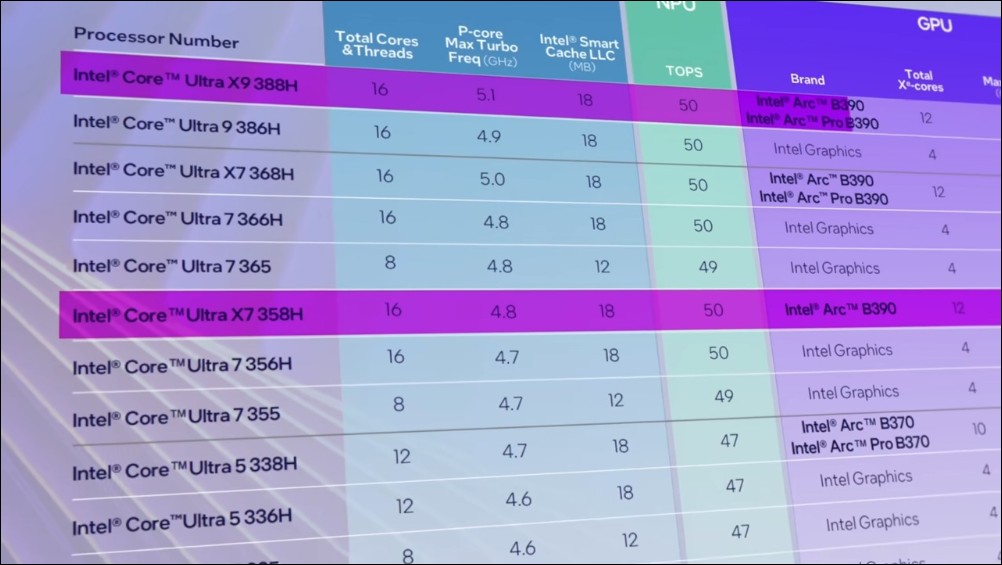
Test conditions and hardware specifications (Intel Core Ultra X7 358H vs Apple M5)
The test conditions for this test are quite strict: both laptops are set to the highest performance mode, powered by batteries (unplugged) throughout the entire process, and the screen brightness is adjusted to a maximum of 600 nits. In terms of hardware, ASUS ExpertBook P5 Ultra is equipped with Intel Core Ultra X7 358H processor, 32GB RAM and 1TB SSD; MacBook Pro is equipped with Apple M5 chip, 16GB RAM and 512GB SSD. The main difference between the Intel Core Ultra X7 358H and the current highest-end Intel Core Ultra 358H), the machine was purchased by him at his own expense. The operating systems of the two machines and some of the test project software are also different, so the following tests can only be used as a reference for the hardware performance indicators.
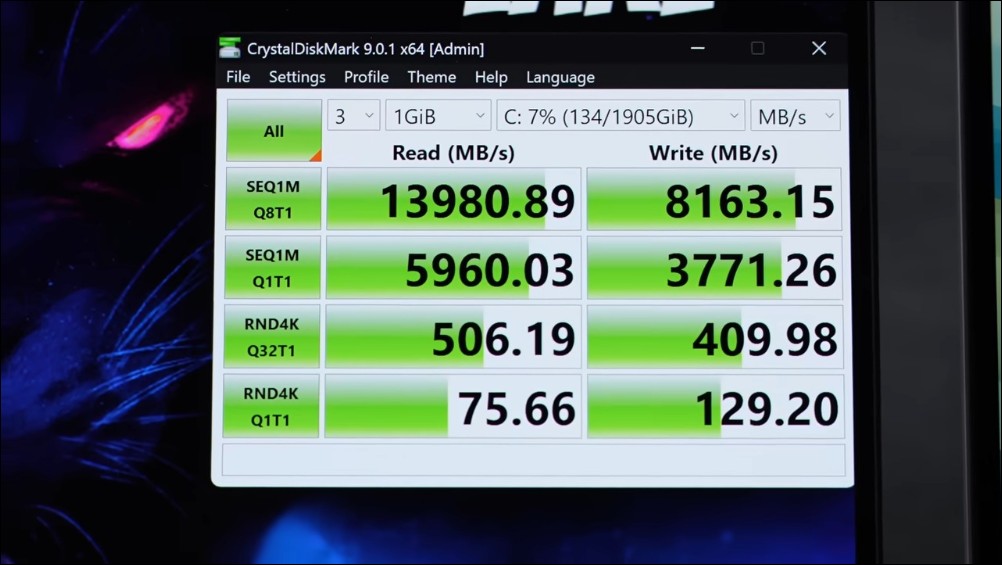
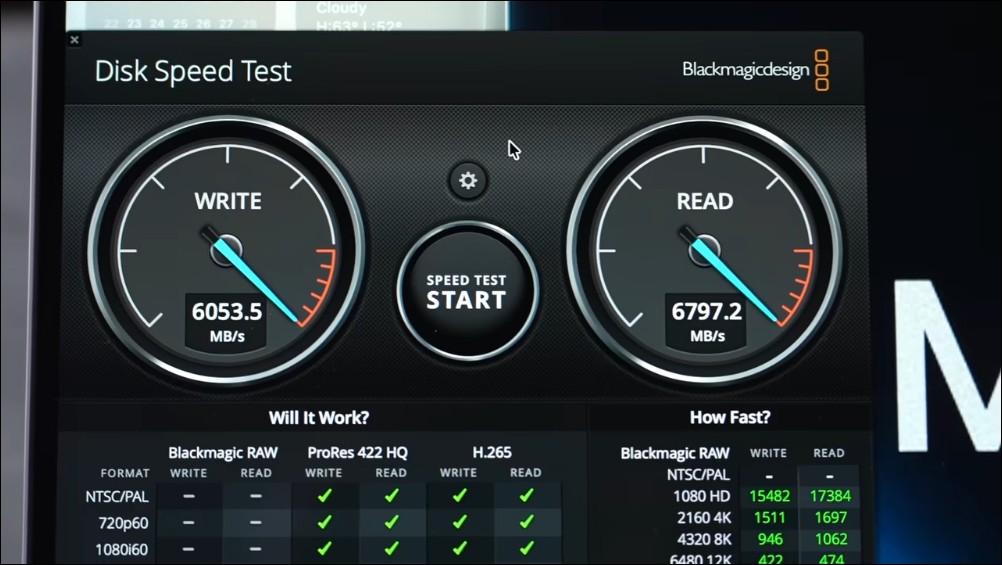
SSD speed: ASUS ExpertBook P5 Ultra beats it with twice the gap
In the Blackmagic Disk Speed Test, ASUS ExpertBook P5 Ultra demonstrated amazing storage performance. The read speed reaches 13,980 MB/s, which is more than twice the M5’s 6,797 MB/s; the write speed is about 8,000 MB/s, which is also about 35% faster. This is one of the most overwhelmingly advantageous items in this test.
CPU performance: M5 has obvious single-core advantage
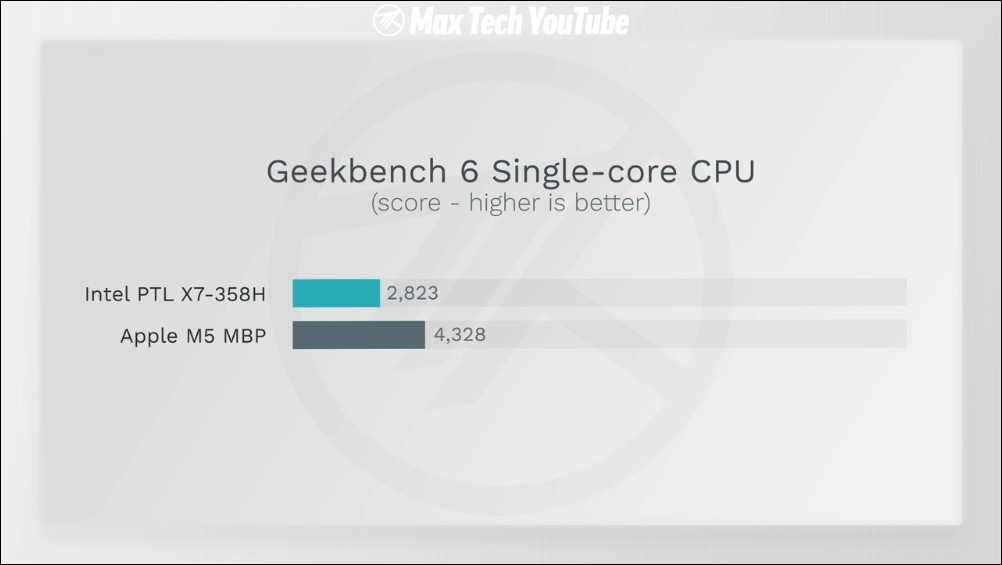
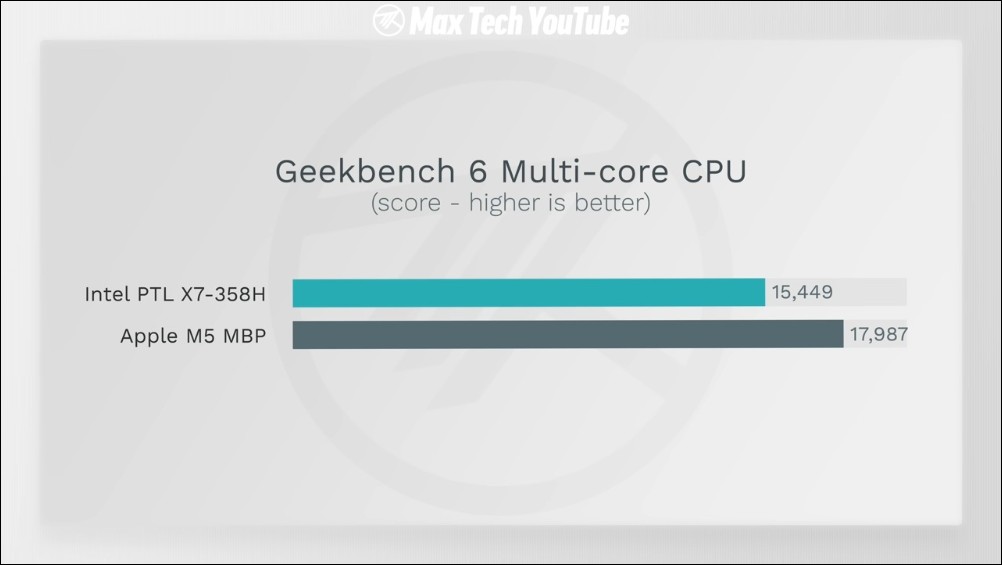
Geekbench 6 CPU test results show that the M5 is significantly ahead of Panther Lake’s 2,823 points in single-core performance with 4,328 points, a gap of 53%. In terms of multi-core, M5 leads PTL with 17,987 points at 15,449 points, a gap of about 16%. It is worth noting that PTL can reach about 16,500 points in multi-core when plugged in, showing that battery mode does limit performance.
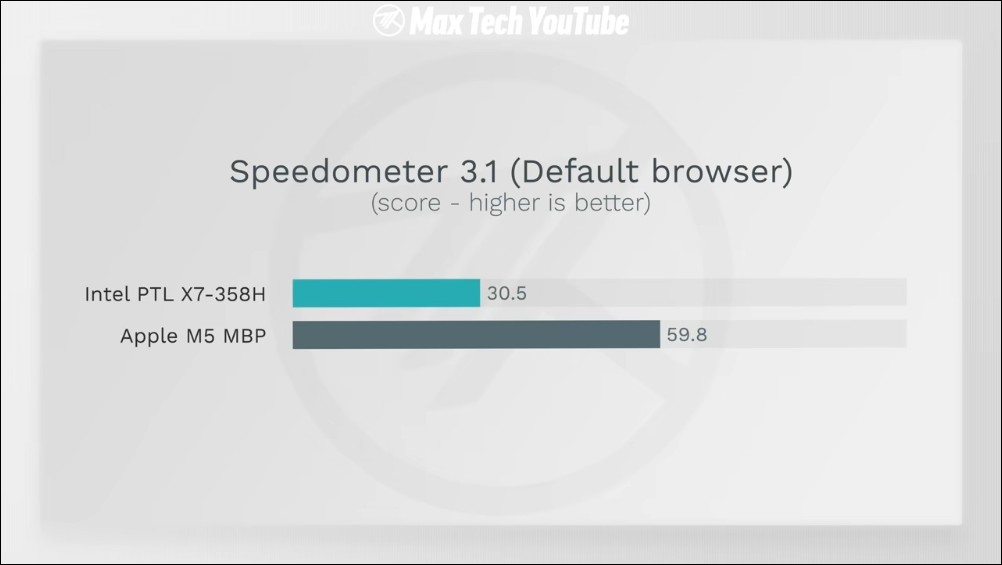
In the Speedometer 3.1 browser performance test, the performance of M5 is almost twice that of Panther Lake, reflecting the absolute advantage of Apple chips in web applications.
Actual workload: Figma exports are evenly matched
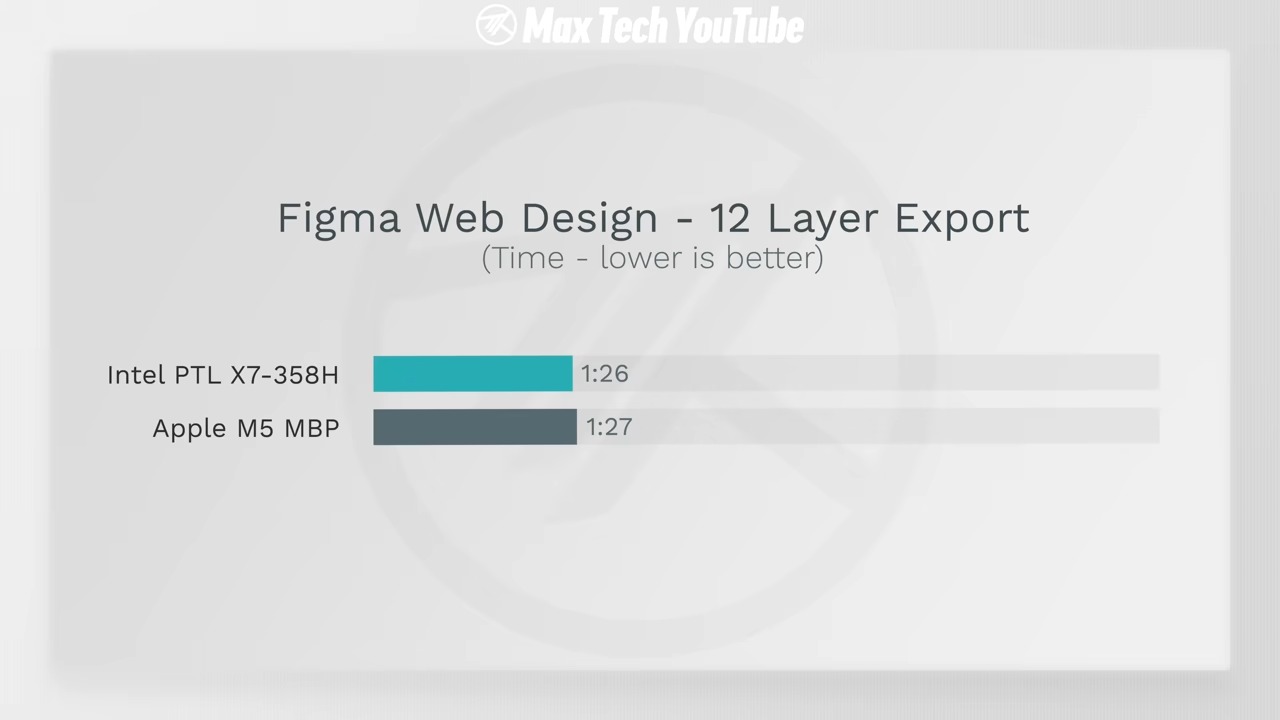
In the Figma web design export test (07:05–07:33), which is closer to the real work scenario, the time required for the two machines to export 12 layers was almost the same: PTL took 1 minute and 26 seconds, M5 took 1 minute and 27 seconds, and Panther Lake narrowly won by 1 second. This result shows that in practical applications, the difference between the two is much smaller than the running score.
GPU computing and game graphics performance
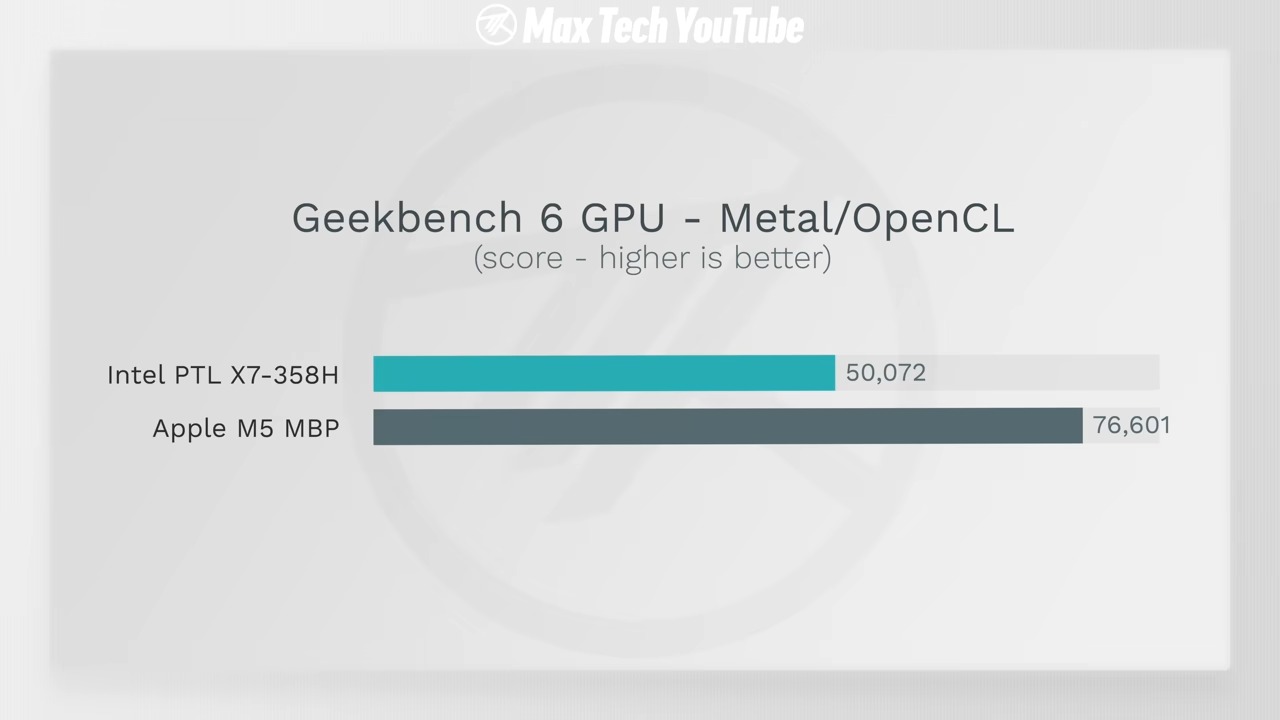
In the Geekbench 6 GPU OpenCL test, the Intel Arc B390 scored 50,072 points, while the M5 GPU led by 53% with 76,601 points.
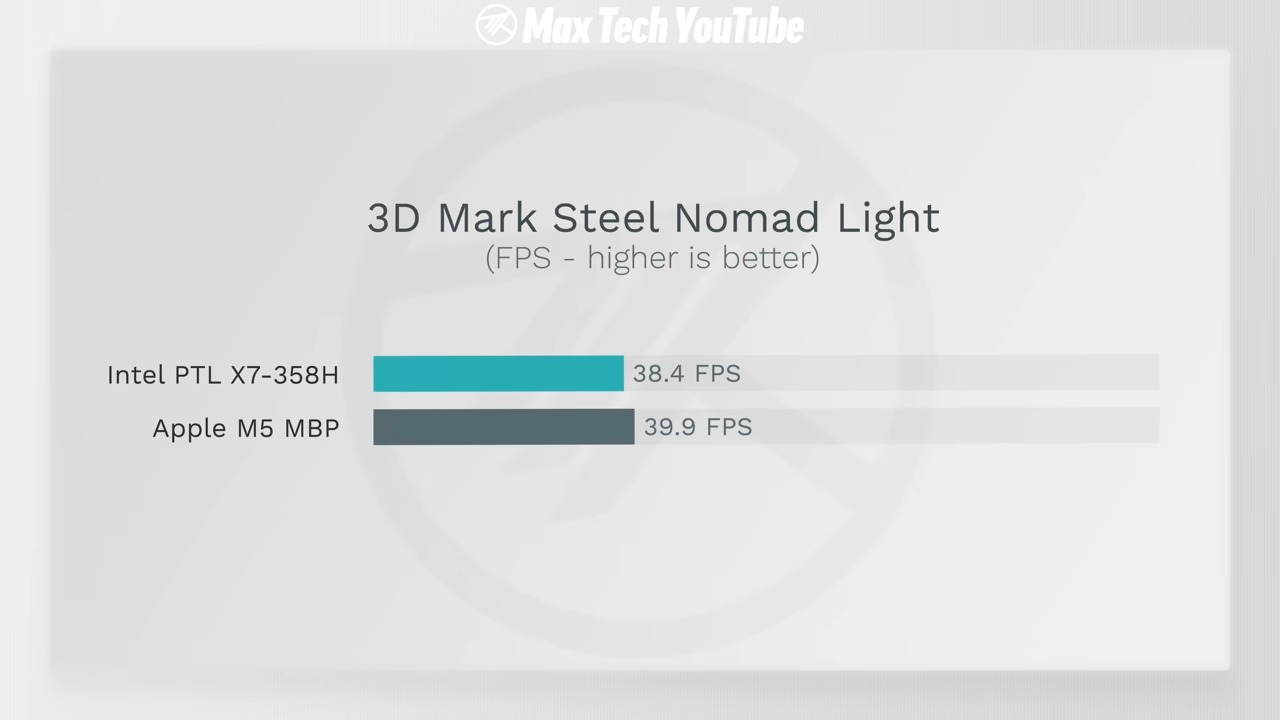
However, in the 3DMark Steel Nomad Light test, which is closer to the actual performance of the game, the results are very close: the PTL achieved 38.4 FPS, and the M5 achieved 39.9 FPS, with a negligible difference. This is quite impressive performance for the Intel Arc B390.
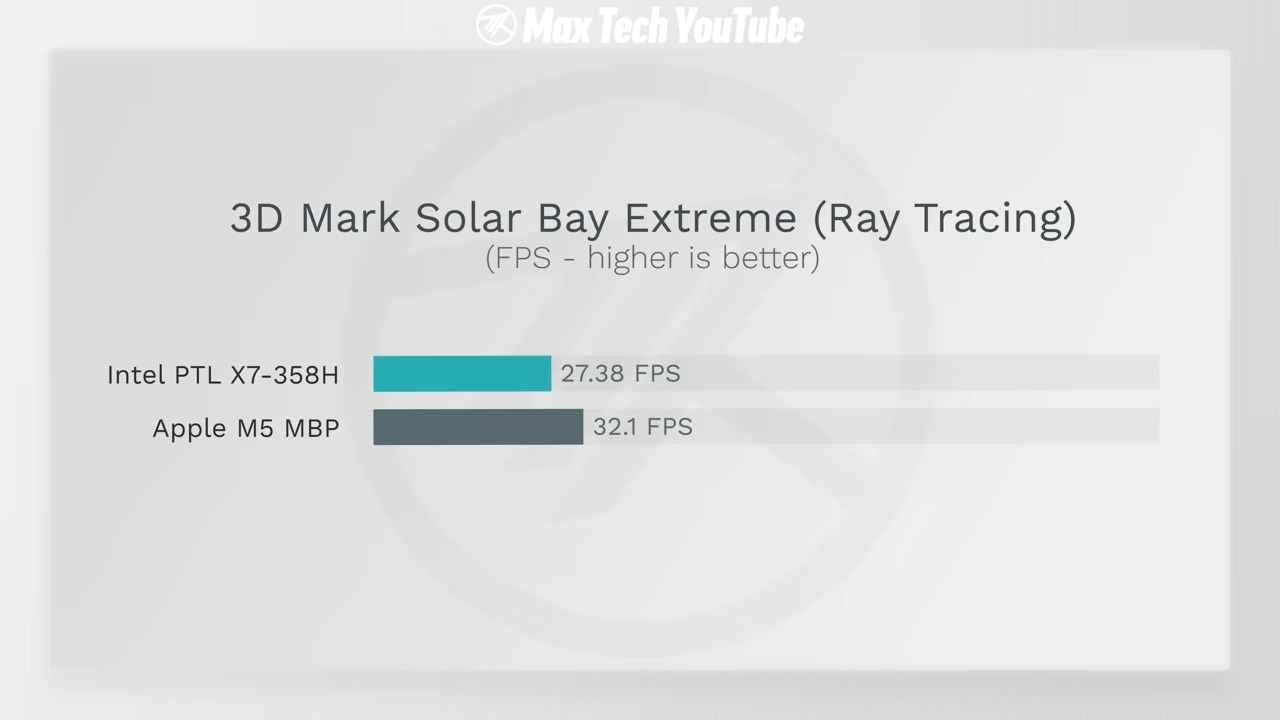
In the 3DMark Solar Bay Extreme ray tracing test, the M5 widened the gap, with an FPS about 17% higher, demonstrating the leadership of Apple GPUs in ray tracing performance. Generally speaking, in terms of GPU performance, this generation of PTL’s Arc B390 is already one of the strongest internal graphics on the Windows platform, but there is still a gap compared with the Apple M5. However, because of the advantages of the X86 platform, overall PTL is more suitable for playing games.
Blender rendering: win or lose
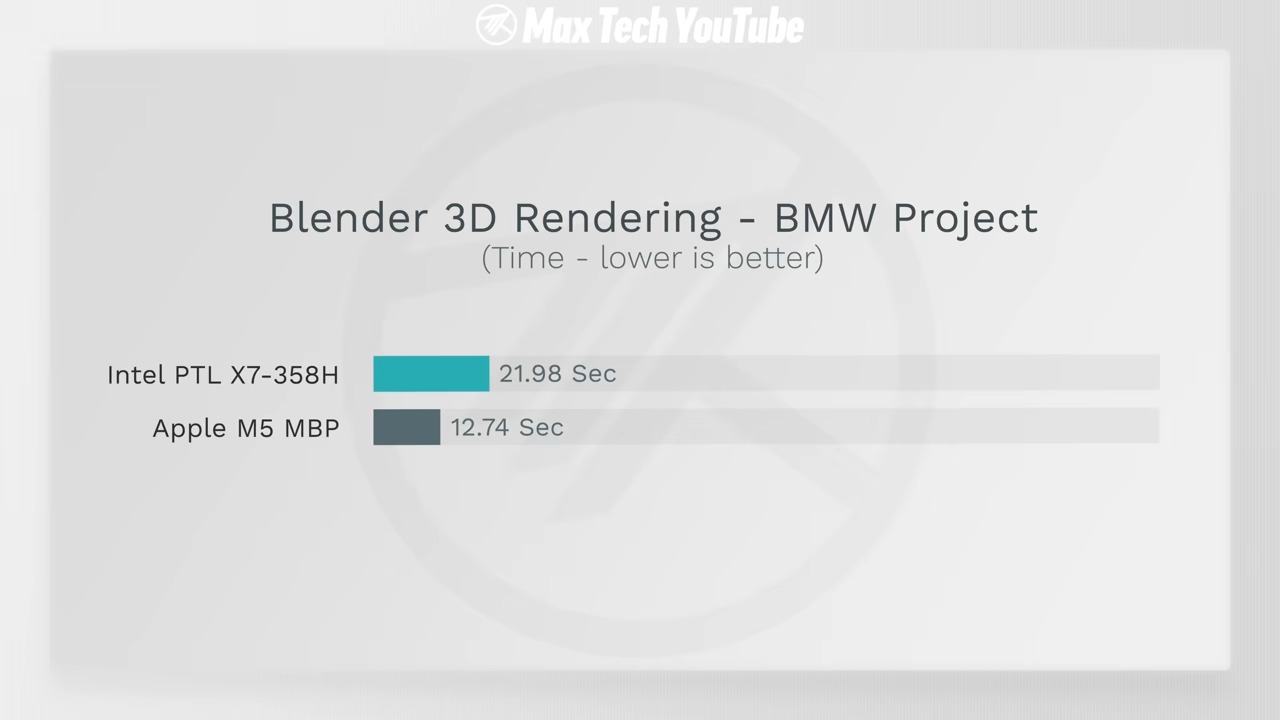
The three Blender GPU rendering tests present an interesting tug-of-war. In the BMW scene rendering, the M5 was significantly ahead of the PTL by about 22 seconds at 12.7 seconds, nearly 10 seconds faster.
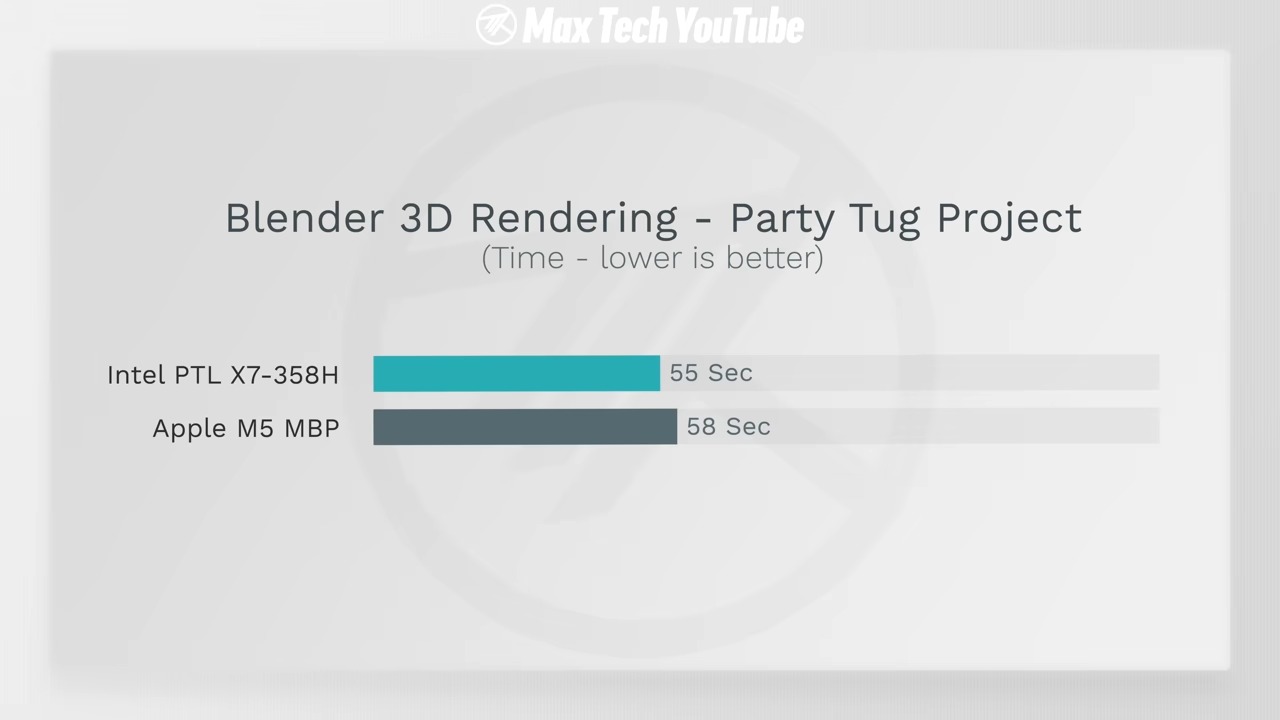
But the tables were turned in the Party Tug scene, where the PTL beat the M5’s 58 seconds at 55 seconds, proving that the Intel Arc B390 can be competitive in certain rendering scenarios.
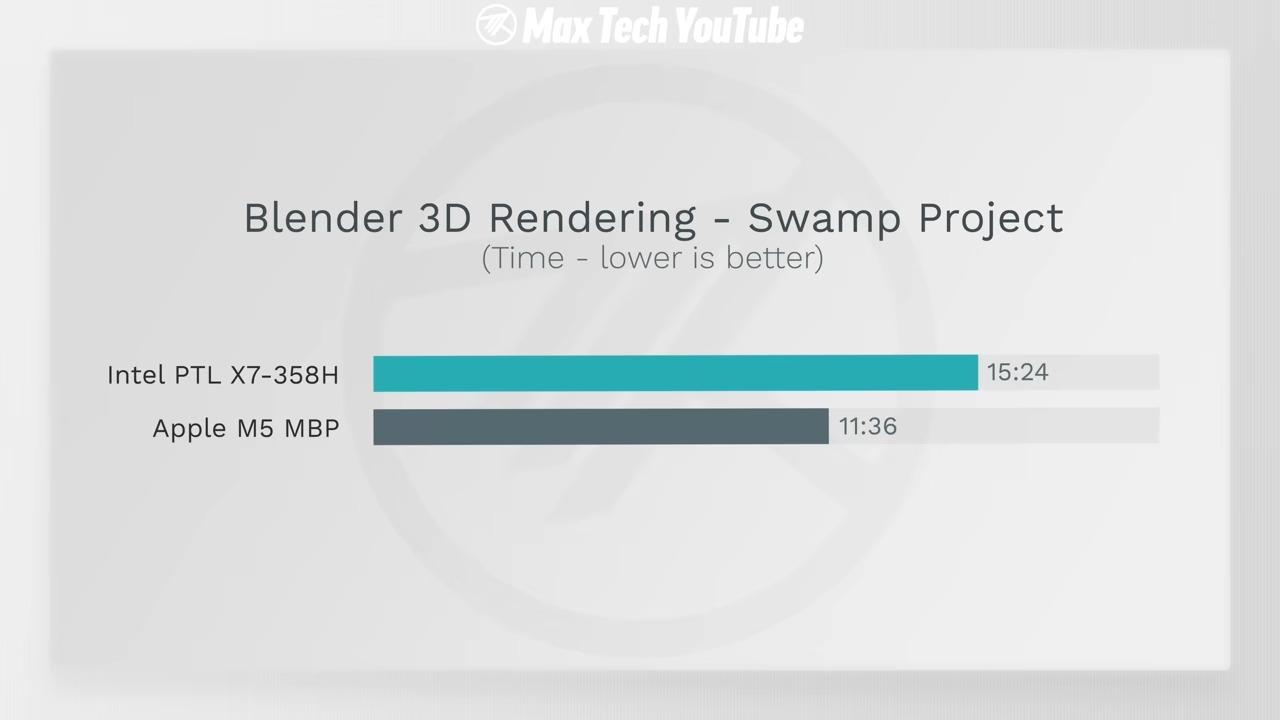
The large Swamp scene rendering was once again won by a large margin by the M5, which was completed in 11 minutes and 36 seconds, while the PTL required 15 minutes and 24 seconds, with a gap of nearly 4 minutes.
Lightroom photo export: M5 is amazingly efficient
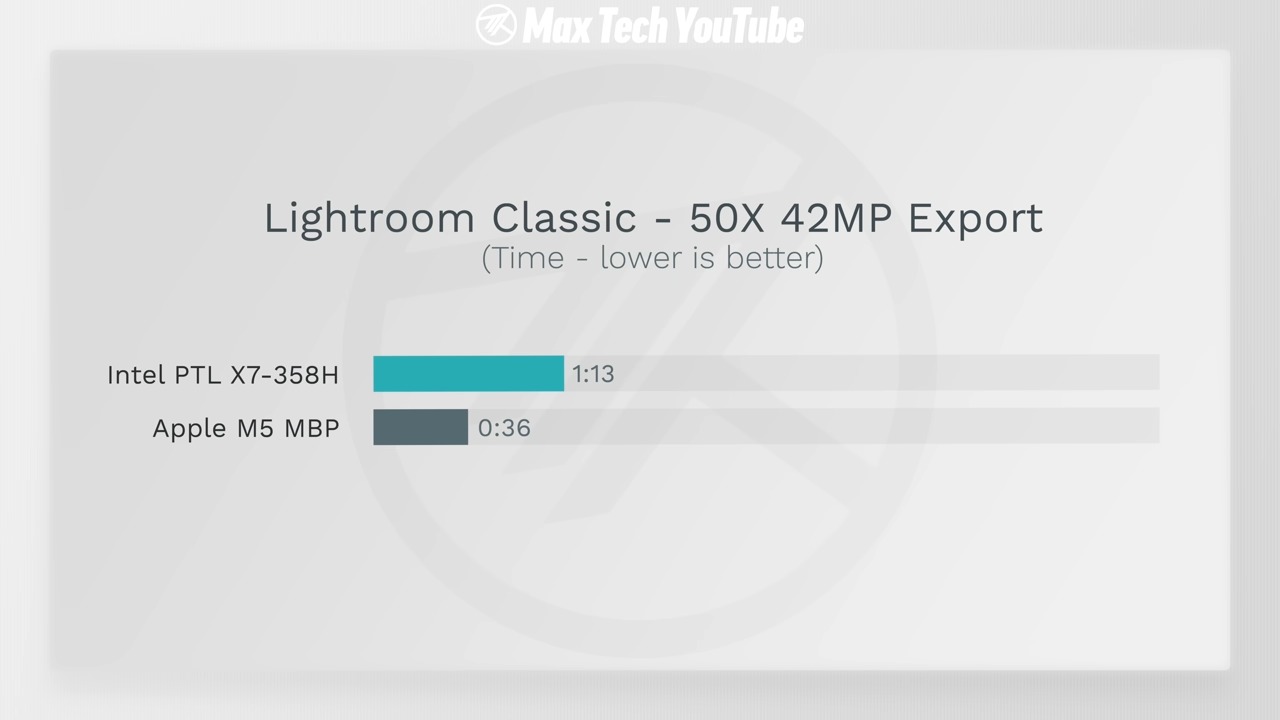
In the Adobe Lightroom Classic export test of 50 42MP RAW photos, the M5 took only 36 seconds to complete the export, while PTL took 1 minute and 13 seconds. The M5 was more than twice as fast. This result is of great reference value for photographers.
Cinebench CPU stress test and thermal performance
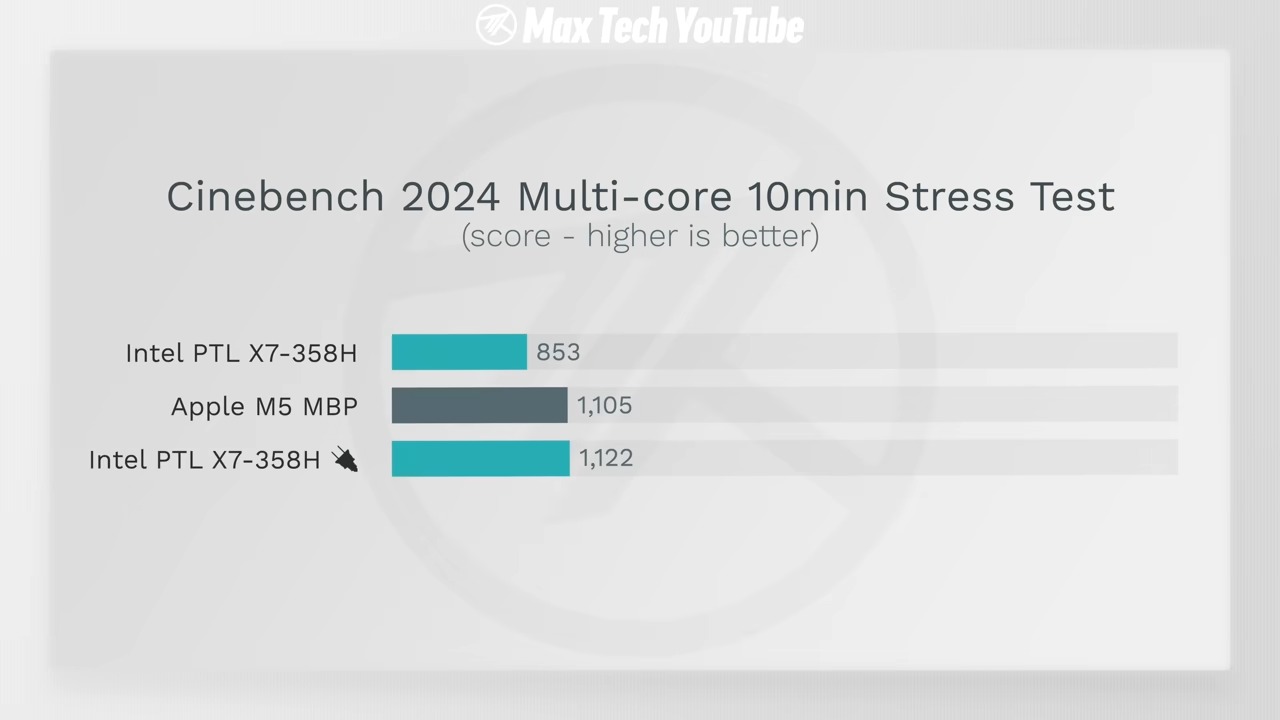
In the Cinebench 2024 multi-core single test, the M5 scored 1,105 points compared to the PTL’s 853 points. However, PTL can reach about 1,122 points when plugged in, which once again proves the impact of battery mode on the performance of Intel processors.
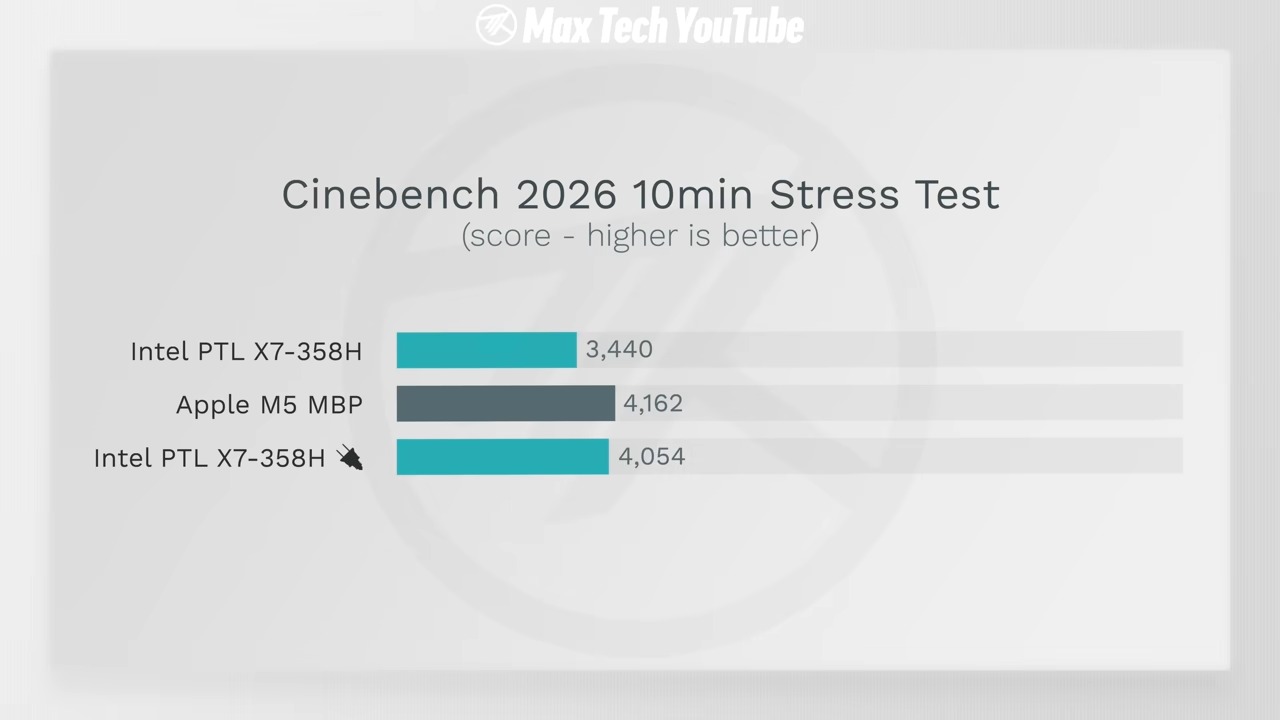
In the more rigorous Cinebench 2026 ten-minute stress test, the M5 led the PTL with 4,462 points to 3,440 points, a gap of about 21%. PTL can reach 4,554 points when plugged in, which is almost the same as the M5, showing that the potential of Intel chips can only be fully unleashed in plugged-in mode.
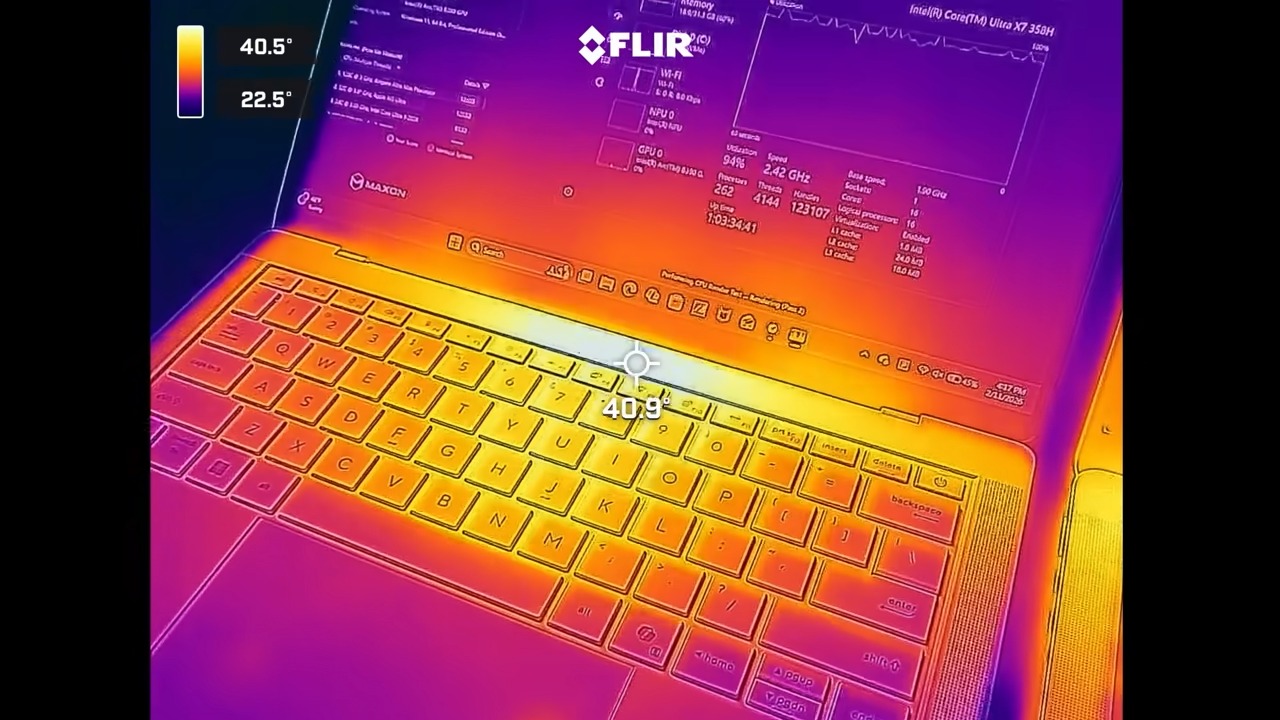
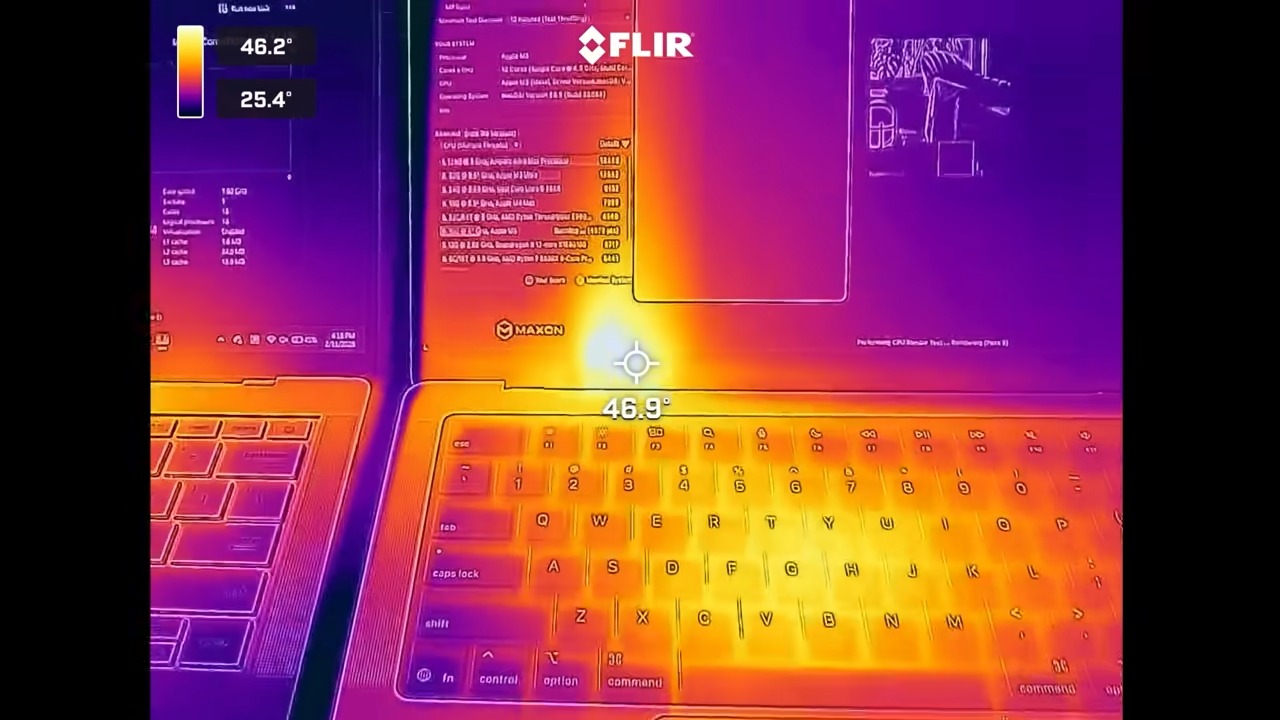
The temperature test was performed simultaneously during the Cinebench stress test. The temperature at the center of the top of the PTL fuselage was 41°C, while the temperature at the air outlet of the MacBook Pro reached 46.9°C, about 6°C higher. ExpertBook has a slight advantage in heat dissipation control (which somewhat subverts the traditional impression).
Battery life: Historic 2% gap
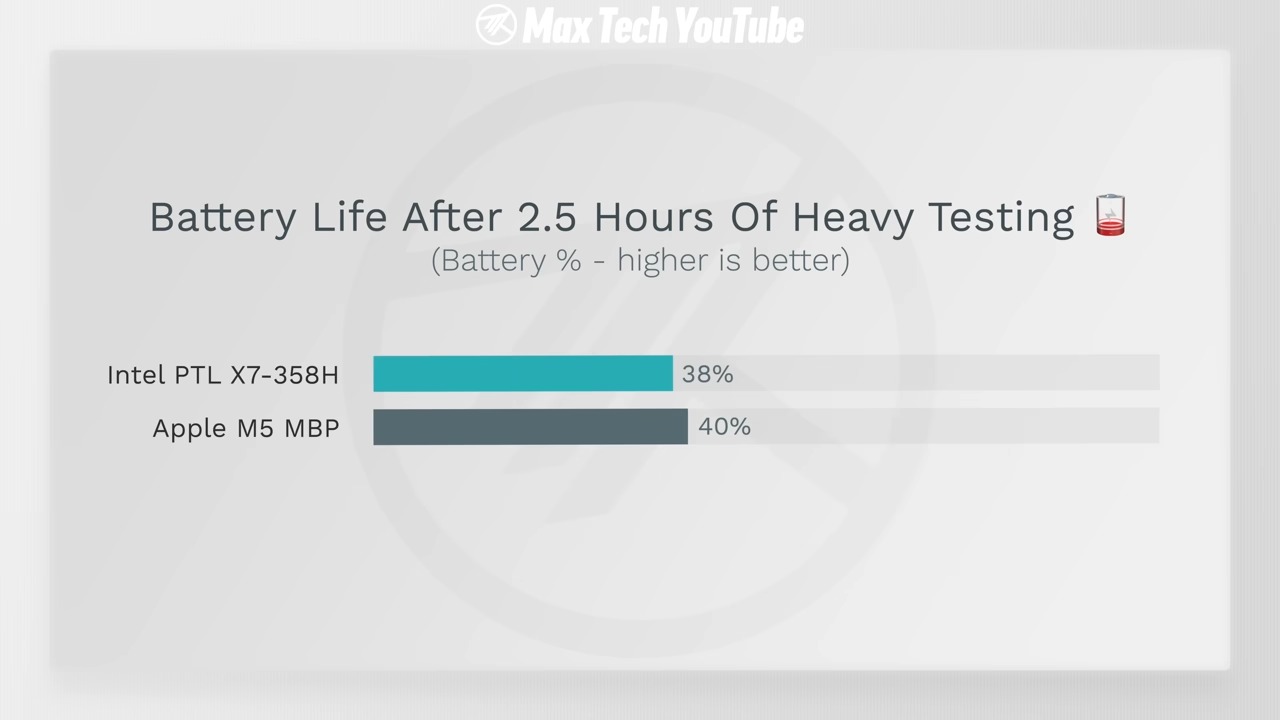
The most shocking result of this test appears in the battery life summary. After 2.5 hours of continuous heavy testing (including all the aforementioned benchmarks and renderings), with the screen brightness at the highest 600 nits, the MacBook Pro had 40% of power remaining, while the ExpertBook had 38% remaining, with a gap of only 2%. This is an unprecedented time when the battery life of a Windows laptop is close to that of a MacBook, which can be called a historic breakthrough.
17 test summary
Across all 17 tests, the Apple M5 wins most categories on pure performance metrics, including Geekbench CPU, Speedometer, GPU OpenCL, multiple Blender renders, Lightroom export, and Cinebench series. Panther Lake wins in SSD speed (2x read), Figma export (1 second faster), Blender Party Tug rendering (3 seconds faster), and cooling temperature (1–2°C lower). 3DMark Steel Nomad Light and battery life are almost tied. Interested friends also recommend that you watch the full version of the comparison video:
summary
The biggest significance of Intel Panther Lake is not that it beats the M5 in every benchmark, but that it finally allows Windows laptops to catch up with MacBooks in the long-term weakness of battery life. In the past, the Windows camp was always far behind the MacBook in battery mode, but now the 2% gap is almost negligible. Of course, Panther Lake’s shortcomings are also clear: some performance will be significantly reduced in unplugged battery mode. For example, after plugging in, the Cinebench score can increase by more than 30% (but it is already one of the smallest performance gaps in the off-grid state on the Windows platform). In contrast, the M5 maintains stable output regardless of whether it’s plugged in or not. But Intel Panther Lake still has an advantage over MacBook that its opponents can’t match: complete x86 software and game compatibility. For users who need to occasionally play games after work, this is a plus that cannot be ignored.
However, in terms of performance, the Apple M5 is still better than the PTL in terms of rolling performance. If it is the M5 Pro version of the MacBook Pro that will be launched in March, the gap may be even greater. But if you are a Windows user, this year’s thin and light notebook equipped with Intel’s Panther Lake platform is already comparable to Apple’s performance and battery life. Coupled with software and game compatibility, it is a generation worth buying.
Source: KOCPC Chinese