


Tesla, the major electric vehicle manufacturer, announced its fourth quarter and full-year financial results for 2025. Revenue fell for the first time in seven years, but its stock price bucked the trend and rose in after-hours trading. The market focus has shifted from pure vehicle delivery data to the company’s comprehensive layout in the field of artificial intelligence: from the integration of Grok AI to the adult mode of in-vehicle voice assistants, from the FSD subscription transformation to the mass production plan of the Optimus humanoid robot, Tesla is undergoing a profound transformation from a car manufacturer to an AI platform giant.
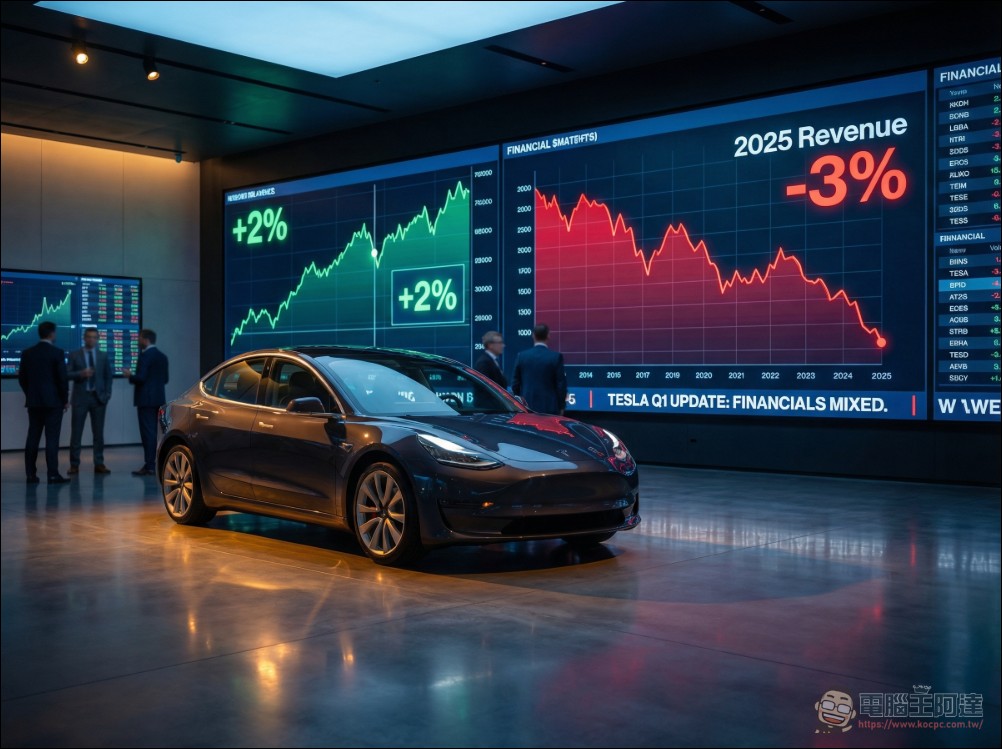
Tesla revenue drops 3% annually for first time in seven years, Musk bets on AI transformation
Traditional electric vehicle business is under pressure, and AI has become a new support
Tesla’s 2025 financial report data reveals a clear fact: the traditional electric vehicle business is facing unprecedented challenges. Full-year revenue was US$94.8 billion, a 3% annual decrease, ending the company’s years of rapid growth. More notably, vehicle deliveries plunged 16% in the fourth quarter, a figure that far exceeded market expectations of an 8-10% decline, reflecting intensifying competition and slowing demand in the global electric vehicle market.
However, while net income fell 61% to $840 million, earnings per share came in at 50 cents, slightly above analysts’ estimates of 48 cents. This “negative upside” comes from cost control and contributions from non-automotive businesses, especially the growth of the energy storage and services business.
The most interesting thing is the market reaction. By conventional logic, such a weak earnings report should trigger a sharp drop in the stock price, but Tesla shares instead rose nearly 2% in after-hours trading. This shows that investors no longer view Tesla through the valuation logic of traditional automakers, but rather as an AI technology company: As CEO Elon Musk has emphasized many times, Tesla’s future value does not lie in how many cars it sells, but in the commercialization potential of its AI technology.
Four key developments: Tesla’s journey to transform its AI platform
Grok AI integration: seamless integration from xAI to in-vehicle intelligence
Tesla announced that it will deeply integrate the Grok large language model developed by Musk’s AI company xAI into all vehicle series, including Model 3, Model Y, Model S, Model X and Cybertruck (mainly HW4, but Australian HW3 can now also use Grok). This integration will be available in software version 2025.26 and above, and the European market is expected to be officially launched on February 14, 2026. The addition of Grok means Tesla owners will have a more powerful voice interaction experience. Unlike traditional in-car voice assistants that can only perform basic commands such as navigation and music playback, Grok can conduct open conversations, answer complex questions, and even provide personalized suggestions based on driving habits. For example, when a driver asks, “Are there any nearby places suitable for taking children?” Grok can not only search for places, but also give comprehensive suggestions based on multiple factors such as time, weather, and ratings.
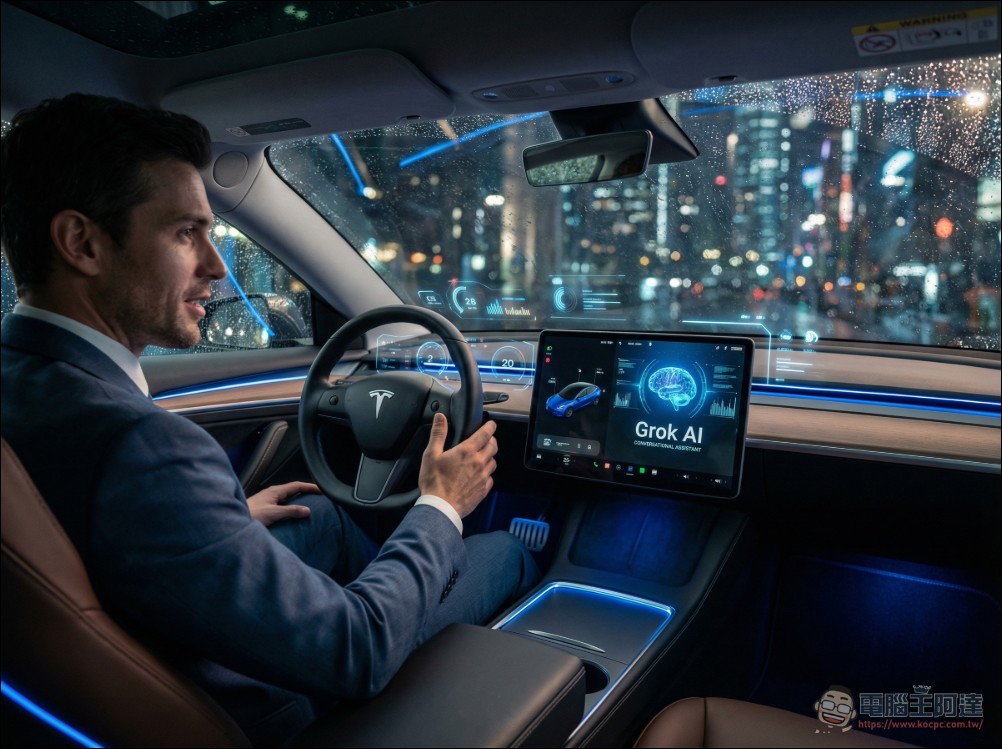
This integration also marks the formal opening of the Tesla and xAI ecosystems. Musk has vigorously promoted the synergies of his companies in recent years, from Twitter and xAI, to today’s Tesla and Grok’s in-vehicle and even future integration with Starlink, which are key processes in this strategy.
FSD subscription transformation: from one-time purchase to ongoing income
Tesla announced that starting from February 14, 2026, the Full Self-Driving (FSD) function will be fully subscription-based and will no longer provide a one-time buyout option. Existing users who have bought out can continue to use it, but new feature updates may require additional payment. This transformation is seen as an important milestone for Tesla’s business model. Analysts pointed out that the subscription system can bring more predictable recurring revenue to the company while lowering the threshold for users: you can experience FSD by paying a certain monthly fee, rather than investing thousands of dollars at a time. In the long term, this will help increase the penetration rate of FSD, thereby accumulating more real-world driving data, forming a virtuous cycle.
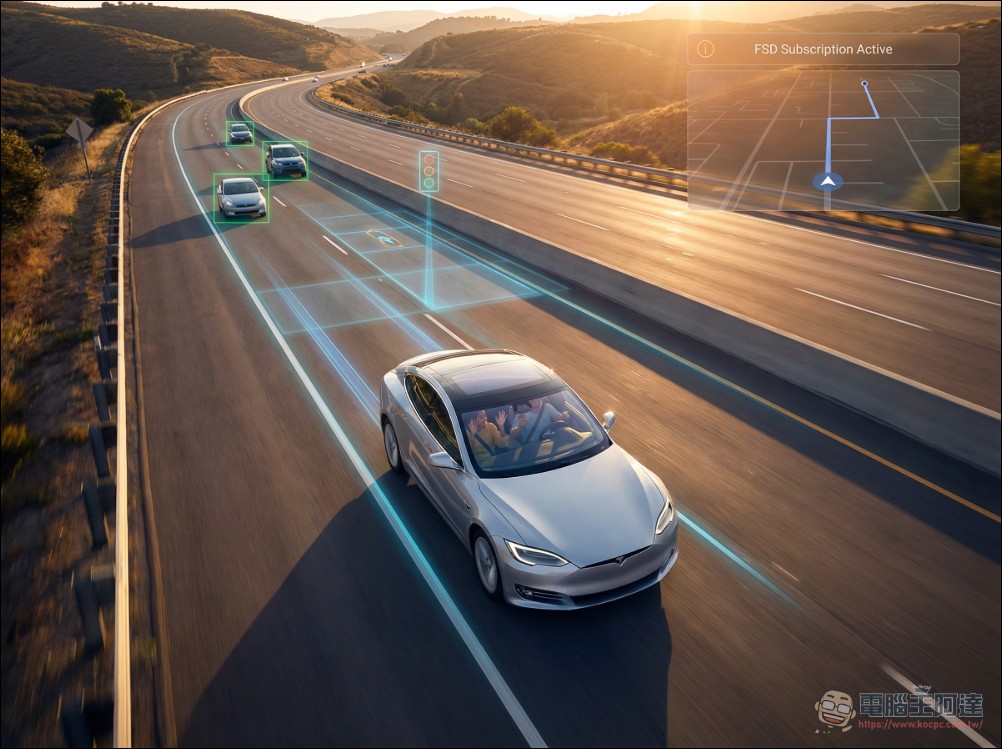
Subscription pricing has not yet been officially announced, but industry estimates may range from $99 to $199 per month, down from the previous one-time buyout price of $12,000. Based on 1 million users at an average monthly household cost of $150, the FSD subscription business could generate $1.8 billion in annual recurring revenue for Tesla.
Optimus robot: $20 billion bet, Musk says it will account for 80% of company value
The most eye-catching news at the earnings call was the mass production plan for the Optimus humanoid robot. Tesla announced that it will invest US$20 billion in capital expenditures (CapEx) for the construction of Optimus R&D and production facilities. The third-generation Optimus (Gen 3) is expected to be released in the first quarter of 2026, with a full-year production target of 50,000-100,000 units in 2026. Musk said at the meeting: “Optimus may eventually account for 80% of Tesla’s total value.” This statement may seem exaggerated, but if analyzed from a long-term perspective, it is not completely unfounded. The potential application scenarios of humanoid robots are extremely wide, ranging from factory automation, logistics and warehousing, to home care and retail services. The market size may reach trillions of dollars.
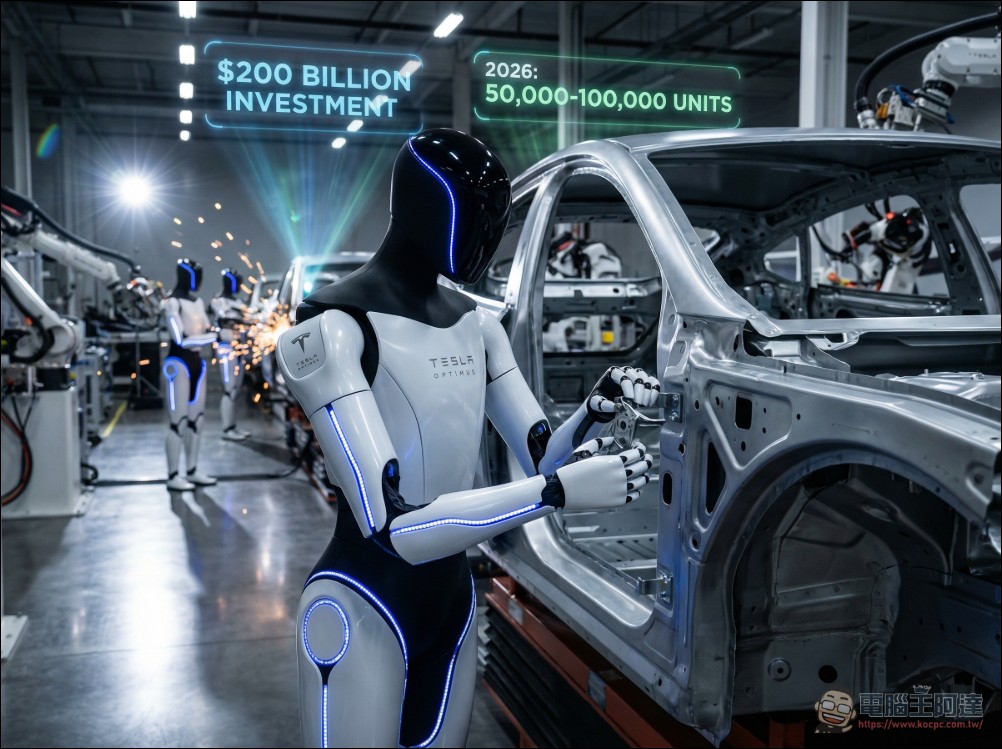
Tesla’s advantage in the field of robotics lies in its existing technology accumulation: the visual perception system, battery technology, motor control, etc. developed by Autopilot and FSD can all be migrated to Optimus. In addition, Tesla’s large-scale manufacturing capabilities are unmatched by other robotics startups. However, the challenges are equally huge. The technical difficulty of humanoid robots far exceeds that of autonomous driving, involving more complex issues such as balance control, fine operations, and human-computer interaction. Even industry pioneers like Boston Dynamics have yet to achieve large-scale commercialization. Whether Tesla can meet its mass production target in 2026 remains to be seen.
Will Tesla’s AI bet succeed?
Judging from the financial report data, Tesla’s traditional automobile business is indeed facing a bottleneck. After years of rapid growth, the electric vehicle market has entered a stage of intense competition. Chinese brands such as BYD, Xpeng, and NIO are constantly putting pressure on prices and product lines, and traditional European car manufacturers are also accelerating their electrification transformation. In this environment, it’s not surprising that Tesla’s deliveries are down. However, simply classifying Tesla as a “car company” is now outdated. Musk’s vision is to create an ecosystem with AI at its core: vehicles are data collection terminals, FSD is a monetization tool, Optimus is the next growth curve, and Grok is the smart brain. Whether this narrative holds true depends on several key factors:
- Actual penetration rate of FSD:Can the subscription system attract enough users to pay? Can Robotaxi be launched in more cities and become profitable?
- Optimus’ commercialization progress:Is the production target of 50,000-100,000 units in 2026 realistic? Who are the first customers? Does the unit economic model hold?
- Leading advantages of AI technology:Facing technology giants such as Google, Microsoft, and Amazon, does Tesla really have a moat in the field of AI?
💬 In the short term, Tesla’s stock price fluctuations will still be affected by traditional indicators such as delivery volume and gross profit margin. But in the long term, the company’s valuation logic has changed – what investors buy is no longer “how many cars are sold”, but “the probability of success in AI transformation.” In this sense, the decline in financial reports in 2025 may be just a pain. The real test is whether the four major AI strategies mentioned above can deliver substantial results in the next 2-3 years.
Source: KOCPC Chinese