


SpaceX recently officially released Starlink Mobile V2 next-generation satellite technology, claiming that it will be provided from space 5G speednetwork services, the data density reaches that of the current V1 satellite 100 times. This major upgrade is expected to revolutionize communication in remote areas around the world, allowing mobile phone users to enjoy an Internet experience comparable to 5G networks in areas without terrestrial base stations.
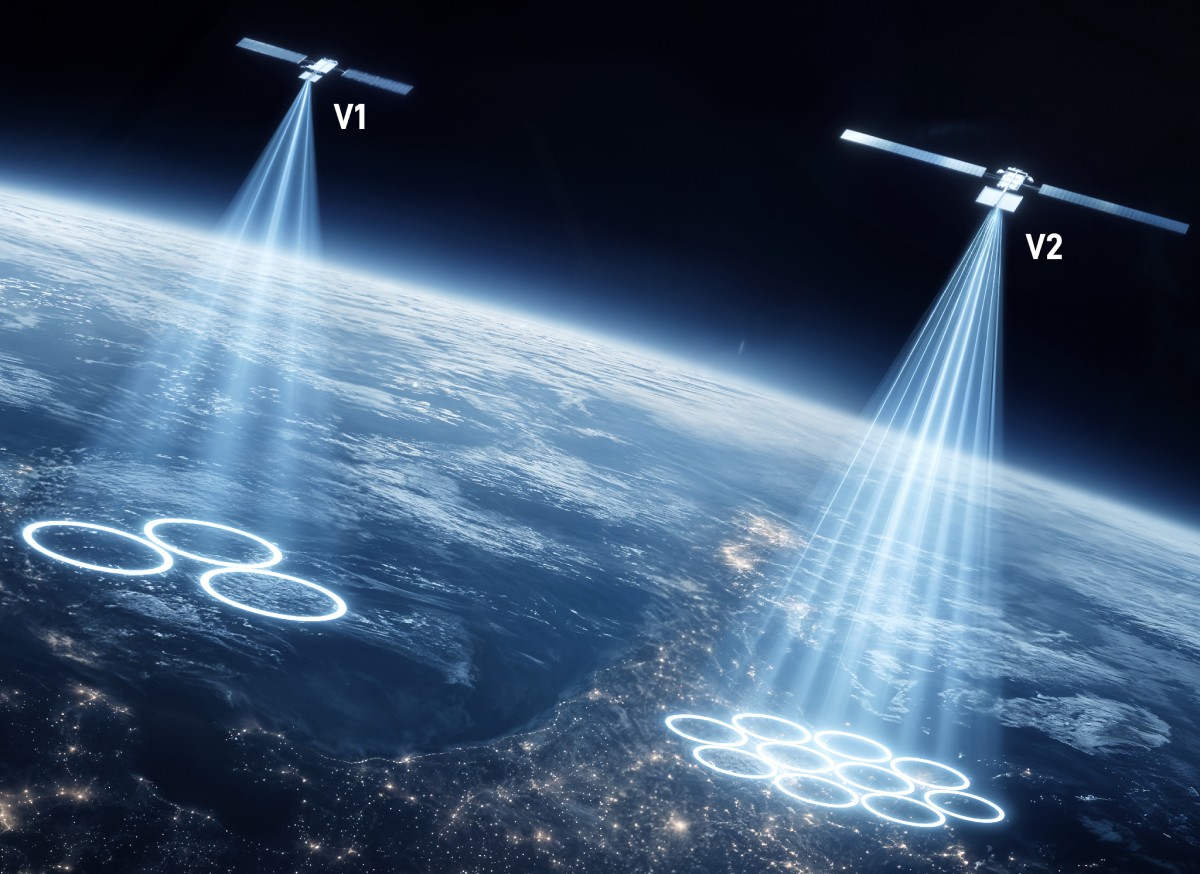
SpaceX officially releases Starlink V2 satellite: 5G speed, 100 times data density
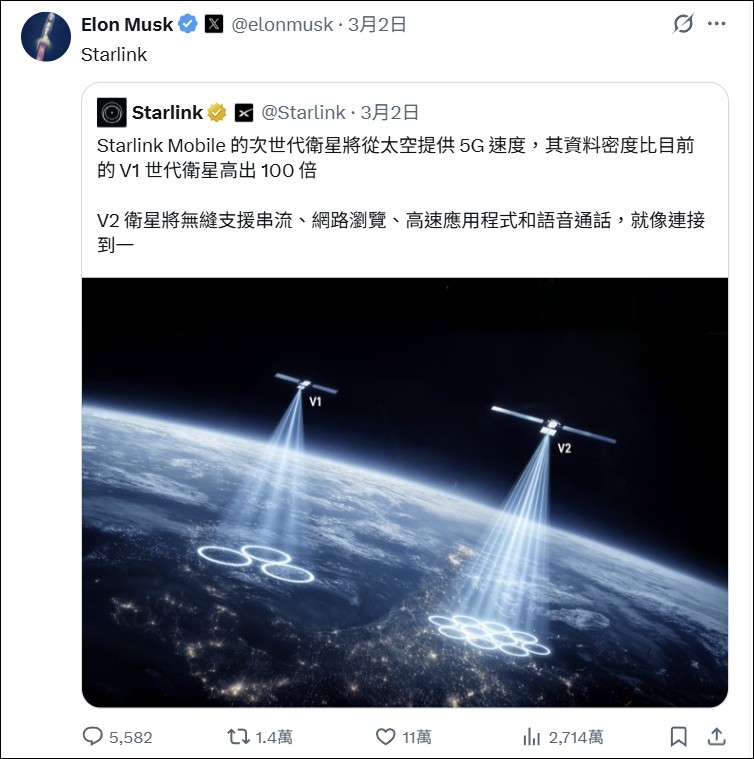
SpaceX CEO Elon Musk recently announced by retweeting a post on Starlink’s official account: “Starlink Mobile’s next-generation satellite will provide 5G speed services from space, with a data density that is that of the current V1-generation satellite. 100 times”. This declaration once again demonstrates SpaceX’s ambition to conquer the space Internet.
In fact, SpaceX’s satellite layout has reached an astonishing scale. On January 9 this year, the U.S. Federal Communications Commission (FCC) officially approved SpaceX’s additional deployment 7,500 piecesThe second generation of Starlink satellites enables SpaceX to gain cumulative 15,000 pieces Officially licensed V2 satellite. If coupled with the number of licensed first-generation satellites, SpaceX is expected to operate up to 90,000 piecessatellite, becoming the largest private satellite network in history.
V2 satellite technical specifications revealed: customized chip, phased array antenna, laser interconnection
According to SpaceX’s official Starlink Business/Mobile page, the V2 satellite has several major technical upgrades:
| technical projects | V1 satellite | V2 satellite | Improvement |
|---|---|---|---|
| data density | benchmark | 100 times | 100x |
| Throughput | benchmark | 20 times | 20x |
| Antenna technology | traditional antenna | Advanced Phased Array Antenna | Brand new design |
| satellite chip | General chip | SpaceX custom silicon chips | Self-developed chip |
| inter-satellite connection | radio | Laser Internet | Globally seamless |
Customized chip: The V2 satellite uses a special silicon chip designed by SpaceX itself, which is optimized for processing a large number of mobile phone signals.
Advanced Phased Array Antenna: Equipped with the world’s most advanced phased array antenna, it can generate thousands of spatial beams and support more users to connect simultaneously.
Laser interconnection system: Seamlessly connected to any location around the world through laser, achieving an integrated architecture similar to a terrestrial roaming network.
The 5G era is coming: you can watch Netflix in space
SpaceX said that the upgraded system will allow users to smoothly watch streaming videos, browse the web, use high-speed applications and make voice calls, just like connecting to the terrestrial network. Starlink Mobile will enable full 5G connectivity in most environments.
Starlink Mobile is providing data for video, voice, and messaging services in areas where terrestrial service is unavailable
Working with global mobile network operators, our satellite-to-mobile network has grown to 32+ countries, home to 1.7B+ people → https://t.co/Sz2wzdRtF8 pic.twitter.com/095z9IDDol
— Starlink (@Starlink) March 2, 2026
“The next generation of Starlink Mobile satellites (V2) will provide complete mobile phone signal coverage to areas that have not been covered in the past through the highest performance satellite-to-mobile network on the surface,” SpaceX said in an official statement.
The V2 satellite has been likened to “Cell phone towers in space” These satellites equipped with advanced phased array antennas are like cell towers floating in space. They are integrated with ground infrastructure through laser interconnection systems to achieve a network integration architecture similar to that of roaming partners.
Partner with T-Mobile: Starlink Mobile’s partnership with T-Mobile is expected to provide up to 150 Mbps download speeds, even in high latitudes in the Northern Hemisphere.
Global telecom partners exceed 32 countries and have a population of 1.7 billion
Starlink Mobile currently has partnerships with many major telecommunications providers around the world (not available in Taiwan):
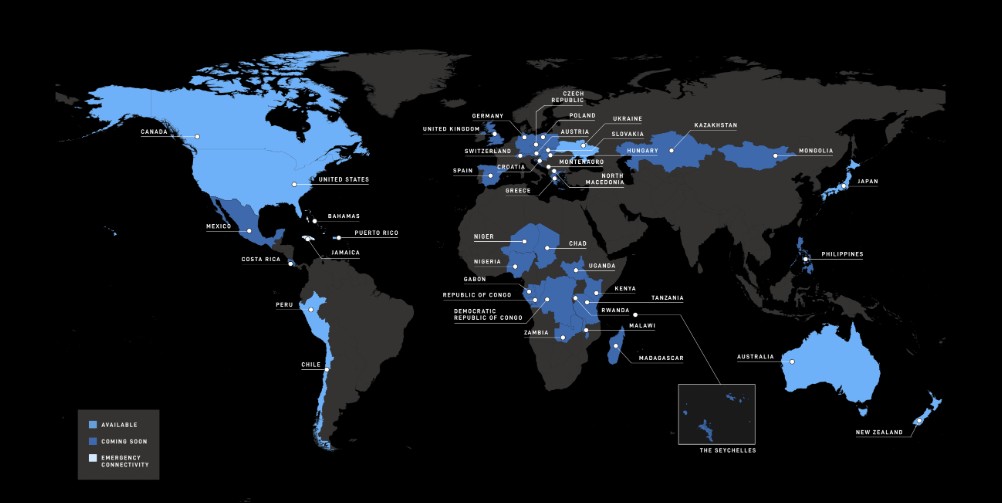
- T-Mobile (US): Covering the continental United States and providing services to 150 million users
- Deutsche Telekom (Europe): Covering 10 countries and more than 140 million users
- Japan KDDI: Asia’s first partner
- Australia Optus: Oceania Partners
- Cover 32 countries, serving a population exceeding 1.7 billion people
“Starlink Mobile is compatible with all existing LTE phones in the world and can be connected as long as there is sky. These satellite antennas are like cell phone towers in space. They are the world’s most advanced phased array antennas and can seamlessly connect to any location on the earth via laser, allowing network integration like standard roaming partners,” SpaceX explained.
Deutsche Telekom takes the lead in Europe: Starlink Mobile recently announced that it is partnering with Deutsche Telekom to become the first region in Europe to launch V2 next-generation technology, using new mobile satellite service spectrum to provide services at 5G speeds.
Starlink Mobile is partnering with @deutschetelekom to support over 140M subscribers across 10 European countries.
The service will be the first in the region to launch V2 next-gen technology using our new Mobile Satellite Service spectrum, which will deliver 5G speeds to cell… https://t.co/V7T8Qn9MBm
— Starlink (@Starlink) March 2, 2026
Currently, Starlink Mobile has been operating in low Earth orbit for approximately 650 pieces V1 satellite, service coverage covers six continents. However, due to the technical limitations of the V1 satellite, existing services can only provide “light data” and SMS services, making it difficult to support high-bandwidth applications. With the gradual launch and deployment of V2 satellites, these “mobile phone base stations in space” will greatly improve service quality. Starlink officials stated that the goal is to allow users to enjoy a connection experience comparable to urban 5G networks in remote areas, at sea, or in disaster areas.
Related data comparison
| index | V1 satellite | V2 satellite | difference |
|---|---|---|---|
| Single star throughput | 1x | 20x | +1900% |
| data density | 1x | 100x | +9900% |
| Theoretical download speed | Number of Mbps | Up to 150 Mbps | substantial improvement |
| Orbital height | 540-570km | 340-485km | lower latency |
| Band support | Ku、Ka | Ku、Ka、V、E、W | More bands |
Opinion: The next step for satellite communications
The launch of the Starlink V2 satellite marks a major turning point in the satellite communications industry. Review the development history:
- 2015: Musk first proposed the Starlink idea
- 2019:The first batch of V1 satellites launched
- 2024: Direct-to-Cell service testing
- 2025: Service expanded to 32 countries
- 2026: V2 upgrade, 5G speed era is coming
Upgrading from “light data” that can only send text messages to a complete 5G experience will significantly change the way communications are conducted in remote areas. For maritime vessels, remote mining areas, areas affected by natural disasters, and areas in developing countries with insufficient infrastructure, Starlink V2 will provide connectivity possibilities that were unimaginable in the past. However, as thousands of new satellites enter orbit, the potential risks of orbital congestion and space debris continue to attract the attention of international astronomers and environmentalists. UNESCO has previously warned that a large number of satellites may have an impact on the night sky environment and astronomical observations.
Source: KOCPC Chinese