


Google announced on September 24, 2026, that the first prototype satellite for its “Project Suncatcher” space AI data center initiative will launch on October 1. The satellite carries Google’s self-developed AI chip, TPU (Tensor Processing Unit), to test how AI hardware actually performs in the space environment. The satellite will launch on SpaceX Falcon 9 rocket’s “Transporter 18” rideshare mission, scheduled to lift off at 3:18 a.m. Japan time on October 2.

Project Suncatcher’s first TPU satellite will launch on October 1.
Project Suncatcher is a long-term research initiative proposed by Google in November 2025, aiming to explore whether space could one day host scalable machine learning infrastructure. Satellites in low Earth orbit can receive sunlight almost continuously, and solar power generation can be up to 8 times that on the ground. If multiple satellites can be linked into a constellation, it may be possible to operate large-scale AI data centers at lower cost. As ground-based AI data centers face controversy over massive electricity and water use and local opposition, Google’s move is also seen as a response to Elon Musk’s plans for space data centers.
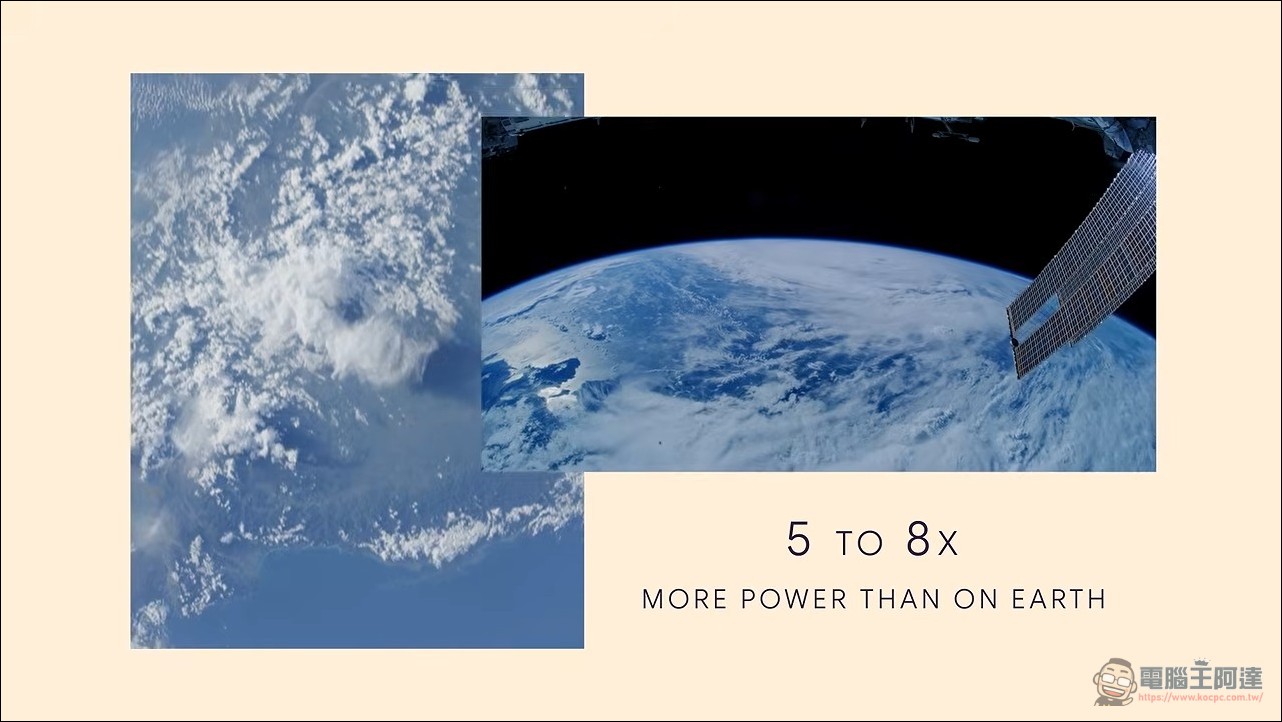
Why put AI into space?
Training and inference for AI models require enormous amounts of electricity. Terrestrial data centers can consume as much power as a city, and their cooling systems also use large quantities of water, leading residents in many areas to oppose new projects. The appeal of the space environment is straightforward: in orbit, sunlight is available almost all the time, solar power generation is several times higher than on the ground, there is no need to compete with other industries for grid capacity, and there is no issue of water use for heat dissipation.
This idea is not unique to Google. Elon Musk and Jeff Bezos have both proposed the concept of orbital data centers. SpaceX even included space AI infrastructure in its development roadmap in its IPO prospectus this year; startup Starcloud is also advancing a space data center plan, and even former Google CEO Eric Schmidt has reportedly acquired rocket startup Relativity Space to send data centers into orbit. Google announced Project Suncatcher in November 2025, which outsiders interpreted as a move to avoid falling behind in this space computing power race.
First test satellite MVP: refrigerator-sized, equipped with 4 TPUs
The prototype satellite launched this time is named “MVP,” roughly the size of a refrigerator, and carries four Google custom TPU accelerators inside. On the ground, a data center would run thousands of the same chips simultaneously, so MVP is clearly much smaller in scale. Its solar panels generate only about 1 kW, roughly enough to power a microwave or a hair dryer.
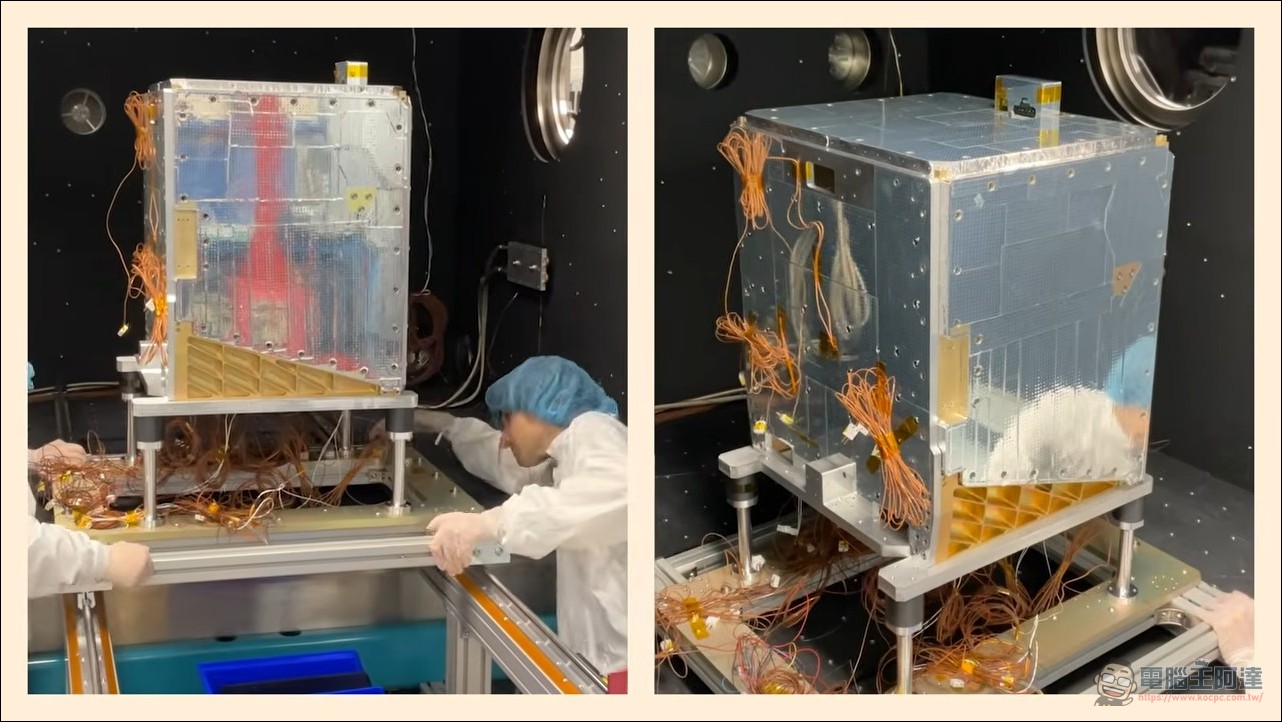
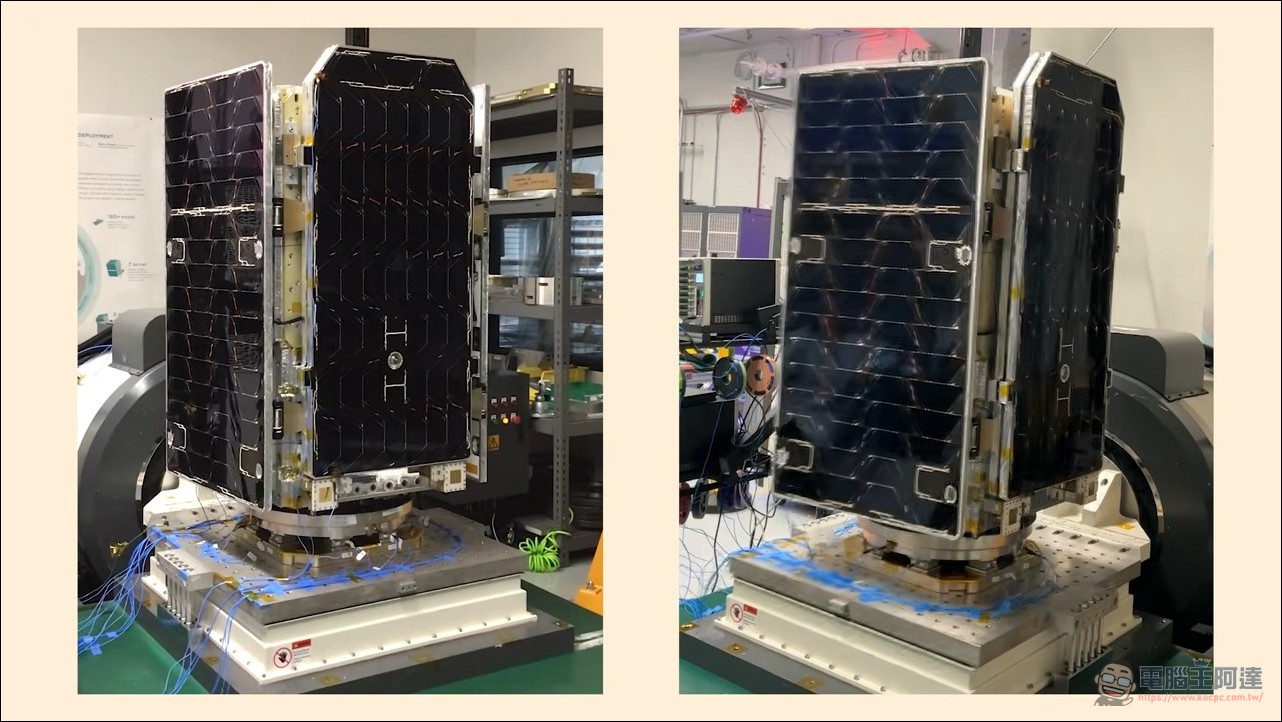
The satellite itself was built by satellite imagery company Planet Labs, with Google integrating its own AI hardware. The original plan was to launch two custom satellites in 2027, but Google wanted to move faster, so it chose to install the chip on a satellite Planet Labs had already built for early testing and begin verification ahead of schedule. The mission aims to collect in-orbit data on how TPU performs under the physical stresses of launch, space radiation, and extreme temperature changes. Google will run the Gemini model on the satellite for testing, and the satellite is expected to operate for only a few months.
Launch and Radiation Trials: Commercial-Grade TPU Goes Directly into Space
It takes about 10 minutes for a rocket to go from launch to reaching low Earth orbit. During this period, the spacecraft must endure severe vibration and sustained acceleration of up to 10 times gravity (10G), and individual components such as TPUs may experience forces of 50 to 100G. To address this, the Project Suncatcher team violently shook the satellite along three axes on the ground to simulate the vibration frequencies of a rocket launch. Project senior director Travis Beals admitted: “These kinds of tests rarely go exactly as planned, so we were both surprised and delighted that the hardware could withstand these forces.”
Once in orbit, radiation is another hurdle. Solar activity and cosmic rays can damage electronic circuits or disrupt computation results with errors such as “bit flips.” The Google team irradiated TPUs with a proton beam at the Crocker Nuclear Laboratory at UC Davis while running AI workloads, closely monitoring the impact of errors on tasks. Preliminary results show that the sixth-generation TPU, “Trillium,” has unexpectedly high tolerance, capable of withstanding a total ionizing radiation dose greater than what a 5-year space mission would receive. However, Google also emphasized that some conditions can only be verified in space, so sending the first batch of TPUs into orbit this time is intended to obtain data that ground experiments cannot provide.
The Space Cooling Challenge: Chips Have to Be Shut Down After 15 Minutes of Running
For orbital data centers, cooling may be the trickiest challenge of all. TPUs generate a huge amount of heat in a small area, and if that heat cannot be dissipated effectively, the chips will heat up to the point where they can no longer function. But space is a vacuum with no air flow, so the air-cooling and water-cooling systems used on Earth are completely useless; the only option is to rely on radiators to radiate heat into the universe.
Google’s approach is to attach a layer of flexible thermal interface material to the chip, connect it to aluminum and copper heat pipes, and then use the heat pipes to carry heat to a radiator for dissipation. The team has now tested this technology in a thermal vacuum chamber that simulates the thermal and vacuum environments of space, and will refine the design based on the test results. The problem is that the MVP’s heat dissipation capability still can’t keep up with the heat generated by four TPUs: Beals told The New York Times that the chip can only run a workload for about 15 minutes at a time before it has to be shut down, and it can’t be restarted until the radiator brings the temperature down.
Constellation vision: laser-interlinked satellites, two-satellite demonstration in 2027
Google’s ultimate vision for Suncatcher is a swarm of satellites, each carrying dozens of TPUs, operating together in orbit and taking turns processing large AI workloads. To maintain the bandwidth needed for AI computing, each satellite must know its own position and its position relative to nearby satellites, which is done by having the satellites communicate with one another via laser.
The challenge is that the specifications are completely different. Most current state-of-the-art satellite communications systems are optimized for long distances and low bandwidth, whereas AI data center satellites need ultra-high-bandwidth connections over very short distances. Google describes the alignment precision requirement as “hitting a coin-sized target from miles away while both ends are moving.” Google plans to send two satellites into low Earth orbit in 2027, when it will put this laser communications technology to the test. Even so, the team expects it will take several more years for Suncatcher to go from “project” to “product.”
Conclusion
“Treating space as a viable domain for scalable AI computing won’t happen overnight. It requires methodical engineering work, starting with proving that hardware can withstand the physical and unpredictable realities of orbit. The focus of this first launch is to see what works, identify failure points, and apply those findings to future missions,” Beals wrote in an official blog post. The October 1 launch is just the starting point. The orbital test data brought back by the MVP will determine how Google’s space data center takes its next step, while SpaceX, Blue Origin, and various startups are all accelerating on the same track.