


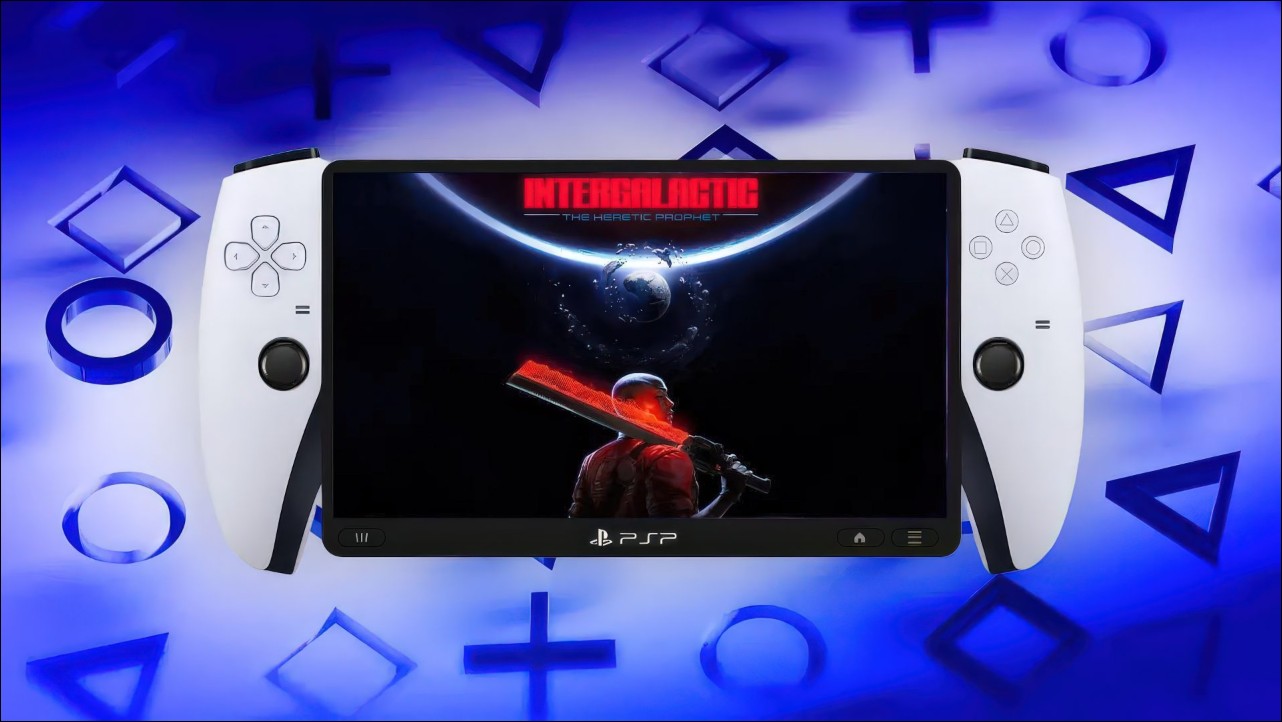
Sony’s next-generation PS6 handheld project “Project Canis” has recently leaked some hardware specification information again. Some PC hardware sites referred to it as “PSP 3” in related reports, but this is only a placeholder codename used by the leaker, not Sony’s official name. All current clues point to a late 2027 launch, with more details such as clock speed and power consumption than previously leaked versions. Sony has not confirmed the related content, nor has it said whether it falls under the PlayStation 6 project. From PS Portal to Project Canis, Sony’s direction on handhelds shows it wants to bring PlayStation games into more usage scenarios.
3nm AMD processor, 6 Zen 6 cores
According to leaks, Project Canis uses a custom 3nm AMD processor with six Zen 6 architecture cores, four of which are standard Zen 6c cores and the other two are low-power Zen 6 LP cores, which are speculated to mainly handle the operating system and background processes. The chip is paired with 24GB of LPDDR5X unified memory, uses a 192-bit bus, and has overall power consumption limited to between 15 and 25 watts. The bus has been widened from the previously leaked 128-bit to 192-bit in order to let high-speed LPDDR5X deliver more bandwidth, because bandwidth has long been a bottleneck holding back frame rates on many handhelds.
RDNA 5 graphics core, with built-in 540p rendering in handheld mode.
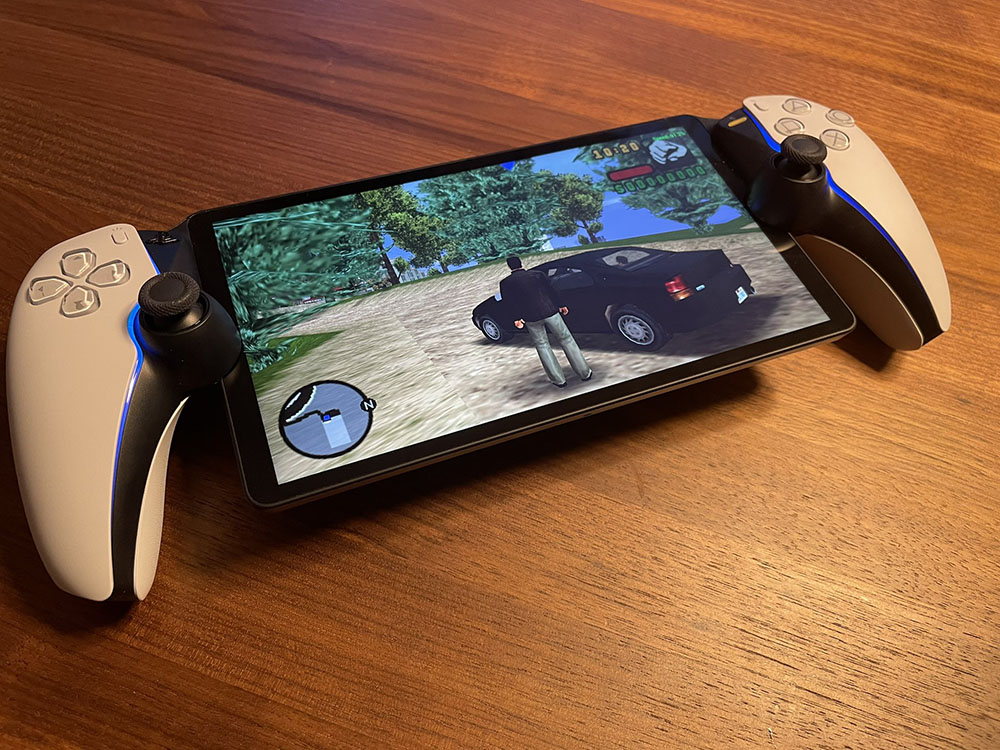
The graphics portion is said to use RDNA 5 architecture, with 16 compute units, and supports Dual-Issue FP32 instructions, allowing the GPU to execute two 32-bit floating-point operations in a single clock cycle under suitable workloads. In handheld mode, the GPU clock is 1.2GHz with theoretical compute power of 4.91 TFLOPS; when docked, the frequency rises to 1.65GHz and compute reaches 6.75 TFLOPS. This device takes a local-computing approach and can run PS4 and PS5 games directly in handheld mode, positioning it differently from the PS Portal, which can only stream PS5 visuals, but support for next-generation games (PS6) is not guaranteed. The dock design is similar to Nintendo Switch, switching performance depending on the usage scenario. Because handheld mode is limited by cooling and power consumption, leaks claim games render internally at 540p, then PSSR 3.0 upscales it to the screen’s native 1080p. Using 540p as a base saves compute for upscaling and frame generation, a common trade-off for handhelds.
Local compute matters more to handhelds than spec numbers do. The earlier streaming-based PS Portal had to rely on a PS5 staying powered on and a stable network, which limited its use cases; a device that can run games locally can also be played offline, making the handheld a standalone platform. Project Canis can play PS4 and PS5 games, meaning it must carry the compute load of local backward compatibility, which places far higher demands on memory and bandwidth than pure streaming; the 24GB of memory and 192-bit bus are precisely there to reserve headroom for that load.
PSSR 3.0 adds frame generation, with effective compute approaching PS5 Pro.
PSSR is Sony’s own super-resolution upscaling technology.(Derived from AMD’s FSR), 3.0 is the next-generation version named for the first time in this round of leaks. The current PS5 Pro uses standard PSSR 2.0, using 1080p or 4K as the render base and then upscaling; Project Canis will pair with PSSR 3.0 with both upscaling and frame generation enabled, and its render base is 540p upscaled to 1080p. PSSR 3.0 is said to use a dedicated hardware block to compute neural networks, support real-time frame generation, and be placed under AMD’s FSR Diamond suite.
PSSR 3.0 can enable the device to achieve around 10 to 11 TFLOPS in handheld mode, and around 14 TFLOPS when docked. For comparison, the PS5 Pro’s theoretical compute power is 16.7 TFLOPS, and it is a fixed value, with no distinction between handheld and docked modes. These effective compute figures are the leaker’s own estimates, not metrics announced by Sony. As of now, there is still no actual gameplay footage, so the frame generation performance cannot yet be confirmed. Earlier this year, Sony system architect Mark Cerny already teased that frame generation would be a key focus for the next generation.
| Specification | PlayStation 5 Pro | Project Canis (PSP 3 Handheld) |
|---|---|---|
| Custom AMD APU | Zen 2 Cores, 16.7 TFLOPs | Zen 6 Cores (4c Zen 6c, 2c LP) |
| GPU | 60 CUs (30 WGPs), custom RDNA 2/3 hybrid architecture @ ~2.18 GHz | 16 RDNA 5 CUs @ 1.2–1.65 GHz |
| System memory | 16GB GDDR6 + 2GB DDR5 | 24GB LPDDR5X, 192-bit bus |
| Power supply | ~215–240W under load | 15W–25W |
| Upscaling technology | PSSR 2.0 (Standard) | PSSR 3.0 (Upscaling and Frame Gen Enabled) |
| Goal | Native 1080p/1440p → 4K via PSSR 2.0 | Native 540p → 1080p via PSSR 3.0 |
| TFLOPs (mobile/docked) | 16.7 TFLOPs (fixed, no mobile/docked split) | 4.91 TFLOPs / 6.75 TFLOPs |
| Effective PSSR 3.0 TFLOPs | N/A | 10–11 TFLOPs (Mobile) / ~14 TFLOPs (Docked) |
KeplerL2 has come forward to deny it, and some performance comparisons are in doubt.
The credibility of this leak has recently been called into question. Hardware leaker KeplerL2, who previously attracted attention for accurately predicting the PS5 Pro specs, had claimed that Project Canis’s base rendering performance was higher than that of the Xbox Series S, which is around 4 TFLOPS, with stronger ray tracing and path tracing performance. He also claimed that PSSR 3.0’s image quality could surpass NVIDIA DLSS 4.5. However, KeplerL2 has come forward to deny this report, saying that he has not released any new specification information for months.
I haven’t said anything about Canis specs in months
— Kepler (@Kepler_L2) September 17, 2026
Launching at the end of 2027, with pricing still unknown.
Based on the information leaked so far, the launch target is the end of 2027, but whether it will launch alongside the PlayStation 6 remains unclear. On pricing, KeplerL2 said earlier this year that it was unlikely to be below $600 (about NT$18,600); with memory and GPU component prices continuing to rise in recent months, keeping it under $1,000 (about NT$31,000) would be a major achievement, provided its performance reaches PS5 level.
Sony has not yet officially announced this device, and the final name, specs, and launch plans will all have to wait for official confirmation. What is certain is that Sony’s handheld strategy is shifting from the PS Portal’s streaming model to local processing, effectively upgrading the handheld from an extension accessory for the PS5 into a complete device capable of playing PlayStation games independently. For players, the handheld is changing from a remote window into the PS5 into a complete portable gaming experience with independent processing, and its market space is completely different from that of streaming devices. Before Sony officially announces it, these figures should still be regarded as estimates from leakers; in particular, the cross-platform performance comparison has been denied by the parties involved, and its performance positioning will only be able to be actually verified after the hardware is released and the PSSR 3.0 frame generation effects are made public.
Source: KOCPC Chinese