


Perplexity and NVIDIA today announced they are expanding Portable Computer to Windows PCs, bringing locally running agentic AI to computers and workstations equipped with NVIDIA GeForce RTX and RTX PRO GPUs. Portable Computer is a local AI agent jointly developed by Perplexity and NVIDIA that can plan and execute multi-step tasks on-device, with the models powering the agent accelerated by NVIDIA GPUs.
What is a Portable Computer
Portable Computer is the local version of Computer, Perplexity’s agent platform. Unlike typical AI chatbots that send data to the cloud for processing, it runs models, agent frameworks, and task schedulers directly on the device, and files and work content stay local by default. The entire execution environment is on-device, including an orchestrator responsible for breaking down goals, a tool router, a scheduler, a persistent task queue, and a local search index. Sensitive information does not need to be uploaded to the cloud, and work completed locally does not consume Perplexity Computer cloud credits.
Portable Computer is now available on Windows PCs with @NVIDIA RTX GPUs.
Run the harness, agents, and models locally on your PC.
Work with local files and connected apps without sending tasks to the cloud. Use frontier cloud models when needed. pic.twitter.com/Htu1WAYwVT
— Perplexity (@perplexity_ai) September 14, 2026
For AI agents that need to run long tasks, the economic advantage of local compute is clear. During agent execution, they need to continuously read files, call tools, and verify results, so token usage is far higher than in ordinary question answering. Once the hardware is bought outright, additional local work is no longer billed per token.
What can an agent help with?
The official listing includes three typical use cases. Code review: Triage open pull requests in linked GitHub projects, identify next steps, and flag outdated documentation. Financial analysis: Review brokerage statements and tax documents locally, identify recurring fees, and cite the relevant files and page numbers in the analysis results. Business insights: Analyze customer registration data locally, identify where users drop off, and share key findings to the linked Slack channel.
Agents can also carry out repetitive tasks automatically on a schedule. For example, a logistics company manager can set a freight invoice reconciliation to run every morning; the agent compares invoices against the carrier’s rate table, flags duplicate charges or amounts that deviate from the contract, and produces an exception list—all while the invoice and rate data never leaves the company’s devices. Perplexity’s own engineering team, meanwhile, uses agents to review open pull requests against the local codebase, sorting them into four categories: mergeable, needs review, blocked, and stale. After the user approves the summary and action list, the agent posts the items to the team’s Slack channel and tags the owners.
When you need the cloud, ask the user first.
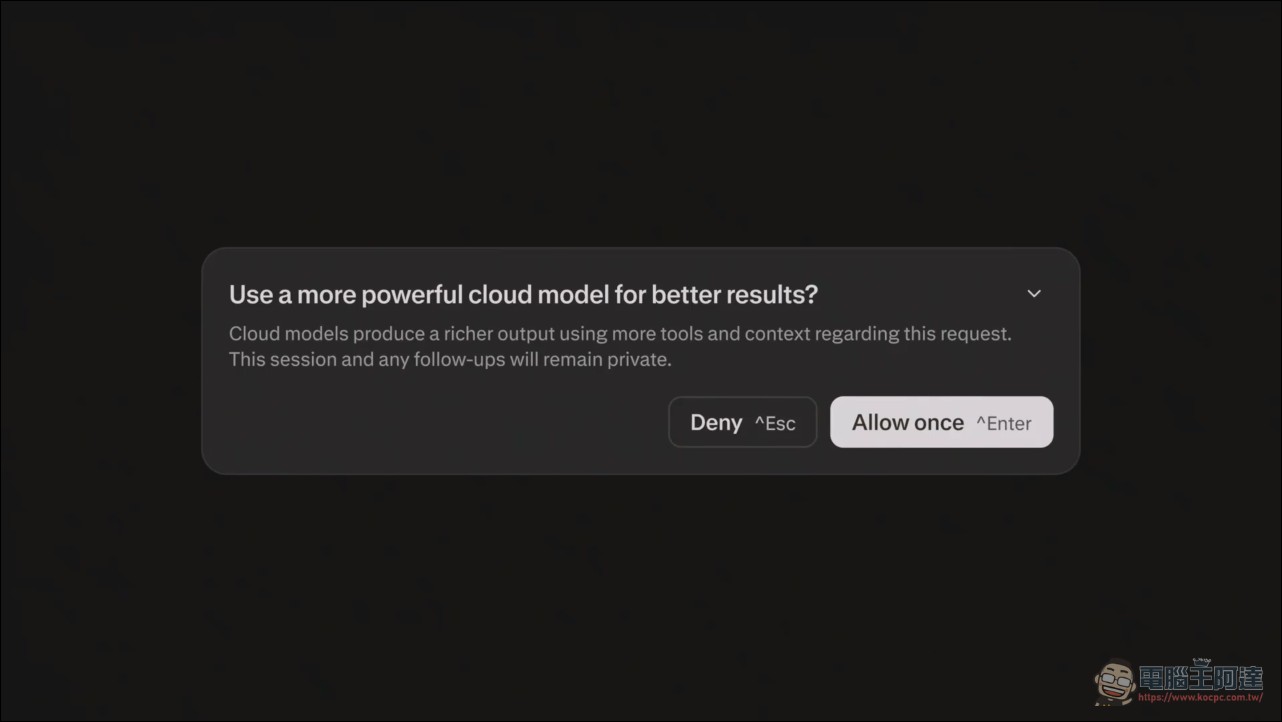
The Portable Computer does not avoid the cloud entirely. When a task requires internet research or more advanced cloud inference, it first asks for user permission before sending content to cloud services, letting users control what data leaves the device. Officials say it only turns to cloud models for steps that local models cannot handle; outbound data first goes through personally identifiable information detection, and cloud models only return text guidance and cannot directly touch the user’s local files or tools.
Hardware requirement: 24GB VRAM minimum
The Windows version supports NVIDIA GeForce RTX and RTX PRO GPUs with 24GB or more of VRAM, starting at the GeForce RTX 3090 (24GB) and including the RTX 4090, RTX 5090 (32GB), and the RTX PRO 4500 and RTX PRO 6000 workstation series.[2] This update builds on existing support for DGX Spark and RTX PCs running Linux, and NVIDIA said support for DGX Station is expected to arrive later.
Models, Connectors, and Security
The setup process for the Windows version has been greatly simplified: after downloading the Perplexity app, users can select a local model from the model menu and download and use it with one click, without having to research models on their own or configure a complex software stack. The first wave includes Qwen 3.8 27B optimized for RTX GPUs, and PPLX 27B, Perplexity’s post-trained model based on Qwen; the open-source NVIDIA Nemotron 3.5 Lightning model is also expected to be added to the model menu later. Voice dictation mode runs locally via the Nemotron 3.5 ASR model, and transcriptions also stay on the device.
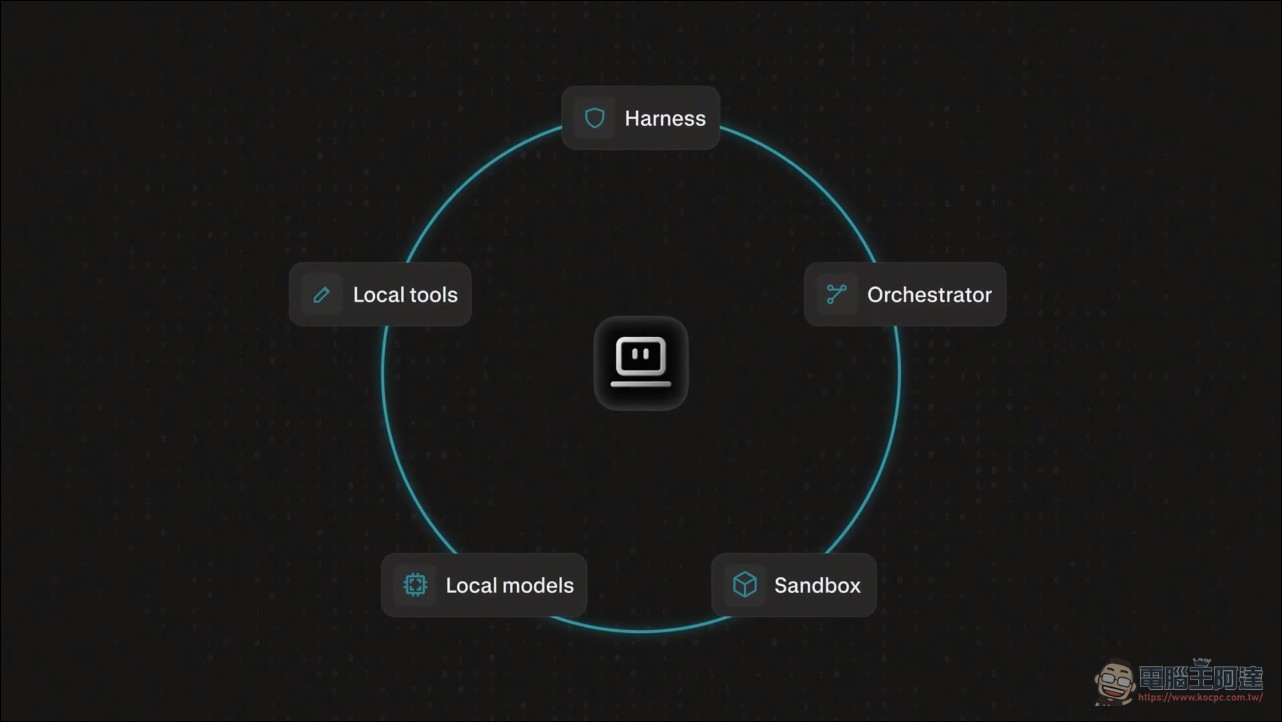
Connectors cover Microsoft Outlook, OneDrive, Word, Google Drive, Gmail, Slack, and GitHub, and can connect to other desktop applications through a local MCP server, letting agents work across the files and apps users are familiar with. On security, code and tool execution both run in isolated sandboxes, paired with the built-in SPACE sandbox and browser, and the company says security matches that of the cloud version of Perplexity Computer.
From DGX Spark to ordinary RTX PCs
Portable Computer was first announced on August 25, when it only supported NVIDIA DGX Spark desktop AI computers and Linux systems; the Windows version was announced at launch for release in September. Now the Windows version is available to Pro and Max subscribers, who can get started by downloading the Perplexity app from the Microsoft Store.
NVIDIA also announced that the next-generation RTX Spark Windows PC will debut in October, bringing local AI to systems smaller than DGX Spark. Observers interpret Portable Computer’s arrival on Windows as more of a preview of NVIDIA’s RTX future: the positioning of RTX computers is shifting from “able to run AI models” to “able to actually get work done.”
Performance and Cost: Go to the cloud only when the local machine can’t handle it.
Perplexity’s own benchmark data shows that when running entirely on a local Qwen model, it scored 59.6% on the Terminal Bench 2.1 software development benchmark, with near-zero additional inference cost; if the agent is allowed to ask frontier cloud models for help, the score rises to 73.0%, at an average cost of about $0.415 per task. Using frontier models throughout scored 82.4%, at about $0.65 per task. The hybrid mode recovers about three-fifths of the performance gap, at about two-thirds the cost of an all-cloud approach, letting users make flexible trade-offs among performance, privacy, and cost.
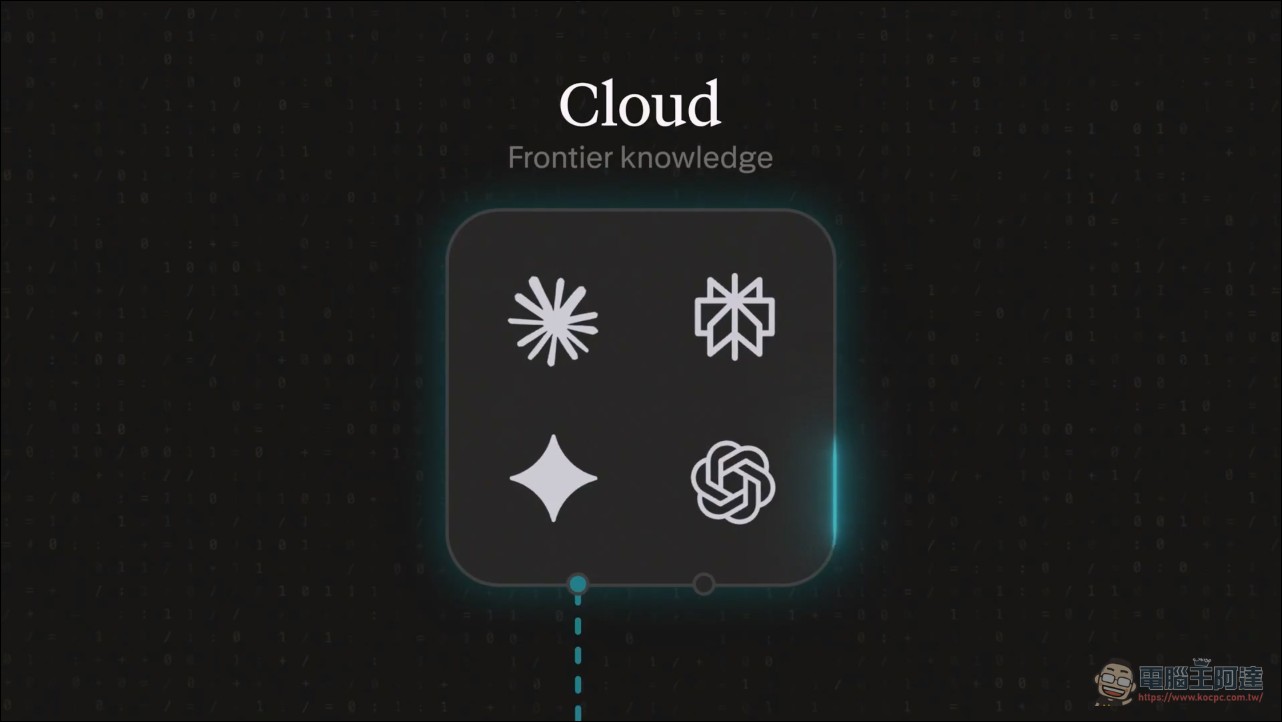
Compared with OpenAI’s ChatGPT Work and Anthropic’s Claude Cowork, Portable Computer takes the opposite design approach. Although the former two can operate on local files and desktop apps, they are still essentially cloud AI reading files on the computer; Portable Computer instead runs the entire agent stack and models on local NVIDIA hardware, with the cloud playing a backup role.
The partnership between the two companies also has a clear precedent. Perplexity and NVIDIA have worked together since June 2025 to promote sovereign AI to European publishers and telecom operators, and are now extending the concept of “keeping data on your own hardware” from the enterprise level to personal computers and workstations.
Conclusion
For businesses and individual users who prioritize privacy, Portable Computer offers a middle path between fully cloud-based and self-hosted: the hardware and models stay in their own hands, while they can flexibly turn to the cloud when advanced capabilities are needed. As on-device model capabilities continue to improve, this kind of local-first, cloud-fallback agent architecture is expected to become one of the mainstream directions for bringing AI agents to personal computers.
Source: KOCPC Chinese