


Apple’s「 on September 9Surprise and Shine“At the press conference, the new generation flagship processor was officially unveiled. A20 ProFor the first time, it adopts TSMC’s 2nm process, built specifically for Apple Intelligence and Siri AI’s on-device computing needs. The newly added on-device capabilities of Apple Intelligence and Siri AI require more computing resources, and the A20 Pro was born in this context. Apple’s Silicon Engineering VP Sribalan Santhanam emphasized that it sets a new benchmark for mobile computing. This chip will be featured in the iPhone 18 Pro, 18 Pro Max, and iPhone Duo, making it Apple’s second chip to use the 2nm process after the M6. These flagship devices thus gain the highest sustained performance and AI computing power in the series’ history.
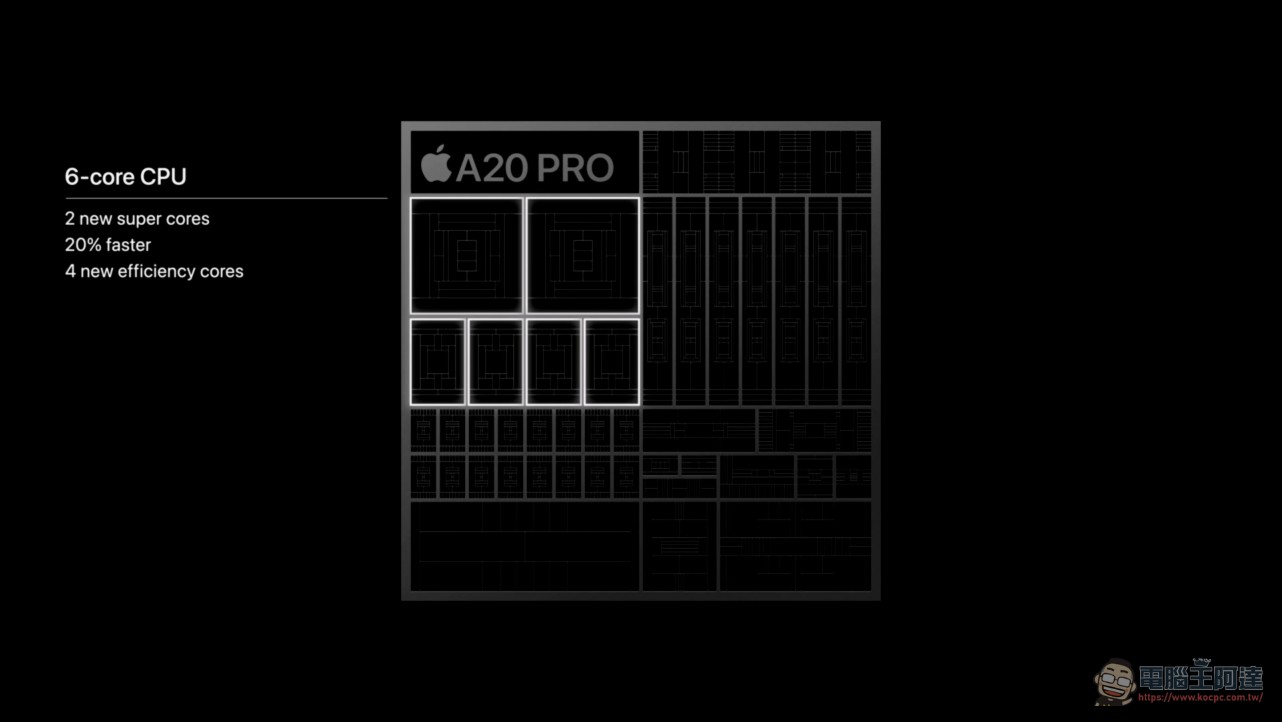
2nm new architecture with 6-core CPU
The A20 Pro adopts a brand-new architecture built on the latest 2nm process technology. Smaller, denser transistors deliver upgrades across every part of the chip. The CPU retains a 6-core design, including two brand-new Super Cores and four efficiency cores. The Super Cores deliver up to 20% higher performance, and Apple describes them as desktop-class—the fastest cores currently found in a smartphone. The four efficiency cores handle everyday light workloads, striking a balance between battery life and performance. Each core integrates a neural accelerator to handle low-latency on-device AI workloads, making Siri AI and Apple Intelligence responses smoother in real time. Compared to the previous generation’s single Neural Engine configuration, the A20 Pro distributes AI computation directly to every CPU core—a fairly significant architectural shift. Apple has rarely used the term “desktop-class” for mobile chips in the past; positioning the Super Cores at the desktop level this time indicates a clear breakthrough in single-core performance for the A20 Pro.
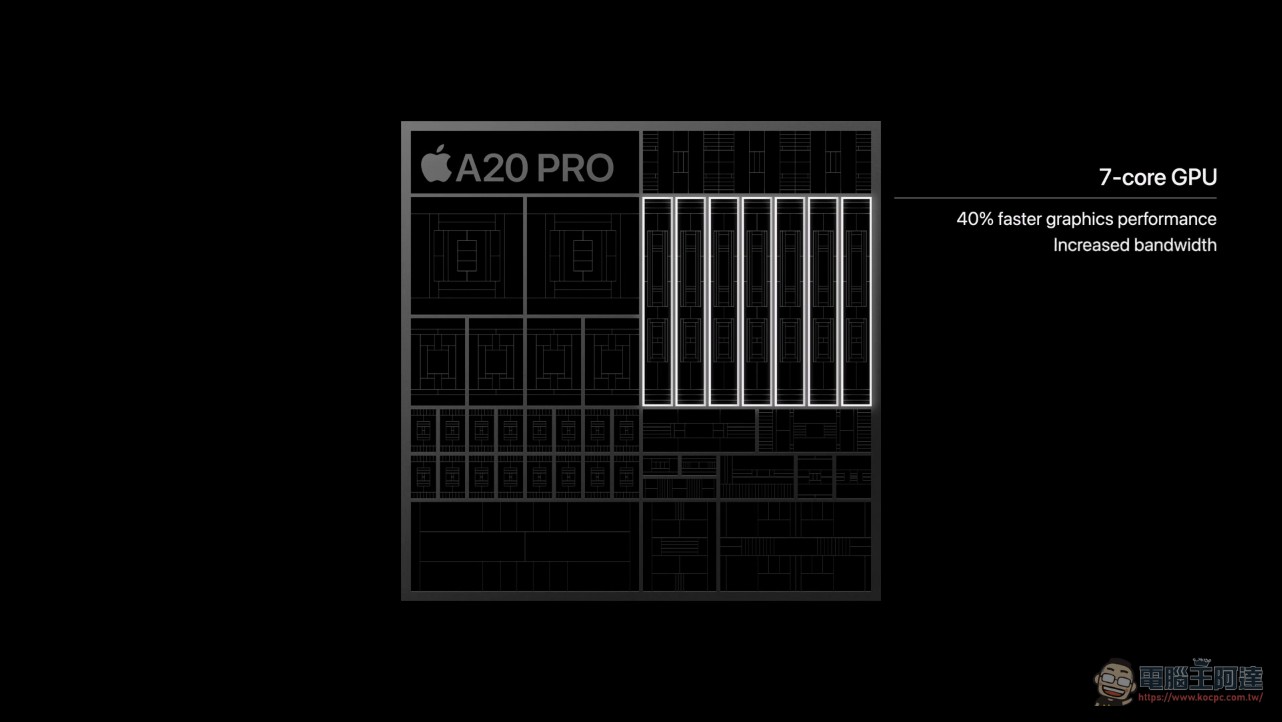
7-core GPU and FP8 neural accelerator
The A20 Pro’s GPU has been upgraded to a 7-core design, adding one more core compared to the A19 Pro, with graphics performance improved by up to 40%—Apple describes this as a major leap within a single generation. Internal bandwidth has been increased, along with microarchitecture refinements tailored for high-end gaming. The new neural accelerator supports 8-bit floating-point operations (FP8) and delivers twice the processing speed of the previous generation, enabling third-party LLMs to run directly on-device while also strengthening AI applications for image generation. For gaming, the compute demands of ray tracing and high-resolution rendering also receive better support on the A20 Pro. Image-generation AI applications likewise rely on the GPU’s parallel computing capabilities, and the 7-core configuration makes such workloads run more smoothly. A 40% single-generation improvement is quite rare in recent mobile GPU evolution, and the upgrade is notably larger than what the previous-generation A19 Pro delivered.
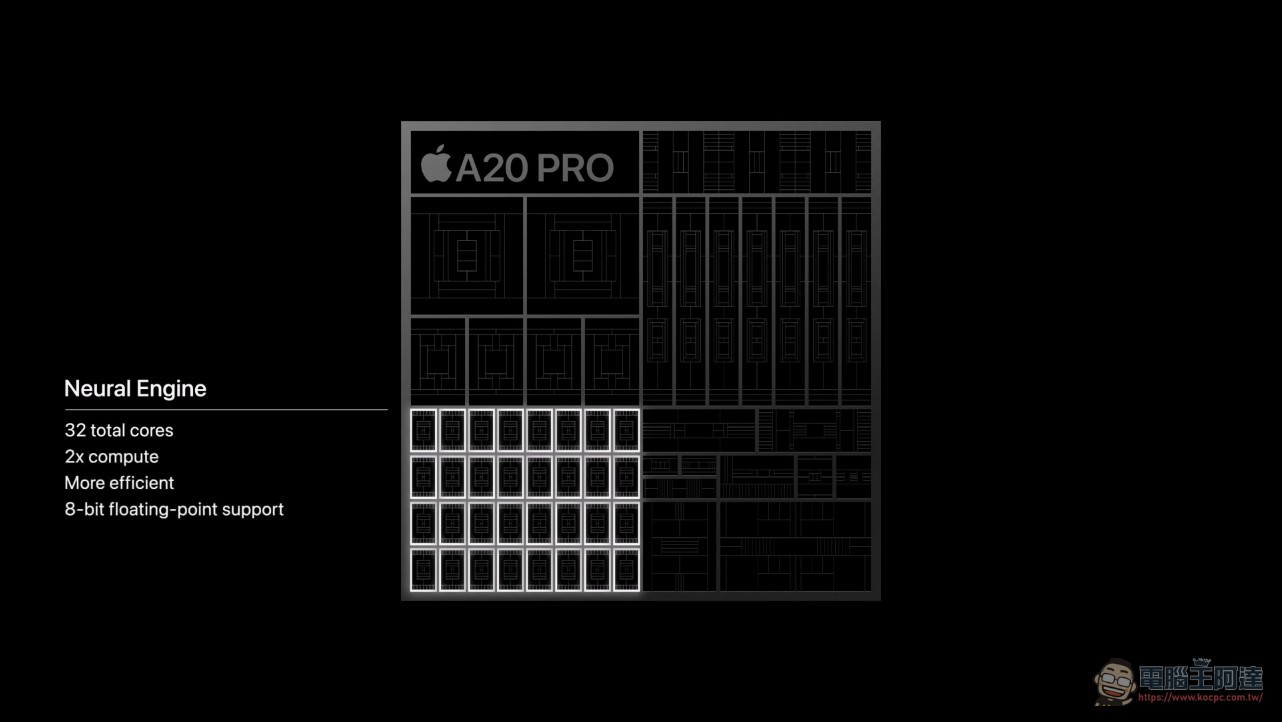
Dual neural network engine: 32 cores, 2x computing power
In addition to the neural accelerator in the CPU, the A20 Pro also features a second neural network engine, bringing the total core count to 32 and delivering twice the computing power of the previous generation. Apple says this makes the A20 Pro the ultimate chip for running advanced on-device models. The neural network engine has been a key focus of Apple’s annual improvements, with previous generations using a single configuration. This year’s dual-engine design represents the largest AI computing expansion in Apple’s history, signaling that on-device AI has shifted from a supporting role to a primary computing direction. Heavy workloads like running large language models and real-time image generation directly on the phone are all powered by this engine. For users, the most immediate benefits of the dual-engine design are faster Siri AI responses and more real-time photo search, while developers can also deploy larger models on-device.
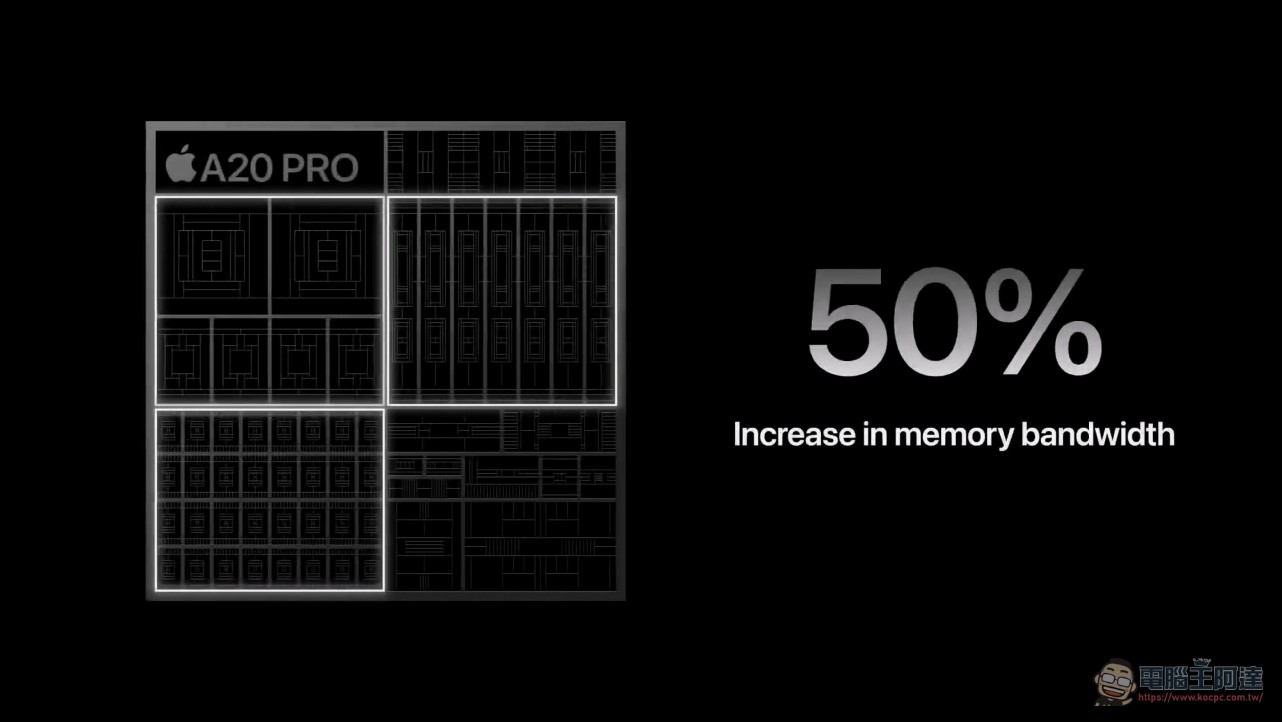
Memory bandwidth increased by 50%
The upgrades to the CPU, GPU, and Neural Engine are all supported by a 50% increase in memory bandwidth, making this the widest memory interface in iPhone history. Apple noted that memory bandwidth is a key driver behind all of the A20 Pro’s performance gains, especially since the Neural Engine requires large amounts of data moving in and out—insufficient bandwidth would directly choke AI compute throughput. Compared with the typical evolution of PC and mobile chips, memory bandwidth is often the performance bottleneck, and this time the A20 Pro tackles the interface width directly, showing clear long-term planning for the AI era. For AI models, the larger the parameters, the more bandwidth is required, and a 50% increase means the device can run larger-scale models. Apple has been relatively conservative with memory interfaces in the past, so this direct 50% upgrade is quite rare among past iPhone chips.
M‑series‑inspired custom packaging and thermal management
To fit greater bandwidth and computing units into the limited physical space of the device, Apple redesigned the chip’s physical packaging. The A20 Pro uses a custom packaging derived from the M-series chips, placing the chip die and memory side by side. This moves the memory out of the SoC’s thermal path, allowing the silicon die to connect directly to the vapor chamber, significantly improving thermal performance.
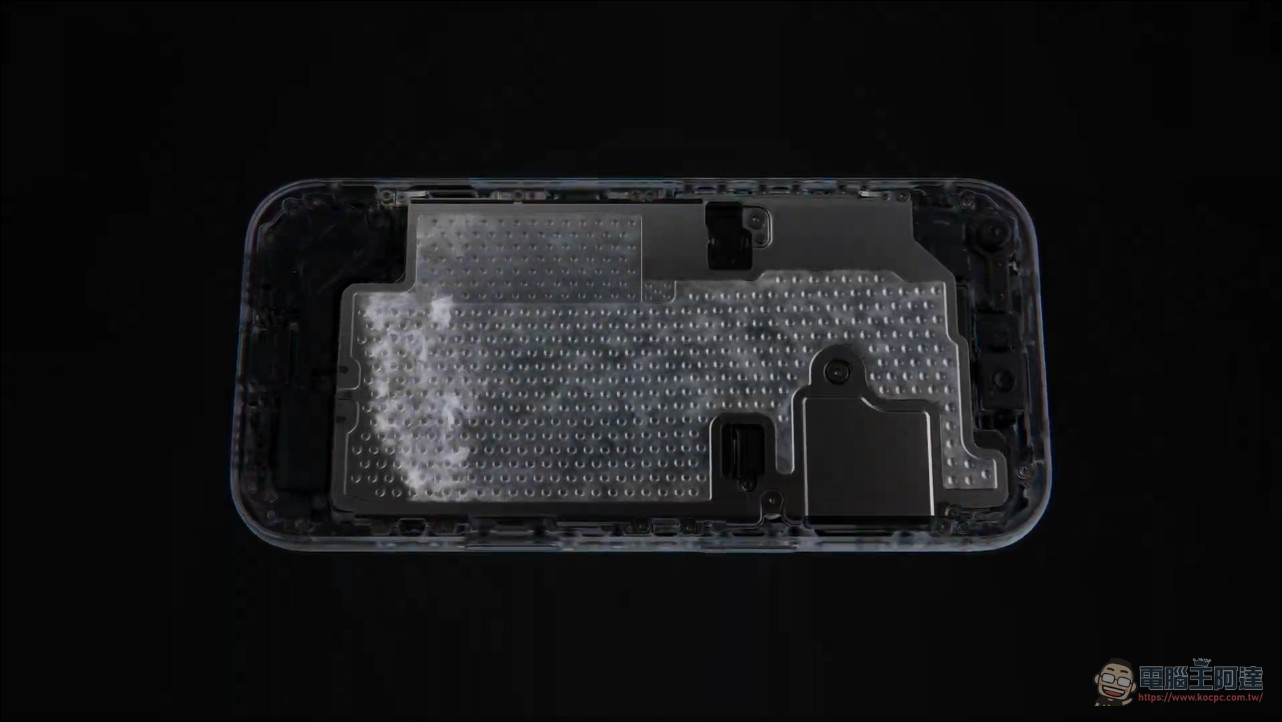
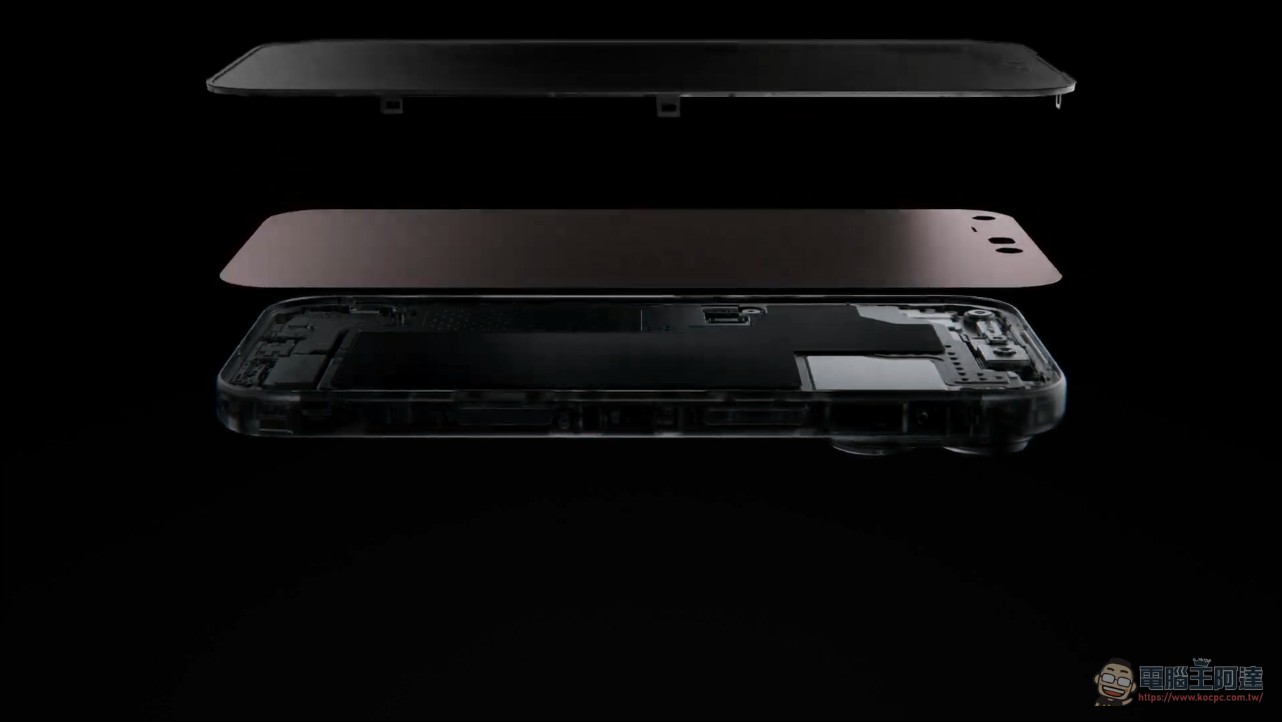
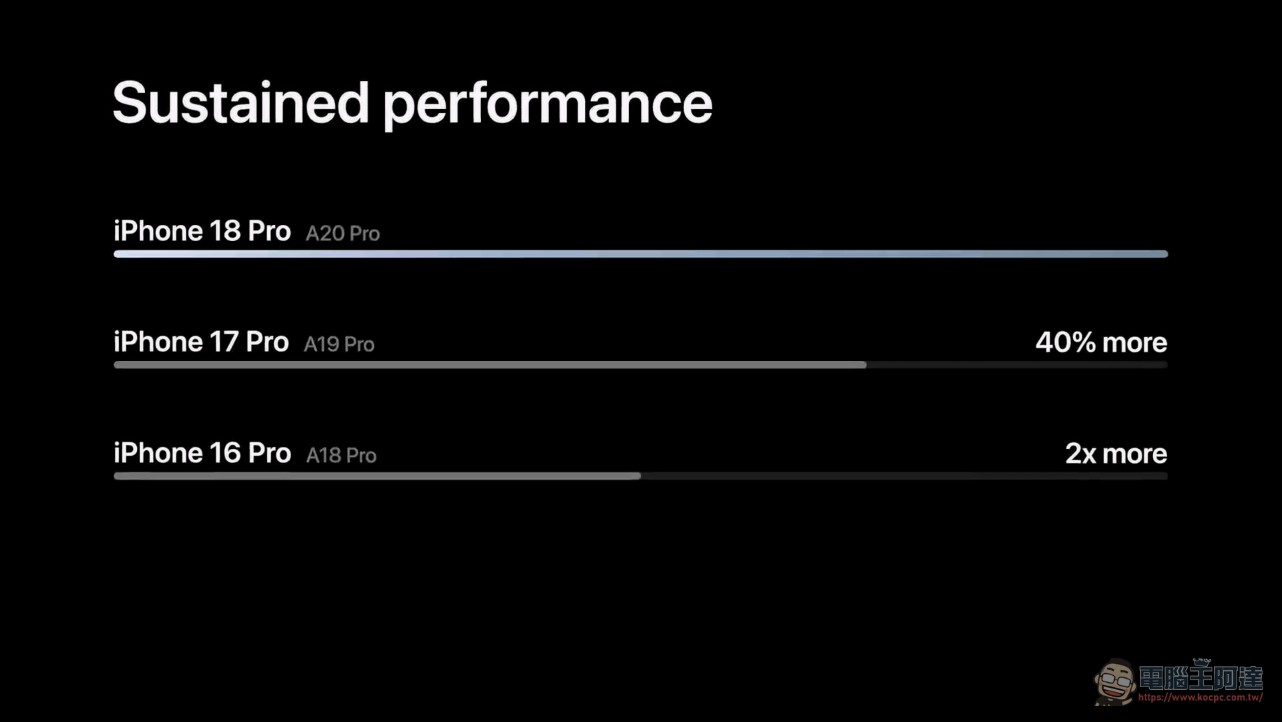
The new packaging is just one part of the overall thermal design. The iPhone 18 Pro features a next-generation vapor chamber with three times the surface area of the iPhone 17 Pro’s, circulating deionized water internally, using 80% recycled stainless steel, paired with graphite material offering higher thermal conductivity, plus the industry’s first nano-twinned copper material. Apple says this cooling system delivers the highest sustained performance ever in an iPhone with the A20 Pro, improving up to 40% over the iPhone 17 Pro and up to twice as much as the iPhone 16 Pro and earlier models.
Sustained performance matters because gaming and AI applications run at high loads for extended periods. In the past, chips were prone to thermal throttling due to overheating. The A20 Pro has put serious effort into cooling to maintain full-speed operation for long stretches, ensuring performance doesn’t degrade from high temperatures under heavy load. It’s 40% faster than the iPhone 17 Pro, and twice as fast as the iPhone 16 Pro (previous iPhones were more likely to throttle due to heat during gaming).
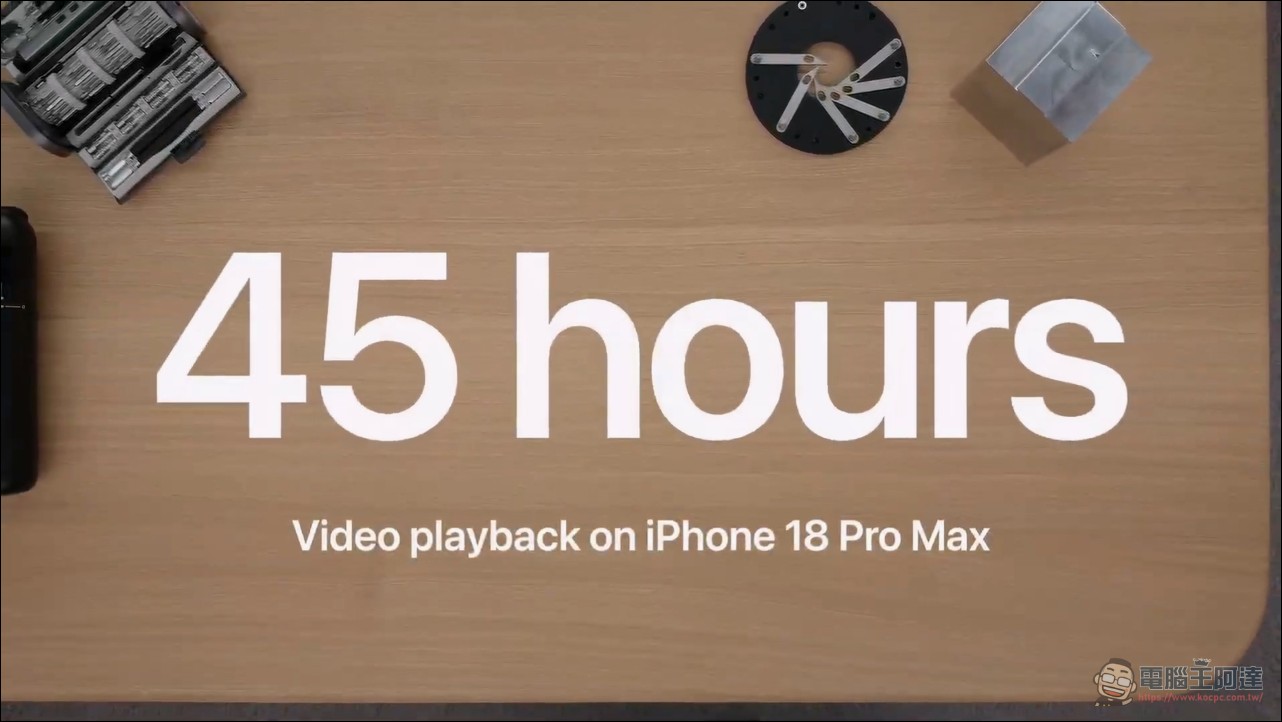
Additionally, the improvement in energy efficiency, combined with the larger battery capacity this time (though the capacity wasn’t disclosed), gives the iPhone 18 Pro its longest battery life ever. The iPhone 18 Pro can play video continuously for up to 18 hours, while the iPhone 18 Pro Max can last up to 45 hours: 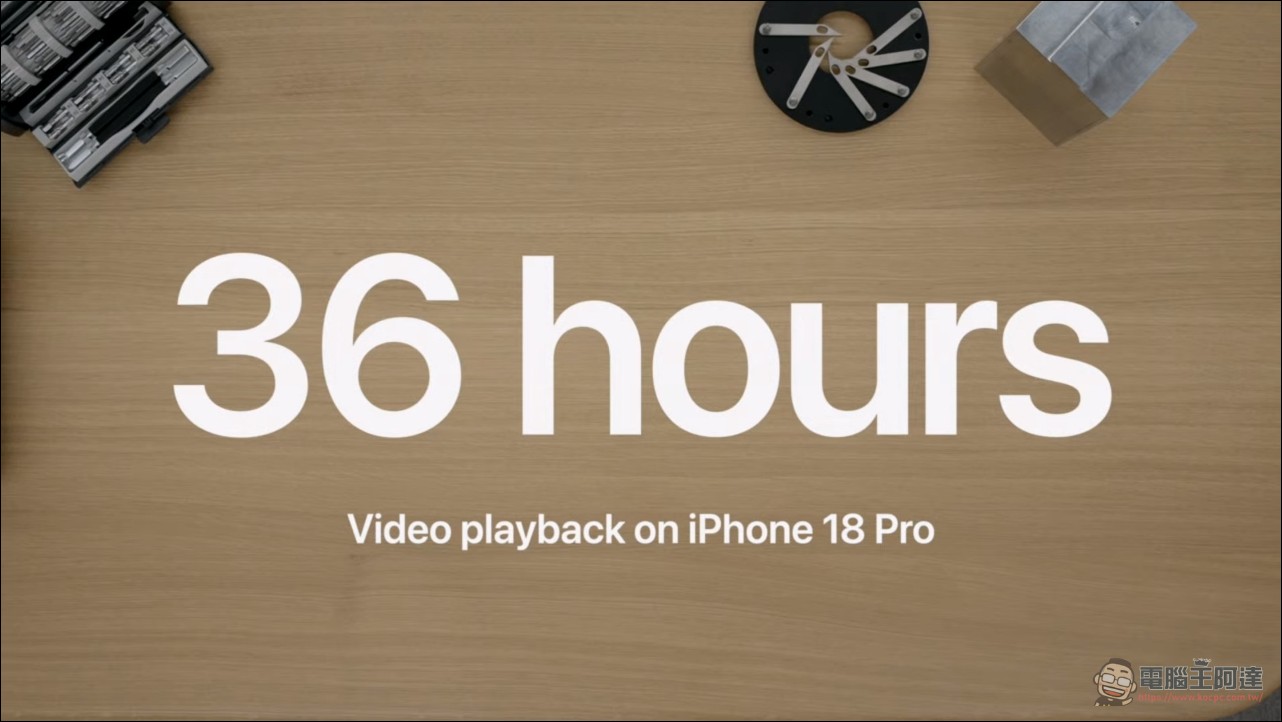
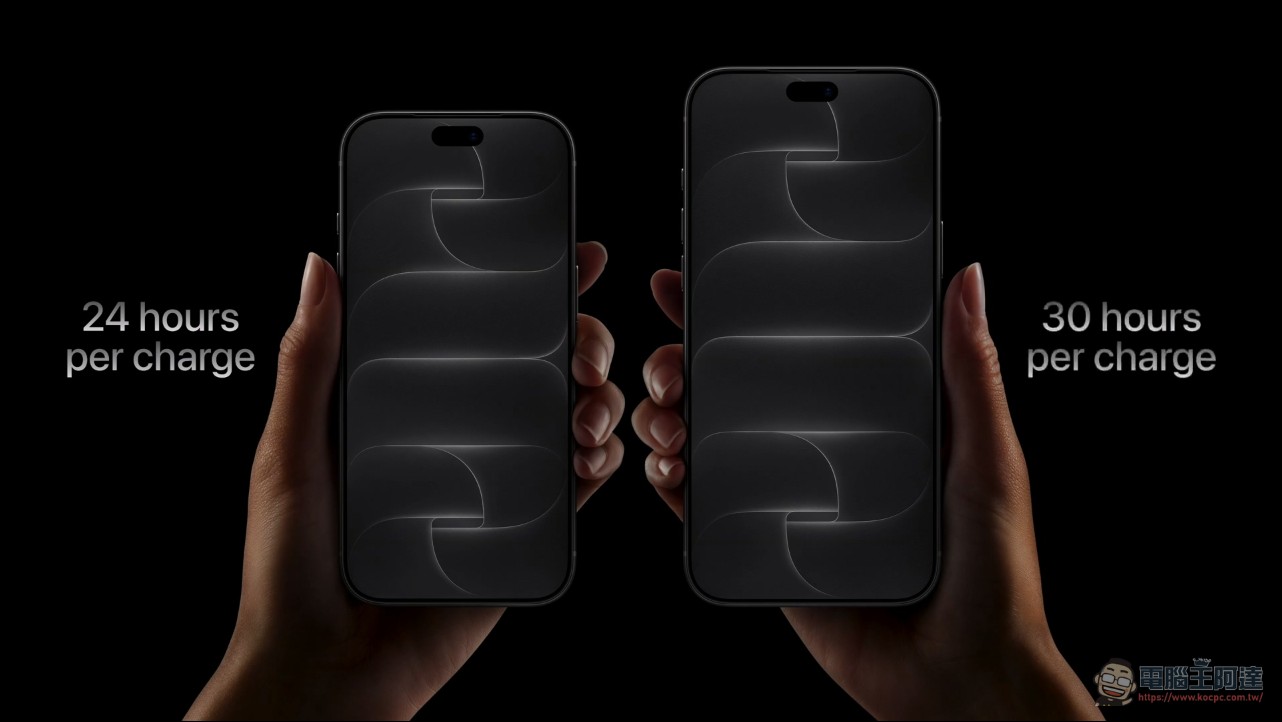
Meanwhile, battery life per charge reaches up to 24 hours (Pro) and 30 hours (Pro Max), and charging speed has also improved—it’s claimed that five minutes of charging provides six hours of video playback, while a 15-minute charge gets you to 50%.

Conclusion
The A20 Pro is a key step in Apple’s push to shift the center of AI computing toward the device. The 2nm process, dual neural network engines, and 50% increase in memory bandwidth give the iPhone 18 Pro the ability to run models locally that previously required cloud assistance, while a new packaging and thermal design keeps it operating at high performance for extended periods. Compared to the A19 Pro, the A20 Pro delivers generation-level upgrades across four fronts—CPU, GPU, AI acceleration, and memory interface—and should stand as the performance benchmark for mobile chips in the near term. For developers and enthusiasts, this chip represents an era where you can run desktop-class applications on a phone; the next question is whether the software ecosystem can keep pace with the hardware.
Source: KOCPC Chinese