


After NVIDIA unveiled the RTX Spark chip at Computex 2026,Windows on Arm The software ecosystem has become the variable drawing the most external attention. On Monday (8/25), Microsoft updated its “Works on Windows on Arm” database, confirming that verified compatible applications and games have surpassed 7,000 titles. This number falls at NVIDIA RTX Spark The timing is intriguing, ahead of the series’ launch this autumn.
Since the Snapdragon X Elite debuted in 2024, Windows on Arm has completed two years of ecosystem building. When Qualcomm launched the Snapdragon X2 Elite in late 2025, Microsoft updated its validation list in tandem, but the numbers then were far below the current scale. The 7,000 apps represent not just growth in quantity, but more critically, the coverage has expanded from productivity tools to professional fields such as gaming, STEM, and cybersecurity, indicating that developer investment in Arm PCs is accelerating.
RTX Spark is NVIDIA’s first system-on-chip (SoC) to enter the consumer PC market, combining a 20-core Grace CPU co-developed with MediaTek, up to 6,144 Blackwell GPU cores, and up to 128GB of unified memory, delivering 1 petaflop of AI computing performance. Jensen Huang said plainly at Computex that NVIDIA and Microsoft are “reinventing the PC,” with the goal of moving AI agents from cloud servers back to local devices. But no matter how powerful the hardware, if the software doesn’t keep up, it’s just a display piece on the desk.
7,000 verified applications: not 7,000 native Arm
Microsoft emphasized that these 7,000 apps and games are “verified to run on Windows on Arm,” including native Arm64 versions as well as x86/x64 programs running through the Prism translation layer.Prism It’s Microsoft’s x86-to-Arm translator, and after the December 2025 update, it added support for AVX and AVX2 instruction sets, significantly improving compatibility with older-generation games and development tools.
Microsoft hasn’t broken down how many of those 7,000 titles are native Arm versus running through Prism emulation. Based on what we know from the Snapdragon X series, mainstream productivity software (Office, Chrome, Adobe suite) already has native Arm64 versions, but plenty of smaller development tools and specialized software still rely on the emulation layer. As for RTX Spark, NVIDIA released a CUDA Toolkit preview back in July that lets developers optimize natively for the platform, but the ecosystem still has a ways to go from “it runs” to “it runs well.” Prism’s AVX support is especially critical, since a large amount of scientific computing and data analysis software depends on that instruction set—this was the main thing holding Arm PCs back in STEM fields before.
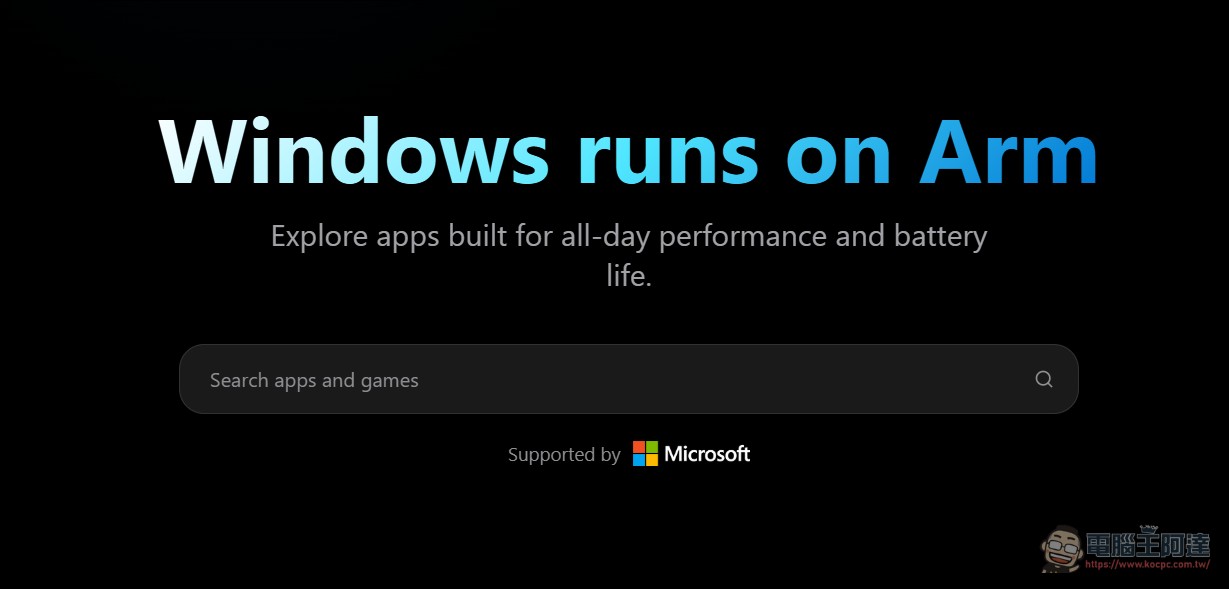
Windows runs on Arm (compatibility check page)
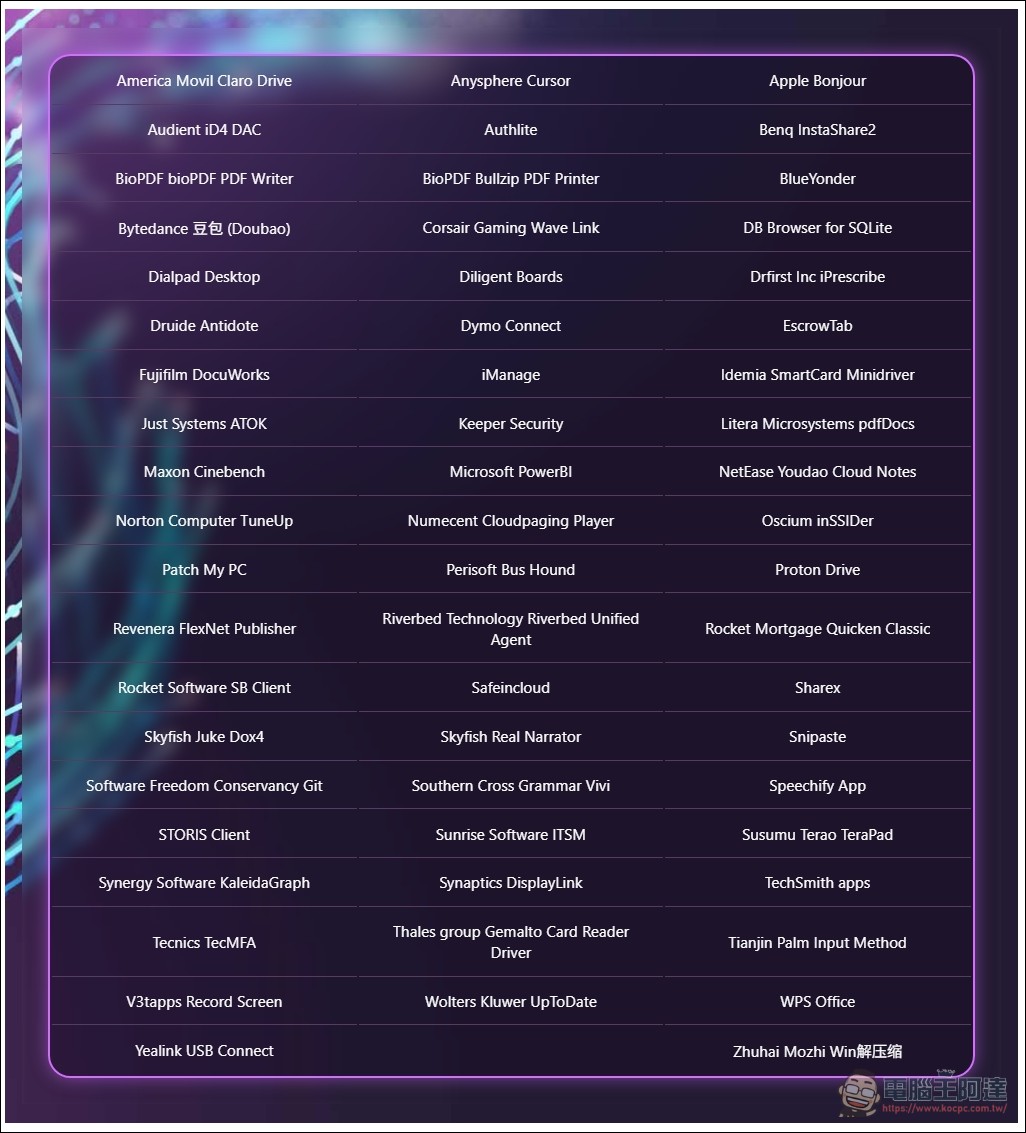
The latest batch of the verification list covers five categories: productivity, development, STEM, security, and entertainment. Productivity and development tools include Cursor, Microsoft PowerBI, ShareX, Proton Drive, and WPS Office.
Creative and entertainment software includes Affinity (under Canva), Discord, Inkscape, MAGIX VEGAS Pro, Maxon Redshift, Signal, and Perplexity Comet Browser.
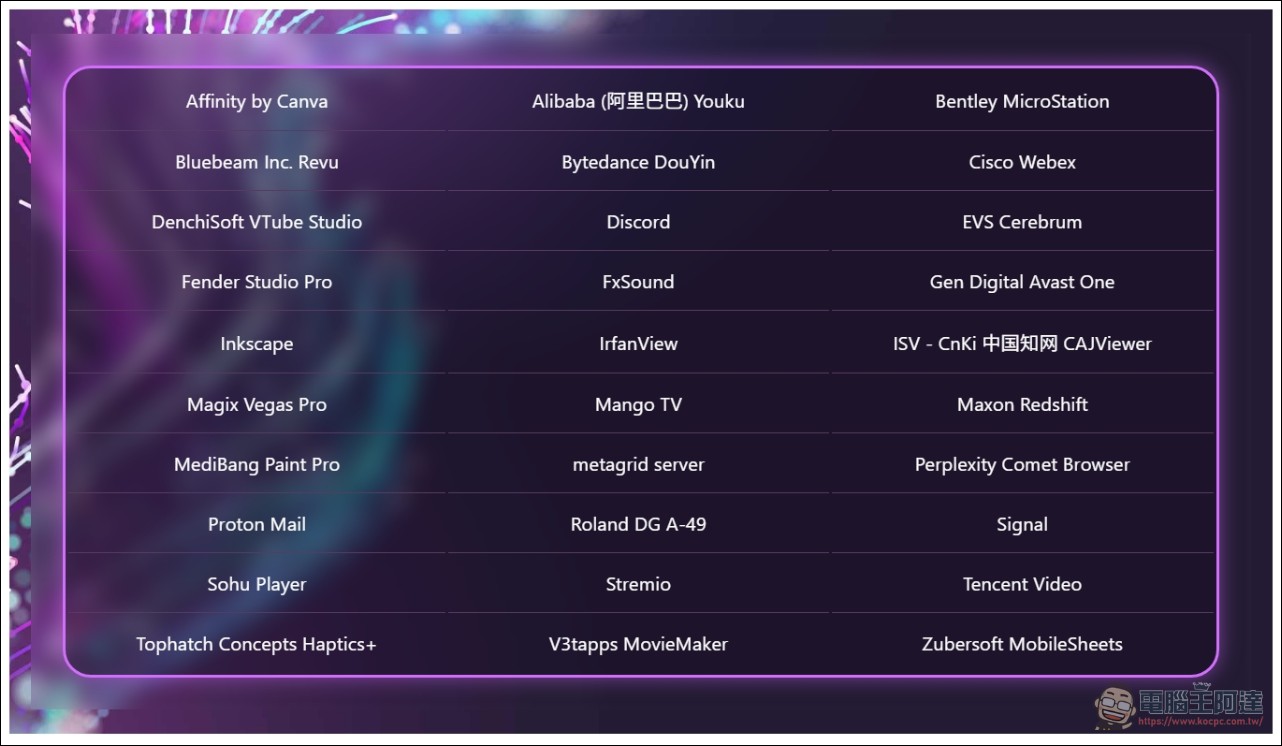
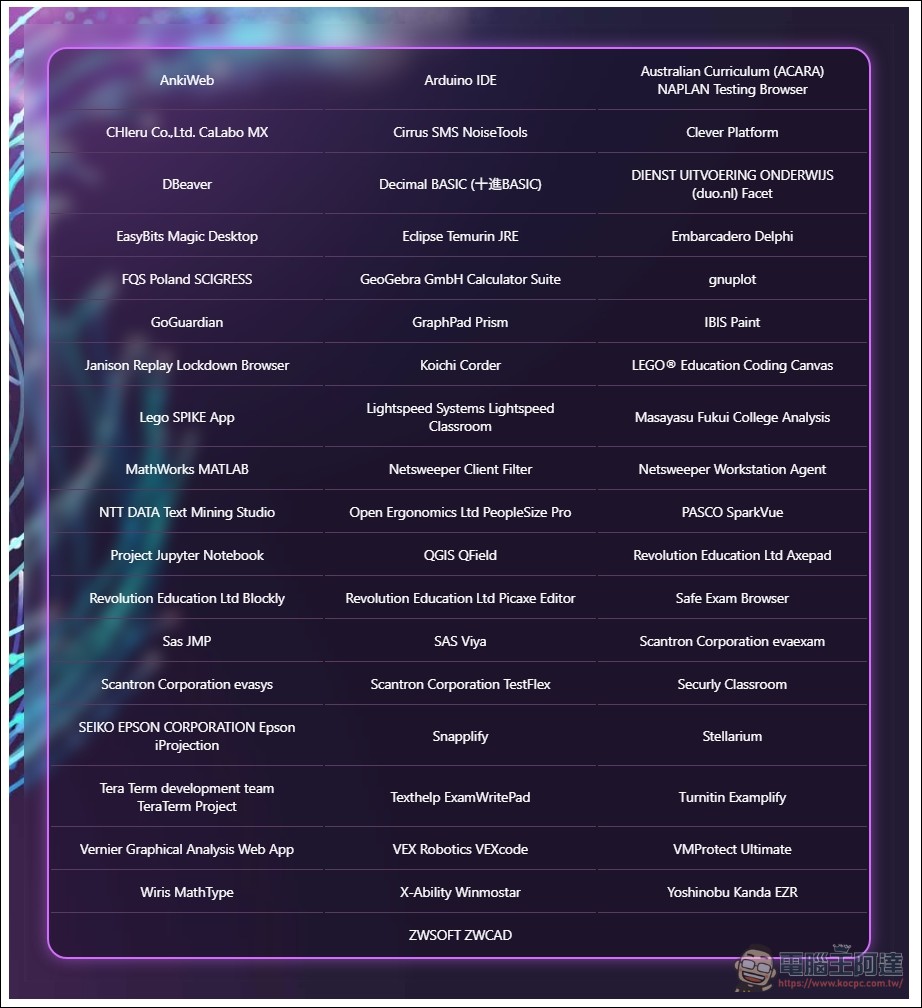
STEM and education category adds Arduino IDE, MathWorks MATLAB, Jupyter Notebook, QGIS QField, ZWCAD, etc.
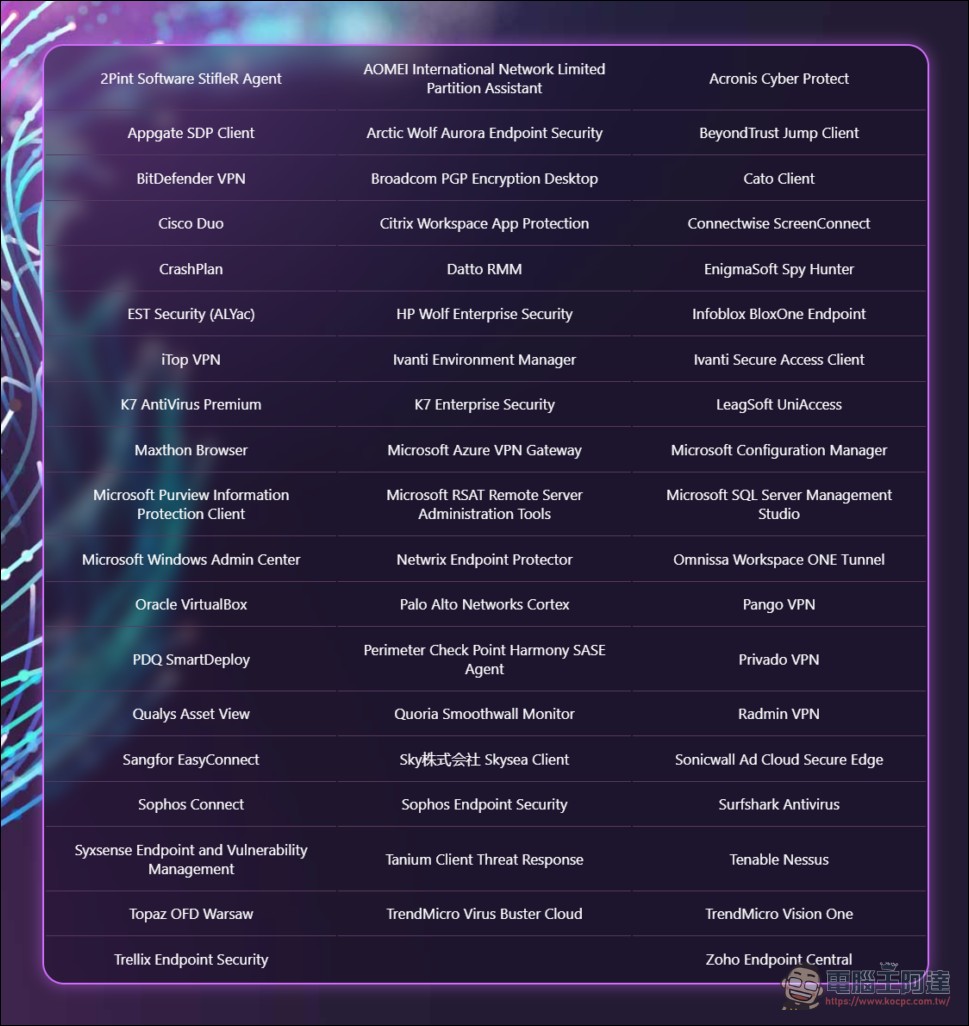
In terms of cybersecurity and endpoint management, Acronis Cyber Protect, Cisco Duo, Sophos Endpoint Security, Tenable Nessus, and Surfshark Antivirus have all completed verification.
RTX Spark Gaming Ecosystem: EA, Ubisoft, Embark Confirm Support
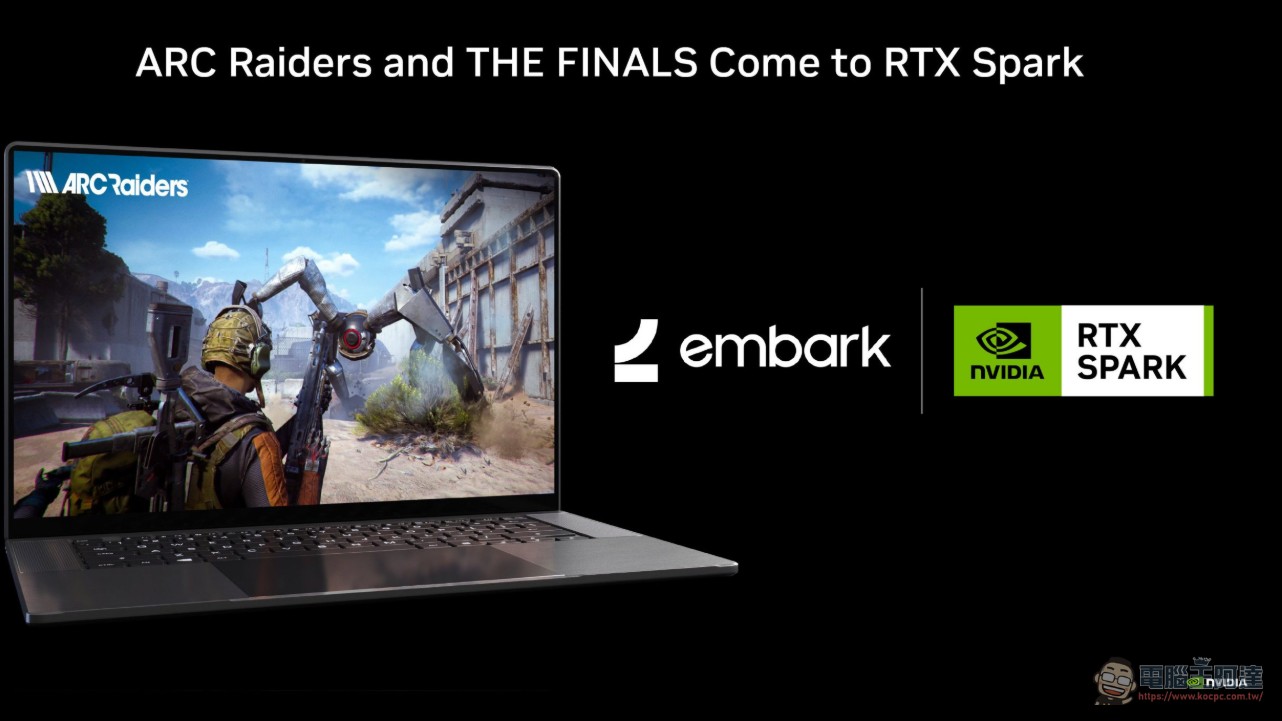
For players, no matter how impressive the hardware specs are, without games to back them up, it’s all empty talk. On August 25, NVIDIA announced that Electronic Arts, Embark Studios, and Ubisoft are preparing game support for RTX Spark, with the confirmed list including Apex Legends, F1 25, ARC Raiders, The Finals, and more. EA’s anti-cheat system has been confirmed to run in a native Arm version, not relying on Prism translation. For competitive gamers, whether anti-cheat can run natively is a decisive factor, because the translation layer interferes with kernel-level integrity checks.
In July, NVIDIA released a preview of the CUDA Toolkit for the RTX Spark platform. This is a native Windows on Arm software toolkit that lets developers optimize specifically for RTX Spark. Some game developers are currently building three versions in parallel: a fully native Arm version, an x86 version optimized for Prism translation, and a hybrid approach. Running all three strategies simultaneously reflects developers’ assessment of the Arm PC market’s prospects: it’s worth investing resources in native versions, but they also need to make sure the Prism translation path doesn’t fall behind.
OEM lineup: Six brands launch simultaneously
Microsoft confirms RTX Spark devices will be Surface, ASUS, Dell, HP, Lenovo, and MSI—six manufacturers launchedDuring Computex 2026, ASUS has already previewed the ProArt P16, P14 laptops and the ProArt Mini PC, while Microsoft unveiled the Surface Laptop Ultra powered by RTX Spark, a 15-inch flagship laptop with up to 128GB of unified memory. Six vendors spanning from commercial to consumer-grade and from laptops to desktops demonstrate that OEM commitment to the second wave of Arm PCs far exceeds the initial Snapdragon X Elite launch in 2024.
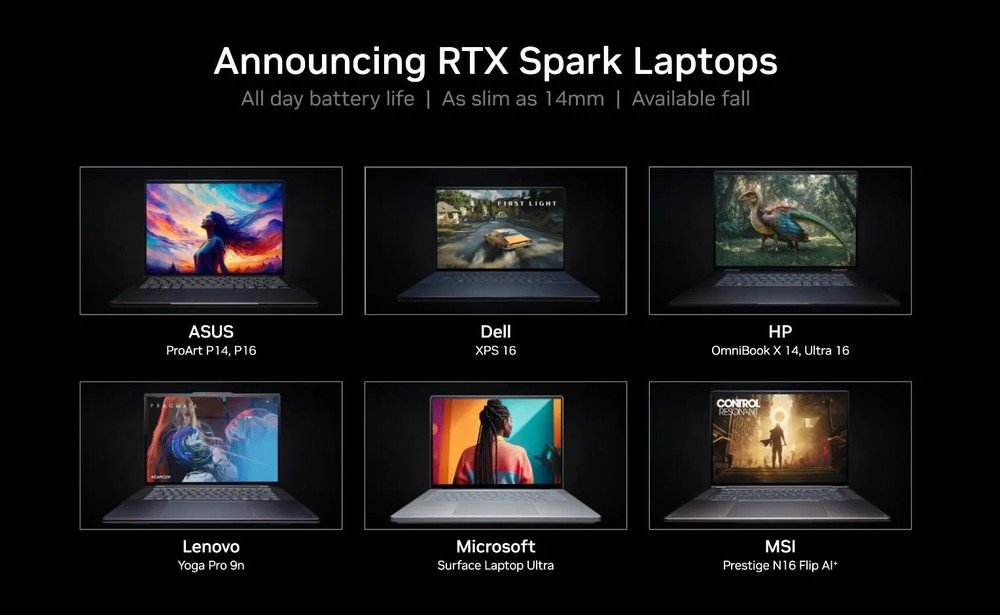
NVIDIA also confirmed the future roadmap for RTX Spark: a next-generation chip using Vera Rubin architecture and LPDDR6 memory will launch in 2027, followed by the Rosa Feynman generation in 2029. The two-year iteration cadence means NVIDIA is treating RTX Spark as a long-term platform, not a one-off product.
NVIDIA joins, Windows on Arm goes from “Qualcomm exclusive” to dual-engine.
Before this, the Windows on Arm market was almost entirely dominated by Qualcomm’s Snapdragon X series. The addition of NVIDIA RTX Spark means the number of Arm PC chip suppliers has grown from one to two. For Microsoft, having an additional chip partner means stronger bargaining power and more product options; for consumers, it could mean more aggressive price competition.
NVIDIA RTX Spark has the potential to “ignite” Windows on Arm. When Qualcomm kicked off the Arm PC era with Snapdragon X Elite in 2024, chip performance was already sufficient—what held things back was the software ecosystem lagging behind. If NVIDIA’s entry can truly draw more developers into native Arm development, the ceiling for the entire Windows on Arm platform will be pushed higher.
For Qualcomm, this is a wake-up call. The Snapdragon X series has had the Arm PC market to itself for two years, yet its market performance has shown little improvement. When NVIDIA cuts straight in with its GPU ecosystem, CUDA developer base, and gaming brand, Qualcomm’s CPU-only approach will see its advantage diluted in the AI PC battlefield. The RTX Spark’s 1 petaflop of AI performance far exceeds the Snapdragon X Elite series, giving NVIDIA an absolute edge in “local AI computing”—the core selling point of Arm PCs.
But the real test for the ecosystem is just beginning. Seven thousand certified apps may sound like a lot, but compared to decades of software accumulated on x86 Windows, it’s still a drop in the bucket. While the Prism translation layer has greatly improved compatibility, native Arm versions remain essential for performance-sensitive workloads like video editing, 3D rendering, and large-scale gaming. Currently, the gaming experience on Windows on Arm has come a long way with Prism updates, driver improvements, and anti-cheat compatibility—which remains the primary bottleneck—but it still falls short of the maturity found on x86 platforms.
When RTX Spark launches this fall, whether these 7,000 verified apps are enough to support daily use, whether gaming performance can keep up with the hardware specs for DLSS and ray tracing, and whether NVIDIA can keep driving developer investment across its two-year roadmap will be key to deciding whether Windows on Arm can move from “usable” to “mainstream.”
For consumers, this fall marks the first time there’s a real choice: Qualcomm’s Snapdragon X2 Elite series and NVIDIA’s RTX Spark series will compete in the same price bracket. Over the past two years, Arm PC buyers could only choose Qualcomm, but now there’s one more option on the table. The 7,000 verified applications are a starting point, not the finish line. Whether the game support list can expand from the current dozens to hundreds within three to six months after RTX Spark launches, and whether the share of native Arm64 versions can keep climbing—that’s the real test of whether this second wave of Arm PCs can actually gain a foothold.
Source: KOCPC Chinese