


“Last year, we had around 200 shoots a month, but this month we only have about 30—a contraction of 80 to 90 percent.” Those are the words of the head of a micro short drama production company in Zhengzhou, Henan Province, speaking to a Sixth Tone reporter. China’s micro short drama industry, exemplified by platforms like Hongguo Short Drama, has experienced explosive growth over the past three years, with Zhengzhou earning the nickname “Vertical Screen Hollywood” thanks to its dense cluster of film studios. But in early 2026, as AI video generation technology matures and platform policies shift, the industry is undergoing a dramatic structural transformation. On one side, directors, actors, and film studios in Zhengzhou are struggling with shrinking budgets and fewer productions; on the other, AI studios in Wuxi are producing short dramas with fewer people, lower costs, and faster turnaround.
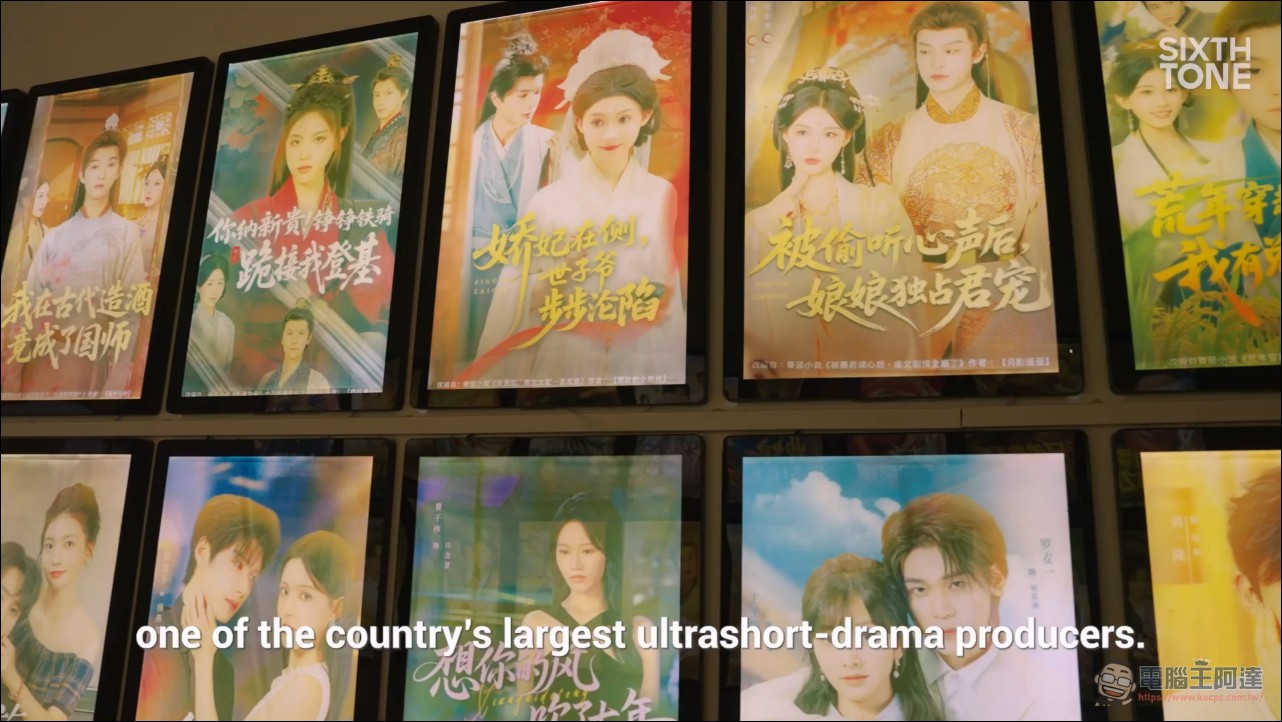
China’s ultra-short drama industry is entering a harsh winter, with live-action productions nearly at a standstill, while AI short dramas are rising to take their place.
Zhengzhou: From ‘Vertical Screen Hollywood’ to Empty Studio Lots
Zhou Tu Culture in Zhengzhou was founded in 2022 and quickly grew into one of China’s largest producers of ultra-short dramas. Before the AI shock, China’s ultra-short drama market was expanding at an astonishing pace, with fast-paced, highly dramatic stories attracting hundreds of millions of viewers. The industry chain was built on speed, low budgets, and nonstop output.
The turning point came in early 2026. With the launch of powerful video generation models, and as short-drama platforms like Hongguo began shifting their incentive policies toward AI-generated short dramas, demand for live-action short drama production plummeted. The head of Zhoutu Culture said that the company had more than 200 productions starting filming each month last year, but after Hongguo adjusted its policies for the live-action drama segment in January and February this year, all short-drama companies have been contracting, and now only about 30 productions start filming each month. The company’s staff has been reduced from over 500 at its peak to just over 200.
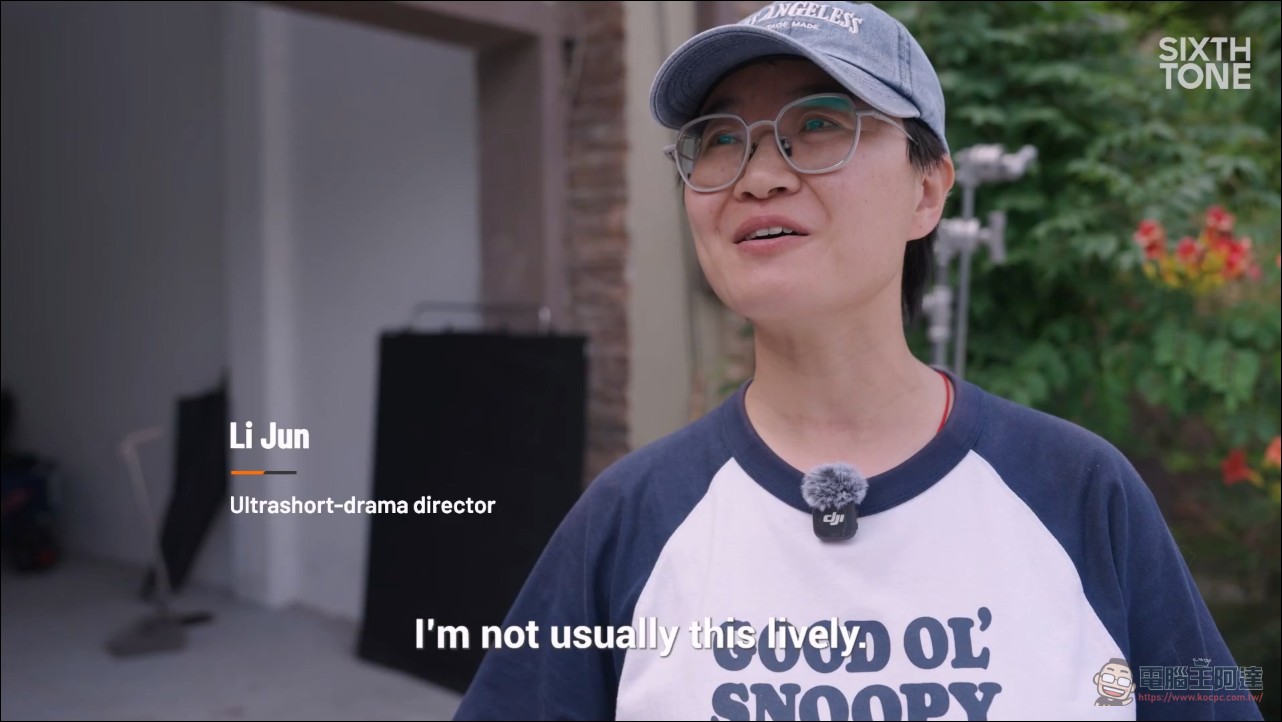
Director Li Jun’s experience reflects this impact even more specifically. Last year, she was shuttling between different crews almost every month, wrapping one project and rushing straight to the next with barely any downtime. But starting in March or April this year, she might get only one production a month. “AI short dramas are absolutely everywhere, and everyone thinks they look obviously fake—they’re nowhere near as lively as real actors. I’m really troubled. Why did AI short dramas have to appear in the first place?”
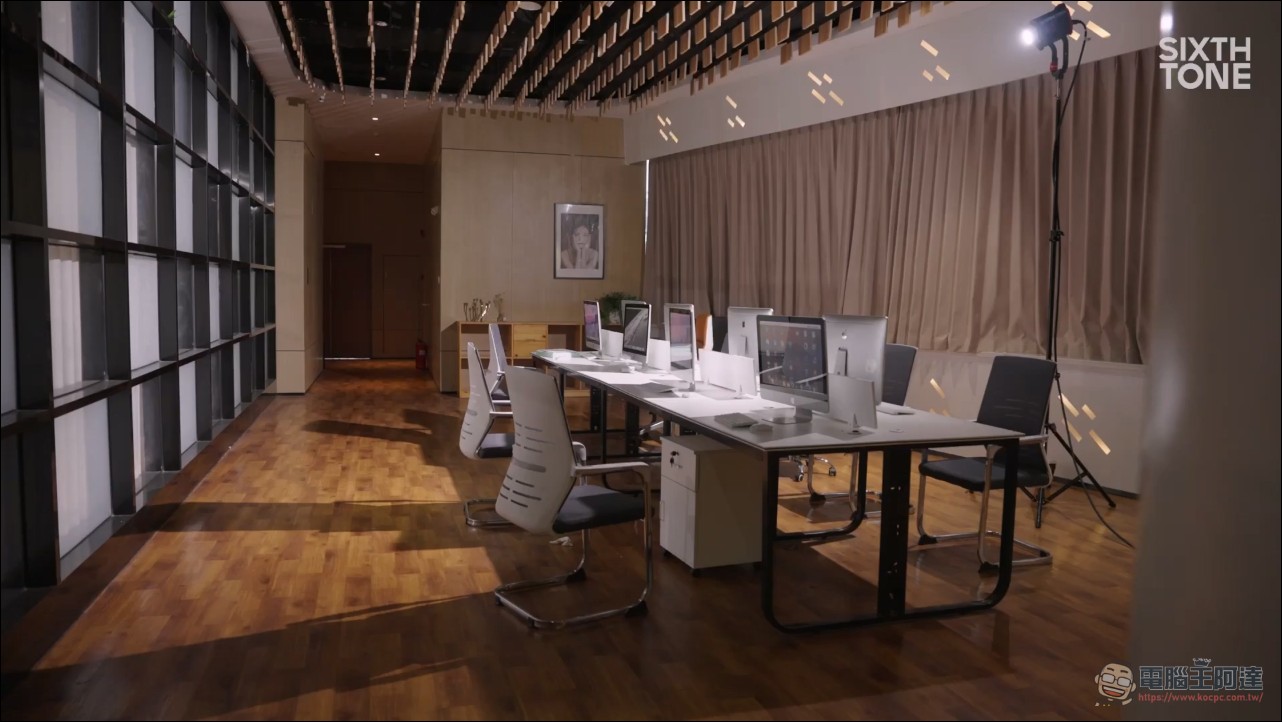
The film studio on the outskirts of Zhengzhou was not spared either. Wang Dongbo, a former gym manager, took over a large film studio from a bankrupt developer last year, betting on the booming micro-drama industry. Renovation began in October last year, and the studio officially started hosting production crews in January this year. At its peak, more than a dozen crews were filming simultaneously in a single day. But things took a sharp turn for the worse in March, with only two or three crews showing up each day. By April and May, sometimes two or three days would pass without a single crew coming through the door. Wang Dongbo admitted, “In March and April, my dominant emotion was self-blame.”
The Actor’s Dilemma: Keep Filming Live-Action or Pivot to Becoming an AI Director?
For actors, this transformation brings not just a reduced workload, but a deeper questioning of the profession itself. One actor said that last year they could take on three or four productions a month, but this year so far they’ve only filmed eight. “The stuff AI makes, compared to us shooting for real, first saves money, and second looks a lot better. The historical fantasy dramas I’m best at — basically this year I’ve rarely had the chance to shoot any.”
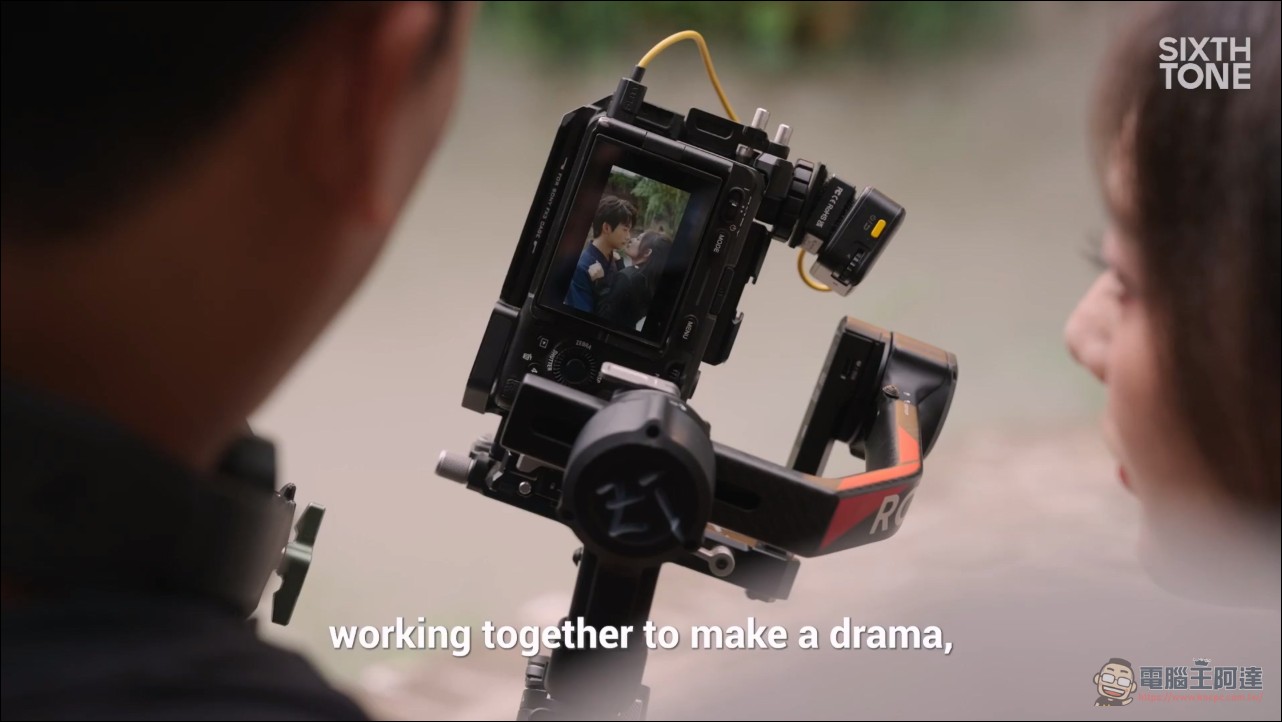
But she also pointed out AI’s current limitations: “The problem with AI now is that it’s too monotonous. All the AI-generated images are basically very similar. Every actor has their own unique qualities. When I play this role, it feels different from when another actor plays it. That feeling is something AI can’t replace.”
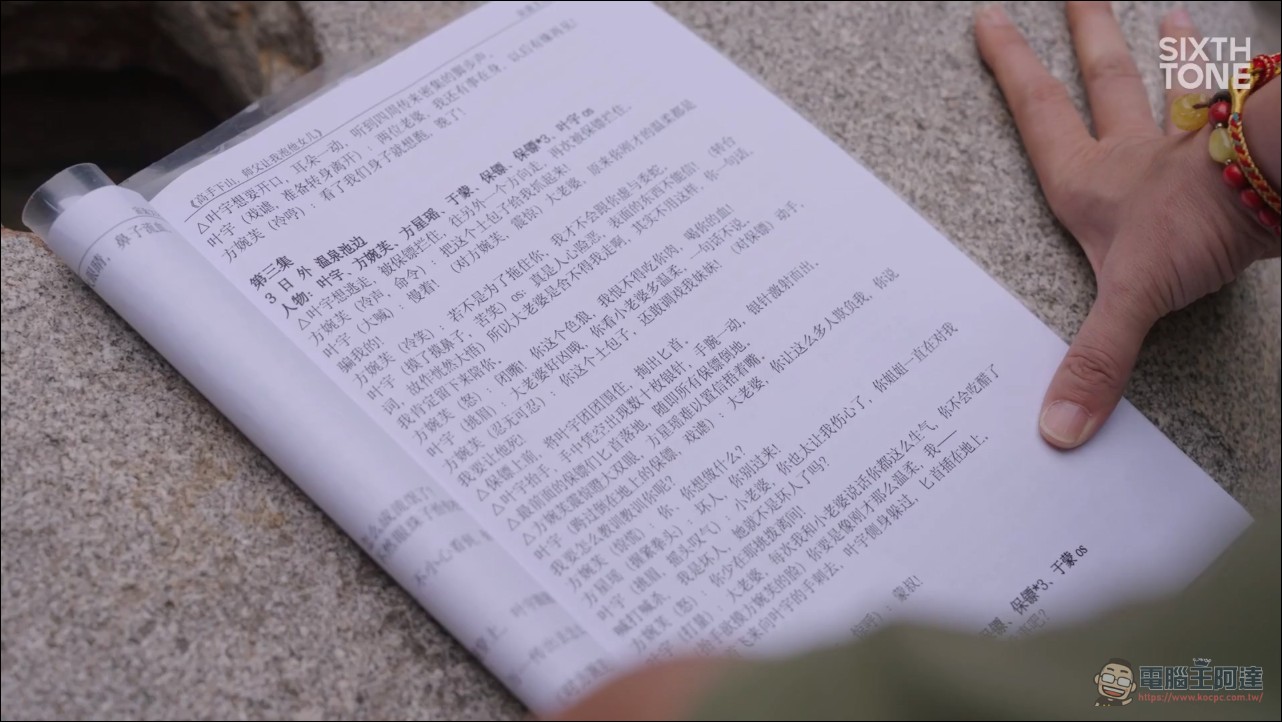
Director Li Jun faces the same choice. “When AI first emerged, we were also lost—we really didn’t know whether to keep filming live-action short dramas or switch careers to become AI directors.” Her final answer was to do both in parallel: “In the future, the ideal state should be running AI short dramas and live-action short dramas side by side. Actors should still be real people, but scenes requiring special effects or large-scale spectacles can be handed over to AI. That should be the real way forward for short dramas.”
Wuxi: The Comprehensive Transformation of AI Studio
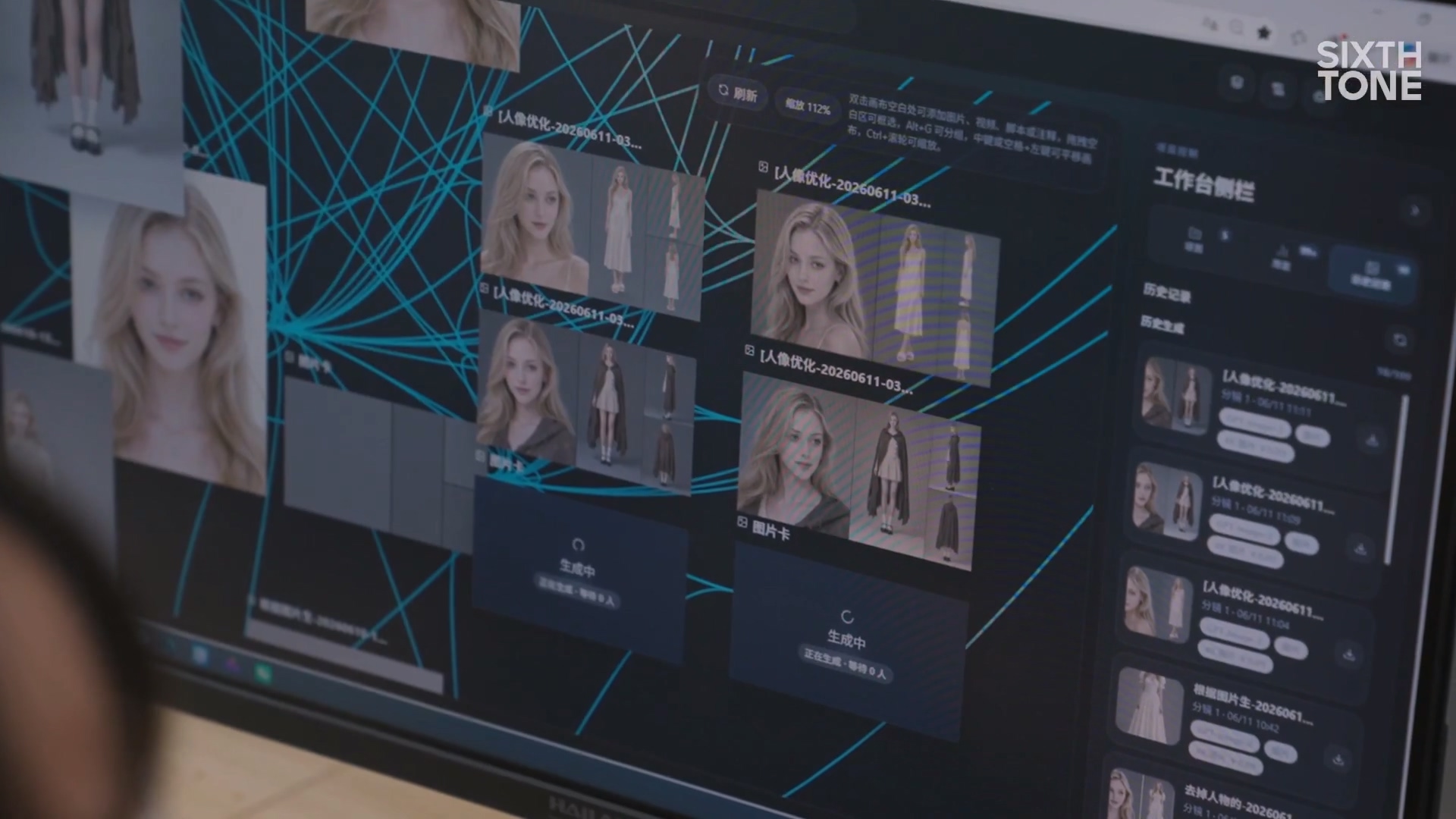
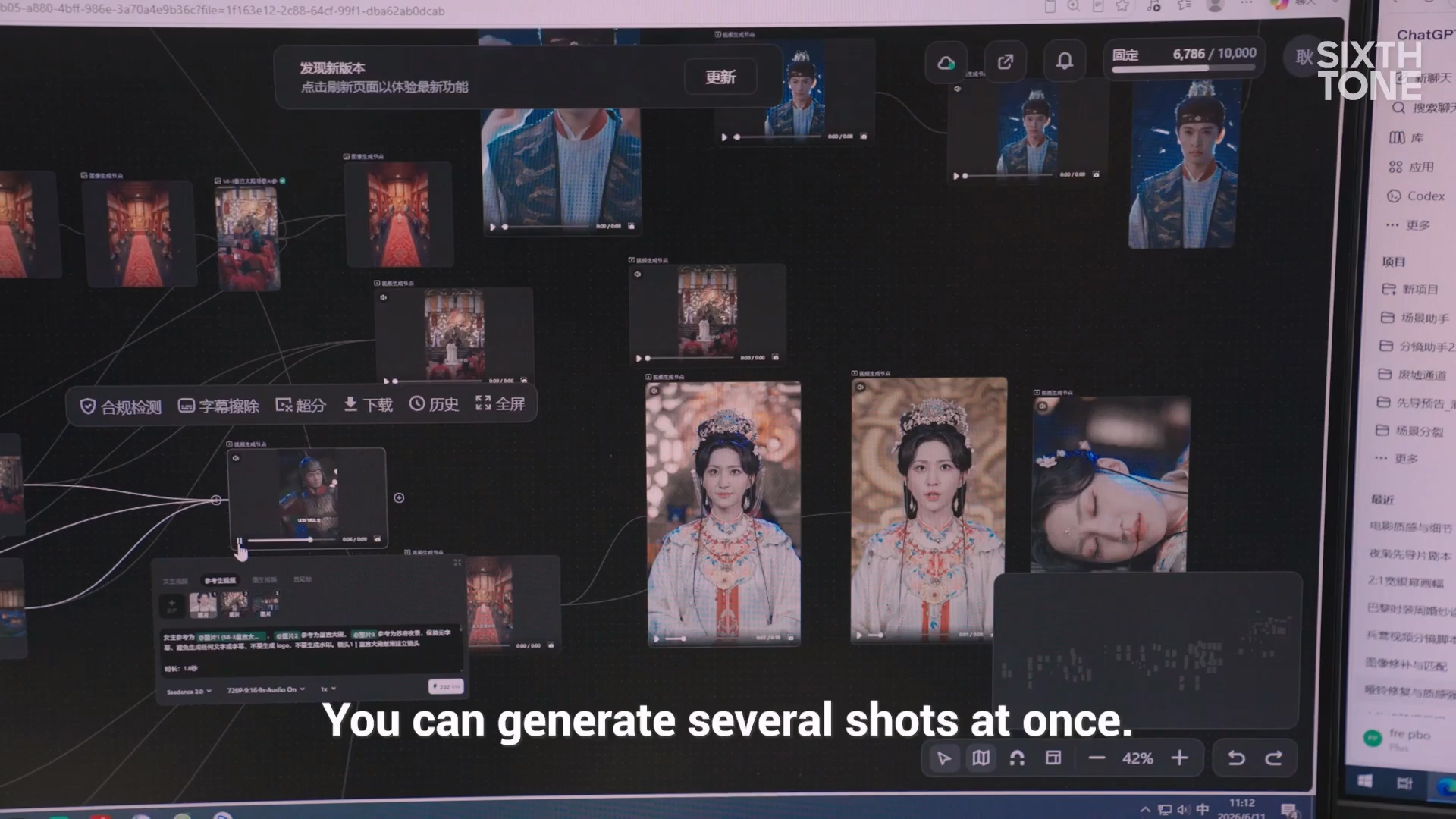
In stark contrast to Zhengzhou’s decline is Wuxi. Qiden Interactive Entertainment has completed its transformation from traditional web movies to a fully AI-driven production studio. The company no longer operates around cameras and large crews, but instead builds workflows around prompts, models, and digital assets. Most of the work is done in front of a computer screen, and a small team can generate, modify, and assemble an entire production.
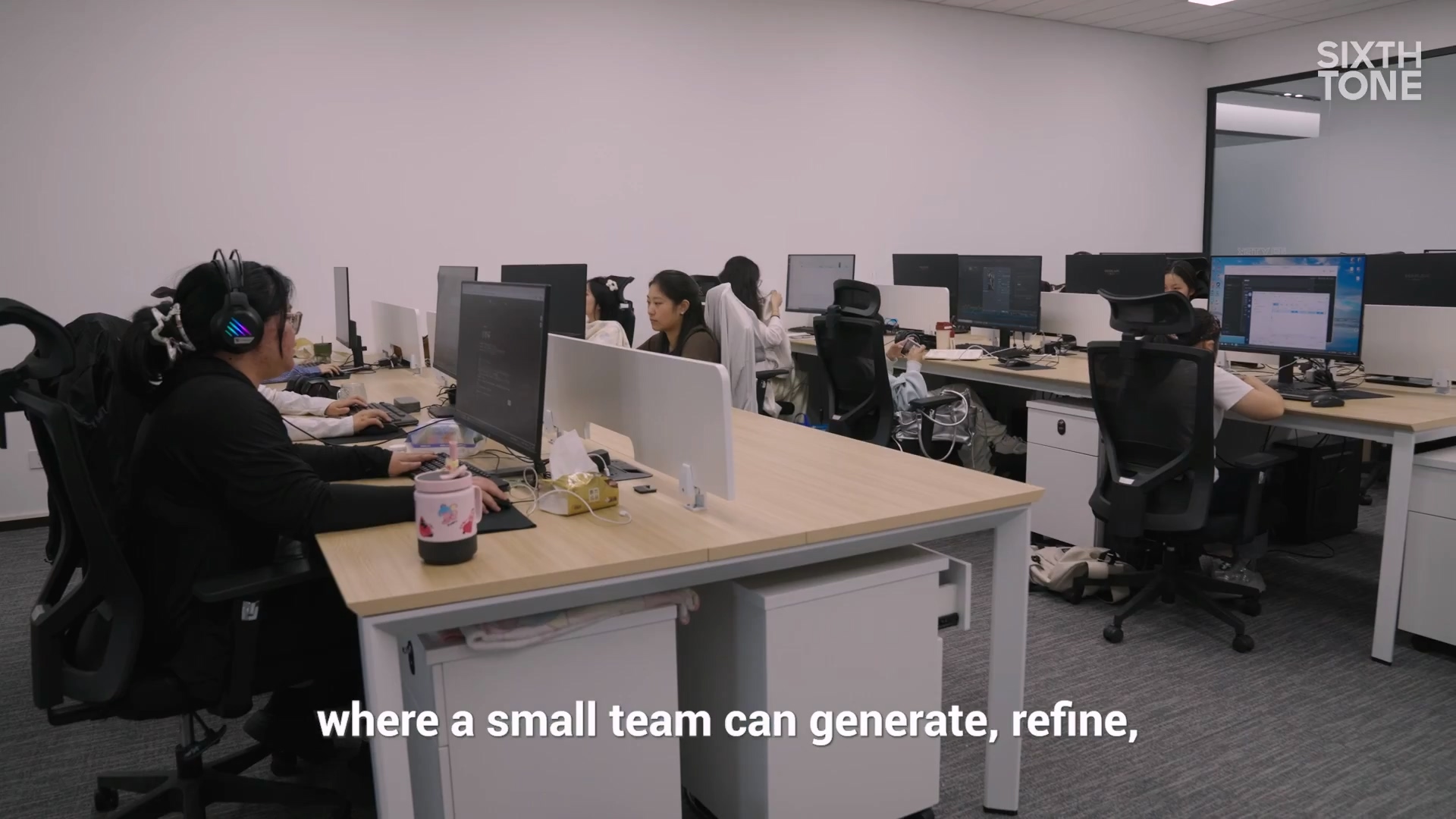
The current company’s one-floor office area has about 26 to 27 people, and each person handles everything independently, from script to final video output. For TikTok projects, the output is one video per day, while for premium short dramas, one person produces one every 2 to 4 days. They have also developed a complete workflow that allows “someone with no knowledge at all to come in and start producing by the next day.”
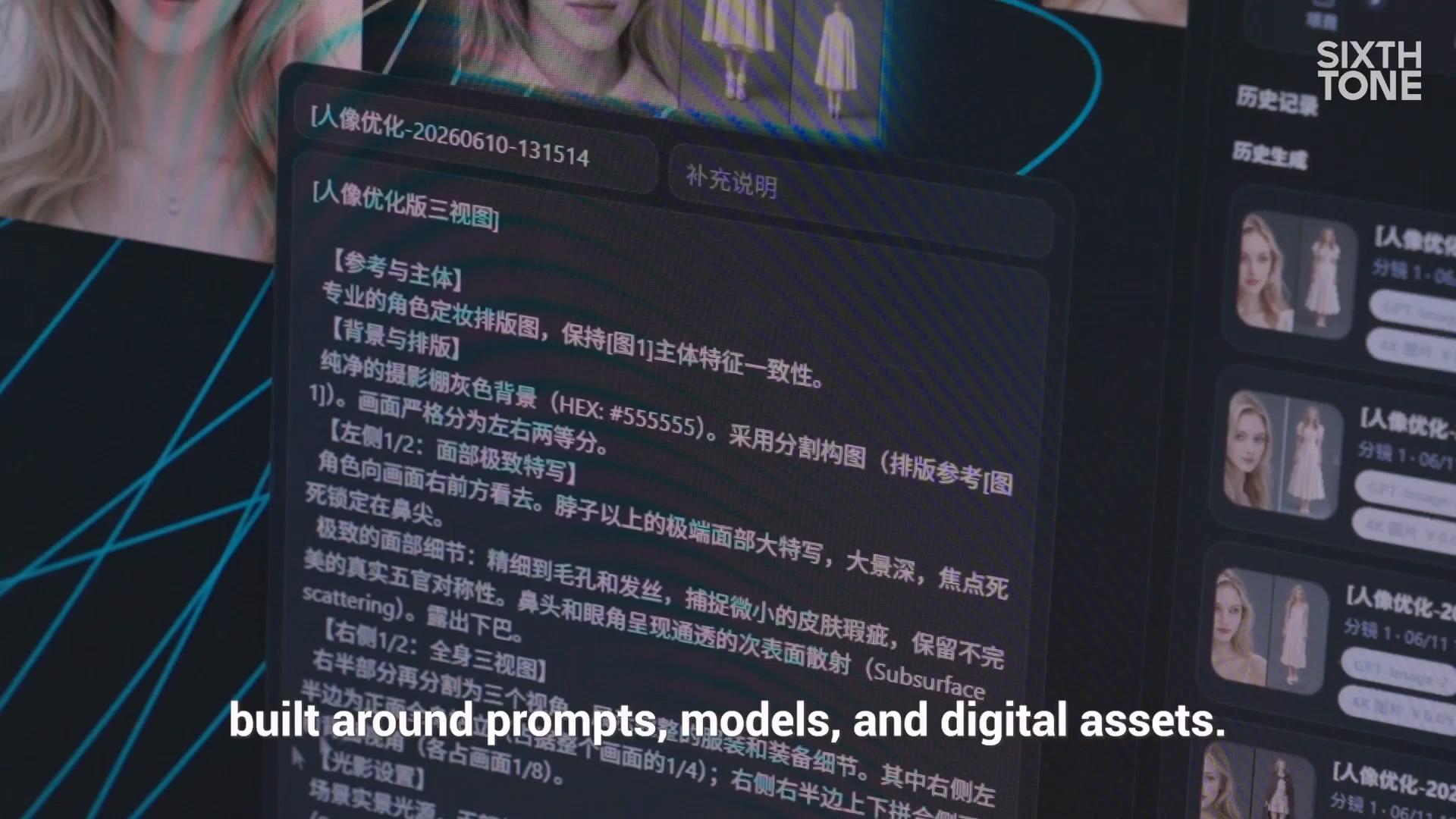
The cost difference is staggering. A company executive cited the example of an animated feature originally budgeted at 8 to 10 million RMB (about NT$35 million to NT$44 million) with a production cycle of at least three years, which was completed in just two months for around 1 million RMB (about NT$4.4 million) with the help of AI tools.
Industry Data: One AI Short Drama Every 36 Seconds
The case presented in Sixth Tone’s video report corroborates overall industry data. According to statistics from Central News Agency citing The Paper, in July 2026, a new AI short drama went live on Douyin every 36 seconds on average. The share of AI short dramas on the daily TOP100 chart has risen from first exceeding half in May to about 70% in August.
In terms of quantity, 655 AI short dramas were newly launched in August 2025; a year later, that figure reached 74,313, a growth of over 100 times, accounting for 75.4% of that month’s new releases. Over the past month, three AI short dramas have surpassed 100 million in peak popularity, while live-action short dramas have gone nearly two months without a title breaking 100 million in popularity.
Hengdian, as China’s largest film and television shooting base, saw the number of short drama productions starting in the first quarter of 2026 drop by about 75% compared to the same period last year. Short drama bases in Zhengzhou and Xi’an have also faced difficulties with vacant shooting venues.
The practitioner’s dilemma
In the video, a veteran animation industry professional voiced what many are thinking: “I spent eight or nine years in traditional film and TV animation, working on animated movies and game CG. Back then we used to joke that if AI ever came out, it should replace the keyframe artists first. Never expected it would upend the entire industry overnight.”
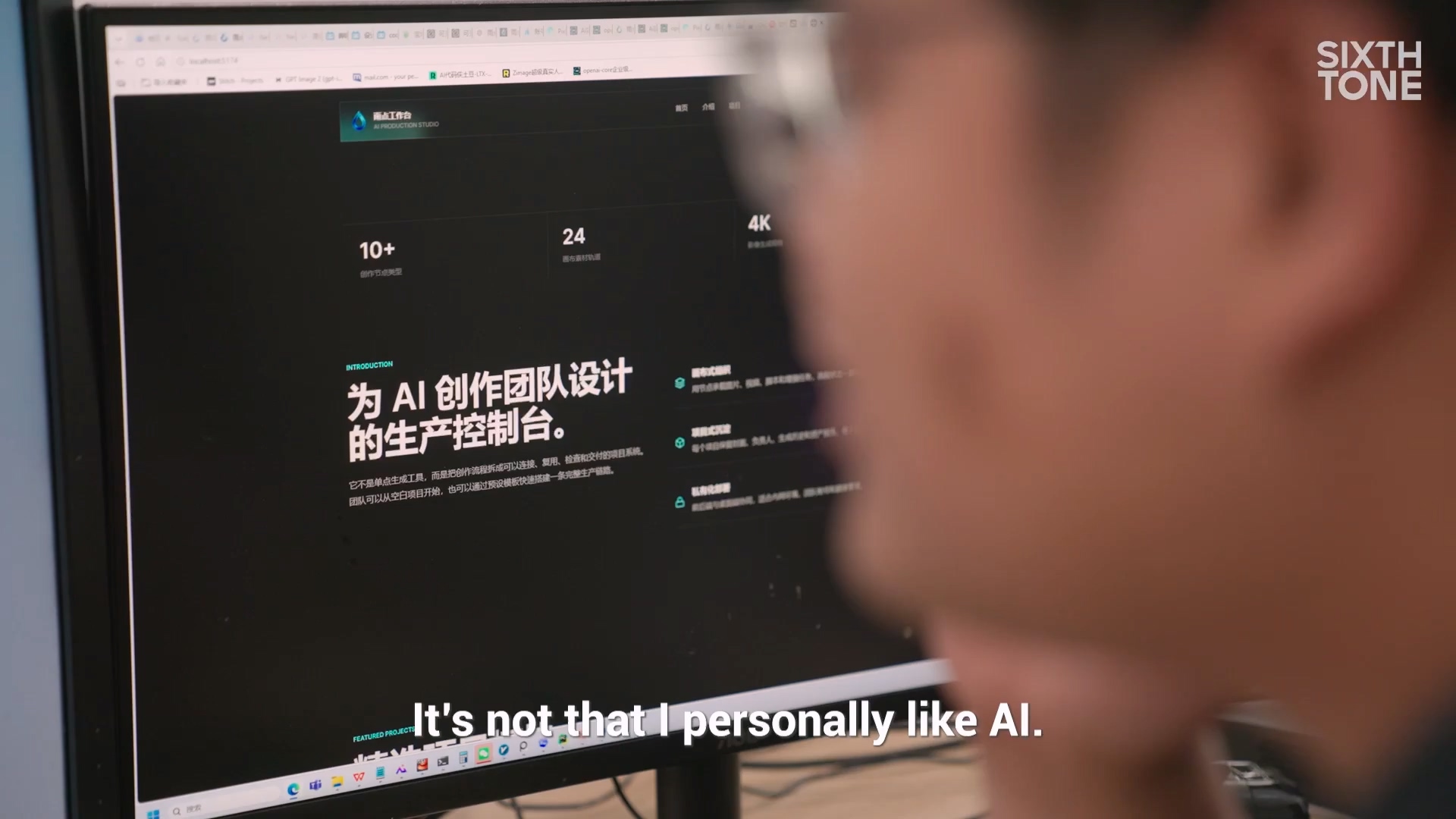
Another practitioner described the helplessness of being swept up by technology: “When one click from you might be better than something you spent two or three days making, then you have no choice but to use it. Personally, I don’t really like this thing, but you can’t do anything about it—you’re forced into using it.” His prediction for the future was even more blunt: “In the future, when a single sentence can generate a 10-minute or even a 90-minute movie for you, then there won’t be any need for these people anymore—not a single one.”
The video discusses the predicaments faced by many people currently working in China’s film and television industry (especially short-form video), and it’s quite worth watching. Fortunately, Taiwan isn’t as bad yet (though in recent years it has also leaned into melodramatic local soap opera styles, and the rate of starting production for general dramas has generally declined):
China’s booming ultra-short drama industry is being reshaped by the rapid rise of AI-generated video. In Zhengzhou, one of the country’s major production hubs, directors, actors, crews, and film bases that once fueled the industry’s explosive growth are now facing shrinking… pic.twitter.com/98w0RdgZeH
— Sixth Tone (@SixthTone) August 25, 2026
Conclusion
The AI transformation of China’s short drama industry has compressed the living space for directors, actors, film crews, and studio bases in the traditional film and television production chain, while also creating a new production model centered on AI tools. Zhengzhou’s “vertical-screen Hollywood” is cooling down, while Wuxi’s AI studios are accelerating. The speed of this transformation has exceeded most practitioners’ expectations, as the director in the video said: “I had some sense of it before the New Year, but I didn’t expect the cliff-like drop right after.” As AI-generated video quality continues to improve and the line between real people and AI gradually blurs, the question is no longer whether AI will change film and television production, but rather, in this transformation, what role humans can still play.
Source: KOCPC Chinese