


Apple officially confirmed via a tweet from Vice President of Marketing Greg Joswiak on August 26 that its fall new product launch event will be held on September 9 (10:00 AM Pacific Time, 1:00 AM Taipei Time on September 10) at Apple Park in Cupertino, California, with the theme “Surprise and shine.”[2]The invitation features a glowing apple logo with sunlight shining through from behind. The next day, Bloomberg senior reporter Mark Gurman posted on X to interpret the invitation, pointing out that the two visual elements in the image correspond to two hardware upgrades for the iPhone 18 Pro / Max.
What I am seeing:
– Shining light = mechanical aperture on the iPhone 18 Pro Max
– Sky Blue color = Possible new iPhone 18 Pro color. https://t.co/MHQ21LmT9U— Mark Gurman (@markgurman) August 26, 2026
Gurman’s assessment is straightforward: the “light” shining on the device in the invitation suggests a mechanical variable aperture lens, while the overall blue tint points to a color option that has never appeared before. These two clues align perfectly with what the supply chain has been leaking over the past year, effectively weaving scattered rumors into a complete picture.

Variable Aperture: A Timeline from Leaks to Mass Production
The variable aperture lens in the iPhone 18 Pro series isn’t news that came out of nowhere. In December 2024, renowned analyst Ming-Chi Kuo was the first to point out that the wide-angle lens on high-end iPhones in 2026 would be upgraded to a variable aperture design, significantly enhancing the photography experience. Around the same time, Weibo leak account Digital Chat Station (DCS), citing supply chain sources, reported that the iPhone 18 Pro Max has entered the testing phase for “large aperture variable material,” and the aperture on the 48-megapixel telephoto lens will also be widened.
By January 2026, Chinese leaker account Smart Pikachu further stated that the variable aperture system had entered late-stage engineering samples, and a teleconverter lens was also being evaluated. In April, reports also indicated that Apple had begun expanding supply chain capacity for variable aperture camera components, officially kicking off mass production.
For ordinary users, the practical significance of a variable aperture is that the lens can automatically adjust the amount of incoming light based on ambient conditions. In bright scenes, it narrows the aperture to increase depth of field and reduce overexposure; in dark environments, it widens the aperture to capture more light and lower noise. Currently, only some Android flagship phones (such as Samsung’s Galaxy S series) feature a similar mechanical variable aperture. If Apple actually implements it on the iPhone, it would be a first.
Sky blue: a color scheme that hasn’t been confirmed yet
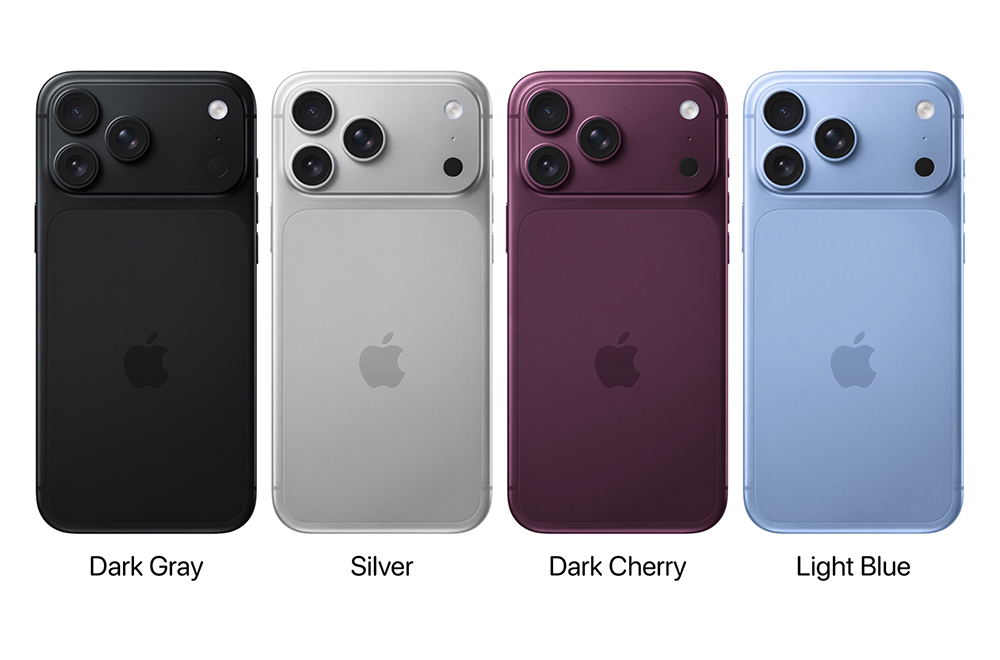
Gurman noted that the invitation’s color tone “leans blue,” hinting that the new color could be sky blue. In April 2026, Gurman himself revealed that Apple had tested a “deep red” coating for the iPhone 18 Pro and Pro Max. Geeky Gadgets’ report listed two new colors: “Dark Cherry” and “Light Blue.” The color list circulating online includes four options: Dark Cherry, Sky Blue, Dark Gray, and Silver. Sky blue is just one of many rumored versions—which colors Apple will actually release won’t be confirmed until September 9.
A20 Pro: The first 2nm mobile chip
Another highly certain upgrade for the iPhone 18 Pro series is the processor. The A20 Pro will adopt TSMC’s 2-nanometer process, marking the first time in iPhone history that a 2nm wafer is used. In a May report, 9to5Mac noted that in addition to the energy efficiency gains from the smaller process, the A20 Pro is also expected to see major improvements in the Neural Engine (NPU) to support more complex on-device AI tasks.
However, the production capacity and cost of 2nm wafers are far higher than the previous generation. Analytics Insight cited TSMC supply chain sources saying that the production cost of 2nm wafers has seen a “significant increase.” Combined with the ongoing global memory chip shortage, both MacRumors and Gurman predict that the iPhone 18 Pro series could see a price increase over the previous generation. Leaks suggest the increase could be between $100 and $200 (approximately NT$3,100 to NT$6,200), but Apple has not confirmed any pricing information.
From a technical standpoint, the A20 Pro’s 2nm process uses TSMC’s second-generation Nanosheet transistor architecture. Compared to the previous 3nm FinFET design, it can pack more transistors into the same footprint while also consuming less power. According to supply chain sources, the A20 Pro’s NPU compute performance is expected to be over 40% higher than the A19 Pro, which will directly impact the inference speed and complexity ceiling of Apple Intelligence on-device models running on the iPhone.
C2 baseband chip and a smaller Dynamic Island
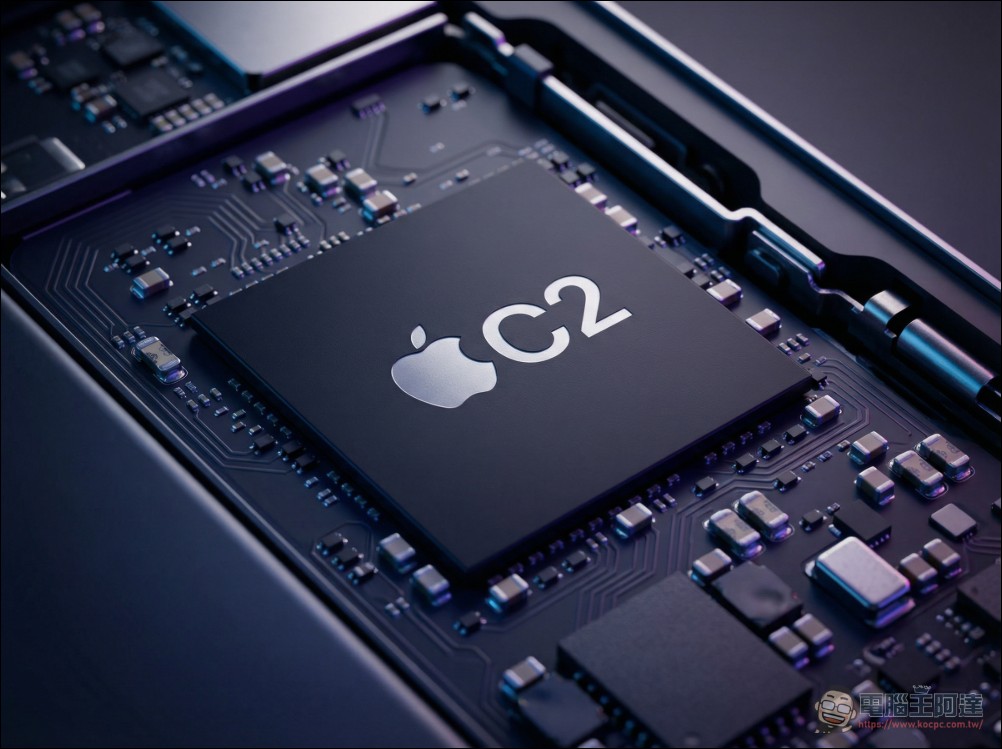
In addition to the processor, the iPhone 18 Pro will also feature Apple’s self-developed C2 Cellular modem. This is another step in Apple’s ongoing effort to reduce its reliance on Qualcomm. The C2 is Apple’s second-generation self-designed baseband chip, following the C1, which debuted with the iPhone 16e in 2024.
In terms of appearance, the punch-hole area of the Dynamic Island may be smaller. However, multiple tipsters have pointed out that under-display Face ID and front camera technology will not appear in this generation, so the reduction of the Dynamic Island will be limited—more of an incremental improvement than a leap.
What else will there be on September 9th?
The focus of the September 9 event isn’t just the iPhone 18 Pro—Apple’s first foldable phone (reportedly named the iPhone Ultra) will also make its debut on stage. It features a book-style design with an outer display of about 5.5 inches and an inner display of about 7.8 inches, with the crease kept to an extremely minimal degree. In an August 23 post, Gurman mentioned that early testers have responded very positively to the iPhone Ultra, “except for the camera.”
The Apple Watch Series 12 and Apple Watch Ultra 4 are also expected to appear at the same event. The standard iPhone 18 and iPhone Air 2 will not be at the September event, with multiple media reports indicating they have been delayed to spring 2027.
For Taiwanese consumers, 1 AM on September 10th Taiwan time is definitely the iPhone launch event worth staying up for this year. Variable aperture, a 2nm chip, in-house baseband, and a foldable phone — all four landing at once is an innovation density Apple hasn’t delivered in the past decade. There’s only one question left: how much will it cost more.
Source: KOCPC Chinese