


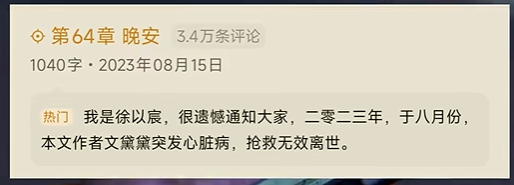
A miracle of resurrection recently occurred in China. In August 2023, when the novel “Spring Day Hides Joy” by “Tomato Novel” author Wen Daidai was updated to Chapter 64, an account claiming to be her boyfriend “Xu Yichen” posted an obituary, stating that Wen Daidai had died from a sudden heart attack despite rescue efforts, and promising that a friend would ghostwrite the rest of the book. Readers mourned, the novel’s rating soared to 9.4, and a flood of memorial tips poured in. Three years later, on August 12, the account suddenly updated, and Wen Daidai herself admitted that it was all a “fake death”—she was still alive.
A Chinese web novel author who had been presumed dead for three years suddenly came back to life: because the platform changed its withdrawal rules, requiring a facial scan to receive payments.
What made a “dead” person voluntarily come back to life was the withdrawal rule updated by Tomato Novel in 2026: authors must complete facial recognition verification to withdraw their royalties, and one real-name ID can only be bound to one account. Wen Daidai’s account had accumulated three years’ worth of tips and ad revenue share, and only she herself could withdraw it by “coming back to life” to scan her face. One netizen commented: “The platform used facial recognition for withdrawals, and it unexpectedly became a mirror for exposing fakes.”
Looking back at that obituary from August 2023, from the publisher’s identity to the textual details, it was riddled with logical holes—just drowned out by the wave of grief at the time. In the obituary, “Xu Yichen” stated that Wen Daidai’s greatest regret before her death was leaving her novel unfinished, so she would ask “her friend Liang Min” to continue writing from Chapter 65, having already obtained the complete outline and character settings.
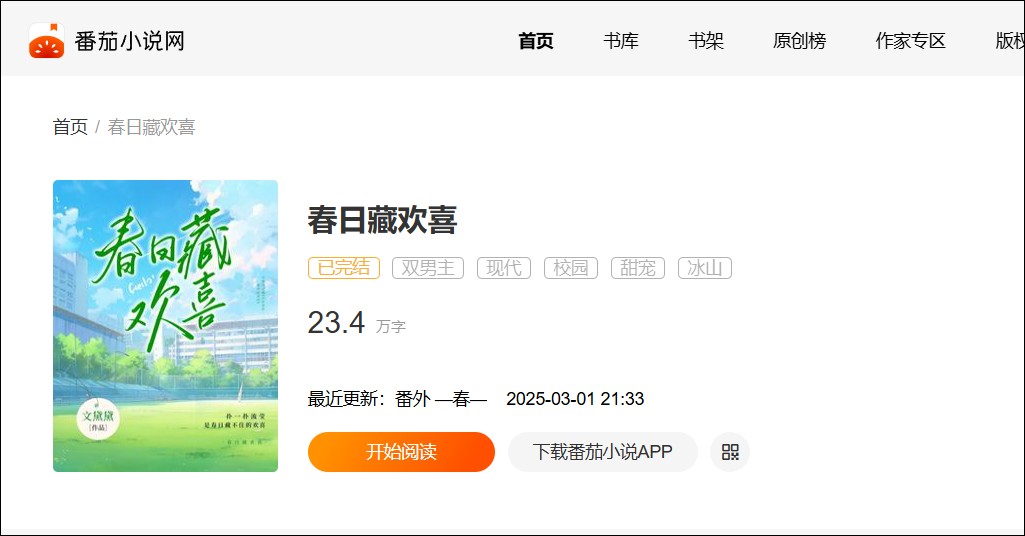
In ghostwriting mode, “Spring’s Hidden Joy” was finally completed at Chapter 103. A flood of readers poured in drawn by the “author’s posthumous work” label, leaving five-star reviews, and the work leaped from mediocre popularity to a top spot on the platform. Over three years, reader tips and commemorative purchases continued flowing into this “deceased” author’s account.
The problem is that family members handling the deceased’s affairs typically don’t keep running the deceased’s social media accounts, let alone arrange for strangers to ghostwrite continuations of their novels. Some readers who reviewed the work have found that Chapter 64, “Goodnight,” which was hailed as a “tear-jerking masterpiece,” “has grammatical errors in every sentence on the first page,” while Wen Daidai’s earlier works had been criticized as “mediocre writing, hollow plot.” A work that was completely unknown during the author’s lifetime surged to a 9.4 rating after the author’s “death”—this contrast alone doesn’t align with a normal reader rating curve, being driven more by emotion than quality.
Three Years of Accumulated Earnings: The Economic Motivation Behind Six-Figure Tips
Tomato Novel uses a business model of free reading combined with ad revenue sharing and tipping. Authors earn primarily from the ad revenue share generated when readers watch ads, along with voluntary reader tips. For an ordinary author, the exposure from a single “killer” marketing campaign may equal the total from years of consistent updates.
No official figures have been disclosed for the specific earnings from Wen Daidai’s account over the three-year period, but according to reader estimates, the tipping amount alone may have reached six figures in RMB. If such earnings could not be withdrawn, faking death would lose its economic motive, which is also the fundamental reason the platform’s new rules could “force the author back to life.” Some analysts have pointed out that if the platform had introduced facial recognition verification a year earlier, Wen Daidai’s death deception might have been exposed long ago.
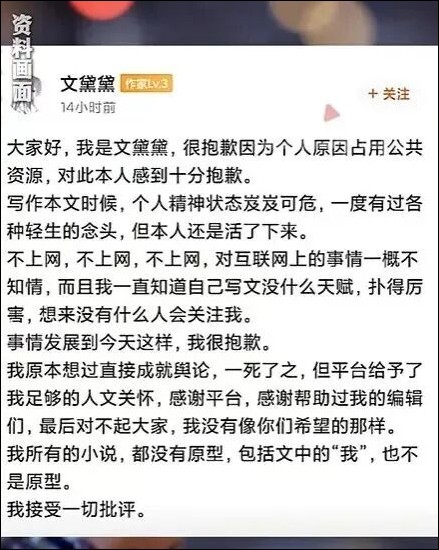
On August 12, 2026, an account that had been dormant for nearly three years suddenly posted an update. In the post, Wen Daidai wrote: “While writing, my mental state was on the verge of collapse, and at one point I had thoughts of ending my life, but I managed to survive.” She also stated, “I haven’t been online and have no knowledge of what’s happening on the internet,” while emphasizing, “I accept all criticism.”
Reader fury and the legal gray area
Public opinion is almost unanimously critical of Wen Daidai’s behavior. Searching for the author’s name on Fanqie Novel immediately brings up the related entry “Wen Daidai Resurrected.” Large numbers of readers have flooded the comment sections, denouncing her for using her death as a marketing gimmick and exploiting fans’ genuine emotions. One netizen said bluntly: “This kind of malicious marketing that trades on public decency harms readers and pollutes the online fiction creation environment.”
On the legal front, according to analysis by legal professionals, if it can be proven that Wen Daidai subjectively intended to illegally appropriate the tips while faking her death, and the amount defrauded meets the threshold for criminal filing, she could potentially be charged with fraud. Even if it does not rise to a criminal offense, she would still be liable for civil fraud. Some legal bloggers have also pointed out that if readers made their donations under the belief that the author had already died, the money constitutes a payment made “under a major misunderstanding,” and Wen Daidai should return it. As of now, there has been no official word on judicial authorities getting involved.
On August 14, Tomato Novel customer service responded that the platform will further verify author information, and if it confirms violations of rules, it will take measures against relevant accounts and continue to strengthen subsequent content review.
Source: KOCPC Chinese