


Just now (the evening of August 13)DeepSeek Official open source release DeepSeek HarnessAbbreviated as DSH, the GitHub repository is now live and open for developer preview. Officially defined as an Agent Harness, this tool features an architecture where “all capabilities are plugins,” allowing models, tools, skills, conversation logs, sandboxes, storage, scheduling, and user interfaces to be swapped out and reassembled. Within less than a day of going live, the DSH repository has surpassed 36,000 stars. It is released under the MIT license, with tags including cordis, dsh, and dsh-plugin. This release of DeepSeek Harness is also seen as a concrete outcome of DeepSeek’s efforts since May this year to assemble a Harness team and benchmark against coding agents like Codex and Claude Code.
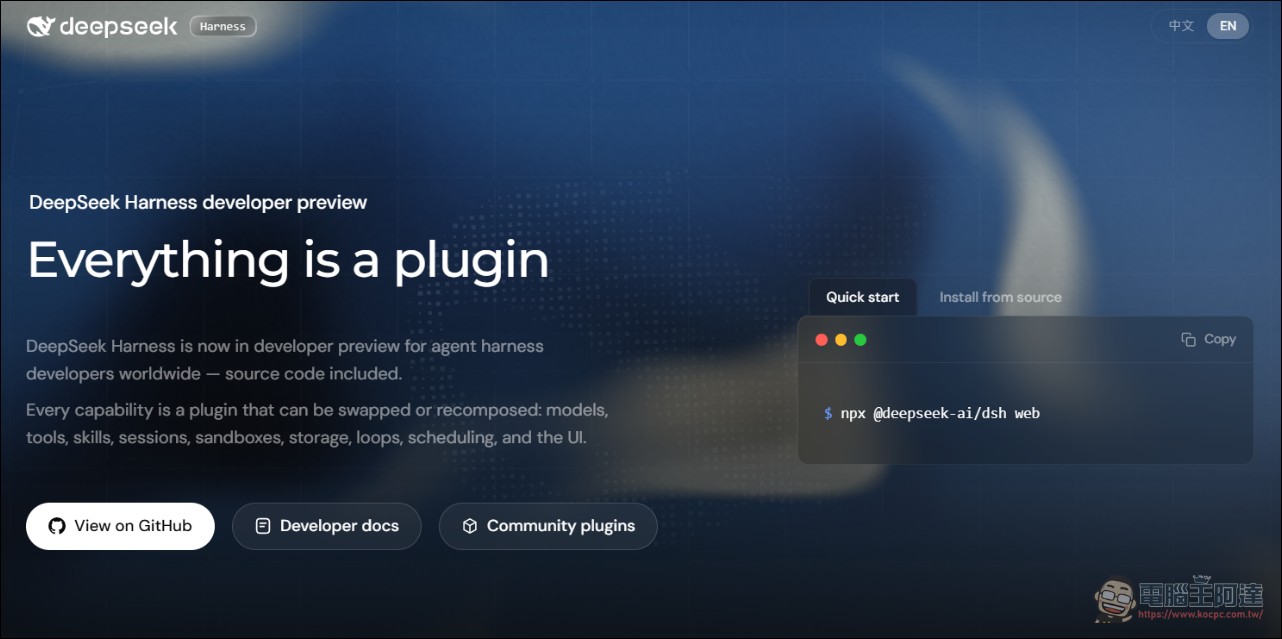
What is DeepSeek Harness: Only when Model is paired with Harness do you get an Agent
DeepSeek repeatedly emphasizes a formula in its recruitment documents and official explanations: Model plus Harness That’s what makes it an Agent. The model is responsible for understanding, reasoning, and generation, while the Harness connects these capabilities to real environments, enabling the Agent to understand projects, read and write files, execute commands, call tools, and continuously complete multi-step tasks.
This definition distinguishes Harness from traditional code completion plugins or code Q&A in chat interfaces. According to the official statement, all work outside the model itself falls under the Harness category, including context management, tool calling, task planning, file operations, terminal execution, feedback collection, and evaluation loops. The recruitment information shows that DeepSeek has opened two key positions for this purpose—Harness Product Manager and Harness R&D Engineer—located at Rongke Information Center in Haidian, Beijing, covering specialties such as prompt engineering, context engineering, and Harness engineering. Prior to this, the open-source community had already produced third-party implementations like DeepSeek-TUI using DeepSeek models as the backend, indicating that developer demand for tools similar to Claude Code has long existed.
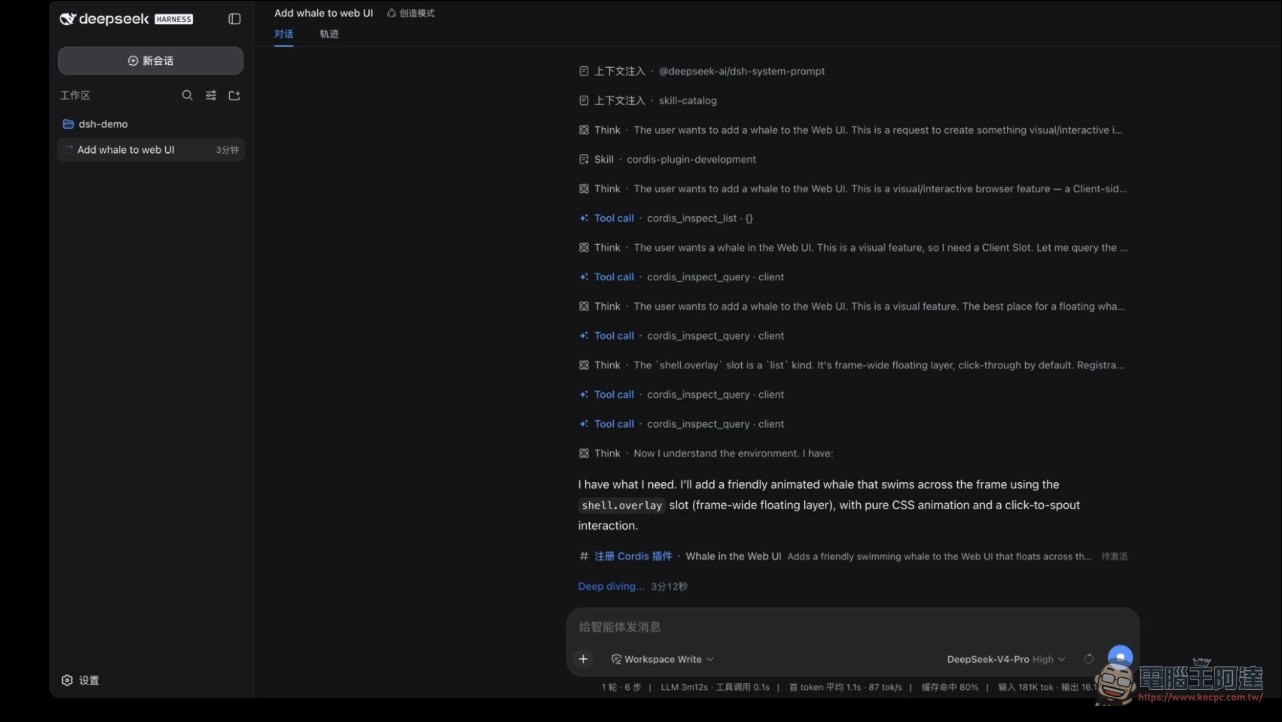
How to run: Web UI and two startup methods
DSH is currently in developer preview. The official notice warns that it will continue to iterate rapidly and may introduce breaking changes. Two launch paths are provided, corresponding to different usage scenarios.
- Start from npmExecute after installing Node.js
npx @deepseek-ai/dsh web, preset inhttp://127.0.0.1:3080Provide Web UI - Launch from source code: Execute
git clone https://github.com/deepseek-ai/deepseek-harness.gitThen,pnpm install、pnpm run build、pnpm dsh web
After entering the Web UI, the process consists of three steps: first, fill in the DeepSeek API key in the model settings under Settings and save it; the model routing takes effect immediately, so there is no need to restart the server. Next, select a workspace, pointing it to the working directory used when launching dsh. Finally, open a conversation and enter a task, such as asking the Agent to summarize the repository and identify the main packages. The Agent has the ability to read and write workspace files, execute commands, delegate subtasks, and maintain plans; operations involving permissions will request confirmation in the interface. The official documentation also provides additional instructions such as model configuration guides, the Python SDK, and CLI modes.
Every execution is traceable: Trajectory and four modes.
Beyond the plugin architecture, the official highlight is that “every execution is traceable.” Everything the model sees is written to an append-only conversation log, including system prompts, reasoning traces, tool calls and their results, sub-agent scheduling, and all context injection events. In the Trajectory view, developers can inspect logs by source, and resume, fork, search, and replay all operate on the same event stream.
DSH provides four execution modes to meet different development needs:
- Standard mode: Complete programming Agent, including file editing, Shell, file and web search, skills, planning, goals, sub-agents, and workflows
- Code mode: Building on Standard, using the Code Mode SDK, the model can compose multi-turn tool calls as TypeScript programs.
- Minimal modeKeep only the persistent Bash and str_replace_editor tools to evaluate models in a minimalist environment.
- Creator modeFor customizing Agent default configurations, supporting runtime inspection, in-memory plugin experimentation, and guidelines for writing default configurations.
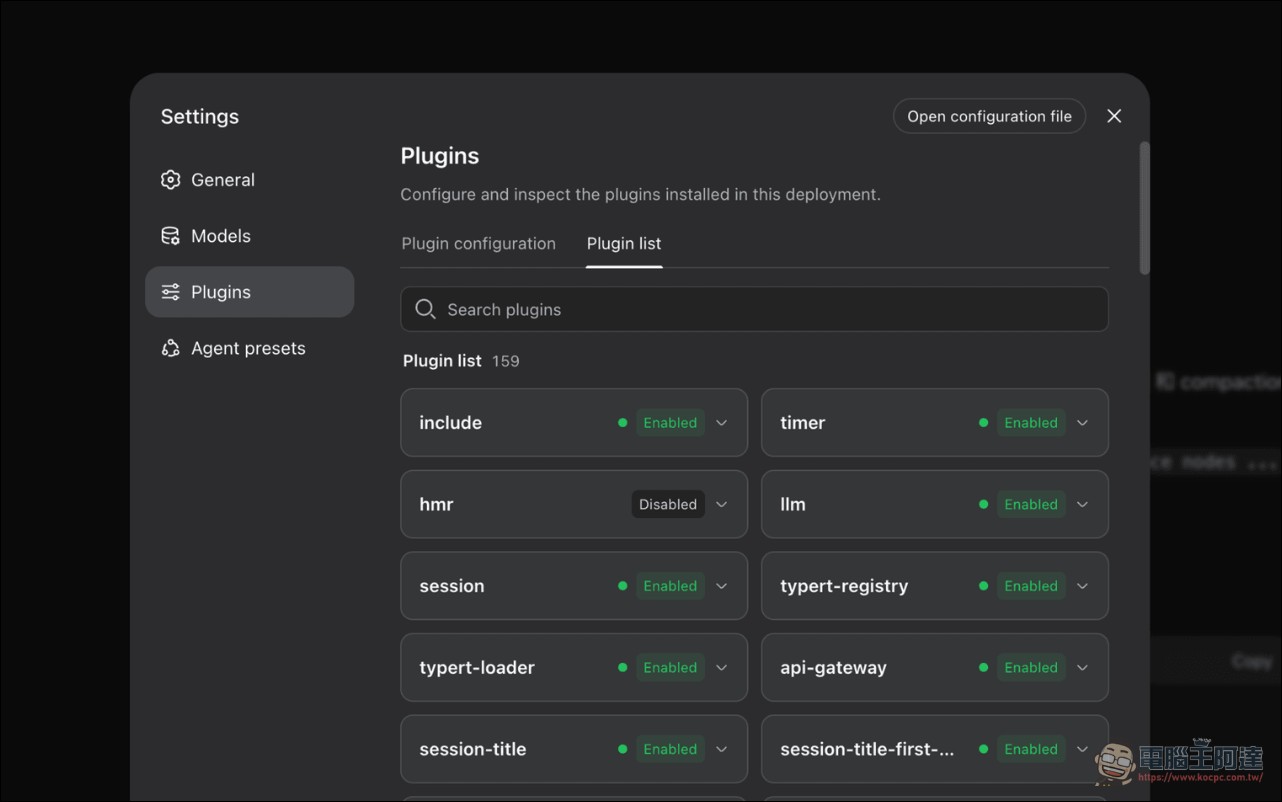
The official preview page also provides a customization display, explaining that developers can adjust page elements, tools, and Agent default configurations in real time through the settings. On the ecosystem side, developers are encouraged to add the dsh-plugin topic tag to the plugin repository for easier searchability, with a Discord community and GitHub Discussions available as feedback channels.
Some people have already recorded their hands-on testing experience online; if you’re interested, you can check it out:
🔥最新实测DeepSeek Harness!⁰全程极其丝滑!梁文峰为大家做到了!
一行命令 npx @deepseek-ai/dsh web,AI直接改文件、跑终端、自动闭环干活!
真正Agent⁰本地跑、插件化、对标Claude Code但更香~
3分钟视频看懂全程体验👇#DeepSeekHarness #AIAgent #梁文峰 pic.twitter.com/VnLVMOAOqb
— SuSu_酥酥👅 (@NFT_Chen) August 13, 2026
Conclusion
DSH’s developer preview release turns DeepSeek’s vision for agents into a concrete, installable, and replaceable open-source framework. For developers, the immediate value lies in the flexibility of the Web UI and plugin combinations: a single command gets it running, and everything from models to tools can be swapped out in the config. For DeepSeek, the value lies in building reusable, composable infrastructure that lets models and the harness evolve together. The current version is still in preview, and the official announcement has already indicated that core plugins and APIs will continue to evolve. The real question going forward is whether a plugin ecosystem will take shape, and whether stability and traceability in real-world projects will live up to the promise on the website: “every capability is a plugin, every execution is traceable.”
Source: KOCPC Chinese