


After the Chuwi notebook CPU mislabeling incident caused an uproar, another Chinese laptop brand Ninkear was revealed to be involved in the same processor mislabeling controversy. The company’s A15 Pro notebook claims to be equipped with AMD Ryzen 5 7430U processor, but the actual commercial version shipped is the older Ryzen 5 5500U, and the BIOS has been modified to hide the truth, with almost the same method.
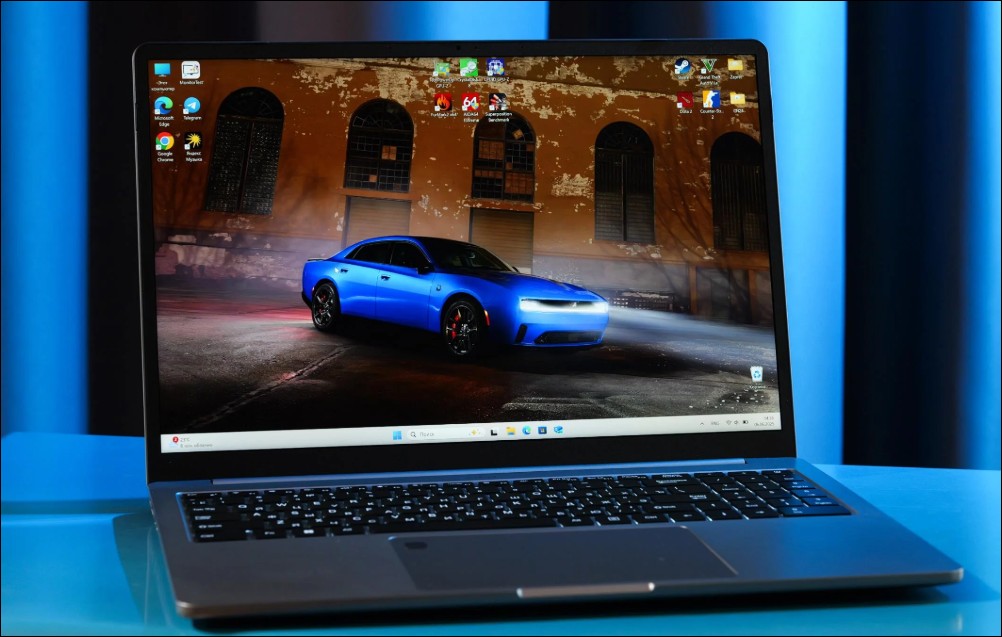
Another Chinese laptop brand was caught with false CPU specifications! Ninkear A15 Pro modifies BIOS to pass off 5500U as 7430U
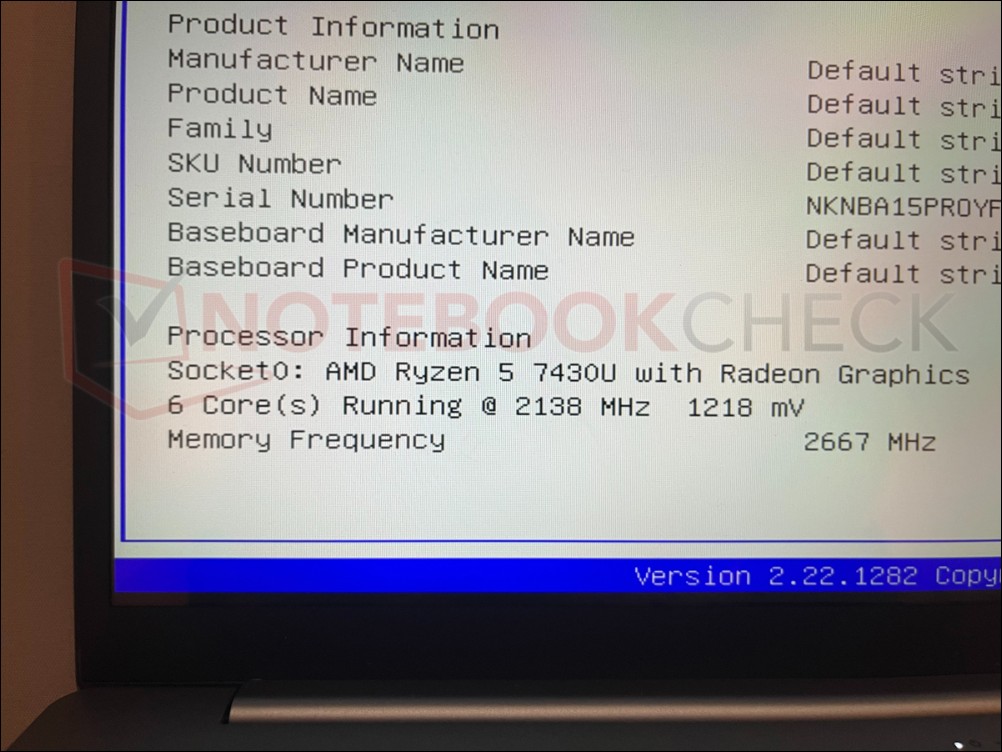
According to NotebookCheck, the media received an A15 Pro review machine provided by Ninkear in the summer of 2025, and the authentic Ryzen 5 7430U processor was indeed detected at that time. However, according to reader feedback, commercially available versions (especially recently shipped batches) may have false markings. For verification, NotebookCheck randomly purchased a Ninkear A15 Pro from e-commerce channels for testing. It was found that although both the BIOS and Windows work administrator showed Ryzen 5 7430U, after disassembling the processor, it was found that the OPN (Ordering Part Number) number was 100-000000375, which corresponds to Ryzen 5 5500U, not the claimed 7430U (OPN is 100-000000943).
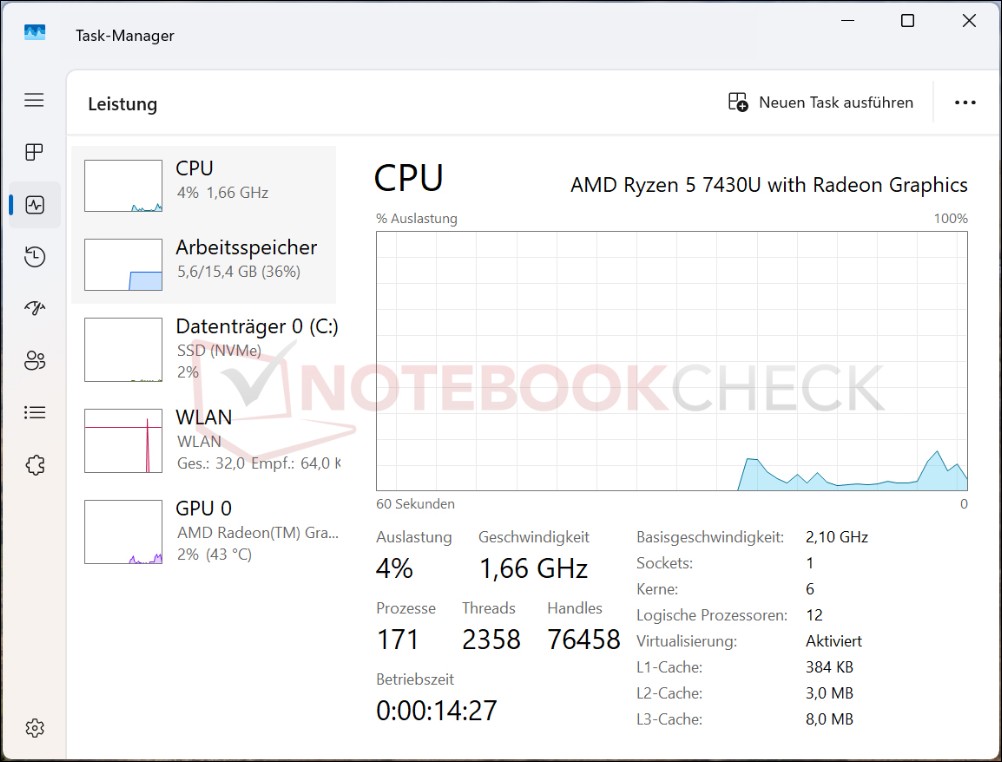
The investigation found that AMD processors can modify the “Processor Name String (PNS)” (Processor Name String, PNS) through the MSR (Model Specific Registers) register, causing BIOS, Windows systems and most detection tools to display the wrong processor model. Since the 5500U and 7430U are similar in most parameters (both have 6 cores and 12 threads, TDP 15W, and the internal graphics are Radeon Graphics), this makes the disguise even harder to detect.
However, CPU-Z officials recently updated version 2.19, which is able to identify this disguise and display the real CPU model. Consumers can now easily verify it through this tool.
ODM manufacturers become the key: Yidao Information is involved
As the incident unfolded, the investigation found that more and more brands were involved in the controversy. So far, all related laptops and motherboards discovered are manufactured by the ODM manufacturer “Shenzhen Emdoor Digital”. This includes Chuwi’s CoreBook X and CoreBook Plus, which previously had false labeling controversies, as well as the Ninkear A15 Pro, which was exposed this time.
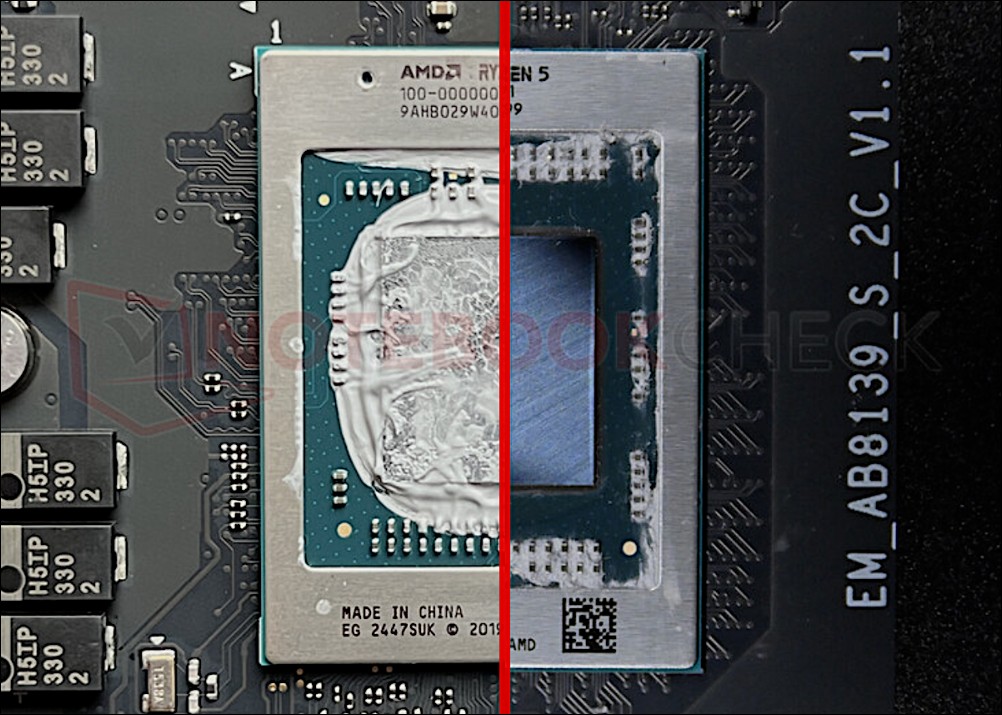
It’s worth noting that the normal review unit from summer 2025 and the problematic commercial unit from March 2026 use the exact same motherboard, proving that there are indeed different production batches. Most of the time points for user feedback of false standards are concentrated at the end of 2025. The media speculates that the manufacturer is likely to replace the processor from 7430U to 5500U in the summer and autumn of 2025, and at the same time “disguise” it with BIOS modifications.
The performance gap: Not just a numbers game
While the Ryzen 5 5500U and 7430U appear to have similar specs, there are significant differences. The 5500U uses the Zen 2 architecture (codenamed Lucienne) launched in 2021, while the 7430U is based on the Zen 3 architecture (codenamed Barcelo-R) launched in 2023.
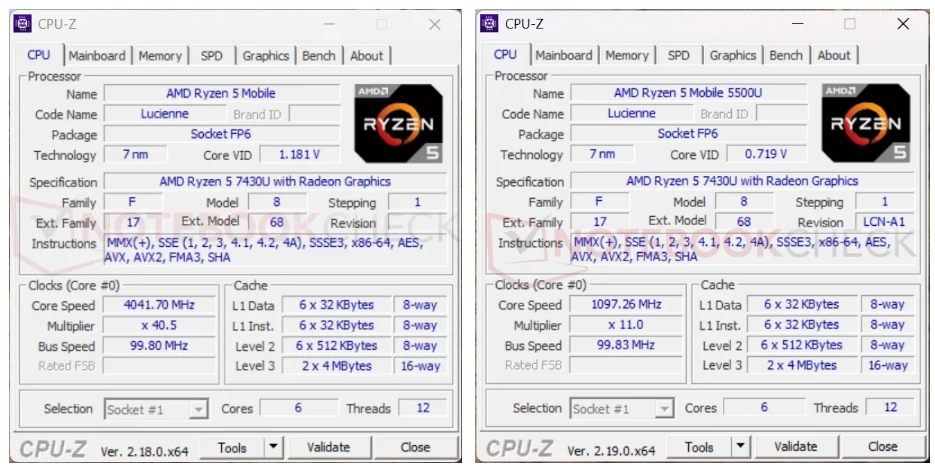
Specific specification differences include: the 5500U has a base clock of 2.1GHz and a boost clock of 4.0GHz, while the 7430U has a base clock of 2.3GHz and a boost clock of 4.3GHz. More importantly, the L3 cache capacity is only 8MB for the 5500U and 16MB for the 7430U. The difference is double.
According to NotebookCheck’s testing, the 7430U is about 7% faster on average than the 5500U, but under certain workloads the performance gap can be as much as 20%. This is a serious disservice to consumers who expect the performance of modern Zen 3 architecture when purchasing.
Responses from relevant parties and subsequent development
AMD has previously issued an official statement stating that it neither authorized nor approved these misleading CPU labeling practices and had no knowledge of them. AMD emphasizes that false labeling strictly violates its trademark and licensing policies and reserves the right to take legal action against those responsible. Hornington, Chuwi’s distributor in Hong Kong, has announced a recall and refunds for the affected product lines, including the CoreBook X 7430U, CoreBook Plus 7430U and UBOX 7430U.
Ninkear issued a statement on this matter: “We have always upheld a responsible attitude towards dealers and users, and have launched an investigation with relevant ODM manufacturers on the affected product batches. We have notified dealers and users, and recommended that affected users contact sales channels or official support. We have established a service working group to solve quality-related issues.” (Editor’s note: I don’t believe that manufacturers are unaware…)
As media reports continue to ferment, various platforms and manufacturers have begun to see some product descriptions being modified, and some products have been removed from the shelves. This CPU false standard crisis may have just begun, and more brands and products may be involved in the future.
summary
This incident highlights the possible widespread fraud among China’s third-tier laptop manufacturers. This false labeling method requires modification of the BIOS firmware, which cannot be explained by the manufacturer’s “accident” or “error.” From MSR register modification, BIOS camouflage, to packaging stickers, this is a complete set of calculated deceptions. Even if consumers have basic hardware knowledge, it will be difficult to detect it through software inspection alone. They must disassemble the machine and heat sink to check the OPN number of the processor body to confirm. These manufacturers may also have spotted the fear that consumers will be deemed to have violated the warranty if they dismantle it, so they are unscrupulous, which is quite exaggerated. For consumers of low-priced entry-level laptops, when the “price-performance ratio” may be based on false specifications from manufacturers, consumer confidence in the entire laptop market will be affected.
Source: KOCPC Chinese