


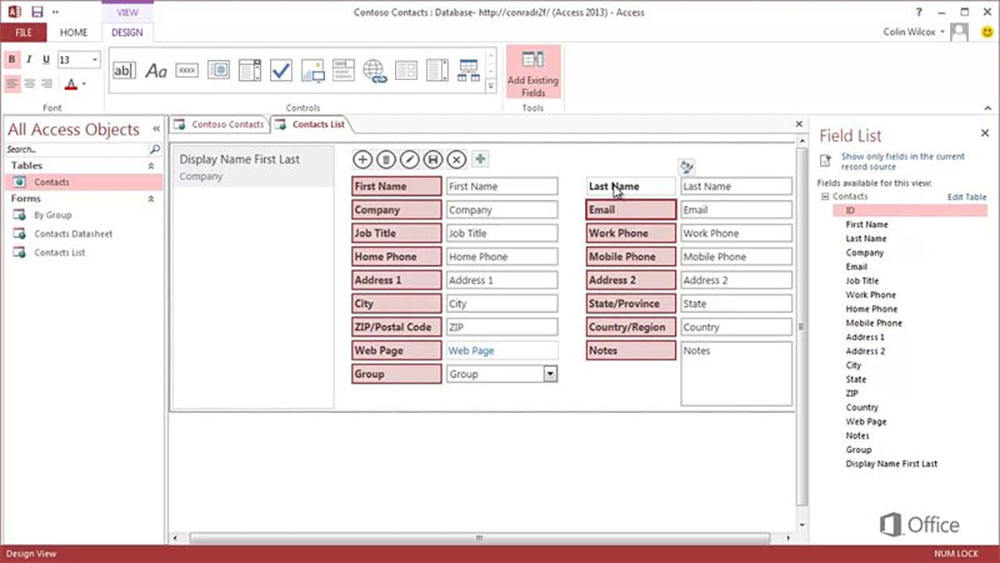
Many people may not have noticed that Microsoft has silently retained the Microsoft Access tool, whether in the Office perpetual license version or the Microsoft 365 subscription version. Although Access’s status in mainstream enterprise-level databases is no longer what it once was, it still plays an important role: providing lightweight solutions for use cases that require simple database management, low concurrency, and basic security requirements. For some organizations, Access remains a convenient choice for quickly developing internal tools and managing small data sets.
Microsoft will retire the Office suite’s Access app in June this year
However, Microsoft recently announced that it will discontinue a feature related to Access. This change will affect multiple versions of Office and affect some users who still rely on Access. Microsoft noted that the standalone database comparison tool (DATABASECOMPARE.EXE) will officially cease service in June 2026. This tool used to be mainly used to compare the differences between two Access databases. It was especially useful when tracking table structures, field changes, or schema adjustments. It was an indispensable auxiliary tool for developers or IT personnel who needed to maintain Access applications.
However, Microsoft says that some of the components the tool relies on no longer work reliably in modern Office environments. Because these components are no longer supported, and startup failures or incompatibilities often occur in different versions and deployment architectures of Office, Microsoft is unable to provide an updated version that can run reliably in all environments. Therefore, it has finally decided to completely terminate the support and distribution of the database comparison tool.
This change will affect the following versions of Access and Office:
- Access 2019 (Volume Licensing and Enterprise Edition)
- Access 2021, Access 2024, and Access in Microsoft 365 subscriptions
- Standalone perpetual licensed versions of Access 2021 and Access 2024 (included with Office 2021, Office 2024)
In addition to the executable itself, supporting DLLs and configuration files located in the Office DCF folder that are responsible for database connections, comparisons, and other operations will also be removed. Microsoft is allowing existing customers to continue using the library comparison tool until June 20, 2026, but then the feature will disappear from all affected Office installations and will no longer be available for download or installation.
Microsoft is also aware that although the user group of Access is relatively small, there are still some enterprises or teams that rely on the database comparison tool to maintain existing systems. Therefore, officials recommend that affected customers plan alternatives or migration strategies as soon as possible. To assist users in the transition, Microsoft has also listed some third-party tools as alternatives, including AccessDiff, AccdbMerge, DataWeigher and Total Access Detective. Most of these tools provide similar database comparison functions, and some even have more advanced difference analysis capabilities and can be used as long-term alternatives.
Judging from the overall trend, it is nothing new for Microsoft to gradually downplay the role of Access in the Office ecosystem. With the popularity of cloud databases, Power Apps, Dataverse and other services, Access’s positioning has gradually shifted to maintaining existing systems rather than being the preferred platform for new projects. The discontinuation of the database comparison tool this time can also be seen as part of Microsoft’s continued adjustment of product lines and elimination of old technologies. For organizations that still rely on Access, this change will not cause immediate system disruption, but it does remind users that it is time to re-examine the existing database architecture and tool chain, and consider whether they need to gradually migrate to a more modern, long-term maintainable solution.
Source: KOCPC Chinese