


In general knowledge, we all know that “electronic products are afraid of water”, but in fact, fires are often more devastating to precision circuit boards than floods. Recently, an accident occurred during the Chinese New Year. Not only did a room burn down, but a computer equipped with an ASUS GeForce RTX 4060 graphics card was burned to death. When this graphics card was delivered to the well-known maintenance expert “Brother Zhang”, its appearance was as black as charcoal. The original precision aluminum fins and plastic shell were twisted and disintegrated under high temperatures, and it looked like scrap metal. However, in the end, this condemned graphics card not only came back to life, but even after being modified with a more powerful cooling system, it showed performance stability that exceeded that of the original manufacturer.
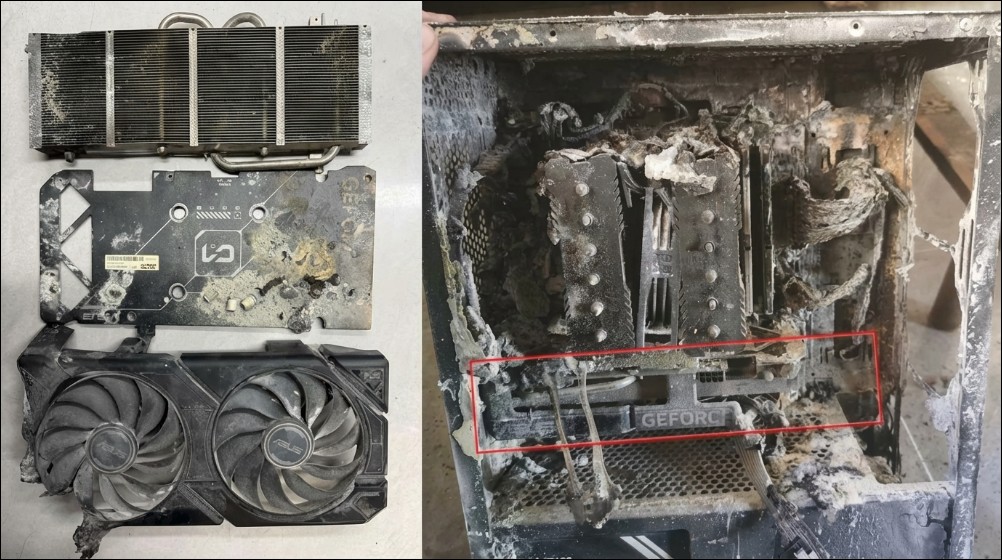
Disaster scene: “Graphics card burning” caused by inferior electric heater
The cause of the accident is sobering. According to reports, the player used a poor-quality electric heater in his room during the Spring Festival cold snap. Due to electrical design defects or excessive load, electric heaters can cause fires during operation, and the fire quickly spreads throughout the room. Although the fire was eventually put out, most of the items in the room were destroyed, including the player’s beloved game console. The scene after the disaster was horrific. The parts inside the casing were covered with thick black carbon deposits. The high temperature caused irreversible thermal damage to the motherboard, memory and other parts.
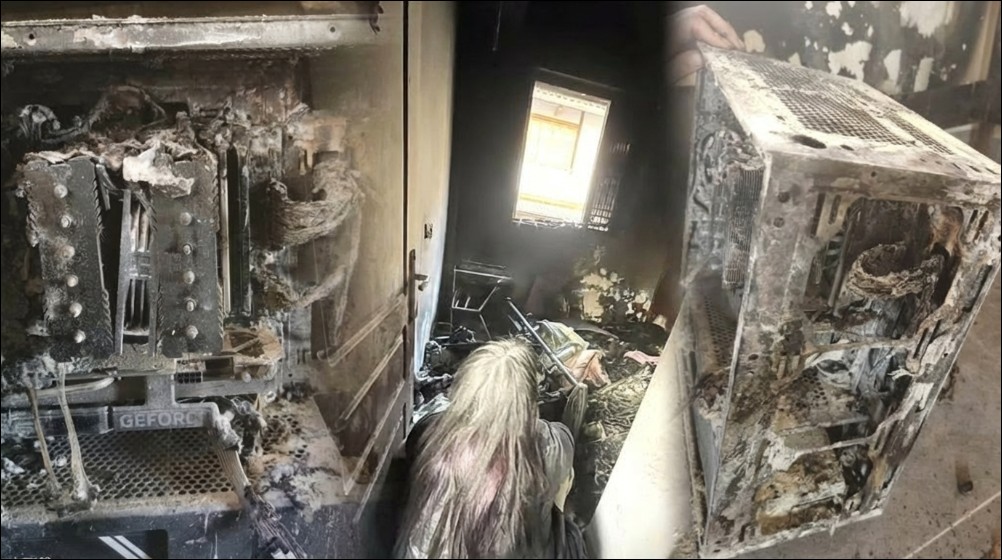
Among the wreckage, the most severely damaged was the graphics card. This ASUS RTX 4060 originally had an elegant radiator design, but in the fire, its outer shell was almost melted, and the internal PCB (Printed Circuit Board) was scorched black. The player originally had no hope of repairing it, but with the mentality of “treating a dead horse as a live doctor”, he sent this piece of “coke” to Brother Zhang, a maintenance technician who is known for repairing difficult hardware.
Diagnosis by a miracle doctor: the miraculous rescue of toothbrush and water
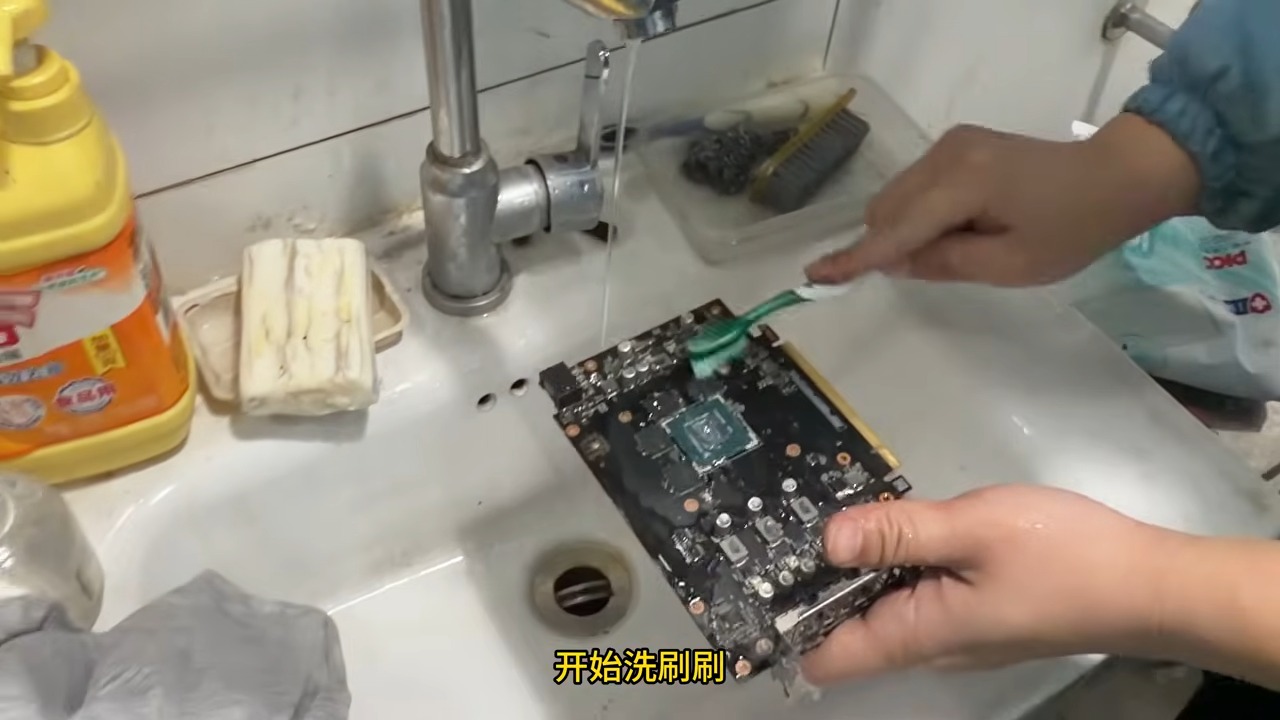
After Brother Zhang received this “coke graphics card”, the first step was not to rush to power it on, but to perform the most thorough basic cleaning. Faced with PCBs full of ashes and oxides, Brother Zhang adopted a seemingly primitive but extremely effective method: scrubbing with a toothbrush combined with water and detergent. The purpose of this step is to remove conductive carbon deposits and corrosive residues on the surface to prevent secondary short circuits during testing.
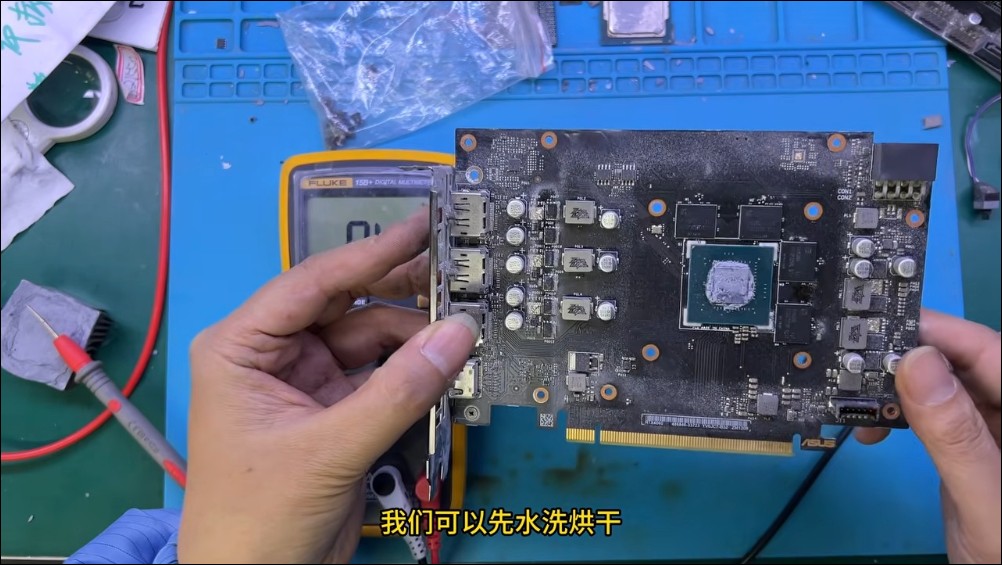
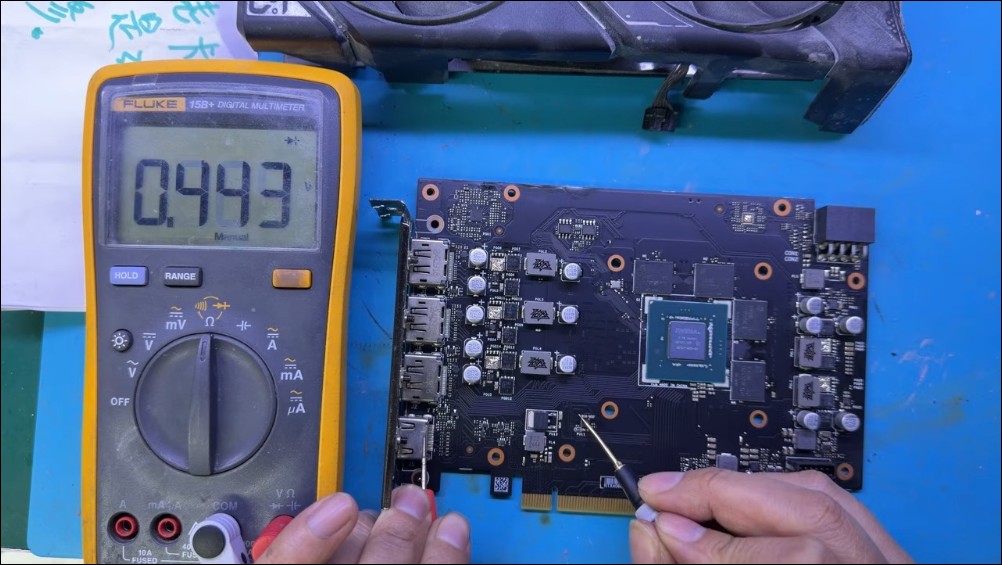
Once the cleaning is complete, the real professional diagnosis begins. Zhang used a multimeter to make repeated resistance measurements on key power rails on the PCB. He was surprised to find that despite the severe damage on the outside, there was no short circuit between the graphics card’s core (GPU) power supply rail and the video memory power supply circuit. This means that although the fire destroyed the external heat sink and plastic parts, the high temperature may not have reached a high enough level to fuse the multi-layer circuits inside the PCB or burn the core silicon wafer. The diagnostic results are exciting: the PCB main body and key chips are intact, and this graphics card has the basic conditions for “resurrection”.
Cross-range RTX 4060 Ti radiator modification
Now that the circuit board is intact, the next challenge is to rebuild the cooling system. Since the original RTX 4060 radiator was destroyed, Brother Zhang proposed a bold repair plan: remove a higher-level RTX 4060 Ti radiator from a graphics card with no core and no video memory.
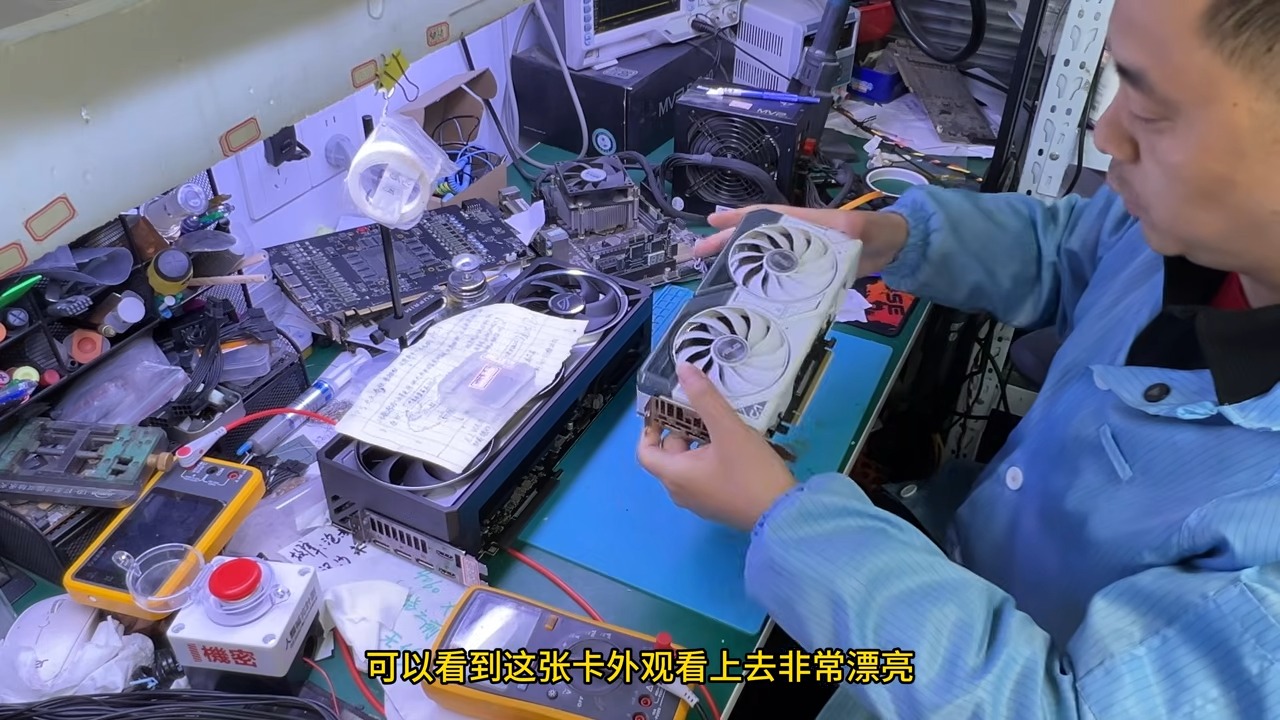
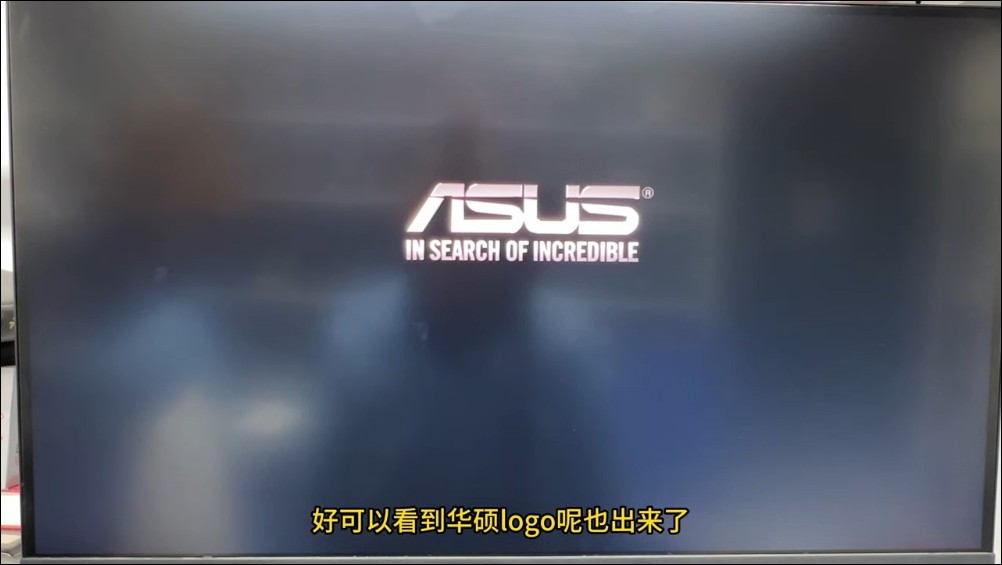
With years of maintenance experience, Brother Zhang made fine adjustments to the 4060 Ti’s cooling base to ensure that the thermal pad can fit perfectly with the GPU core, video memory and power supply module (VRM). This “leapfrog” modified radiator has more heat pipes and a larger fin surface area. In the iconic voice of Brother Zhang shouting the classic “Power on! The ASUS logo has come out”, this graphics card that had been burned by fire was successfully lit up and the screen output was normal, marking the initial success of the repair work.
Test results: peak performance after rebirth
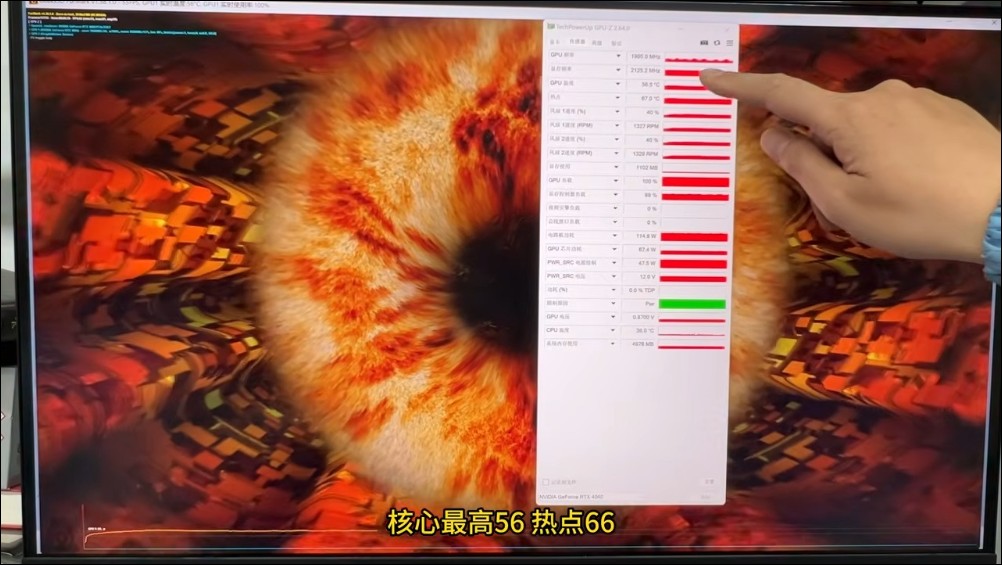
The repaired “Fire Edition” RTX 4060 was sent to the FurMark burn-in test bench, which is a rigorous test to measure the stability and heat dissipation limits of the graphics card. Surprisingly, after modifying the 4060 Ti cooler, the card showed amazing low-temperature characteristics. Under full load operation and TGP power consumption reaching 115W, the maximum temperature of the GPU is only 56°C. The subsequent Steel Nomad stress test passed as high as 99%, which is more stable than many graphics cards.
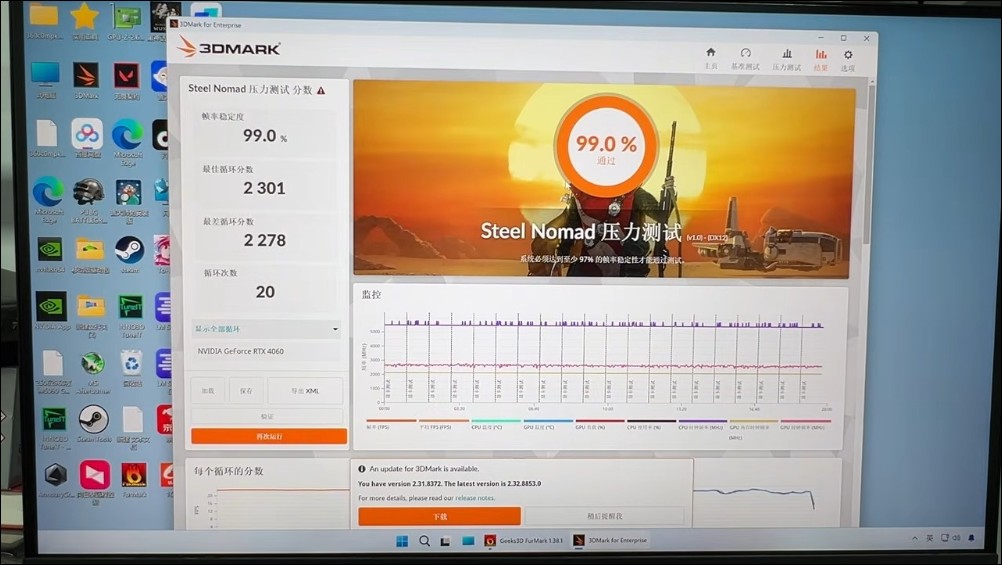
For a graphics card that was once as black as carbon, it can pass the high load stress test and have such excellent temperature control. In addition to proving Zhang’s skill, the player’s luck and not giving up are also important. This also indirectly shows that as long as the core chip is not damaged, through professional maintenance and appropriate replacement of auxiliary parts, even electronic products that appear to be completely scrapped still have hope of rebirth. For the detailed repair process, you can directly watch Brother Zhang’s video:
Source: KOCPC Chinese