


Samsung Electronics’ annual flagship smartphone Galaxy S26 series has been launched in global markets. However, this new machine uses different processors in different regions (Qualcomm Snapdragon 8 Elite Gen 5 vs. Samsung’s own developed Exynos 2600 processor), but there is a considerable difference in the actual use experience. YouTube technology channel Android Addicts recently released a detailed battery life comparison test. The results show that the version equipped with Qualcomm Snapdragon 8 Elite Gen 5 processor is significantly ahead of the Exynos 2600 version in battery life performance by up to 2 hours and 38 minutes. This astonishing gap not only shocked many consumers, but also raised questions in the industry about the actual performance of Samsung’s 2nm GAA process technology.
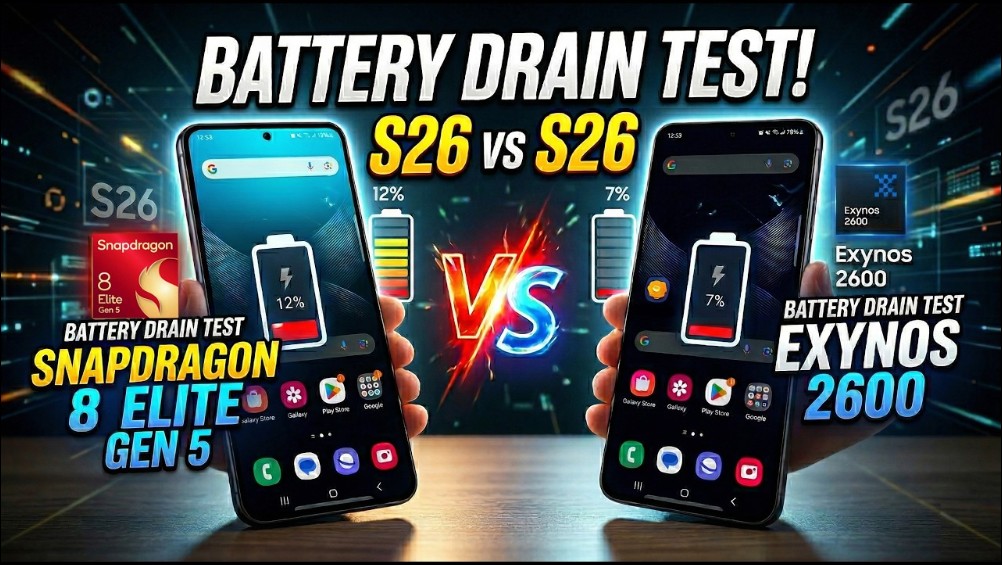
Samsung Galaxy S26 dual version battery life test
The Android Addicts channel’s test design this time is quite rigorous and strives to compare the two versions under fair and objective conditions. He prepared two Samsung Galaxy S26 phones with identical specifications. The only difference is that the processors use Samsung’s own Exynos 2600 and Qualcomm’s Snapdragon 8 Elite Gen 5 respectively. Before the test started, both mobile phones were charged to 100%, set to the same screen brightness, turned off Wi-Fi and only used the 5G mobile network to ensure the consistency of the test environment.
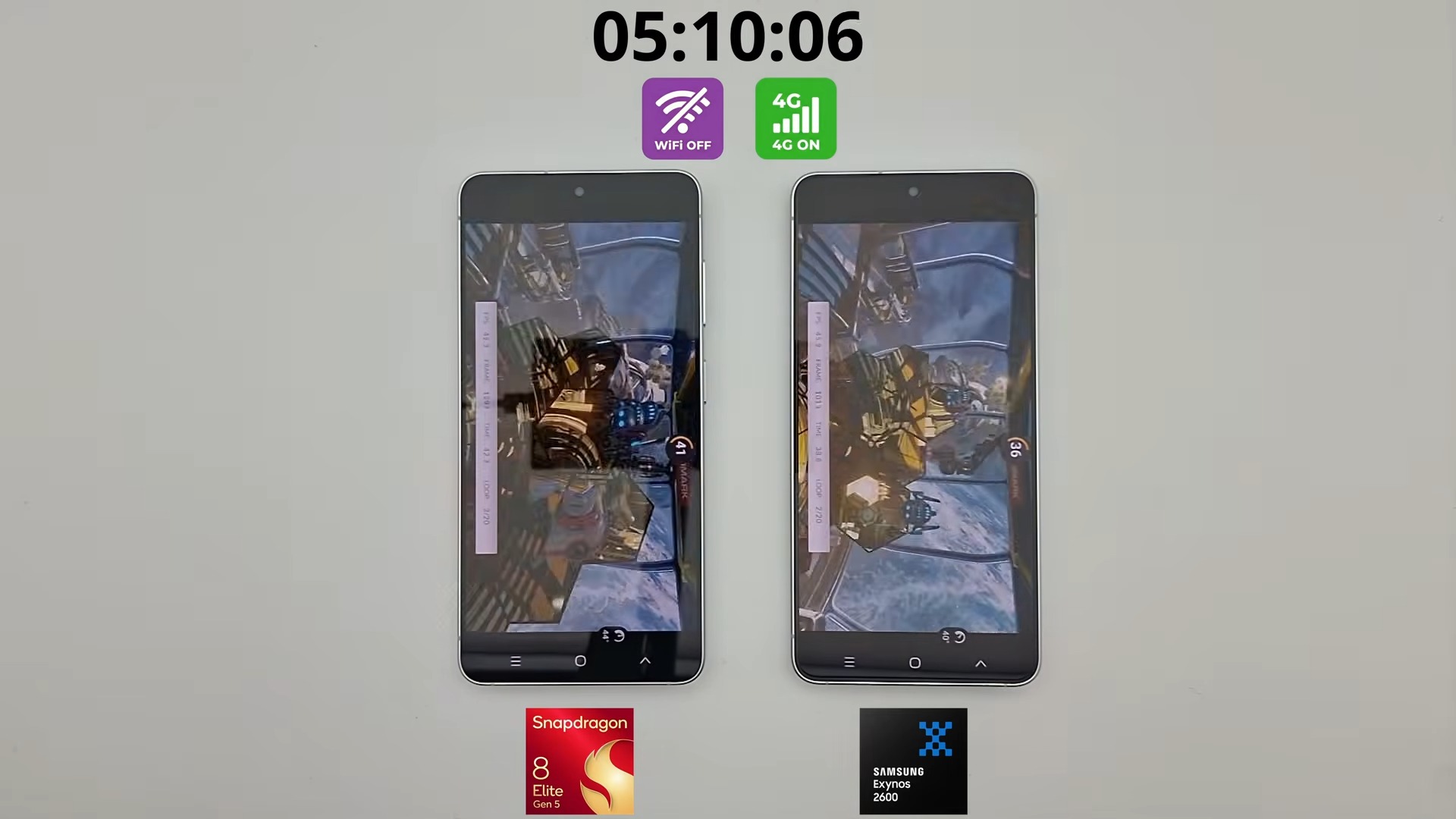
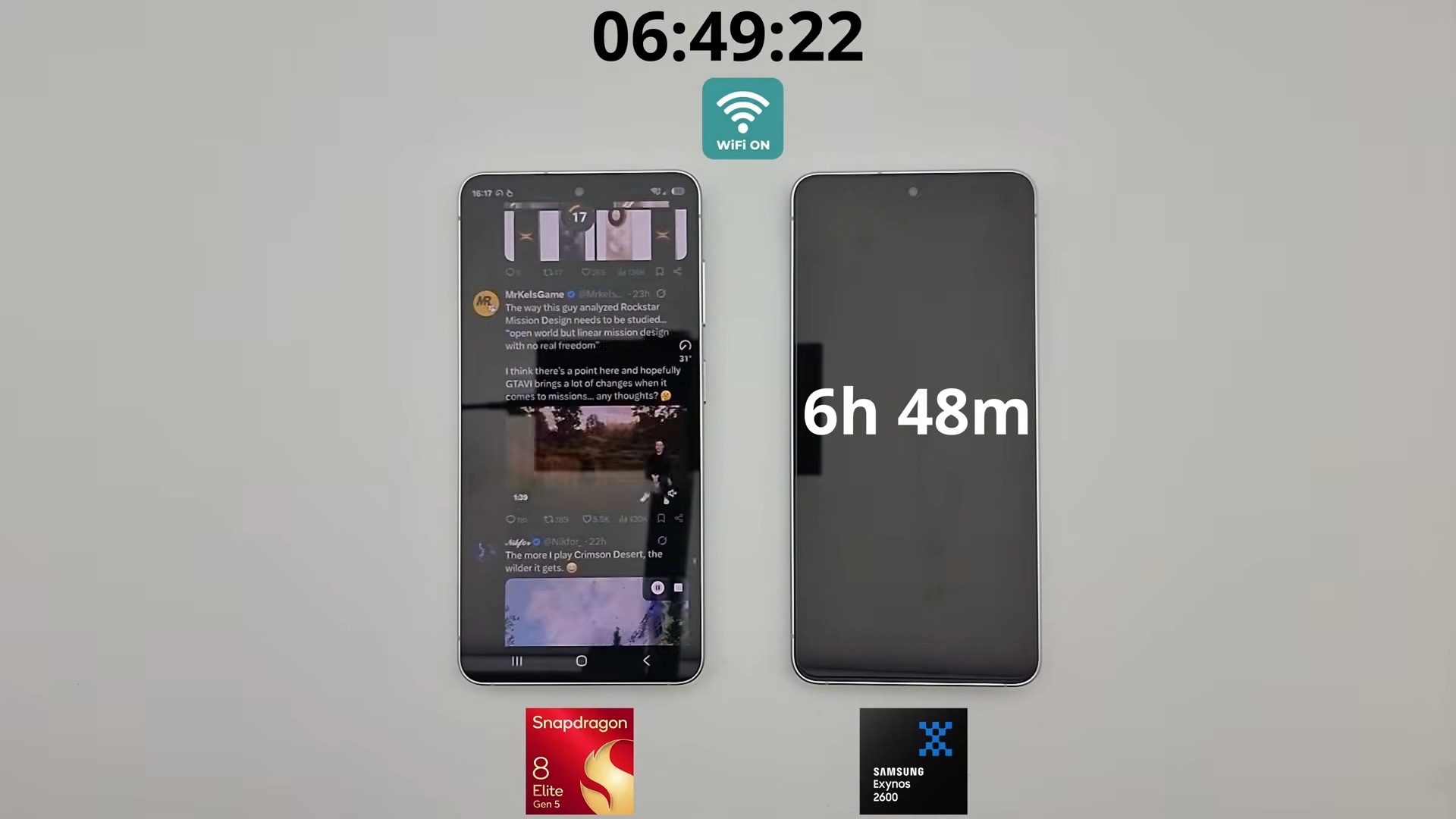
The test process simulates various operating scenarios that an average user may perform in a day, including in sequence: making and receiving calls, 4K 30FPS high-definition video recording, video encoding and transcoding, Google map navigation, WhatsApp video calls, YouTube high-definition video playback, 3DMark graphics performance scores, TikTok short video browsing, X platform (formerly Twitter) social browsing, Prime Video streaming video playback, and Instagram photo browsing, etc. The entire test process continues until one of the mobile phones is completely out of power and automatically shuts down.
The final test results were incredible to all viewers watching the video:
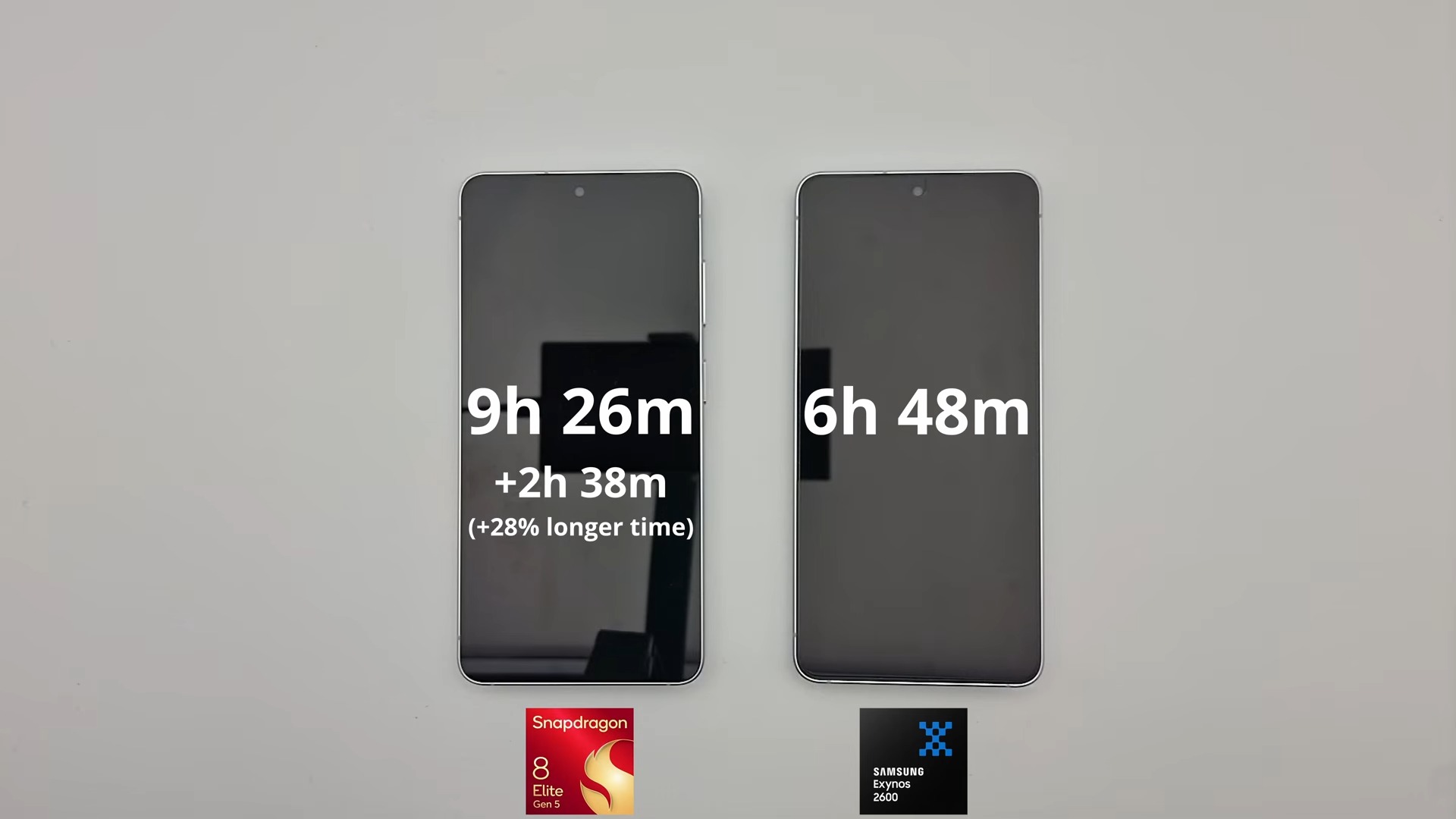
- Version with Qualcomm Snapdragon 8 Elite Gen 5: After 9 hours and 26 minutes of continuous use, it ran out of power and shut down.
- Version with Samsung Exynos 2600: Completely out of battery and shut down after only 6 hours and 48 minutes of use
The battery life gap between the two is as high as 2 hours 38 minutes, the battery life of the Snapdragon version is about 28% longer than that of the Exynos version. Such a gap is extremely rare in the smartphone market, especially considering that except for the processor, the two phones have exactly the same hardware and software conditions such as battery capacity, screen specifications, and operating system versions, which further highlights the huge gap in power consumption control between the two processors.
Interested friends can also directly watch this complete test video:
Exynos 2600 crashes due to overheating and power consumption surges
In addition to the significant lag in battery life, there were also situations that troubled users even more during the test. When performing high-load tasks such as 4K video encoding, mobile phones equipped with Exynos 2600 experienced obvious overheating, which ultimately caused the video encoding application to crash before completing the task.
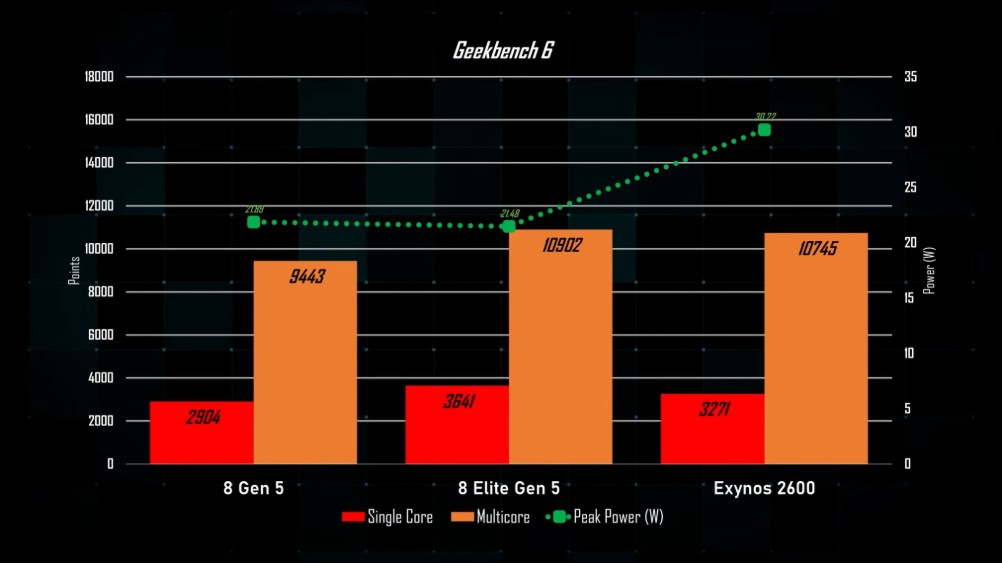
In order to delve deeper into the power consumption characteristics of the two processors, technology media Wccftech conducted additional peak power consumptiontest. The results show that when running CPU-intensive tests such as Geekbench 6, the peak power consumption of the Exynos 2600 soared to 30.22W, in comparison, the peak power consumption of Snapdragon 8 Elite Gen 5 is only about 21.5W. This means that the power consumption of the Exynos 2600 in extreme performance mode is about 40.69% higher than the Snapdragon version. For a smartphone, this power consumption gap is an extremely shocking figure.
Samsung’s 2nm GAA process technology has been questioned
Such a huge gap in battery life and power consumption has caused the technology industry and consumers to question the actual efficiency of the 2nm GAA (Gate-All-Around) process technology promoted by Samsung. GAA is regarded as a new generation of transistor structure technology after FinFET. In theory, it can provide better current control and lower leakage current, thereby achieving higher efficiency and lower power consumption. Samsung also claims that its 2nm GAA process can reduce power consumption by 25% at the same performance or improve performance by 12% at the same power consumption compared to the previous generation 3nm process.
However, judging from the actual test results of the Galaxy S26, the power consumption performance of the Exynos 2600 does not seem to reflect these theoretical advantages. Analyzing the possible reasons, they may be summarized into the following points:
- The actual efficiency of the process did not meet expectations: Samsung’s 2nm GAA process may still be in its early stages, and the actual energy efficiency has not yet reached the ideal level advertised.
- CPU architecture design factors: The Exynos 2600 uses a 10-core CPU architecture, compared to the Snapdragon 8 Elite Gen 5 which is an 8-core design. Although a larger number of cores can theoretically provide stronger multi-tasking capabilities, it also means a higher base value of power consumption.
- Software tuning and power management: Samsung’s software tuning for the Exynos 2600 may not be mature enough, and the power management strategy may be too performance-oriented.
- Modem power consumption differences: The Exynos 2600 integrates Samsung’s own 5G modem, while the Snapdragon version uses Qualcomm’s X80 5G modem.
The performance of Samsung’s process is so poor. It’s no wonder that Qualcomm, NVIDIA and Apple all turned to TSMC after suffering huge losses from Samsung’s process. They would rather wait in line than give Samsung a chance (currently only some secondary processors will be OEMed by Samsung).
Impact on consumers and markets
This test result is of high reference value for consumers who plan to purchase Galaxy S26. If you are looking for longer battery life, more stable performance, and a better user experience, you should obviously give priority to the version equipped with Qualcomm Snapdragon 8 Elite Gen 5 processor. However, the reality is that the Snapdragon version is usually only sold in specific markets, including the United States, China, Japan, etc., while markets such as Europe, South Korea, and India mainly sell the Exynos version.
Looking back at the development history of Samsung’s Exynos series, this is not the first time that there has been a clear gap with the Snapdragon version. As early as the Exynos 990 era of the Galaxy S20 series, it was criticized for overheating and performance issues. Although the subsequent Exynos 2100 and 2200 have improved, they have never surpassed the Qualcomm Snapdragon processors of the same period in terms of energy efficiency ratio. This time, the Galaxy S26’s Exynos 2600 once again has battery life and power consumption issues, which may deepen consumers’ negative impression of Exynos processors.
Source: KOCPC Chinese