


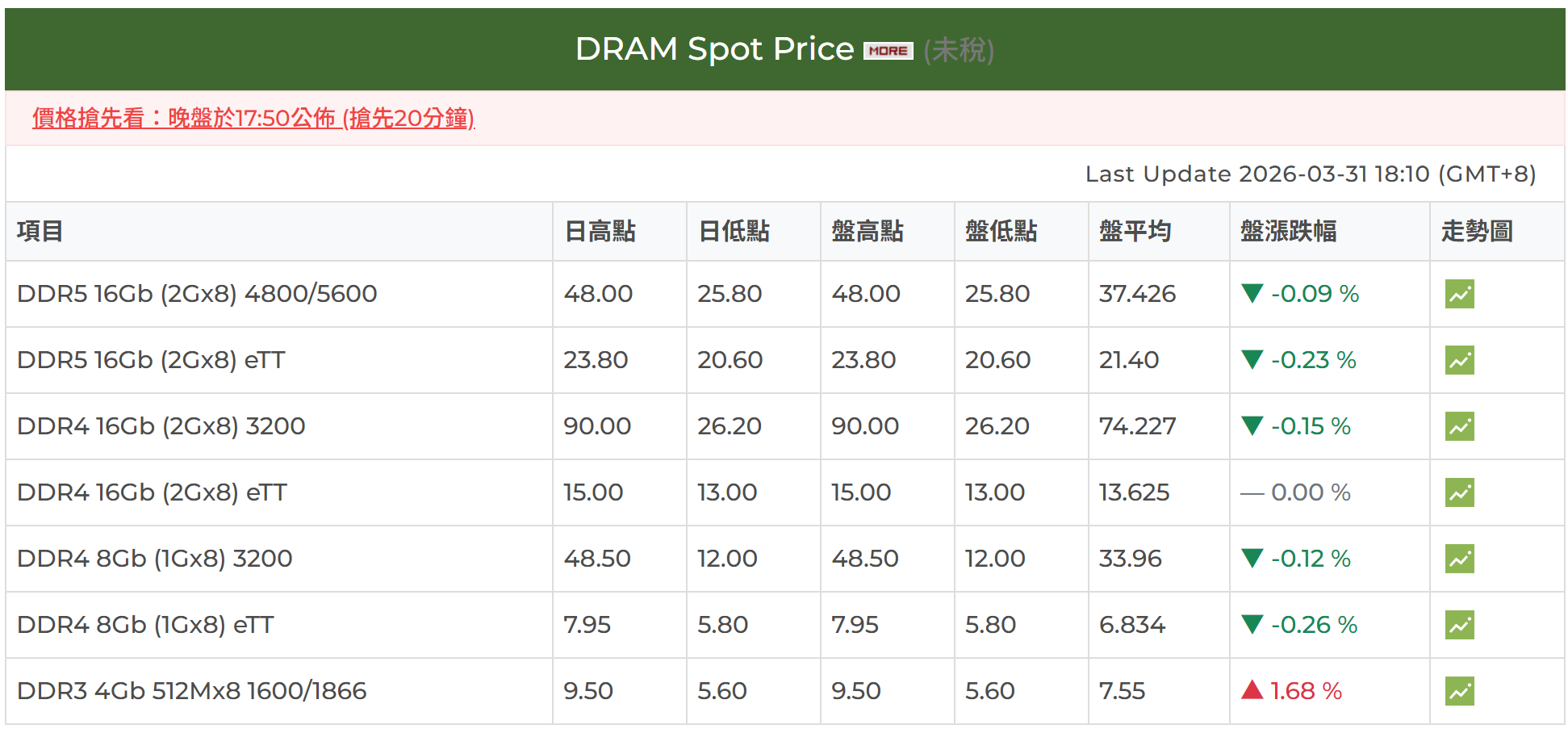
Just in the last few days of March 2026, according to China’s Sina Financereport, China’s Huaqiangbei business district, which has always been regarded as a barometer of the memory market, has seen significant loosening in spot prices since March 22, especially consumer-grade DDR5 products, which have begun to plummet. The price of mainstream 32GB DDR5 kits has plummeted from RMB 2,999 in mid-March to around RMB 2,200, a monthly drop of nearly 27%. Some high-capacity 64GB packages were hardest hit, with a single-week decline of more than 20%. Dealers described this kind of drop as unprecedented.
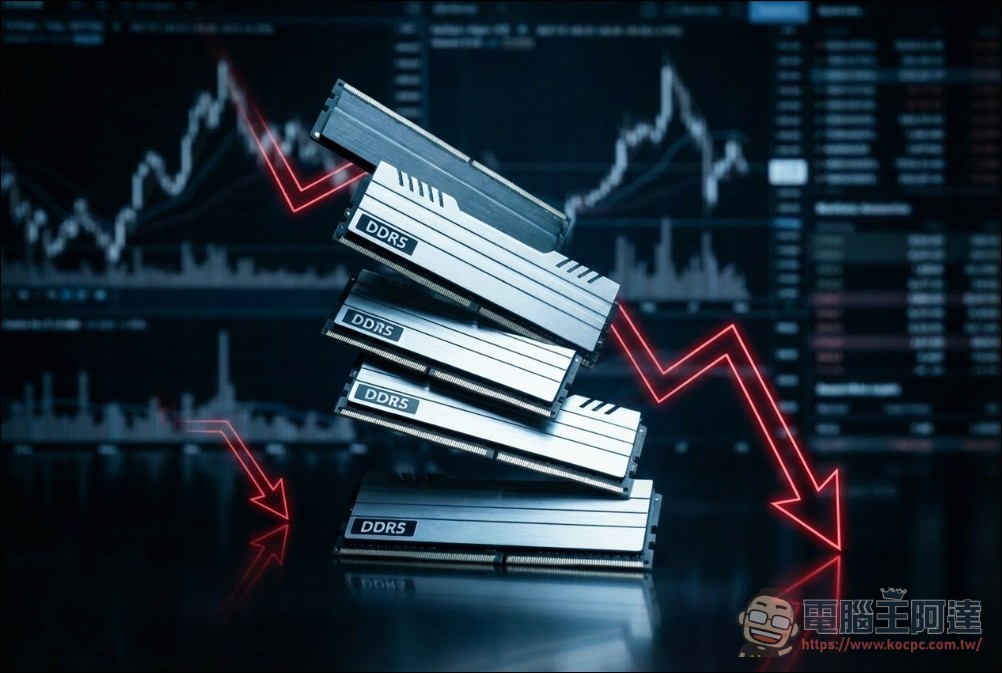
Stock-hoarding and technology panic: DDR5 price collapse under dual pressures
An in-depth analysis of the causes of this wave of memory price collapse is inseparable from the intersection of three key factors. The first is panic selling by channel dealers. According to Wccftechanalyze, during the soaring price of memory in the past few months, many “big players” and outside investors stocked up in large quantities, hoping to sell at a high point to earn the price difference. However, soaring prices have severely suppressed end demand. Sales of some merchants have dropped by more than 60%. Tight capital chains have forced them to cut prices in order to obtain cash, triggering a stampede of selling.
小时候存了不少游戏卡,后面存着BB机,觉得以后能卖钱。 pic.twitter.com/gSkBl9BOYX
— Geek Lite (@QingQ77) March 30, 2026
Secondly, Google’s release of the TurboQuant algorithm became the straw that broke the camel’s back. TurboQuant claims to reduce key-value cache memory usage by at least 60% when inferring large language models. This technological breakthrough triggered concerns about declining demand for memory chips (although it has little to do with consumer memory), and memory stock prices plummeted. The market value of the three major memory giants, SK Hynix, Samsung, and Micron, has evaporated by “hundreds of billions of dollars” in just one week, and panic quickly spread to the spot market.
The third factor is the spontaneous market correction caused by excessive price increases. according to TrendForce According to the data, the cumulative increase of some memory models since 2024 is close to 300%, which is far beyond the affordability of ordinary consumers. When prices rise to a prohibitive level, demand naturally shrinks, and a price correction becomes inevitable.
Two worlds of ice and fire: consumer-level plummets, enterprise-level rises against the trend
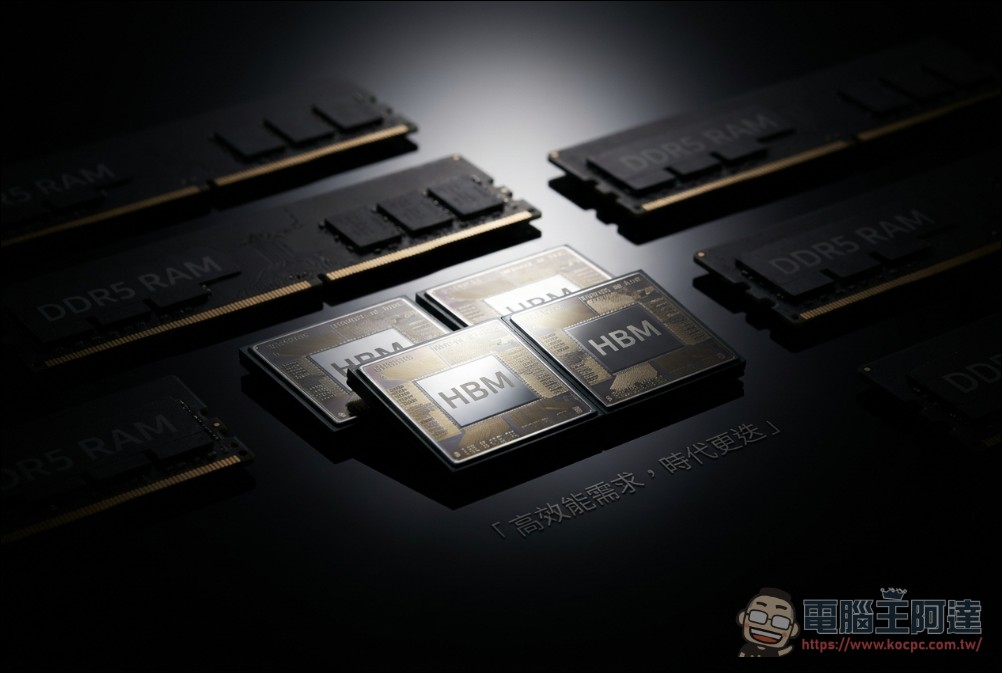
This wave of memory price adjustments shows an extremely obvious structural differentiation. Analysis by Sina Finance pointed out that price reductions are mainly concentrated in consumer-level DDR5 models, while enterprise-level HBM memory prices have even risen by more than 200% due to strong demand for AI servers. The memory requirement of an AI server is several times that of a traditional server. With limited total production capacity, the original factory prioritizes the supply of high-profit enterprise-level products. This “class discrimination” results in the supply of the consumer market remaining tight.
What deserves more attention is the obvious deviation between “channel price” and “original factory price”. This price reduction is mostly a “fire sale” by channel dealers to clear inventory. The ex-factory quotations of upstream original manufacturers such as Samsung and Micron have not significantly loosened, and are still more than 50% higher than the level before the price increase. At present, most DDR5 prices in the mainland Chinese market are still at high levels, and only some have dropped slightly. The price of some memory modules has dropped from RMB 3,999 to RMB 3,199, which is a relatively limited range.
In addition, the price trends of memory and terminal equipment also show obvious decoupling. Although the spot price of memory sticks has fallen, the prices of terminal equipment such as mobile phones and computers have not dropped simultaneously. By narrowing the price difference between different storage versions (for example, the price difference between 256GB and 512GB is reduced to 300 yuan), manufacturers maintain high prices with the “lower configuration upgrade” strategy. Consumers have not actually felt the dividends brought by the memory price reduction.
Outlook: Technical correction or trend reversal?
There are clear differences of opinion in the industry as to whether this wave of price cuts can be sustained. Optimists believe this is a technical pullback rather than a trend reversal. They pointed out that original factory production capacity will continue to tilt towards AI high-end storage, consumer-grade supply recovery is limited, and it will take time to digest channel inventory. Prices may continue to fluctuate in the short term, and there is even a risk of rebounding in July and August. Tom’s HardwareTracking reportIt was also pointed out that the price reduction of consumer-grade DDR5 in the European market is relatively slow, and the problem of tight supply has not been fundamentally resolved.
Pessimists warn that if spot prices continue to rise rapidly, it may accelerate the collapse of the entire industry’s business cycle. The gap between spot prices and contract prices continues to widen, which may trigger structural problems throughout the supply chain.
Advice to consumers: What should you do if you just need it?
For consumers who urgently need to upgrade their computers, experts suggest that if there is no urgent need to upgrade, they recommend continuing to wait and see, extend the service life of old equipment, and be wary of the risk of taking over at a high level after a “fake fall”. In the long term, as Chinese memory manufacturers gradually release production capacity and AI demand becomes more rational, the storage market structure may gradually ease after 2027.
summary
The memory market has always been one of the most cyclical areas in the technology industry. On the surface, this plunge is caused by panic selling by scalpers and fluctuations in market sentiment caused by technological mutations (such as TurboQuant). The underlying reason is that the AI craze in the past few years has excessively raised market expectations. When news of technological efficiency improvements (such as TurboQuant reducing memory requirements by 60%) comes out, the market immediately panics. This reaction actually ignores the Jevons paradox effect: when resource usage efficiency improves, the overall demand often rises instead of falling, because more application scenarios will be developed. For ordinary consumers, this wave of price cuts may be rare good news in recent years; but for industry investors, such market fluctuations are the risk: a single technological breakthrough can evaporate hundreds of billions of dollars in market value. This uncertainty deserves vigilance. As for ordinary computer gamers, if there is no urgent need to upgrade, I personally recommend waiting. The memory bubble feels a bit big.
Source: KOCPC Chinese