


Retired stock god Warren Buffett recently revealed in an interview with the American media CNBC that Berkshire Hathaway’s pre-tax income from holding Apple shares has exceeded US$100 billion (approximately NT$3.2 trillion). It is even more rare to compare the management capabilities of current CEO Tim Cook with the late Apple founder Steve Jobs. Jobs) and gave the evaluation that “he is better at managing the company than Jobs.”
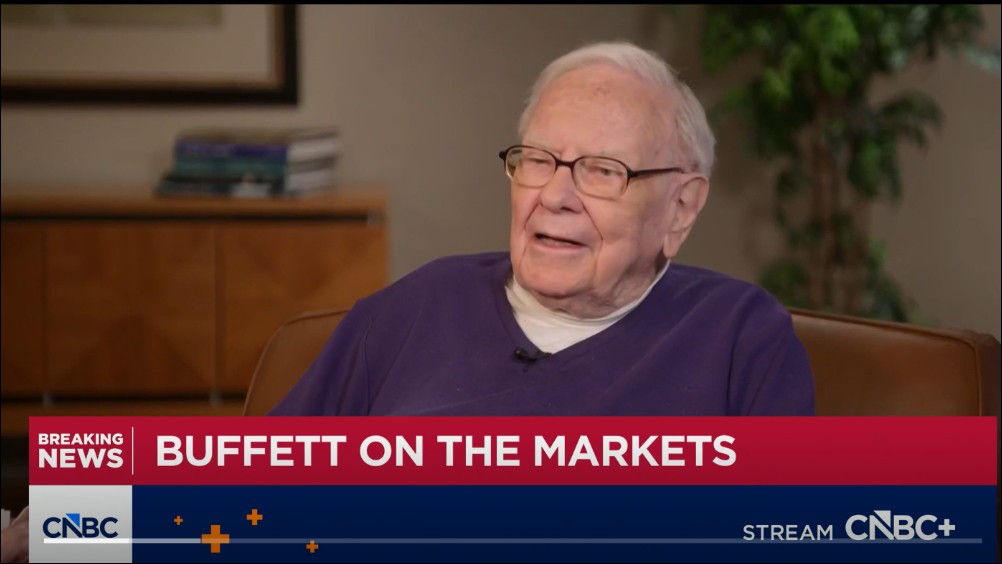
Buffett praises Cook: He can manage the company better than Steve Jobs
In the interview, Buffett spoke highly of Cook’s management capabilities, saying bluntly that “Cook plays the cards in his hand better.” He further explained: “Jobs couldn’t do what Cook is doing now, but Jobs gave him a good hand. Jobs himself might not be able to play so well.” These words are not only an affirmation of Cook, but also reveal the different missions of the two Apple leaders.
Looking back at Apple’s development trajectory, after Jobs returned in 1997, he launched revolutionary products such as the iPod, iPhone, and iPad, establishing Apple’s status as a global technology giant. After Cook took over in 2011, he was faced with how to transform this innovation-driven company into a corporate giant with stable operations and continuous creation. Under Cook’s leadership, Apple has not only become one of the most valuable companies in the world, but has also established a stable ecosystem and service revenue sources, areas that were less focused on during the Steve Jobs era.
Buffett added that Cook is not only an extremely good manager, but also a very good person who can get along with everyone in the world. “I don’t have this kind of ability, and my partner Charlie Munger, for example, certainly doesn’t have it either.” These words not only show Buffett’s humility, but also highlight Cook’s unique abilities in cross-cultural management and corporate diplomacy.
Berkshire’s Apple return on investment: more than $100 billion in profit
According to financial data analysis company Insider Score, Berkshire’s investment in Apple between 2016 and 2018 was approximately US$35 billion (approximately NT$1.1 trillion), and by the end of 2023, this investment had increased to US$173 billion (approximately NT$5.5 trillion). Even though Berkshire reduced its holdings in Apple to US$61.96 billion at the end of last year, Apple is still Berkshire’s largest holding.
Buffett admitted that he thought he sold too early and would continue to add to his position if Apple’s stock price became cheaper. “I’m happy for Apple to be our number one holding, but I’m not happy for it to be so large that it’s almost equal to all other positions.” These words reflect Berkshire’s cautious approach to portfolio management. Even in the face of high-quality targets like Apple, appropriate risk diversification needs to be maintained.
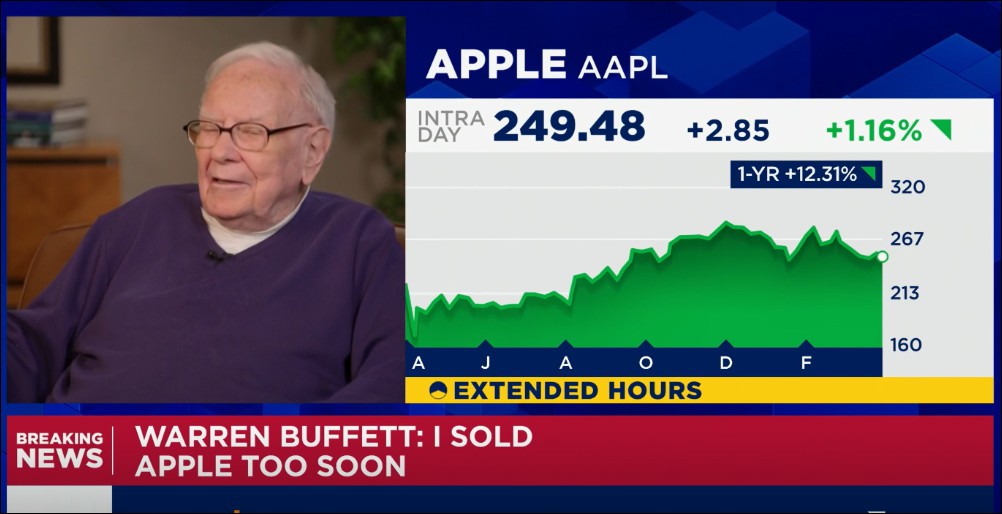
During the interview, Buffett compared Apple to Coca-Cola: another investment he has held for a long time. In Buffett’s investment philosophy, such companies have strong brand moats, stable cash flow and predictable long-term returns, making them his preferred “long-term holding” investments.
The embodiment of investment philosophy: long-term holding and high-quality management
Buffett’s praise of Cook reflects his consistent investment philosophy to some extent. The stock god has emphasized many times that investing is not only about a company’s financial data, but more importantly, it is about evaluating the quality and integrity of the management. Cook’s execution, supply chain management capabilities and commitment to shareholder returns over the past decade have clearly won Buffett’s trust.
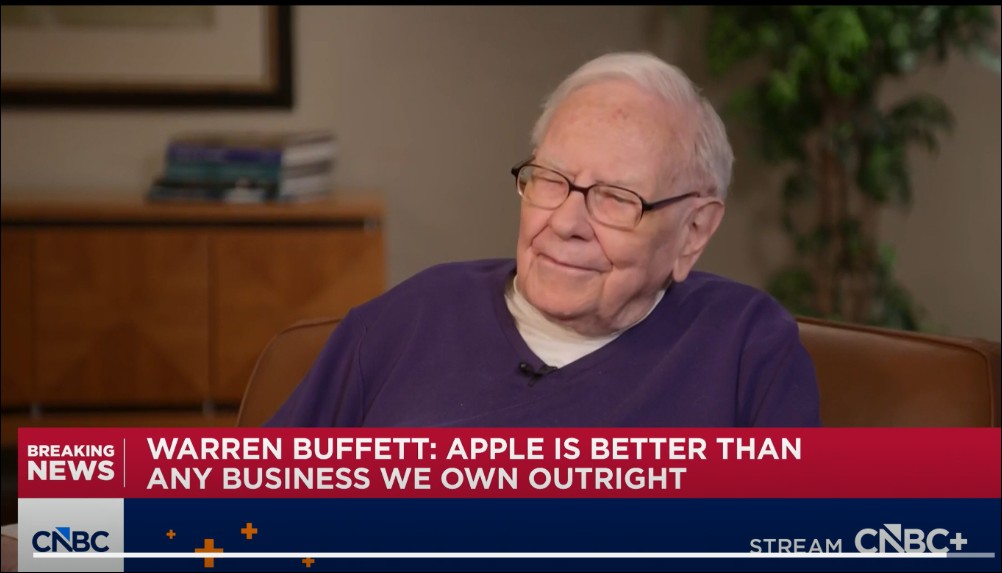
At Apple’s operational level, Cook has successfully transformed the company from a pure hardware manufacturer into a comprehensive technology giant covering hardware, software and services. The revenue share of service businesses (including App Store, Apple Music, iCloud, etc.) continues to increase, bringing more stable recurring revenue to the company. This is also the “predictability” that Buffett values.
However, Buffett also admitted that he would not buy more Apple shares in the current market environment, mainly because the stock price is already at a relatively high level. This once again reflects his investment principle of “buying high-quality companies at reasonable prices”. Even for a beloved target like Apple, he is unwilling to chase high prices.
Friends who are interested in the full text of Buffett’s interview can readhave a look:
Source: KOCPC Chinese