


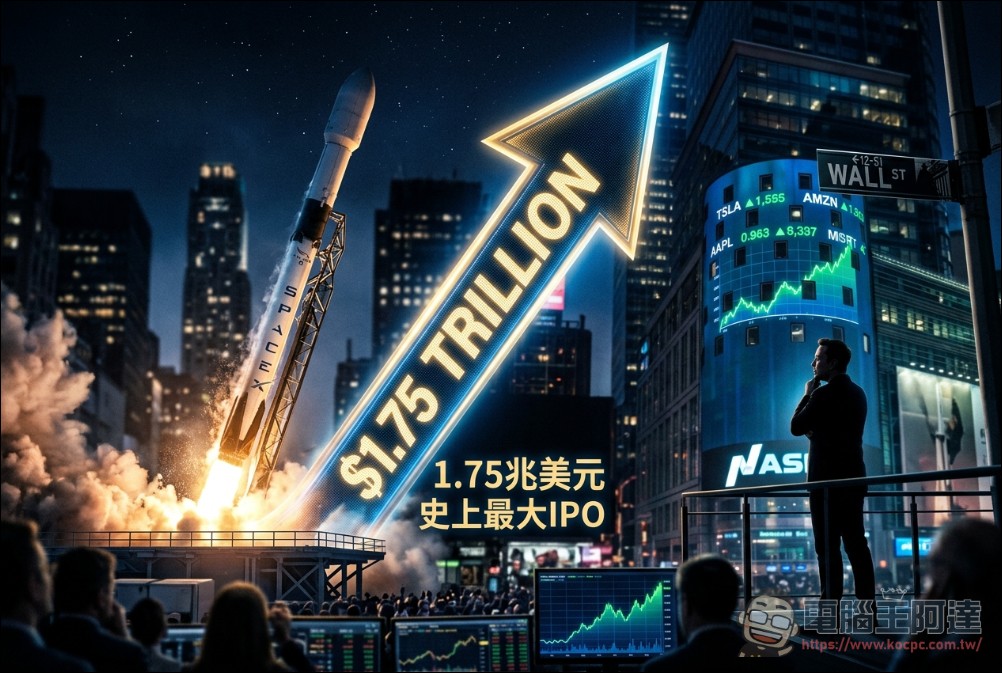
Elon Musk’s space exploration technology company SpaceX secretly submitted an initial public listing (IPO) application to the U.S. Securities and Exchange Commission (SEC) on April 1, 2026, with a target valuation of more than US$1.75 trillion (approximately NT$57 trillion). If the listing process is successfully completed, it will be the largest listing transaction in the history of global capital markets, surpassing the US$29 billion listing of Saudi Aramco in 2019.
Twenty-four years of sharpening a sword: the private space industry reaches a turning point
SpaceX was founded by Musk in 2002. It was only a small start-up in its early days, but it completely reshaped the global space industry in just a few years. The company is known for its reusable rockets, and its Falcon 9 has become a standard equipment for governments and commercial customers to launch satellites. Throughout 2025, SpaceX completed more than 130 Falcon 9 launch missions, firmly ranking as the space company with the most launches in the world. The company also shoulders important tasks for the U.S. government, including performing missions for NASA to transport astronauts to and from the International Space Station, and participating in the “Artemis” lunar landing program, providing key vehicles for the United States to return to the moon before China does.
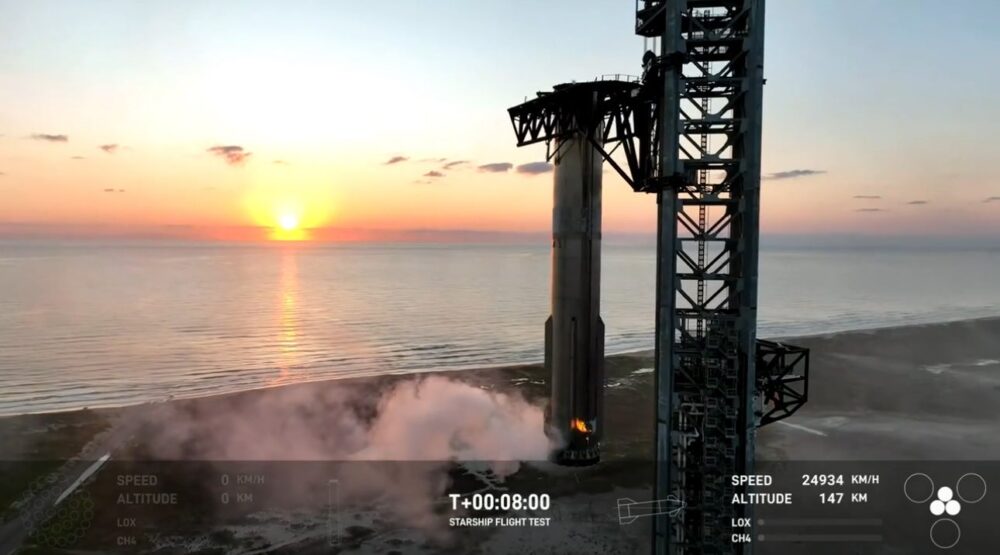
Musk has stated many times in the past that SpaceX will not consider going public until the spacecraft actually lands on Mars. However, as the demand for artificial intelligence computing has exploded, and the scale of funds required to develop the Starlink satellite network and Starship rockets has become beyond the capabilities of the private market alone, SpaceX has finally turned to the public offering market. Sources revealed that SpaceX has internally codenamed the IPO project “Project Apex” and has mobilized 21 internationally renowned banks to jointly underwrite the project. The lineup is so large that Wall Street has rarely seen it in recent years.
Merger with xAI: Where the $1.75 trillion valuation comes from
In addition to the traditional rocket launch business, another key asset supporting SpaceX’s sky-high valuation is the merger with xAI completed in February 2026. According to public information, SpaceX acquired xAI in an all-stock transaction at the time, with the new entity valued at US$1.25 trillion after the merger; of which SpaceX, the rocket business, was valued at US$1 trillion, and xAI, the new AI startup, was valued at US$250 billion. It is worth noting that in addition to the AI chatbot Grok, xAI also holds the social media asset X (formerly Twitter).
SpaceX’s latest vision after the merger is to move the AI data center directly into space. Musk and the management team stated that they plan to deploy up to one million data center satellites in Earth orbit, powered by solar energy, in an attempt to solve the energy and heat dissipation bottlenecks faced by terrestrial data centers. If this plan is realized, it will be the largest investment in space infrastructure in history and a key step in SpaceX’s transformation from a simple rocket launcher to a vertically integrated technology group.
Starlink: The golden hen holds up half the sky
If rockets are SpaceX’s dream, the Starlink satellite network is the cash flow that supports it all. Starlink currently has about 10,000 satellites in orbit, providing broadband services to remote areas around the world and areas lacking network infrastructure. It has more than 9.2 million subscribers and will bring more than $8 billion in revenue to SpaceX in 2025, accounting for more than half of the company’s overall revenue. Analysts estimate that Starlink’s single-year revenue forecast range for 2026 is between US$15.9 billion and US$24 billion, which is an astonishing growth rate.
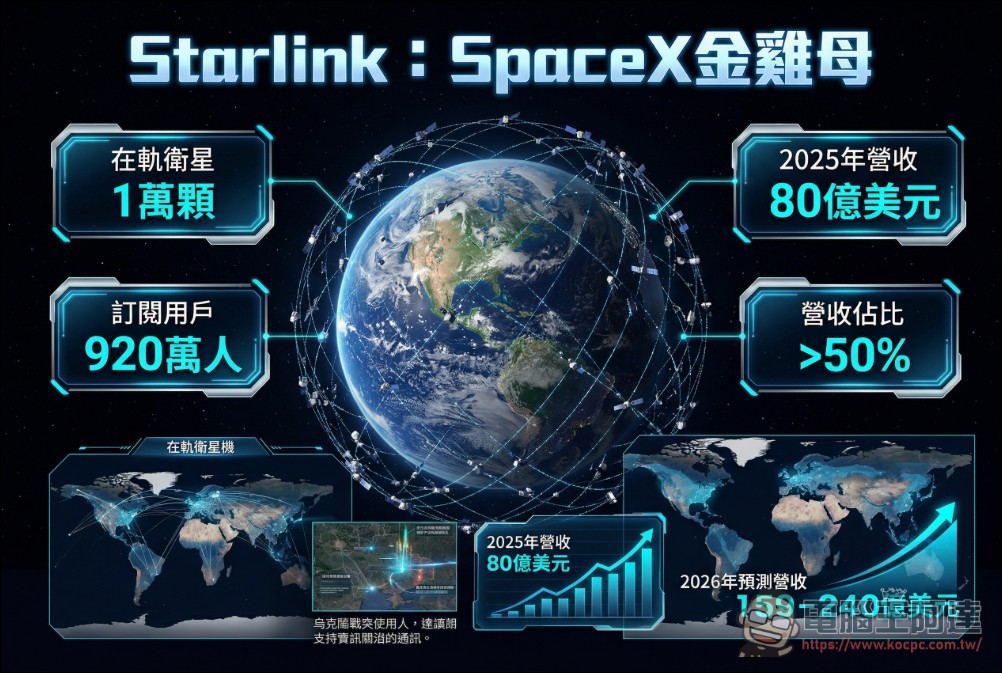
Starlink’s influence extends beyond business. The Ukrainian military relied heavily on Starlink for battlefield communications and command and dispatch during the Russo-Ukrainian War, making this system an indispensable infrastructure in modern warfare and causing Musk’s personal weight in the global geopolitical landscape to rise sharply. This layer of “strategic materials” is bound to become one of the most interesting topics for institutional investors during the IPO road show.
IPO schedule revealed: Analyst days, data center visits, virtual meetings
According to informed sourcesReutersAccording to Bloomberg, SpaceX has drawn up a complete IPO pre-schedule. A physical Analyst Day will be held at the California headquarters on April 21. Institutional research analysts will be invited to attend, and the management team will personally explain financial data, business strategies and future growth forecasts. In addition, voluntary registration will be opened on April 23, and analysts will be led to visit xAI’s data center campus code-named “Macrohard” in Memphis, Tennessee. An online virtual meeting will be arranged on May 4, with the participation of banking industry research analysts, focusing on financial model discussions.
According to the time schedule, SpaceX aims to be officially listed on Nasdaq in June 2026. The formal S-1 disclosure prospectus is expected to be disclosed after SEC review between April and May. At that time, the company’s detailed financial data: including revenue, gross profit and cash flow that have been classified as top secrets for many years will be exposed to the sun for the first time. Barclays, one of the UK’s largest banks, is also reported to be involved in coordinating IPO subscription orders.
Concerns among investors and observers
While the market reaction to SpaceX’s listing has been enthusiastic, it hasn’t been without some noise. Some Wall Street analysts pointed out that the $1.75 trillion valuation is equivalent to more than 100 times 2025 revenue and deviates far from traditional valuation logic. The overall AI industry, especially basic model development, is in a highly cash-burning stage. When compared with OpenAI’s ChatGPT and Anthropic’s Claude, xAI’s Grok still lags behind in terms of functionality and market share.
On the other hand, Musk’s controversial words and deeds in recent years have also added atypical risks to this IPO. He was deeply involved in the massive federal government cuts controversy triggered by the Department of Government Efficiency (DOGE) in 2025, and Tesla’s brand image was damaged by consumer disgust in the European and American markets. In addition, xAI’s Grok was kicked out for generating a large number of non-consensual sexualized images of women and children, and regulatory agencies have launched an investigation. Whether these factors will affect the willingness of institutional investors to subscribe is worthy of continued observation.
Follow-up Watch: What’s next for the SpaceX empire
The reason why SpaceX’s IPO has been given a “record-breaking” status by the market is not only because of the amount of funds raised, but also because it represents the arrival of a new business model: a vertically integrated technology group that integrates rocket launches, satellite communications and artificial intelligence, officially opening its doors to public investors. SpaceX has secured $24.4 billion in government contracts since 2008, including critical missions for NASA, the Department of Defense and the Space Force. The high certainty and high gross profit characteristics of government business, coupled with Starlink’s rapidly growing consumer market, are the most important fundamentals supporting the valuation of this IPO.
As for Musk himself, he is expected to further widen the wealth gap with all the rich after the successful listing of SpaceX, and move towards the goal of becoming “the world’s first trillionaire” (trillionaire). The success or failure of this IPO will not only affect the growth and decline of Musk’s personal wealth, but may also determine the direction of the global space industry and AI capital market in the next ten years.
Source: KOCPC Chinese