


The global smartphone market is facing an unprecedented cost storm! Since the beginning of 2026, the price of memory chips has continued to soar, which has become more than just a fluctuation within the supply chain, and has evolved into a chain reaction that can reshape the industrial landscape. In the past, the “thousand-yuan phones” (entry-level models priced around NT$4,500), which were regarded as the mainstay of the market by Chinese manufacturers and had huge sales volume, are rapidly disappearing from the new product blueprints of major brands as profit margins are squeezed to the limit. This cost pressure has spread upwards to top chip designers and foundry leaders. Qualcomm and MediaTek are reported to have begun to significantly reduce 4nm chip orders for entry-level phones, forcing TSMC, the leading foundry, to flexibly adjust its production lines and shift production capacity to the AI chip market with stronger demand.

Memory costs cannibalize profits: Qualcomm and MediaTek cut orders, and the world’s thousand-dollar phones may become extinct
Profits evaporate: memory cost accounts for more than 50%, and the living space of entry-level mobile phones is confiscated
According to industry research instituteslatest surveyIt shows that the price increase of memory chips has reached staggering levels. In the current bill of materials (BOM) of entry-level smartphones, the cost of memory (RAM) alone accounts for 35% of the total material cost, while flash memory (NAND Flash) responsible for data storage accounts for 19%. This means that these two storage components alone account for 54% of the mobile phone hardware cost.
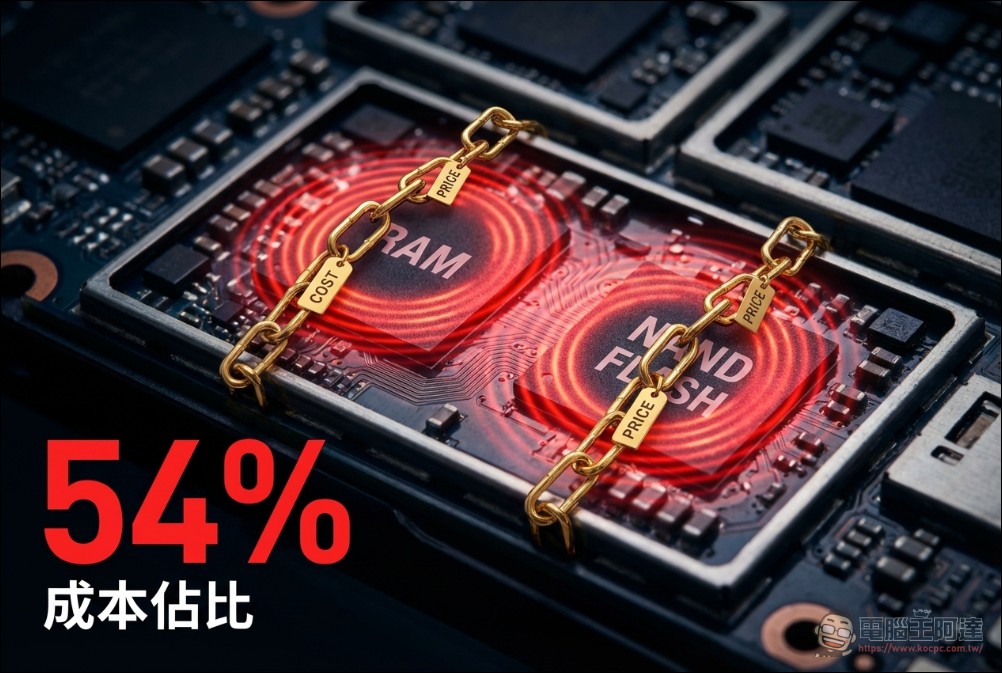
For entry-level mobile phones with extremely thin profits, this cost ratio of more than 50% is undoubtedly a fatal injury. In the past, entry-level phones mainly relied on economies of scale to obtain small profits. However, when the prices of core components have doubled, manufacturers may face losses for every phone sold if they do not increase the terminal selling price. However, once the price increases, they will lose the core competitiveness of the entry-level market. Faced with this dilemma, most mobile phone manufacturers have chosen to adopt an “abandonment strategy” and have suspended or terminated updates and iterations of their thousand-yuan-level (approximately NT$4,500) product lines. This also symbolizes that the smartphone market is being forced to move towards the mid- to high-end range, and the glorious era of low-priced mobile phones may have come to an end.
Chilling effect: The Android camp’s shipments plummeted, and the chip duo took the “first shot to cut orders”
The chain reaction caused by the surge in memory costs is quickly reflected in terminal shipment data. Global smartphone shipments are facing significant downward pressure in 2026 due to rising cost pressures on terminal selling prices and sluggish consumer desire. At present, foreign investors have simultaneously lowered their estimates of global mobile phone shipments this year, and the annual decline is expected to reach 13%. Among them, the Android camp, which has been hardest hit, is expected to decline by as much as 15%.
Faced with the shrinking end market, global chip design leaders Qualcomm and MediaTek have had to make strategic adjustments. According to market rumors, the two major chip manufacturers have begun to reduce orders for the 4nm process, with a total reduction of approximately 20,000 to 30,000 wafers expected. If converted into the number of chips that can be produced on a single wafer, this is equivalent to a reduction in shipments of approximately 15 million to 20 million mobile processor chips. This action is regarded by the market as a key indicator of the reversal of the mobile phone industry’s prosperity, and also reflects the cautious stance of chip manufacturers to prioritize protecting inventory health and cash flow when facing a sharp freeze in downstream demand.
Great production line shift: TSMC shifts to 3nm to support the AI wave that is in short supply
In the context of chip manufacturers adjusting orders, the production capacity allocation trends of TSMC, the leading foundry, have also become the focus of the industry. according to”economic daily“The report pointed out that as non-Apple mobile phone customers have begun to reduce 4nm wafer production, TSMC is beginning to leverage its excellent manufacturing flexibility and plans to convert some idle 4nm production lines or slowing demand into 3nm production lines. The core purpose of this initiative is to support the demand for AI computing chips that is still in “extremely short supply.”
Although the details of this production line conversion are still market rumors and legal speculation, TSMC did reveal relevant operational thinking in previous press conferences. TSMC mentioned at the time: “We will rely on manufacturing excellence to improve fab production efficiency, and if necessary, convert 5nm production capacity to support 3nm.” This shows that TSMC has mature technical capabilities and can make dynamic adjustments between different process nodes according to the strength of market demand. Industry analysts believe that if this production line conversion is successfully completed, it will not only alleviate the revenue impact caused by the recession of the mobile phone market, but also further enhance the supply capacity of 3-nanometer cutting-edge chips. It is expected to improve the current “traffic jam” situation of AI customers and is expected to shorten the customer’s waiting period until 2028 at the earliest.
Industry comparison: When DDR5 collapses and mobile phone components surge
It is worth noting that the crazy price trend of mobile phone memory is in sharp contrast with the recent trend of computer DDR5 memory prices. Not long ago, the market just experienced a plunge in DDR5 prices due to oversupply, but now LPDDR and flash memory used in mobile phones have surged in the opposite direction. This price dislocation across different market dimensions reflects the imbalance of resource allocation in the global semiconductor supply chain between different application areas (servers/AI and consumer electronics).

For mobile phone manufacturers, the current crisis comes from the fundamental destruction of the profit structure. When mobile phones are no longer just technology products, but become “packaging boxes” for expensive components, brands must find a new balance between technological innovation and cost control. In the short term, consumers may find fewer low-priced options on the market, replaced by mid-range models that cost more but may not offer significant upgrades in storage capacity.
Conclusion
To sum up, the memory cost tsunami in early 2026 is forcing the mobile phone industry to undergo a painful “deleveraging”. The retreat of thousand-yuan phones marks the end of the low-price competition model, while Qualcomm and MediaTek’s move to cut orders is a survival instinct in the cold winter of demand. Fortunately for foundries such as TSMC, the AI wave has filled the gap in advanced processes below 4 nanometers in a timely manner, allowing production capacity to maintain high utilization rates through flexible conversion. However, when the mobile phone industry can get rid of the cost haze and return to the track of growth still depends on whether future memory quotations can return to rationality and consumers’ acceptance of mid-to-high-end products.
Source: KOCPC Chinese