


Apple Inc. recently launched the affordable MacBook Neo, which has set off an unprecedented “affordable MacBook” whirlwind in the market with its shocking price of only US$599 (NT$19,990). However, this was originally regarded as a miracle for Apple to clear inventory and expand market share. Now, due to its unique cost structure and supply chain logic, it has unexpectedly fallen into the embarrassing situation of “out of stock immediately after hot sales”. According to multiple industry sources and semiconductor analysis reports, Apple is being forced to make a difficult choice between maintaining shipments and adjusting selling prices as the inventory of “graded chips” that support the low-price core of the product is about to be exhausted.

Sweetness and sadness after hot sales: MacBook Neo runs out of A18 Pro stock chips
The miracle of “recycling”: the low-price secret of A18 Pro graded chips
To understand why MacBook Neo can be launched at such a low price, we must first deconstruct the unusual “processor” inside it. For a long time, Apple’s high-end chip production has maintained extremely high yield requirements. However, due to the limitations of semiconductor physical characteristics, even TSMC’s most advanced process will inevitably produce chips with minor defects. According to Tim Culpan, a senior analyst in the semiconductor industry, the key to the MacBook Neo’s initial price of $599 was Apple’s clever use of the “binning” mechanism of the A18 Pro chip.
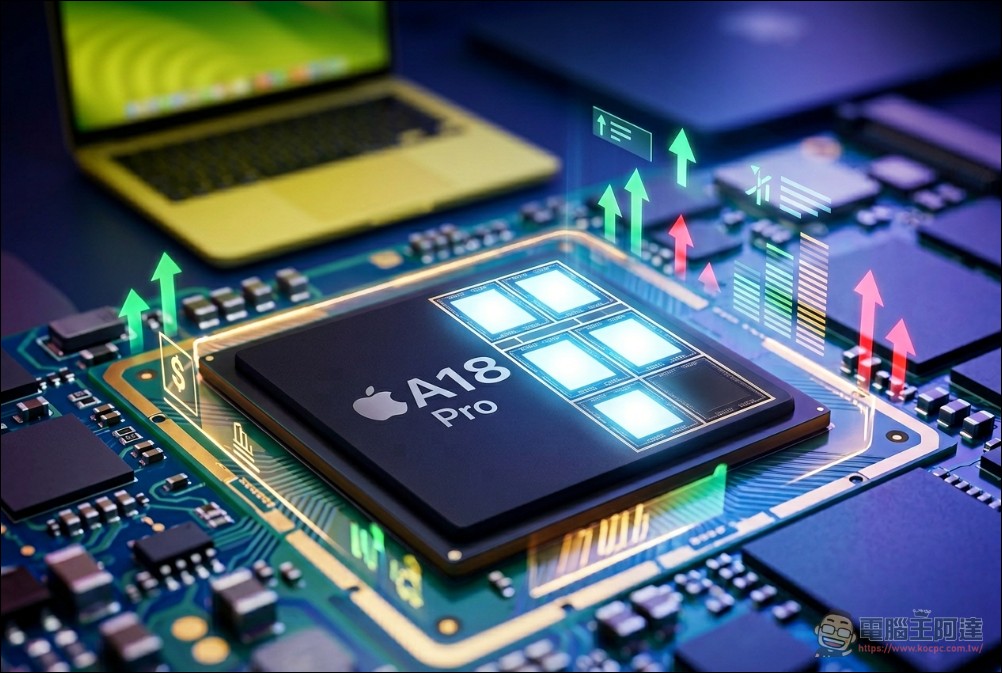
In the production line of the iPhone 16 Pro series, the A18 Pro chip, which is supposed to have a 6-core GPU, is usually considered a defective product if one of the GPU cores is found to be defective during testing. However, Apple took a more cost-effective approach: redefining these defective chips, turning off one of the damaged cores, converting it into a stable version with a 5-core GPU, and installing it in the MacBook Neo. For Apple, the R&D and production costs of these chips have already been amortized by the iPhone product line, and their marginal cost is almost “free”, which makes the $599 price possible.
“Sweet predicament” where supply exceeds demand: inventory of defective products is in short supply
However, market feedback far exceeded Apple’s most optimistic expectations. In a public conversation two weeks ago, CEO Tim Cook enthusiastically declared that MacBook Neo was the best-performing “first-time new customer” product in Apple’s history, successfully attracting a large number of young people who originally used Windows systems or had not bought a Mac due to budget considerations.
This explosive growth has had side effects. Since the production of MacBook Neo is highly dependent on “defective products” released from the iPhone production line, when the demand for the product far exceeds the output speed of defective products, the balance is broken. According to current supply chain monitoring data, this batch of almost zero-cost A18 Pro graded chip stocks has entered the countdown. Apple is currently produced by Quanta’s Vietnam factory and Hon Hai’s China factory, and shipments remain between 5 and 6 million units. However, if further production is to be increased to meet orders, the chip gap will become an insurmountable obstacle.
Three big mountains of rising costs: production capacity, structure and raw materials
Facing the chip shortage, if Apple chooses to “take the initiative” and place orders for new chips from the supply chain, it will face extremely severe cost pressures. Analysts summarized the three main reasons that currently put Apple in a dilemma:
First of all, TSMC’s production capacity is extremely tight. The A18 Pro uses TSMC’s second-generation 3-nanometer (N3E) process, which is currently the hottest production capacity in the global semiconductor market. Although Apple is TSMC’s number one customer, N3E production capacity has already been booked due to the surge in demand for high-performance computing (HPC) and AI chips. If Apple wants to force additional orders at this time, it will not only be difficult to obtain price concessions, but may even need to pay an additional premium to ensure stable supply.
Secondly, the chip cost structure has fundamentally changed. The “free” defective products used in the past no longer exist. If A18 Pro is produced specifically for MacBook Neo, Apple must pay the full cost. What’s even more paradoxical is that in order to maintain consistency in the specifications of all MacBook Neos, even if Apple obtains a perfect 6-core GPU chip, it must actively “castrate” one core before leaving the factory to comply with the 5-core product setting. This approach of “spending a lot of money to buy good materials but having to actively cut off functions” will undoubtedly be a heavy blow to affordable models that are extremely sensitive to profit margins.
Finally, the overall component environment is not optimistic either. Since the beginning of 2026, the prices of aluminum required for the chassis, memory (DRAM) and storage space (NAND Flash) have all increased simultaneously. The combination of multiple pressures has greatly compressed the already meager profit margins of MacBook Neo, and even risks shipping at a loss.
Analysis of Apple’s possible countermeasures
Apple is currently intensively discussing response plans internally. The industry generally believes that Apple is unlikely to directly increase the prices of existing models, because this will seriously damage its brand integrity and “affordable” marketing positioning. The following are several strategic paths that are considered feasible:
| Options | Content description | feasibility assessment |
|---|---|---|
| Disguised price increase: Cancel entry model | The $599 256GB version is discontinued, making the $699 512GB version essentially the floor. | The short-term probability is low, which will undermine the parity positioning. |
| Introducing new colors/packs | If the Product RED version is launched and comes with 200GB of free iCloud space for one year, the price will be slightly increased to $649. | It is more flexible and can use “value packages” to shift the focus of price increases. |
| Transfer to A19 Pro in advance | Accelerate development of the next generation MacBook Neo and skip existing A18 Pro production barriers. | It will take some time for the A19 Pro to be produced for enough defective stock to be available. |
| Accept low-profit strategies | The price is maintained at US$599, with the company absorbing additional chip and raw material costs. | Aiming to expand the ecosystem is in line with Cook’s long-term goals. |
Analyst Watch: Is the sweet period for parity strategies coming to an end?
Regarding the challenges faced by MacBook Neo, MacRumors pointed out that this reflects Apple’s tug-of-war between hardware profitability and ecosystem expansion. Apple has long been accustomed to pursuing high gross profits, but the success of MacBook Neo proves that “price” is still the most effective key to unlocking the mass market. If Apple chooses to abandon its price parity promise in order to preserve profits, the newly built market momentum may quickly dissipate.
Many semiconductor analysts believe that Apple’s most likely approach is to “delay time” through supply chain scheduling, waiting for the mass production rhythm of the next generation of chips to stabilize, or for raw material prices to fall back in the second half of the year. In any case, MacBook Neo’s chip gap problem has become one of Cupertino’s most challenging production issues in 2026. For consumers, if they want to buy this most cost-effective Mac laptop in history, perhaps “ordering early” is the best strategy at the moment.
Source: KOCPC Chinese