


If you are an AI developer and want to deploy automated AI Agents in the past, you have to spend a lot of time on the drudgery of “building a sandbox”, “managing status” and “performing permission isolation”. Anthropic officially announced that “Claude Managed Agents” has entered public beta on April 9, packaging all the most annoying underlying infrastructure and handing it over to you in one go. You only need to define tasks, specify tools, and set rules, and Anthropic will run the rest for you. This is not just the release of a new feature, but more like a key step taken by Anthropic from “AI model supplier” to “AI infrastructure platform”, directly launching a dimensionality reduction attack on existing third-party Agent frameworks and sandbox service providers.
What are Claude Managed Agents?
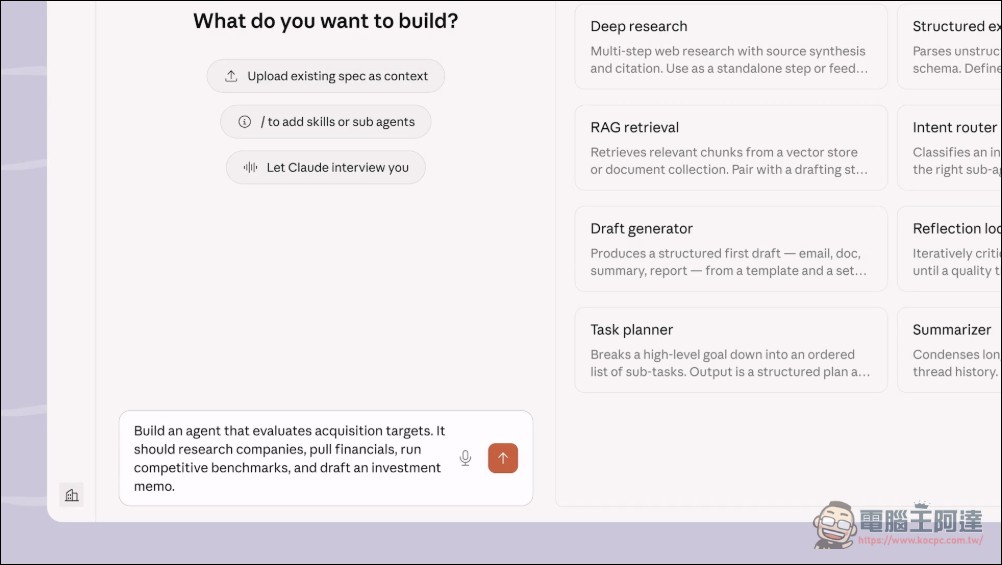
Simply put, Claude Managed Agents is a set of AI agent deployment platform APIs fully managed by Anthropic. In the past, to deploy an AI Agent that can perform tasks autonomously, developers had to deal with a lot of underlying projects such as the container environment, Agent execution loop (Agent Loop), tool invocation, state persistence, error retry, credential security, etc. It usually took several months to go online from scratch. Now Anthropic has done all this. Developers only need to define three things through the API: Agent (model + system prompt + tool), Environment (container environment settings), and Session (instance to perform tasks), and they can quickly deploy an AI agent that runs autonomously in the cloud.
Introducing Claude Managed Agents: everything you need to build and deploy agents at scale.
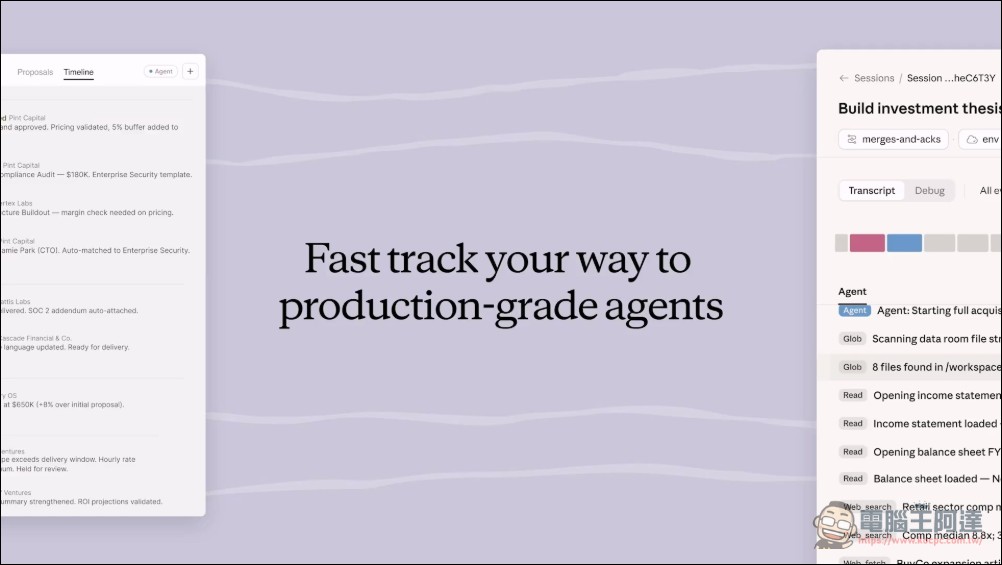
It pairs an agent harness tuned for performance with production infrastructure, so you can go from prototype to launch in days.
Now in public beta on the Claude Platform. pic.twitter.com/vHYfiC1G56
— Claude (@claudeai) April 8, 2026
According to Anthropic’s internal test data, task success rates using Managed Agents are up to 10 percentage points higher than standard prompting loops, and the improvement is particularly noticeable on complex tasks.
Four core highlights
1. Fully managed cloud sandbox environment
Anthropic directly provides configured cloud containers (Cloud Containers), pre-installed with basic execution environments such as Python, Node.js, and Go. Developers no longer have to painfully configure containers and manage Agent Loops themselves. Network access can be set to “unrestricted” or customized whitelist, and security isolation is handled by the platform.
2. Asynchronous execution and persistence Session
This is super practical. You can start a Session and disconnect directly after sending the task. Claude will execute it fully automatically in the cloud and automatically retry when errors occur. Each execution will generate an Append-only log, and you can use SSE (Server-Sent Events) streaming through the API to check the latest progress at any time. Sessions continue to run even during network outages, waiting to catch up when you reconnect.
3. Built-in tool set that can be used out of the box
Managed Agents has a built-in “agent_toolset_20260401” tool set, including: secure in-container Bash command line access, file operations (reading, editing, full search), native Web search and web crawling (Web Search & Fetch), and native support for MCP (Model Context Protocol) server mounting, which can seamlessly connect your own exclusive tools. Developers can enable all tools with one line of settings, and can also turn individual tools on and off as needed.
4. Multi-language SDK full support
Anthropic has simultaneously released SDKs in seven languages: Python, TypeScript, Go, Java, C#, Ruby, and PHP, as well as an official command line tool ant CLI (supports macOS Homebrew and Linux). Developers can quickly get started using the most familiar language.
Enterprise-level actual combat: Notion, Sentry, and Rakuten have been launched first
Managed Agents is not just a concept product: several major manufacturers are already running it in production environments.Notion Integrate Agent into the workspace to support parallel output from code to presentations;RakutenMultiple professional Agents have been deployed across departments such as product, sales, marketing, and finance. The deployment cycle that originally took several months was compressed to within a week. Employees can directly request reports and briefings from the AI Agent on Slack and Teams.
The most amazing thing is Sentry Case study: The Agent they deployed can fully automatically read a huge code base, find bugs, write repair code, and then independently submit a Pull Request, compressing the entire cycle from discovering problems to producing reviewable fixes from weeks to one action.Asana We are building an “AI teammate” function to integrate Agent into the team’s daily workflow.
Pricing: Only $0.08 per session hour
Managed Agents adopts a two-tier billing model: the standard Claude API Token fee, plus an execution fee of US$0.08 (approximately NT$2.5) per active session hour. For example, if an Agent runs 8 hours a day and runs continuously for 30 days, the monthly infrastructure cost is only about US$14-20 (approximately NT$450-650), plus Token consumption. This price establishes the industry’s first transparent hosting agent infrastructure pricing benchmark, which is comparable to the initial stages of commercializing cloud resources by AWS and Azure.[3]
Impact on the industry: The living space of third-party frameworks is compressed
Anthropic’s move this time will undoubtedly have a huge impact on the existing AI Agent ecosystem. In the past, if developers wanted to build Agents, they usually relied on third-party frameworks such as LangChain, AutoGen, and CrewAI to handle orchestration logic, and then used sandbox services such as E2B and Modal to provide execution environments. Now Anthropic has integrated orchestration, sandboxing, state management, credential isolation, and multi-agent coordination into its own platform, which directly cuts into the core areas of these third-party tools.
It is worth noting that the “Multi-Agent Coordination” function is still in the Research Preview stage. Agents can generate their own sub-Agents for parallel task processing, but the pricing and restrictions of this part are still being adjusted.
AI Agent’s “AWS moment”?
The launch of Claude Managed Agents marks the official transition of AI Agent development from the “handcraft” era to the “cloud service” era. Sandbox, state management, credential isolation, multi-Agent coordination: Anthropic takes care of the most annoying “dirty work” of developing Agents. The pricing of $0.08/session-hour also allows enterprises to start trying it with a low threshold. For developers, this is undoubtedly good news: you can finally focus on “what to make the Agent do” instead of “how to make the Agent run”. As for whether this will become the “AWS moment” in the AI era, it depends on how other manufacturers respond.
Source: KOCPC Chinese