


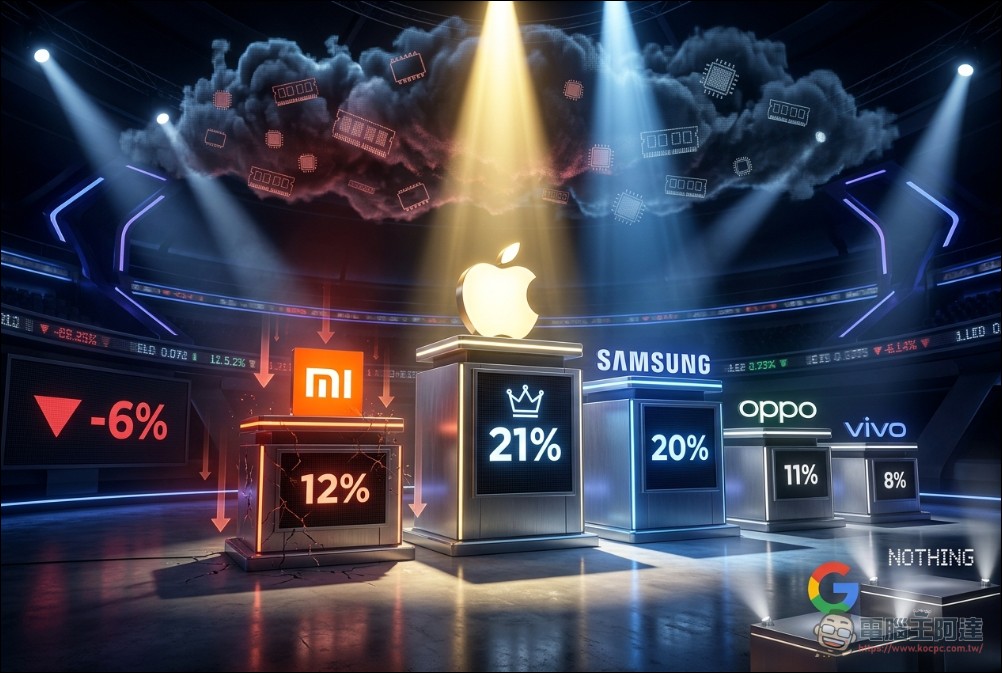
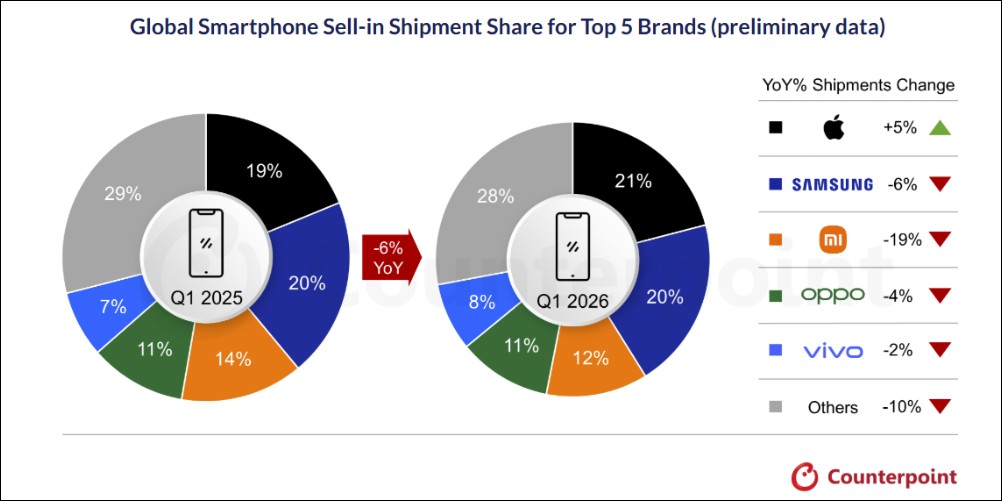
The impact of memory shortage has officially appeared in the smartphone market. According to an April 10 release from Counterpoint ResearchReport, global smartphone shipments fell 6% in the first quarter of 2026 compared with the same period last year, reversing the recovery trend in previous quarters. The most eye-catching highlight of this season is that Apple has become the global leader in shipments in the first quarter for the first time (usually the best-selling fourth quarter just announced), with shipments increasing by 5% year-on-year and market share reaching 21%, writing a new page in the company’s history.
Memory shortage becomes the culprit, supply chain tightening drags down the overall market
The core reason for the market decline this quarter is not a collapse in demand, but a “parts shortage.” Counterpoint Research pointed out that the supply of DRAM and NAND flash memory continues to shrink. IDC estimates that the annual growth rate of global DRAM supply will be only 16% in 2026, and the annual growth rate of NAND supply will be only 17%, both below the historical average. In addition, geopolitical tensions in the Middle East have also led to weakening consumer confidence, further suppressing demand.
The memory shortage has the greatest impact on the price-sensitive entry-level and mid-range markets. As a result, OEMs have adjusted pricing and production strategies, including delaying product launches and reducing release styles. Counterpoint pointed out that the shortage of memory chips and rising costs will have the greatest impact on low-end models, and Chinese brands that rely on shipments will face a greater decline as a result; high-end manufacturers such as Apple will be relatively unaffected.
Apple reigned supreme in the first quarter, accounting for 21% of the market. Write a new page
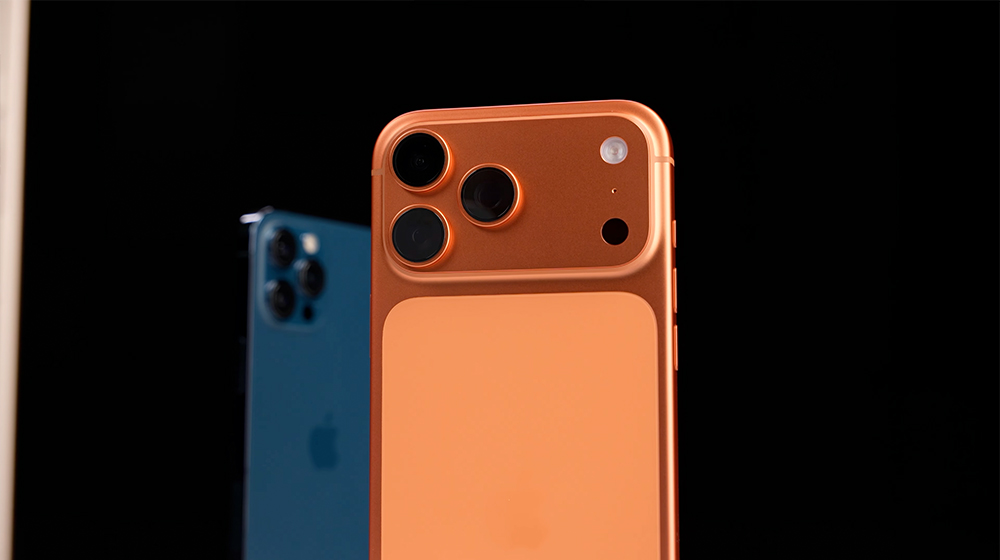
In an environment where the market is generally weakening, Apple’s performance is particularly outstanding. Counterpoint Research data shows that Apple’s Q1 market share reached 21%, and its shipments increased by 5% year-on-year, becoming the global shipment leader in the first quarter for the first time. The strong demand for the iPhone 17 series in the Indian and Chinese markets, as well as its well-managed supply chain, coupled with its ultra-high-end positioning and highly integrated supply chain, make Apple the most resistant to the memory crisis and the biggest winner this season.
Samsung shipments fell by 6%, ranking second; S26 delay dragged down
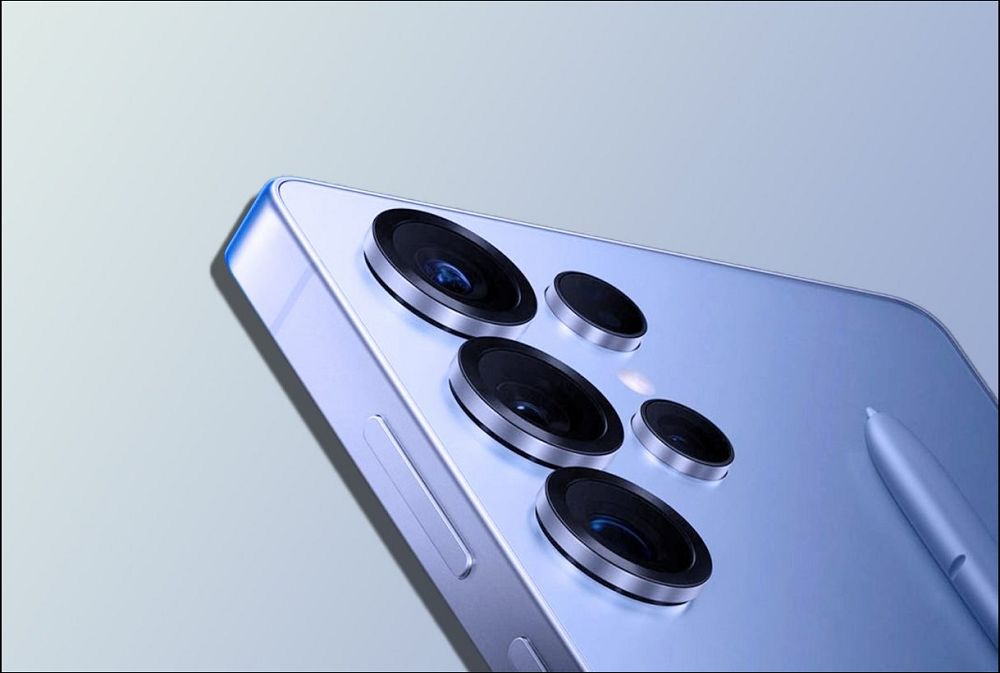
Samsung’s shipments fell 6% year-on-year this quarter, ranking second with about 20% market share. Delays in the release of the flagship Galaxy S26 series, coupled with weak demand in the entry-level market, are the main reasons for Samsung’s decline this quarter. Faced with memory cost pressure, Samsung has begun to adjust its product portfolio, streamlining entry-level options and emphasizing high-end configurations in an attempt to maintain profits in the high-end market.
Xiaomi fell the most with 19%; OPPO and vivo ranked fourth and fifth respectively.
Xiaomi has suffered the heaviest decline among the top five brands this quarter. Xiaomi’s Q1 market share maintained at 12%, still ranking third in the world, but its shipments plummeted 19% compared with the same period last year, which was the largest decrease among the top five brands. Counterpoint analysis pointed out that Xiaomi is highly concentrated in the price-sensitive entry market, making it the biggest victim of rising memory costs. In response to the situation, Xiaomi has begun to streamline its product line, focus on core markets, and try to capture the flagship market in the Chinese market with the Xiaomi Mi 17 series.
OPPO and vivo ranked fourth and fifth respectively, with market shares of 11% and 8% respectively. Vivo still maintains its leading position in the Indian market, and OPPO’s A5 series and Find N5 folding flagship perform well, which is the key to preventing the two brands from falling as hard as Xiaomi.
Google and Nothing buck the trend and grow rapidly, emerging brands break through
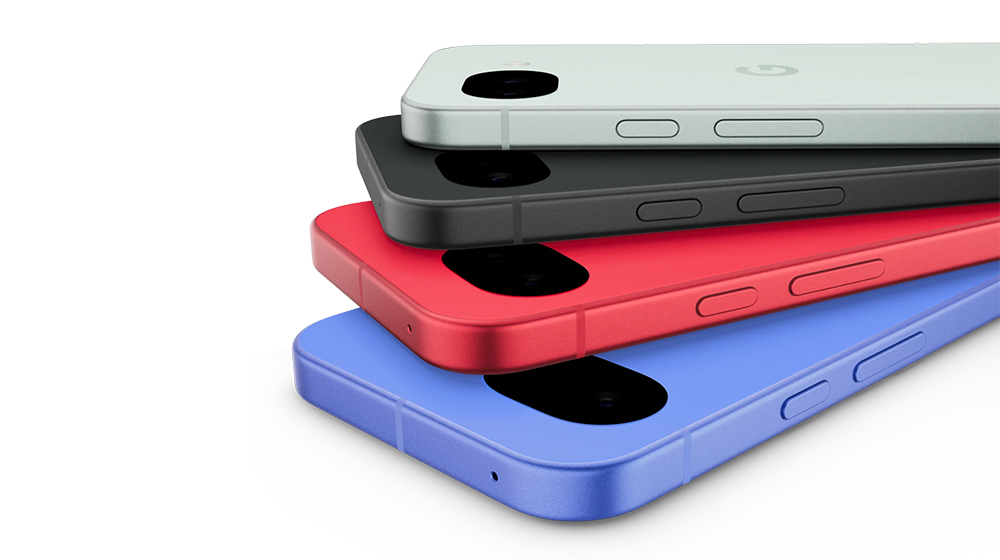
While major brands are generally under pressure, Google and Nothing are bucking the trend and rising. Google’s Q1 shipments increased by 14% year-on-year, and the Pixel series continues to expand its footprint in mature markets with AI capabilities, computational photography, and user-friendly software experiences. Nothing’s annual growth rate is as high as 25%. With its unique design language and niche market positioning, Nothing has accumulated more and more loyal users among young consumers.
Memory shortage is expected to last until the end of 2027, and the market outlook remains weak
The tight supply of memory is still difficult to alleviate in the short term. Counterpoint predicts that the memory shortage may continue until the end of 2027, and OEM manufacturers are expected to prioritize value over quantity, update product configurations, and cut low-margin models to cope. Looking to the future, brands will increasingly rely on software, ecosystem expansion and services to maintain growth [1][4].
IDC predicts that as major memory manufacturers gradually implement their production expansion plans, the supply of DRAM and NAND will gradually pick up in the second half of 2026, and the supply gap is expected to converge by then [4][5]. However, as inventory continues to be tight in the first half of the year, brands will still face the dual challenges of supply and cost.
summary
The significance of Apple’s dominance in the first quarter lies not only in data leadership, but also in proving that when memory becomes a scarce resource, whoever can maintain attractiveness in the high unit price market and who can control the supply chain will be able to stand firm in the face of economic headwinds. The lesson from Xiaomi’s 19% plunge shows that in an era of heightened component price volatility, business models that rely heavily on low-price mass production are bearing greater systemic risks than before. On the other hand, the rise of Google and Nothing may indicate that the next battlefield is not in hardware specifications, but in the depth of integration of software, design and ecosystem.
Source: KOCPC Chinese