


Apple systems running on game consoles may sound like a fantasy, but open source developer Bryan Keller has done it. Recently, he successfully ported Apple’s classic operating system Mac OS
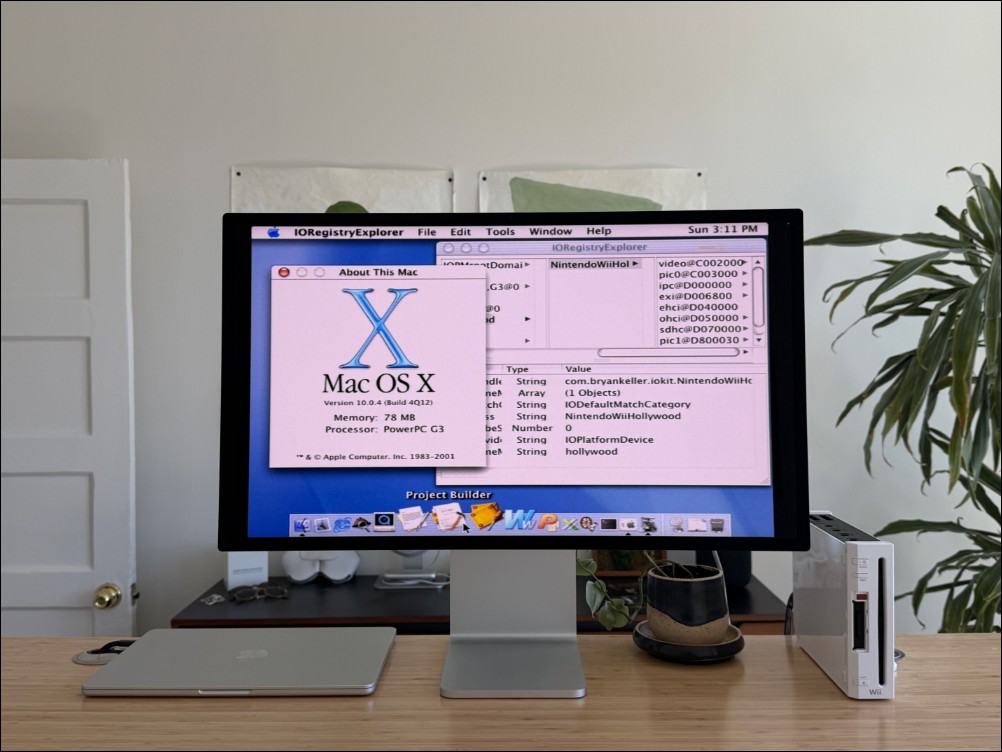
Inspired by those who came before, locking in the PowerPC architecture
The starting point for this porting project came from Keller seeing news on the Internet that someone had successfully ported Windows NT to the Wii. As a developer, he immediately came up with an idea: Since Wii uses IBM PowerPC architecture processor, and Apple’s Mac system also used PowerPC architecture, it is not impossible in theory to port Mac OS X.
The hardware foundation that supports Keller’s bold hypothesis lies in the PowerPC 750CL processor used by the Wii, which is closely related to the PowerPC 750CXe processor used by Apple in the G3 iBook and iMac. Both processors are based on the same family architecture, which gives Keller a premonition that this challenge is “possible to succeed.”
Core porting: modifying the Darwin core and compiling custom kernels
According to Keller in personalon blogSharing in detail, the entire transplantation process involves multiple arduous technical hurdles. He first made the necessary patches to the OS X core source code and compiled a customized core binary file. This is the most critical and difficult step of the entire project.
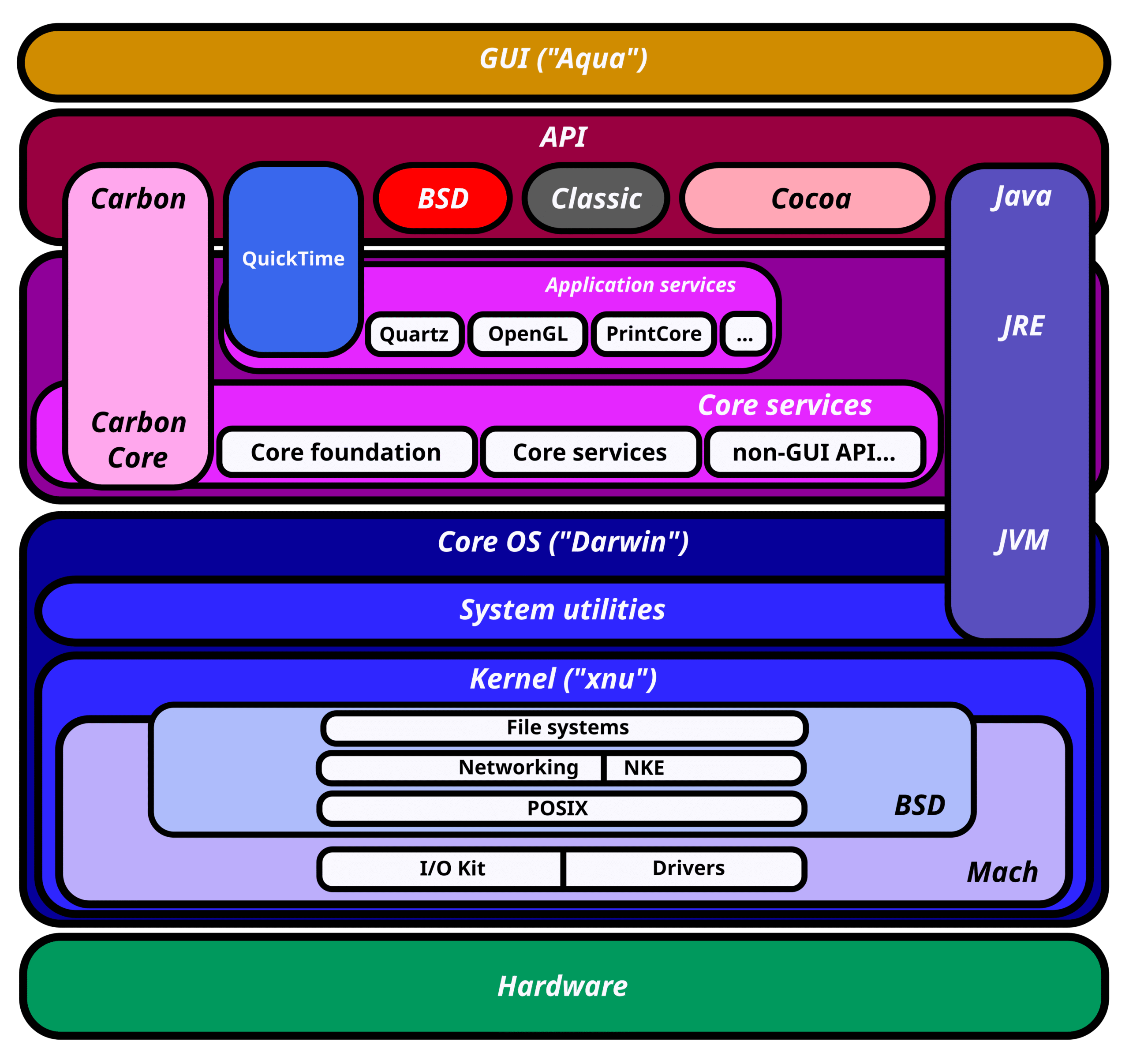
Keller mentioned in his blog: “Theoretically, if I can modify enough open source parts to make the Darwin core run, then the closed source parts should be able to run directly without additional modifications.” However, the reality is not so smooth. After successfully getting the core started, he still needs to deal with a lot of manual work.
Driver Conundrum: Full Customization of SD Card, Display and USB
With the core problem solved, Keller had to write a series of custom drivers for the Wii to make OS X actually run on the console. The first is the SD card driver: he wrote a proprietary driver that allows the core to read data through the Wii’s SD card slot to complete the file system startup process.
Display output is another challenge. There is an incompatibility in color processing between the Wii’s video hardware and the OS X graphics code: the Wii expects an analog video signal, while the Mac outputs a standard RGB digital signal, resulting in color distortion when OS X initially boots up. To do this, Keller had to deal with two sets of framebuffers at the same time: an RGB framebuffer used internally by Mac OS X, and a YUV framebuffer designed specifically for Wii video output, and manual color format conversion was required between the two.
Finally, there is USB support. Keller needed to get external keyboards and mice to work, which involved modifying Apple’s AppleUSBOHCI driver to support the Wii’s USB 1.1 controller chip. However, since OS X has long since ended support, the original driver code is nowhere to be found. In the end, Keller successfully completed the puzzle by asking around in IRC chat rooms and finding the ancient OS X Cheetah USBFamily source code.
Hardware limitations exceed expectations: insufficient RAM remains the biggest bottleneck
Even with breakthroughs at the software level, Wii’s hardware specifications are still innate limitations that cannot be avoided. The Wii only comes with 88 MB of memory, while Mac OS X 10.0 Cheetah’s official minimum requirement is 128 MB, a difference of 40 MB. This meant Keller had to find ways to optimize memory usage just to keep the system running. In this regard, Keller relied on another MacBook laptop for almost the entire early development process, and it was not until later that he gradually debugged an environment that could run normally on the Wii itself.
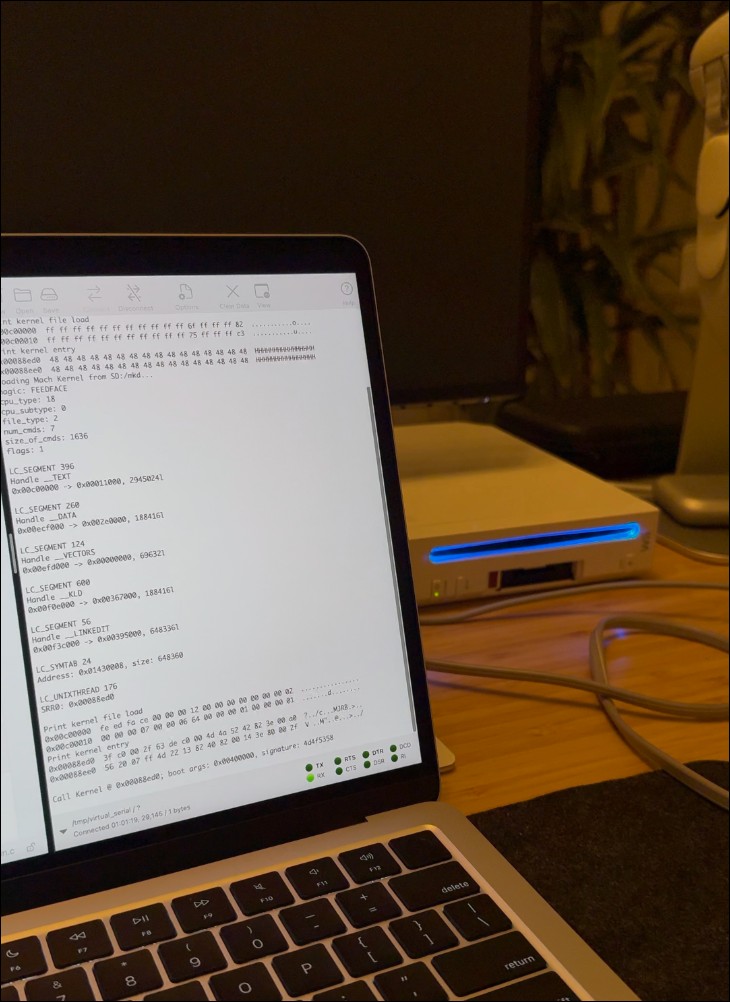
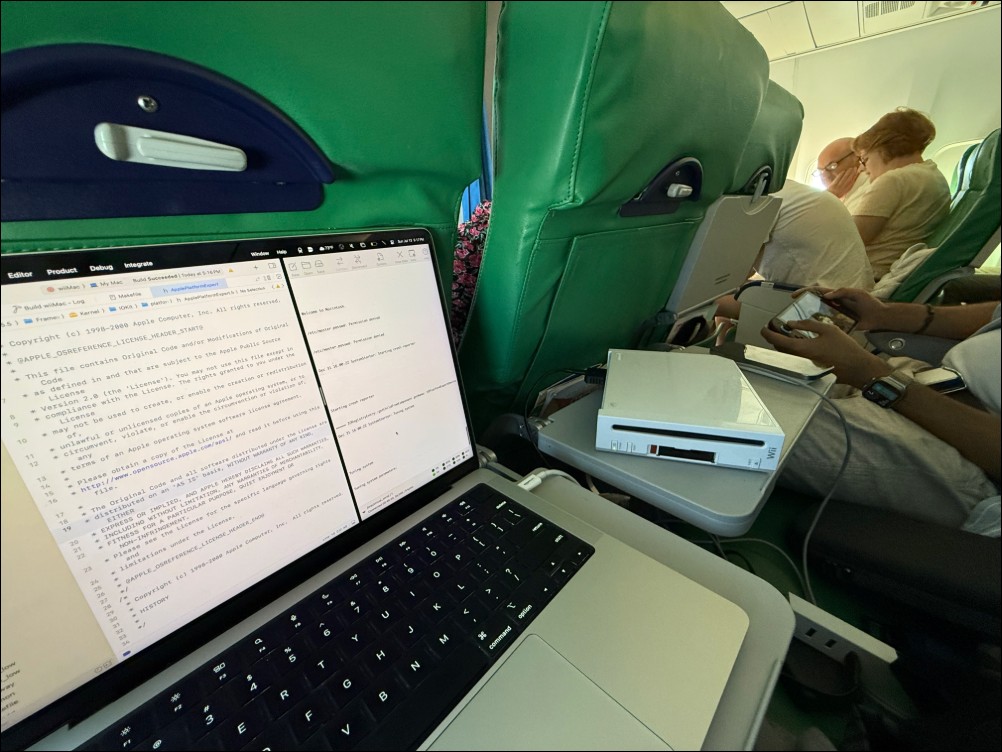
You should also take Wii running programs with you on vacation. Perseverance and enthusiasm can complete impossible tasks.
The transplant process was long and full of setbacks, but Keller’s dedication remained undimmed. According to reports, he even took the Wii console with him when he went on vacation in Hawaii and used the vacation time to continue debugging and improving the work. After going through multiple technical hurdles, the Mac OS X Cheetah installer finally successfully ran on the Wii, and both the keyboard and mouse can be used normally. In this way, Wii transformed from a pure game console into a practical Apple operating system device.
Complete open source. Interested developers can also try it on their own.
Keller has published the complete source code of the entire project in GitHub , interested developers can directly try to install OS X on Wii. At the same time, he also recorded the resolution process of each technical difficulty in detail on his personal website, which is an important reference resource for understanding this transplant project. Prior to this, Linux, NetBSD, and Windows NT had all been ported to the Wii. Now, coupled with Mac OS X 10.0 Cheetah, it means that the Wii can be said to be the single game console hardware platform that runs the most operating systems. A game console built for living room entertainment has now become the “ultimate test bed” in the eyes of open source transplant enthusiasts. Perhaps this is an alternative legacy that was not foreseen when the Wii came out.
Source: KOCPC Chinese