


According to Bloomberg citing registration data from S&P Global Mobility on April 16, 2026, of the 7,071 Tesla electric pickup Cybertruck vehicles registered in the United States in the fourth quarter of 2025, as many as 1,279 vehicles: that is, more than 18% were purchased by Elon Musk’s SpaceX. In other words, for every five Cybertrucks sold, nearly one was sold from Musk’s own company. The purchase amount is estimated to be more than US$100 million (approximately NT$3.25 billion), and it is reported that it will continue in 2026.
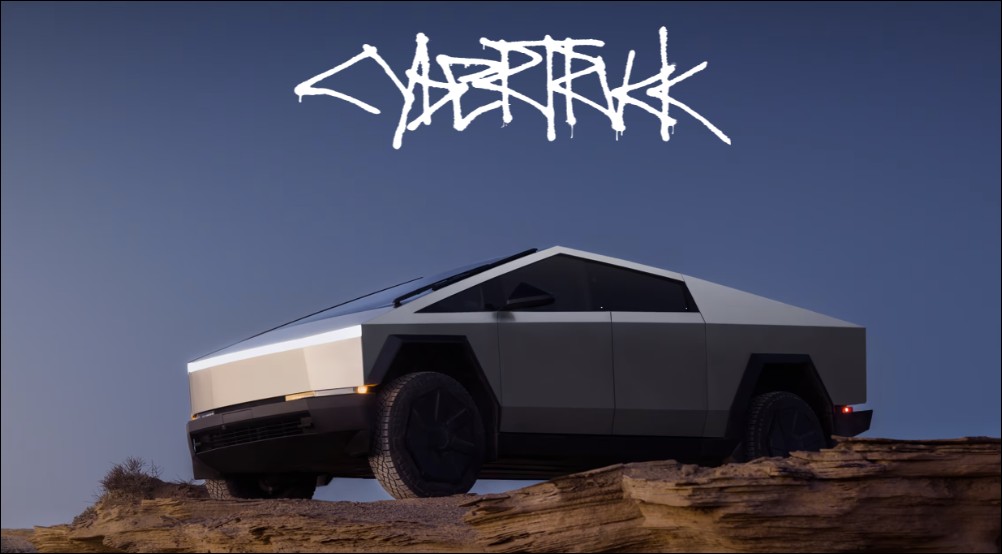
Cybertruck sales have been sluggish, relying on Musk’s own company to support it, with SpaceX solely buying 18%
According to an investigation by Bloomberg, in addition to the 1,279 vehicles purchased by SpaceX, other companies owned by Musk also purchased an additional 60 Cybertrucks in the same quarter. Companies involved include:
- SpaceX: Rocket and satellite manufacturer, contributed the most (1,279 vehicles)
- xAI: Artificial intelligence company founded by Musk
- The Boring Company: Tunnel excavation company
- Neuralink: Brain-Computer Interface Company
The outside world is quite skeptical about these purchases. SpaceX and The Boring Company may have demand for vehicles, but the rationale for technology company xAI and brain-computer research institute Neuralink to purchase large numbers of electric pickup trucks is puzzling to industry insiders. If these internal purchases by Musk’s companies are excluded, Cybertruck registrations will decrease by another 51% in the fourth quarter of 2025, leaving only about 5,732 vehicles.
From “star car model” to “slow-selling crisis”: Cybertruck’s fall
The birth of Cybertruck was one of the most high-profile events in the electric vehicle market in recent years. In just five days after its debut in late 2019, it accumulated 200,000 refundable reservations; by mid-2021, the number of reservations was reported to have exceeded 1.2 million. Musk was also full of confidence in the outside world at the time. On the eve of Tesla’s delivery at the end of 2023, he warned investors: “I think we will eventually produce about 250,000 Cybertrucks per year, and I estimate that we can reach this output as soon as 2025.”
Reality gave this prediction a blow.
According to data from Kelley Blue Book, Cybertruck’s U.S. sales in 2024 will be 38,965 units. Although it ranks fifth in U.S. electric vehicle sales, it is far below Musk’s ambitions. By 2025, the numbers took an even sharper turn: only 20,237 units were sold for the year, an annual decrease of 48%. This is more than ten times the difference from the “250,000-vehicle vision” described by Musk.
Why don’t consumers pay the bill?
Cybertruck’s demand dilemma comes from multiple factors.
The price gap is too big: When Musk announced in 2019, he promised that the basic model would be priced at no more than US$40,000 (approximately NT$1.3 million). However, when it was actually launched, the first batch of Cybertrucks sold for close to US$100,000 (approximately NT$3.25 million), disappointing many consumers who were originally optimistic about the car.
Frequent quality problems: The Cybertruck encountered a series of recalls after delivery. In 2025, Tesla issued a recall for 46,000 Cybertrucks due to the problem of trim panels falling off. Quality hazards continue to erode consumer confidence.
political image effect: Musk made a high-profile intervention in U.S. federal government affairs in 2025 and became one of the most controversial figures in U.S. politics. This “politicization effect” has directly affected the car-purchasing decisions of some consumers: buying a Cybertruck is no longer just a choice of a car in the eyes of some people, but is also regarded as a political statement.
Special design style: The Cybertruck’s iconic stainless steel shell and angular appearance have attracted a group of die-hard fans, but have also kept away a large number of mainstream pickup truck buyers.
Policy headwinds: At the end of 2025, the tax and expenditure bill passed by the U.S. Congress officially canceled the US$7,500 (approximately NT$244,000) car purchase tax credit for electric vehicles, causing the purchase cost of electric vehicles to rise significantly and suppressing the overall market.
The electric pickup truck market is cooling across the board
It is worth noting that Cybertruck’s plight is not an isolated case, but a microcosm of the entire electric pickup market. The Ford F-150 Lightning, once the best-selling electric pickup truck in the United States, saw its sales drop by 60% annually in the fourth quarter of 2025. Eventually, Ford announced that it would permanently cease production of the Lightning in December. The Chevrolet Silverado EV sold only 2,756 units in all of 2025, and Rivian R1T sales also fell 33% from the previous year, selling only 7,416 units for the year.
Overall, the total sales of electric vehicles in the United States in 2025 will be about 1.3 million units, a 2% decrease from 2024. This is the first time that the electric vehicle market has shrunk in recent years. Although Tesla is still the dominant player in the U.S. electric vehicle market, with a market share of about 46%, overall deliveries have also fallen from 1.79 million vehicles in 2024 to 1.64 million vehicles in 2025, a 9% drop.
“We are running out of potential buyers.”
Faced with such grim data, industry observers also issued warnings. Sam Fiorani, vice president of global automotive forecasting at AutoForecast Solutions, an automotive market research organization, bluntly said: “Potential buyers of Cybertruck are almost disappearing.”
Dan Ives, a technology analyst at Wedbush Securities, took a slightly more optimistic view, saying: “Although the sales trend is difficult, there is still a long demand curve ahead.”
So far, Musk, Tesla, SpaceX, The Boring Company and Neuralink have not responded to this matter.
Conclusion: Questions behind the numbers
SpaceX purchases more than a thousand Cybertrucks every quarter. Is this normal corporate vehicle demand, or is it a “protection” operation intended to boost Tesla’s sales numbers? At present, there is no way to know the actual use of this batch of purchases, and there is no explanation from the relevant parties.
But the problem revealed by this batch of data is quite clear: an electric pickup truck with an avant-garde design and a strong brand has to rely on the boss’s other business units to maintain sales just two years after its delivery. This in itself is an intriguing signal. While Cybertruck’s “consumer dream” has not yet come true, its story continues to be written, except that the protagonist has changed from ordinary buyers to other companies owned by Musk himself (if it is launched in Taiwan, it should be able to sell several thousand units).
Source: KOCPC Chinese