


Boxer3D, which has recently sparked discussion on X, is a 3D detection project that integrates iPhone LiDAR, ARKit and AI object recognition models. Its feature is not only to identify objects in the screen, but also to directly upgrade the 2D detection results into 3D directional frames and superimpose them on the augmented reality screen in real time. In other words, what users see is not just a flat frame, but a three-dimensional frame that truly fits the spatial position and angle. This effect makes the iPhone no longer just a shooting and ranging tool, but more like a portable spatial awareness device.

What is Boxer3D?
According to GitHub projectillustrate, Boxer3D is an AR 3D object detection project specially designed for iPhone, which mainly relies on iPhone models with LiDAR to operate. The overall process is to first use the camera screen for 2D detection, then combine the LiDAR depth information, the camera posture and gravity direction provided by ARKit to further convert the original plane frame with only width and height into a 3D bounding box with position, size and orientation information, and finally render it directly in the AR screen through SceneKit.
Meta 发布的 “Boxer” 项目已移植至 iPhone,并更名为 “Boxer3D”。它不仅仅是简单的 2D 边界框检测,而是通过整合 LiDAR 和 ARKit,实现了物体尺寸、距离及方向的实时 3D 重建。
结合 YOLO11n,空间识别任务完全可以在智能手机上独立完成。
通过赋予 iPhone… pic.twitter.com/imWiBN0LlQ
— Bill The Investor (@billtheinvestor) April 13, 2026
from README Judging from the content, the implementation process of Boxer3D is quite clear. The front-end detector uses YOLO11n, which first finds the object on the 640×640 image; then BoxerNet is responsible for upgrading the 2D box into a 7-DoF 3D box, which contains information such as center point, size, and yaw rotation angle; finally, it is handed over to ARKit and SceneKit for spatial positioning and visual presentation. This allows users to directly see objects being framed three-dimensionally on the iPhone screen, instead of staying at the 2D overlay stage common in general image recognition.
The core highlight is not just recognition, but “2D to 3D”
The most noteworthy thing about Boxer3D is that it does not simply move the existing 2D model to the mobile phone for execution, but further utilizes the depth sensing and spatial tracking capabilities of the iPhone itself to make the recognition results contain real spatial information. This difference is very critical. Because although general 2D object detection knows “there is a chair here on the screen”, it does not necessarily know the actual depth, size and orientation of the chair in space; Boxer3D tries to make up for this, so that the framed result becomes a 3D object description that can be aligned with the real environment.
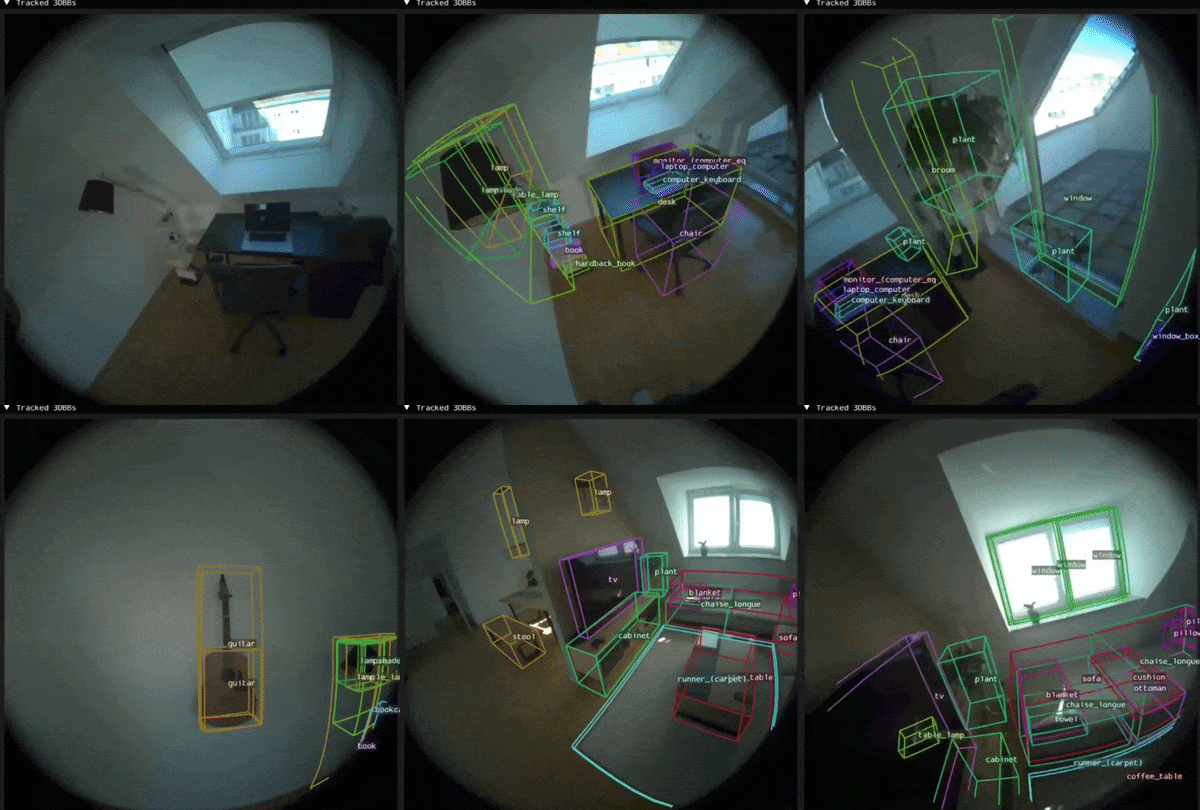
This is a big deal for AR applications. Because as long as the detection results can be stably located in spatial coordinates, in the future it will not just “recognize a cup”, but may extend to interactive navigation, furniture size estimation, warehouse inventory, indoor robot visual assistance, and even real-time annotation in educational or industrial scenes. In other words, what Boxer3D really shows is not a single demo, but a direction that combines mobile AI with spatial computing.
Hardware requirements are not high, but the positioning is very clear
The hardware requirements currently locked for this project are not high. According to the README, Boxer3D requires an iPhone 12 Pro or newer model with LiDAR, and iOS 16 or above. In addition, the model file itself also requires approximately 450MB of storage space. However, this means that it is not a lightweight App for all iPhone users, but a project that is obviously biased towards technology demonstration and research implementation.
Judging from the model specifications, YOLO11n is about 10MB, while BoxerNet’s ONNX weight is close to 391MB, and uses Metal or Neural Engine for acceleration through ONNX Runtime and CoreML Execution Provider. This also explains why this set of things can run on the iPhone, but at the same time it is not a “download and play” level daily application. It is more like a case of truly advancing the research model to mobile phone verification.
Meta is the background source, but the protagonist is actually the ported implementation of Boxer3D
If we trace the source of the technology, the BoxerNet used behind Boxer3D can be traced back to the open source Boxer of Meta Reality Labs Research. research project. However, as far as the topic itself is concerned, the protagonist that is really worthy of reporting is the iPhone integration implementation of Boxer3D, rather than the official launch of a new App by Meta. A more accurate statement would be that Boxer3D refers to and builds on the open source research results of Meta, but what truly brings it to the iPhone LiDAR and ARKit scenes is the engineering transplantation completed by third-party developers.
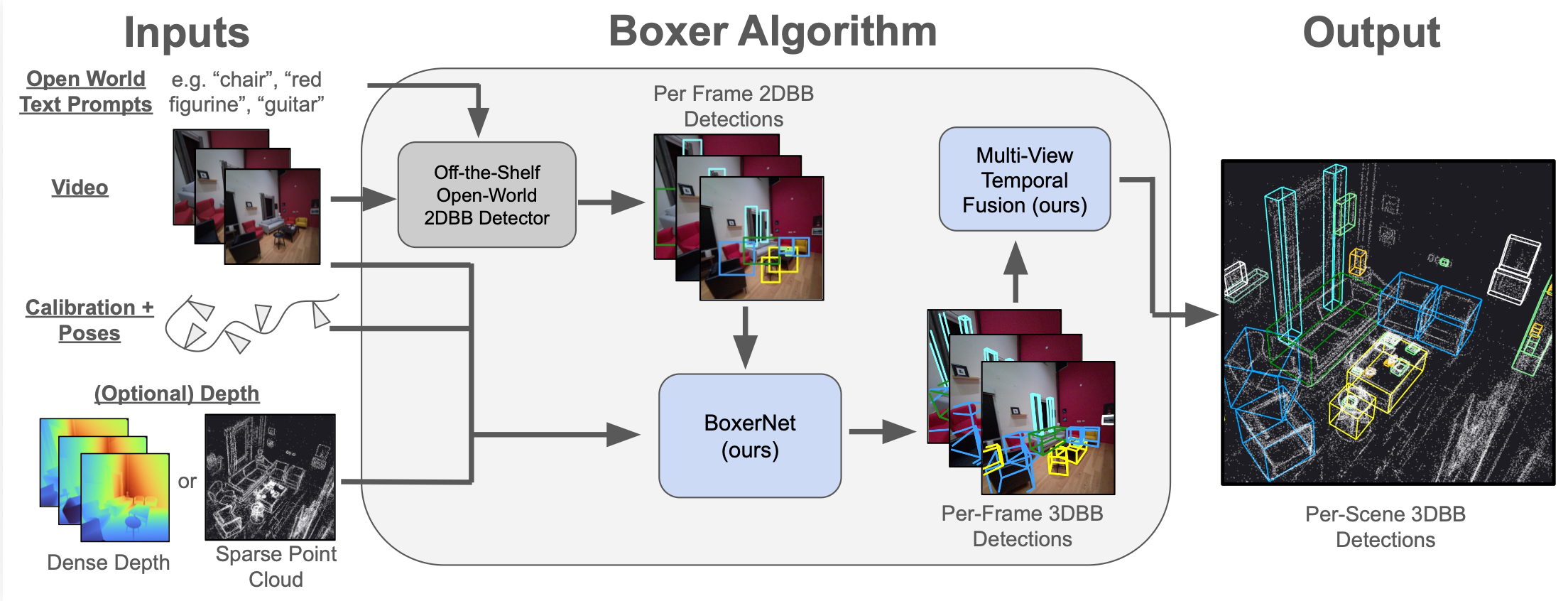
This also makes Boxer3D particularly iconic. Because it shows a technology diffusion model that is very common in the AI field today: large research teams first release models and papers, and then community developers quickly transplant the research results to versions that are closer to real devices and application scenarios. For readers, such projects are often easier to understand than the paper itself, and they can more specifically feel what the technology will look like after it is implemented.
Why are projects like these worthy of attention?
At this stage when generative AI almost monopolizes the topic, projects like Boxer3D that combine vision, depth sensing, spatial positioning and mobile phone inference capabilities actually provide another direction that is worth noting, that is, “AI is not just chatting, but starting to truly understand and mark the real world.” This type of application is particularly interesting for mobile platforms, because it means that future iPhones or other mobile devices will not just point their cameras at the world, but will gradually build a spatial model that can be understood, annotated, and interacted with. What’s really attractive about Boxer3D is that it turns the original research-oriented 3D perception technology into practical results that can be displayed directly on the iPhone. This direction of integrating LiDAR, ARKit and AI detection models is closer to the prototype of the “spatial perception” capability of future mobile devices. It should be just around the corner to be applied to more mobile phones or mobile devices in the future, and it has great potential for assisting the visually impaired or sensing the physical world.
Source: KOCPC Chinese