


Spotify is known for its cross-platform support. It can be found on mobile phones, computers, smart TVs, smart speakers, car systems and game consoles. Now, this streaming service has a new use case. Spotify has officially launched Anthropic’s chatbot Claude, allowing users to get music and podcast recommendations directly in the conversation interface, and even control playback.
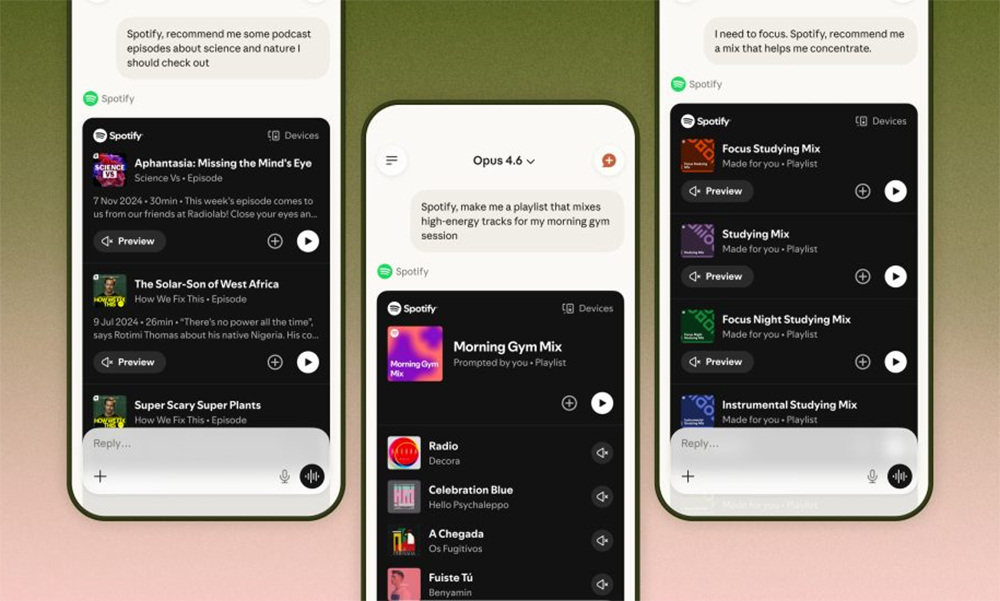
Claude can now help you create the perfect Spotify playlist
according to What Spotify announced in its latest blog post, this integration with Claude aims to bring personalized recommendations into a more natural interactive environment. Starting today, users can link their Spotify accounts to Claude, allowing AI to provide recommendations more relevant to their personal tastes based on their listening history, preferred styles and historical behaviors. The integration method is quite straightforward: Just enter a command into Claude, such as “Make me a high-energy playlist suitable for running”, and Claude will automatically generate a playlist based on your music habits. Users can preview the playlist content in the conversation and choose to save or open it directly in the Spotify app.
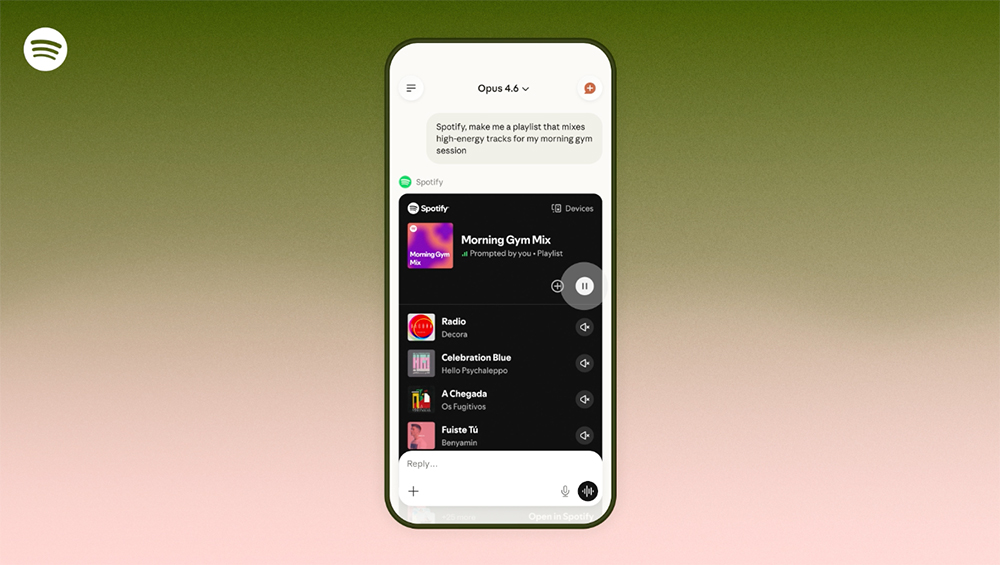
This integration is not limited to playlist generation. Spotify has also brought the Spotify Connect function to Claude, which means that users can view the current playback device, switch the output location, or directly control play, pause, and skip songs in the chat interface without switching applications. For users who are accustomed to switching music between multiple devices, this makes the operation process smoother and allows the AI assistant to truly become part of the daily media experience.

In terms of privacy and data use, Spotify particularly emphasizes that account linking is entirely up to the user’s choice and can be canceled at any time. The company has also made it clear that it will not share users’ music, podcasts or other audio and video content with Anthropic. In other words, the information Claude can use is limited to the listening preferences and related data needed to provide personalized recommendations, not the complete media content itself.
It is worth noting that this integration does not set a subscription threshold. Whether you are a free Spotify user or a paid Premium user, you can use Claude’s recommendation function. However, Spotify also revealed that Premium users will be able to get more advanced experiences, such as more detailed customized recommendations based on mood, atmosphere or activity type. This complements Premium’s own ad-free playback and higher sound quality, giving paid plans a new value proposition in the AI era.
Taken as a whole, Spotify’s partnership with Claude reflects the integration of streaming services and generative AI that is quickly becoming mainstream. For Spotify, this is not just adding a new entrance, but pushing “personalization” in a more immediate and conversational direction. For users, this means that music exploration becomes more natural and closer to everyday language, without the need to click through layers of categories or search for keywords in the application.
The launch of this feature also makes Spotify’s layout in the field of AI assistants more complete. In the past, Spotify has tested features such as voice interaction and AI DJ within the app, and now it is extending these capabilities to a wider range of usage scenarios through cooperation with third-party AI assistants. Whether users are working at a desktop, chatting on a mobile phone, or switching between smart devices, they can get a consistent music experience through Claude.
Although this integration is currently open to most regions around the world, similar to Google Gemini’s personal intelligence function, the European Economic Area, Switzerland and the United Kingdom are not included in the first wave of rollout. Spotify did not explain the reason, but it is widely speculated that it is related to stricter local data protection regulations.

In summary, the collaboration between Spotify and Claude makes music recommendations more immediate and personal, and also makes the role of AI assistants more practical in daily life. For users who often rely on playlists to accompany work, exercise or commuting, this integration provides a more intuitive way to explore music and manage the playback experience. In the future, as more streaming services cooperate with AI platforms, this type of conversational media experience may become a new mainstream interaction model.
Source: KOCPC Chinese