


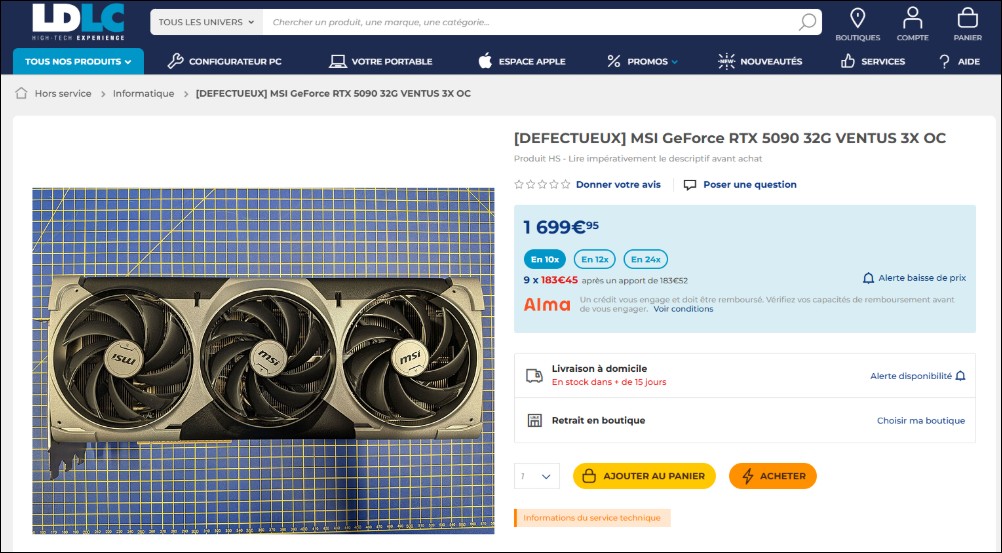
Due to the AI craze, the current graphics card market has reached an unimaginable level of craziness. LDLC, a large French computer retailer, recently listed a batch ofSpecial NVIDIA GeForce RTX 5090, all of them are faulty cards that are damaged during logistics and cannot be used normally. What’s even more surprising is that these half-price bad cards, which are like waste, are even more expensive than a brand-new RTX 5080, and no returns or refunds are accepted after sale.
The faulty card is sold as a commodity, but the price is still ridiculously high at half price
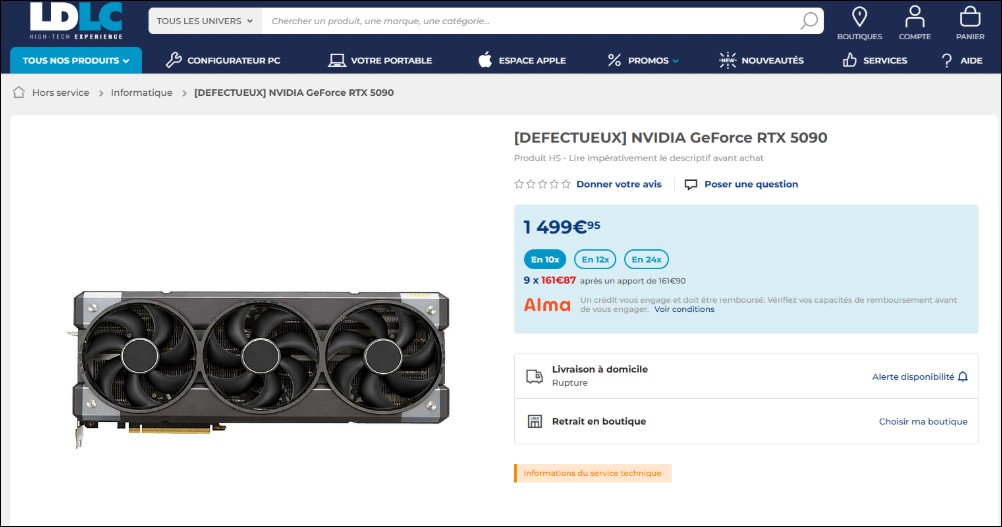
The two faulty RTX 5090 models currently listed on LDLC are:
- ASUS RTX 5090 TUF Gaming: €1,499 (approximately NT$52,500)
- MSI RTX 5090 Ventus 3X OC: €1,699 (approximately NT$59,500)
Although these two prices are about half of the normal RTX 5090 pricing, in comparison, a brand new RTX 5080 is only about €1,300 to €1,400 in Europe. in other words,A faulty 5090 that is completely unusable costs more than a brand new 5080. As far as the Taiwan market is concerned, the recommended price of a brand new RTX 5080 is about NT$40,000, while the price of this faulty card starts at NT$52,500. Consumers spend more money, but what they buy is a brick that cannot work.
Non-refundable and non-exchangeable terms
LDLC clearly marks these graphics cards as “non-functional products” on the product page. The cause of damage is physical damage caused during logistics and transportation, which may include PCB circuit board breakage, impact deformation, etc.
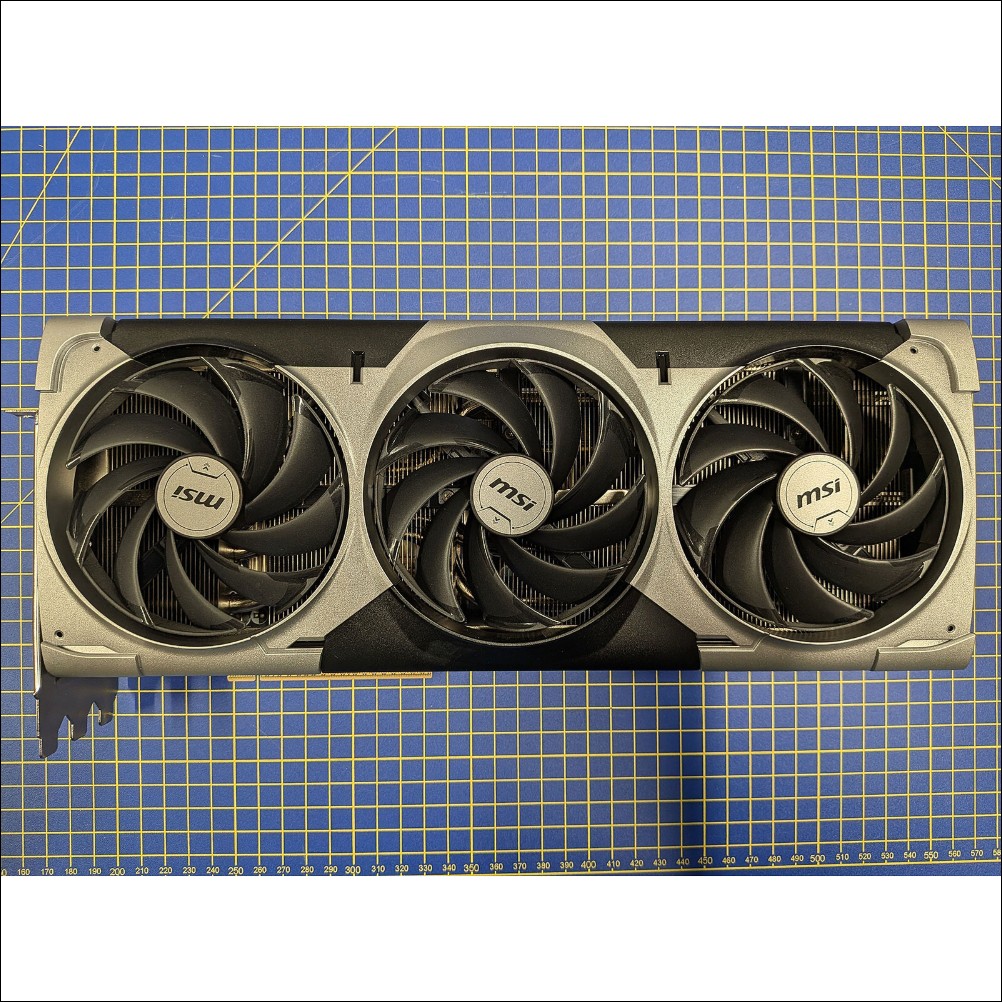
The after-sales terms are even stricter: since the goods are clearly marked as non-functional, no returns or refunds will be accepted after purchase. LDLC stated that this type of product is only for professionals with repair capabilities or component recycling needs (such as those who repair graphics cards).Brother Zhangsuch people). The buyer may just buy a piece of electronic waste (e-waste), and whether it can be repaired depends on luck.
Why can a faulty card be sold at this price?
The source of all this absurdity comes from the extreme scarcity of RTX 5090 in the global market. Due to the surge in demand for AI computing, NVIDIA’s Blackwell architecture high-end GPUs are in short supply. The actual selling price of the RTX 5090 in Europe has soared to more than €3,250 (approximately NT$114,000), which is more than three times the official recommended selling price.
In such a context where cards are hard to come by, even a faulty card has a market value. If a studio or individual with the ability to perform chip-level repairs can buy it at half the price and successfully repair it, it will cost about NT$52,500 in exchange for a graphics card worth NT$114,000, a price difference of nearly NT$60,000 (which is what Zhang often calls “gambling cards”). This arbitrage space is exactly why LDLC dares to sell faulty cards without returning or replacing them.
Taiwan and China markets also have similar situations
The report pointed out that such defective graphics cards can also be found in the Chinese market, and the prices are usually lower. However, special attention needs to be paid to the fact that these faulty cards often run the risk of having their core components removed in the Chinese market. The GPU chips and GDDR7 display memory particles may have been removed and used for other purposes. The buyer may only receive an empty PCB board, which needs to be screened by themselves.
Although it is rare to see such cases of publicly selling faulty graphics cards in the Taiwanese market, on some second-hand trading platforms or professional repair communities, you can occasionally see faulty high-end graphics cards sold under the name of “material boards”. You also need to be extremely cautious before purchasing.
Warning: Not recommended for general consumers to try
Although the half-price RTX 5090 looks tempting, for ordinary consumers without chip-level repair capabilities, this deal is likely to be a waste. If consumers take a chance and “gamble” to buy cards and repair them, these faulty cards may just “buy empty shells”, and the internal graphics card may be too serious to be repaired. If it cannot be repaired, the purchase price will be lost in full.
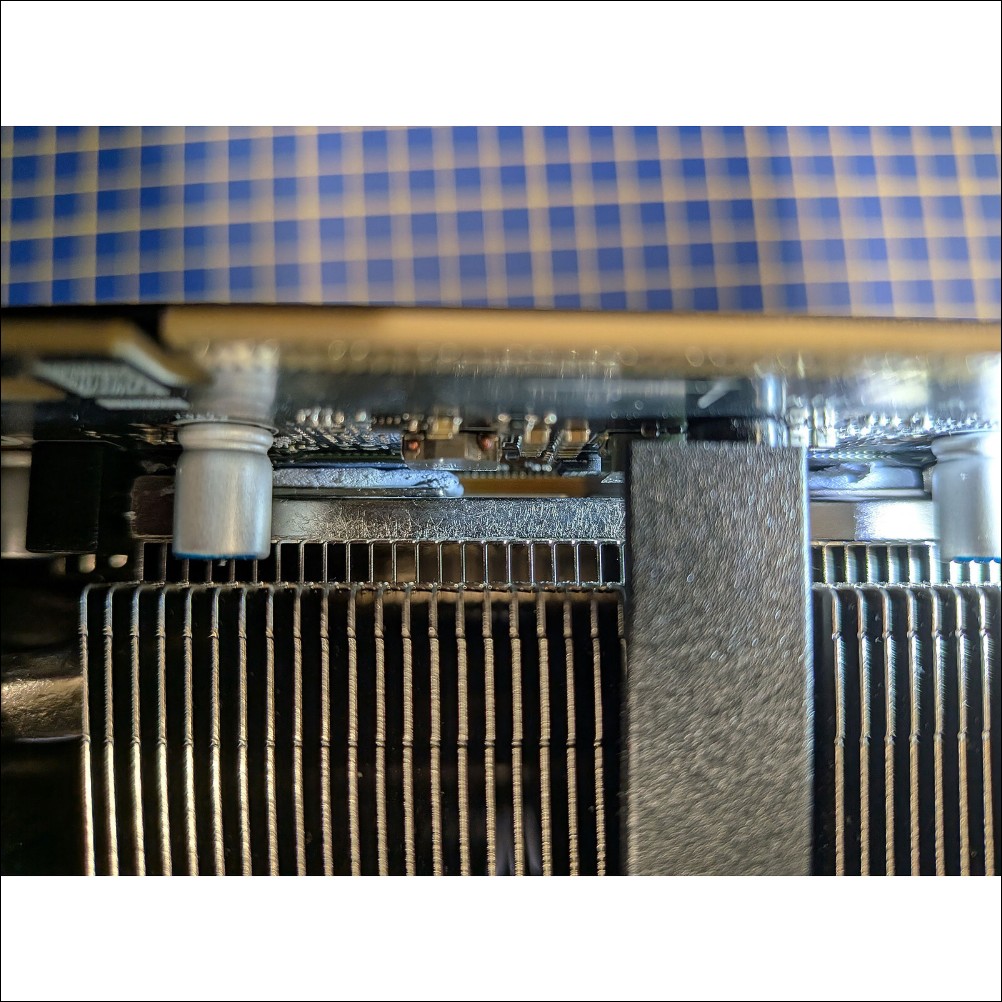
In addition, even if it is successfully repaired, whether the source of these faulty cards contains warranty transfer issues and whether the stability after repair is reliable are potential risks.
Source: KOCPC Chinese