


For now, using ChatGPT still mostly boils down to “typing a prompt and waiting for a response.” Whether writing articles, organizing data, translating, or coding, everything centers around the chat box. But according to recent reports from overseas media, OpenAI appears to be gearing up for a major overhaul of the ChatGPT interface, turning ChatGPT from a simple chat tool into an “AI super app” that integrates multiple capabilities.
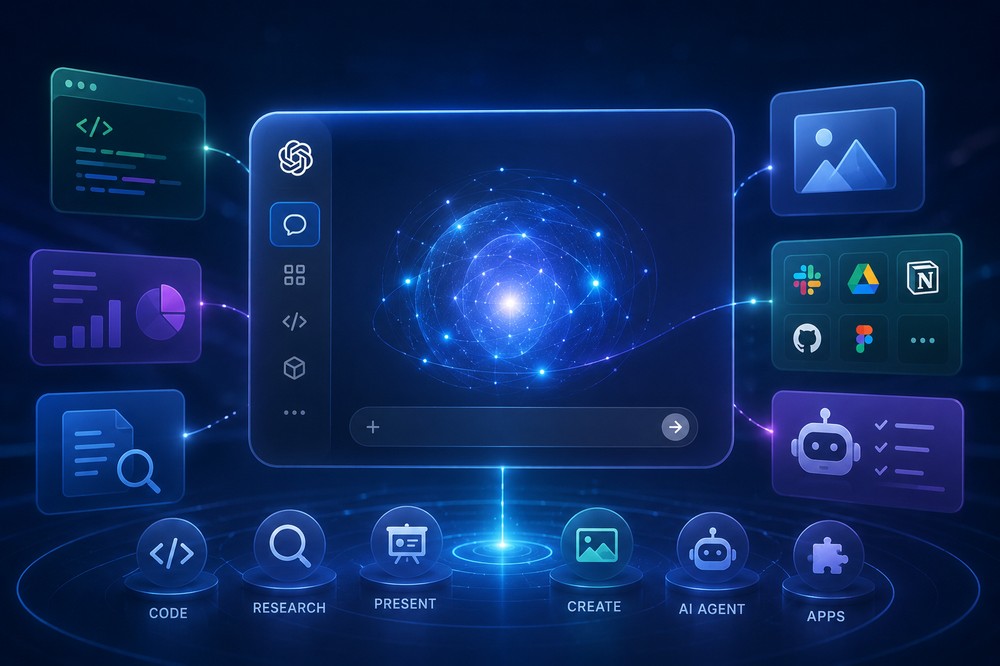
ChatGPT May Get Its Biggest Overhaul Yet: OpenAI Reportedly Preparing to Turn the Chat Box Into an AI Super App
according to Gizmodo organization of,Financial Times Reports indicate that OpenAI is preparing to launch a new version of ChatGPT in the coming weeks, transforming it from a chatbot into a “superapp.” According to sources, this new ChatGPT will more actively steer users toward capabilities such as AI agents, coding tools, third-party apps, and image generation, rather than focusing solely on chat.
TechCrunch’s report also noted that one of OpenAI’s goals is to make ChatGPT a gateway for users to access more paid tools, particularly products like Codex that offer higher revenue potential. Simply put, OpenAI wants you to be able to complete all your work directly within ChatGPT—such as coding, conducting research, making presentations, generating images, using partner services, and even handing off an entire chain of tasks to an AI agent.
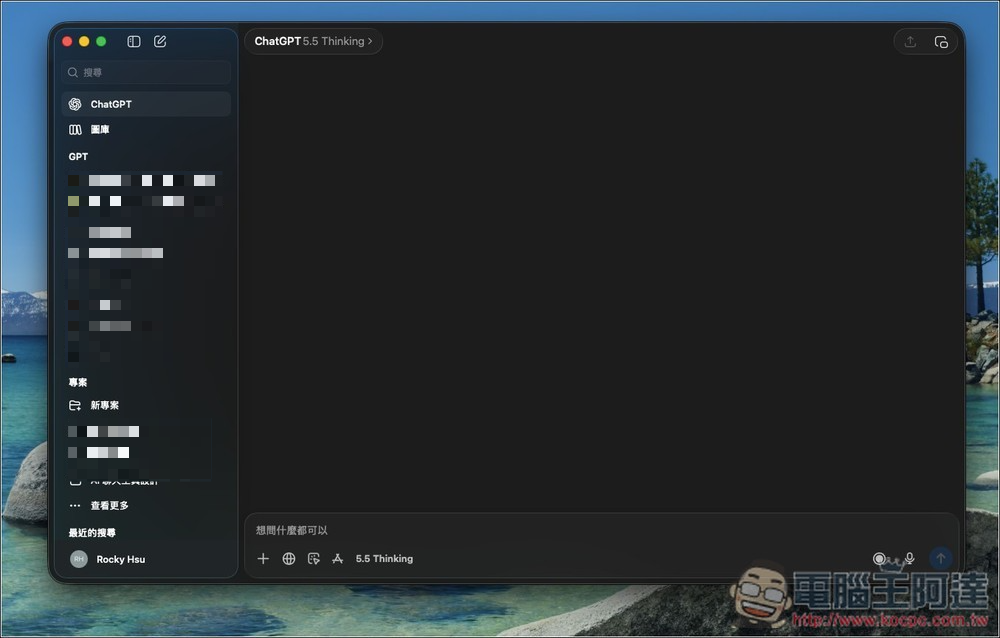
ChatGPT App’s current interface:
In fact, OpenAI back in April this year,in the official article published by Chief Revenue Officer Denise Dresser, it already explicitly stated that the company is building a “unified AI superapp,” aiming to make ChatGPT the main entry point for employees to handle their daily work.
The Financial Times report also mentioned that OpenAI’s next step is for ChatGPT to no longer just wait for users to input commands, but to proactively understand what users are trying to accomplish on apps or websites. Although this direction sounds highly imaginative, it is actually not easy to achieve in practice.
AI may increasingly understand context, but enabling a system to accurately figure out what a user wants to do without explicit prompting, while also staying safe, controllable, and not altering data arbitrarily, is extremely difficult. This is not just a matter of model capability; it also involves interface design, access control, privacy, error correction, and user trust.

Overall, OpenAI aims to integrate its products and tools into ChatGPT, somewhat similar in direction to the workflow integration that Claude has been pushing in recent years. Currently, aside from regular chat conversations, the Claude app also includes Cowork and Claude Code.
However, if the final version of the new ChatGPT doesn’t differ much from Claude’s existing approach, the “superapp” label would be a bit of an exaggeration. It remains to be seen whether OpenAI can deliver a truly eye-opening integrated experience.
Foreign media believe OpenAI is facing competitive pressure from Anthropic in enterprise customers and Claude workflow deployment, especially as Claude has gained significant traction in recent years in programming, agentic work, and enterprise adoption.
For OpenAI, relying solely on general users subscribing to chatbots each month may offer limited room for growth. But if it can turn ChatGPT into the central console that enterprise employees use every day, backed by Codex, APIs, Agents, enterprise plans, and token-based billing, the business potential becomes entirely different.
It is currently unknown when OpenAI will release this new version of ChatGPT.
Source: KOCPC Chinese