


On July 31, OpenAI released an investigative report exposing how a Cambodia-based criminal network deeply embedded ChatGPT into its entire fraud workflow. The group used AI for everything from creating fake identities, multilingual translation, and forging documents to managing internal employee debt, essentially turning ChatGPT into a “full-time employee” of the criminal organization. The investigation began with leads provided by WhatsApp, and after tracing them, OpenAI found that the banned ChatGPT accounts were highly concentrated around Poipet, Cambodia. Poipet is located in Banteay Meanchey Province in northwestern Cambodia, right on the Thai border, and has been repeatedly identified by international media and human rights organizations for years as a hub for online scam compounds and human trafficking.

Cambodian scam syndicates use ChatGPT for four types of fraud.
OpenAI isReportIt is pointed out that this criminal network operates four different scams simultaneously: investment fraud, romance scams, gambling fraud, and impersonation of law enforcement. The criminal group flexibly selects the most effective methods and attack strategies based on the characteristics of the target.
In practice, the four types of fraud often mix together. For example, scammers first use a dating persona to build an emotional connection with victims, gain their trust, and then guide them into fake platforms for cryptocurrency or spot gold trading. Another group of accounts specializes in impersonating online gambling platform customer service, using “free bonuses” and “winning notifications” as bait. Yet another team poses as law enforcement, telling victims they are involved in serious criminal offenses and must pay a fine.
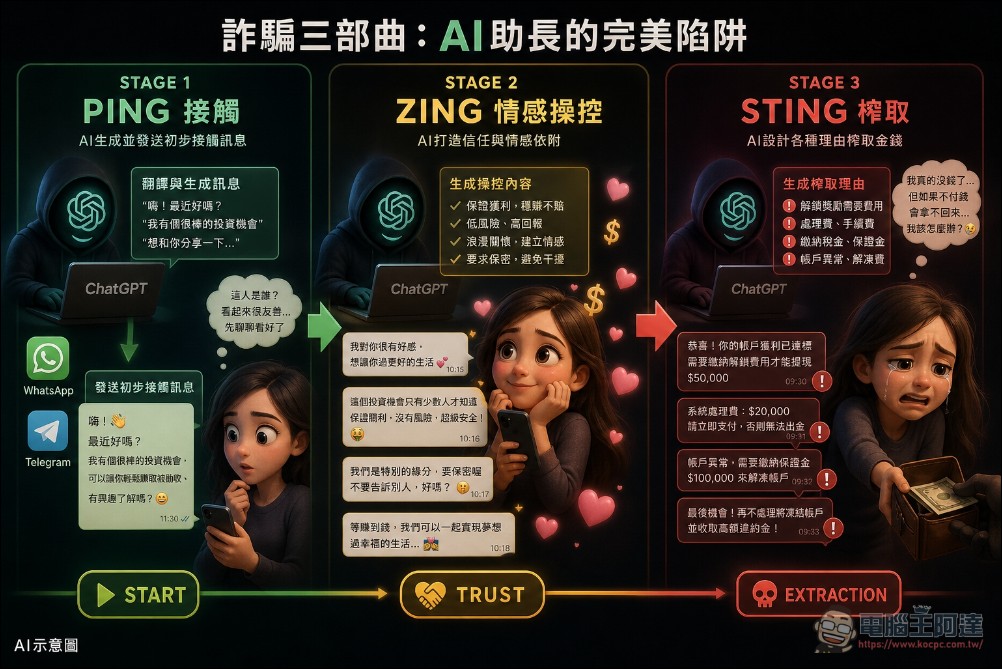
OpenAI uses three stages to describe this scam mechanism: “Ping,” “Zing,” and “Sting.” In the contact stage, ChatGPT handles translation and generates conversation content for outreach on messaging platforms such as WhatsApp and Telegram. In the emotional manipulation stage, trust is built through promises of guaranteed profits, risk-free investments, romantic language, and demands for secrecy. In the final extraction stage, victims are asked to transfer money to unlock so-called rewards, pay processing fees, or settle fabricated fines.
ChatGPT doesn’t just write manuscripts—it also forges passports and documents.
The most frightening part of this case is that ChatGPT was used to generate forged official documents. OpenAI discovered that this network asked ChatGPT to create fake passports, legal notices, stock purchase confirmations, and screenshots of the operation interface of a counterfeit gambling platform. The forged documents were used to increase the credibility of the scam, making it easier for victims to be deceived after seeing the “official documents.”

In addition, ChatGPT has also been used for a variety of everyday criminal operations: creating and maintaining fake online identities, translating messages into multiple languages, producing promotional materials for scam schemes, and handling internal administrative matters. Related reports indicate that the network even used ChatGPT to manage employee debt ledgers, recording details of employee debts, salary deductions, disciplinary fines, and loan repayments.
Fraudsters themselves may also be victims.
OpenAI’s investigation also uncovered a darker dimension. Content from some ChatGPT accounts showed that this criminal network was linked to human trafficking and forced labor. Some users used ChatGPT to design social media ads recruiting “chat operators” to work in Poipet, with offers including free airfare, accommodation, meals, visas, and work permits.

More unsettling still, internal chat logs contain descriptions of detentions, attempted escapes, and discussions about the criminal liability that people trafficked into this work might face. OpenAI said it could not confirm the actual circumstances of those involved. Research also shows that many of those actually carrying out romance and investment scams in Southeast Asia are themselves victims of human trafficking, forced into organized criminal labor.

Amnesty International, in a report released in June 2025, accused the Cambodian government of turning a blind eye for years to slavery, human trafficking, and child labor in scam compounds. However, the Cambodian government has recently shut down nearly 200 scam centers as part of its crackdown on transnational fraud. Recently, the large numbers of Chinese and Taiwanese people who fled Cambodia have mostly scattered after catching wind of the crackdown.
Banning accounts is just the tip of the iceberg.
OpenAI acknowledged in the report that it has banned the relevant accounts and shared threat indicators with industry partners and law enforcement, but account bans only address one facet of the criminal operation. Fraud rings can switch platforms, switch AI tools, and switch accounts to keep operating. The core contradiction in these cases is that ChatGPT is deeply integrated into a fully functioning criminal organization—OpenAI can identify accounts, block access, and share technical indicators, but the underlying criminal organization can still move across different platforms, different scripts, and different AI services.
Additionally, global illegal cryptocurrency trading is projected to reach a record US$158 billion (approximately NT$5.1 trillion) in 2025. In an underground economy of this scale, the exploitation of AI tools by criminals is almost an inevitable trend. OpenAI’s public report this time is, to some extent, a warning to the entire AI industry: as generative AI capabilities continue to advance, the front line against criminal abuse must also move forward in tandem.
Source: KOCPC Chinese