


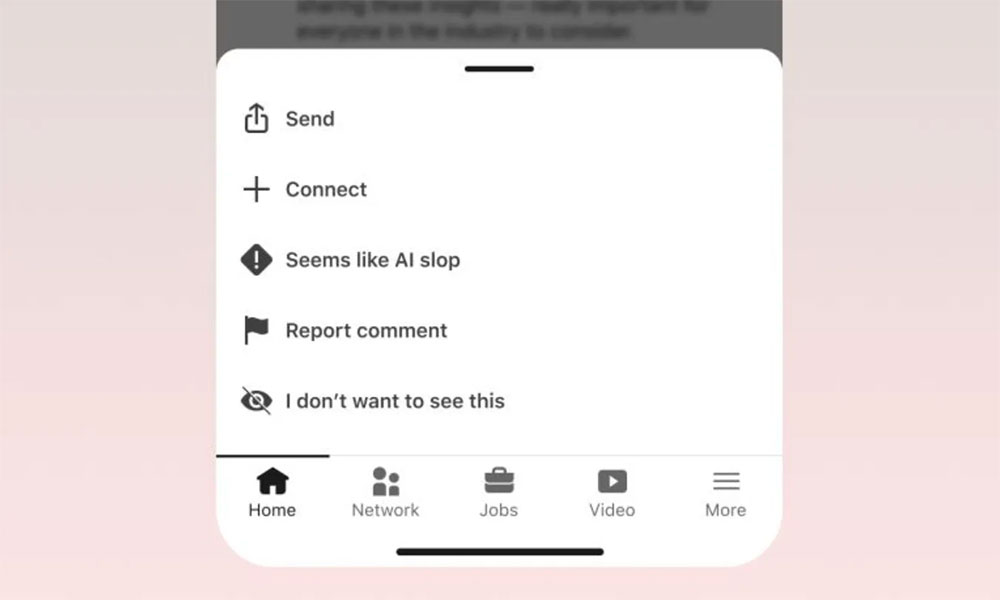
LinkedIn is facing an increasingly serious problem with AI-generated content quality, and the platform has now decided to directly seek help from users. To improve the authenticity of the feed, LinkedIn is introducing a new feedback button that allows users to flag posts they suspect were generated by artificial intelligence. This feedback will be incorporated into the platform’s content evaluation system and used to adjust the reach of posts. In particular, content that appears to be automatically generated by AI may in the future be restricted to the poster’s social network rather than spreading to a wider audience.
LinkedIn harnesses crowd power with new features to curb AI-generated posts on the platform.
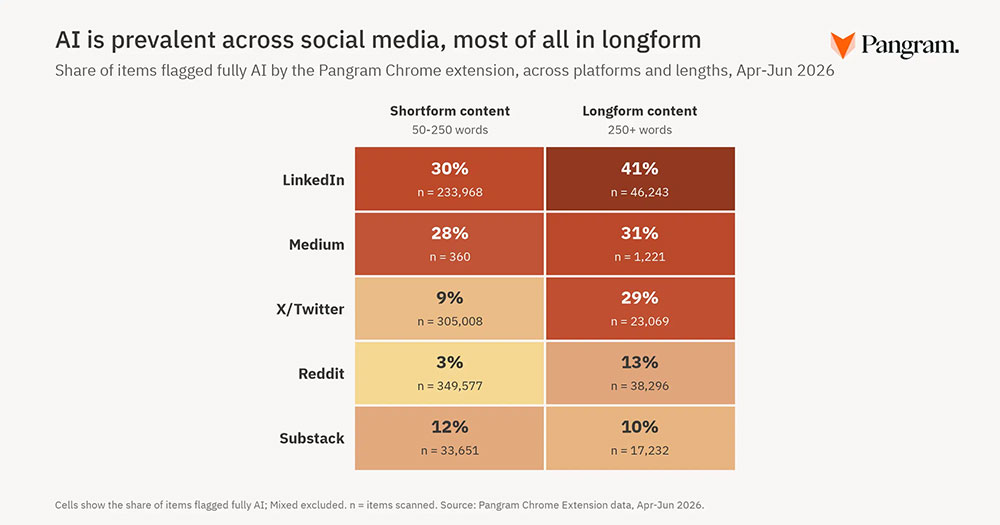
This update is not without basis. A content analysis firm Pangram’s recently published researchIt notes that over 40% of long-form posts on LinkedIn are written entirely by AI, showing that the measures the platform introduced earlier this year to reduce AI content reach are still insufficient to curb the influx of automated posts. Faced with this trend, LinkedIn must adopt a more aggressive strategy.
LinkedIn Chief Product Officer Hari Srinivasan recently posted on the platform.He explained the adjustments the company is making. He admitted that AI-generated spam has become LinkedIn’s top governance priority, because users use LinkedIn to get genuine professional insights, not large volumes of repetitive, shallow automated content. Srinivasan said LinkedIn blocks hundreds of thousands of auto-generated comments every day, and over the past few months has blocked billions of automated operations, including the spread of large-scale spam messages.
The newly launched report button is specifically designed to support this effort. In addition to user feedback, LinkedIn is also simultaneously improving its content classifiers to more accurately intercept AI-generated low-quality posts and prevent them from spreading on the platform. Srinivasan also acknowledged that the definition of spam is not fixed; as generative AI capabilities improve, the criteria for judgment must be continuously adjusted. Therefore, the platform needs more direct feedback from users to strengthen its automated detection system.
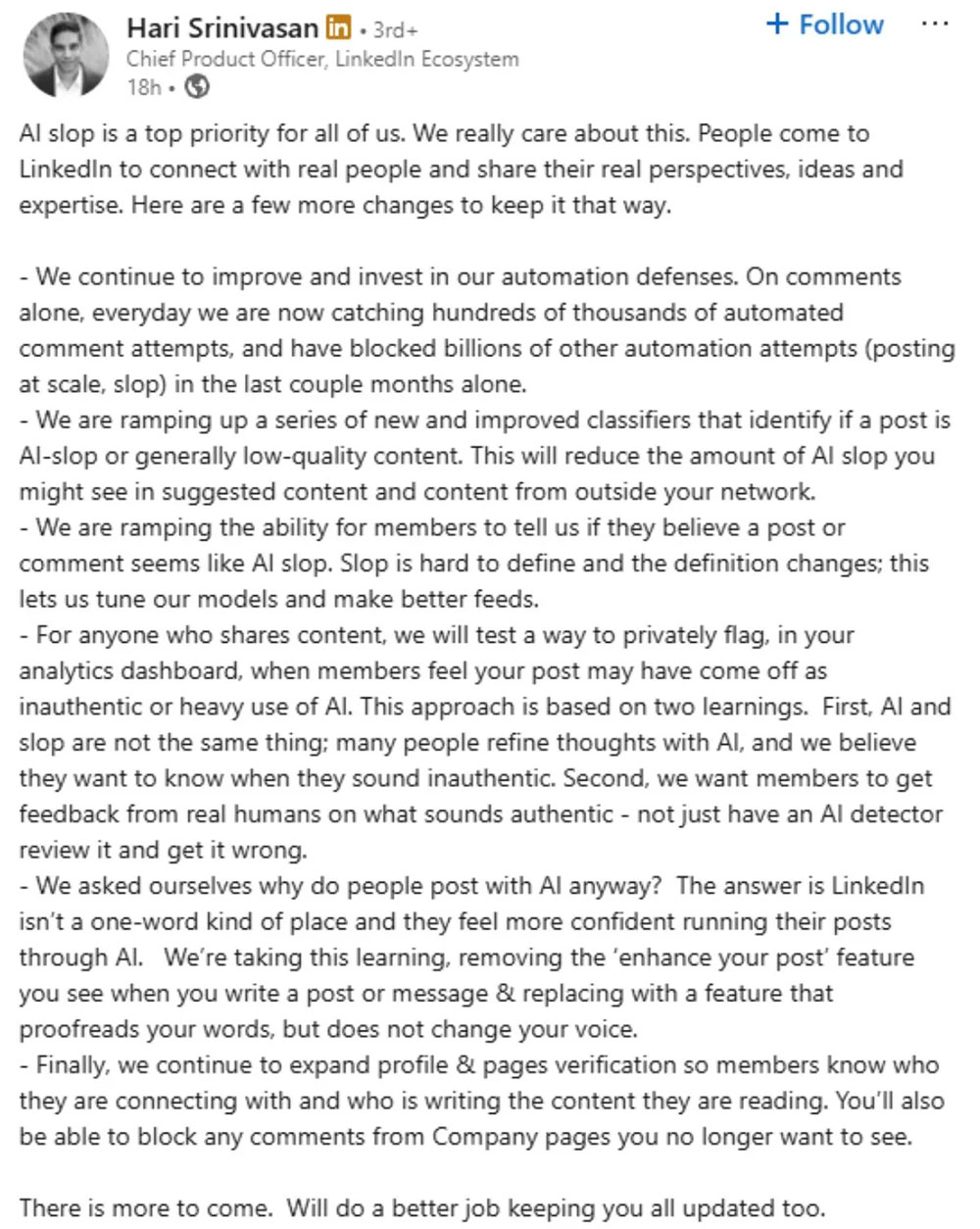
In addition to the public reporting mechanism, LinkedIn is also testing a more private tool: a “Resource Center flag” aimed at creators. When the system determines that a post appears inauthentic or overly reliant on AI, it displays an alert in the creator’s dashboard. The purpose of this feature is not to punish, but to allow creators to adjust their strategy after publishing. Srinivasan emphasized that this flag is not automatically determined by AI, but is based on user feedback, because many professionals do use AI to organize their thoughts or improve their wording rather than generating low-quality content, and they should receive more precise prompts rather than being misjudged.
Notably, LinkedIn will also discontinue the “Enhanced Posts” AI writing feature it had previously promoted heavily, replacing it with a simpler proofreading tool. The new tool will only fix grammatical errors and will not change the user’s tone or content style. This adjustment somewhat reflects LinkedIn’s reconsideration of its past strategy: having once encouraged users to generate posts with AI, it now has to deal with the consequences of an overflow of AI content on the platform. Although Srinivasan did not say so explicitly, the symbolic meaning of this feature being retired is fairly clear.
LinkedIn is not the only platform facing this issue. Substack also rolled out a tool this month to flag AI-written newsletters, alerting readers to the origin of the content. As generative AI becomes more widespread, platforms are all looking for a balance: not preventing users from using AI as a creative aid, while also avoiding being flooded with low-quality content. Whether these new tools can truly improve content quality remains to be seen. But one thing is certain—the governance of AI-generated content has become a shared challenge for all content platforms, and LinkedIn’s latest move is another significant development in this long-running battle.
Source: KOCPC Chinese