


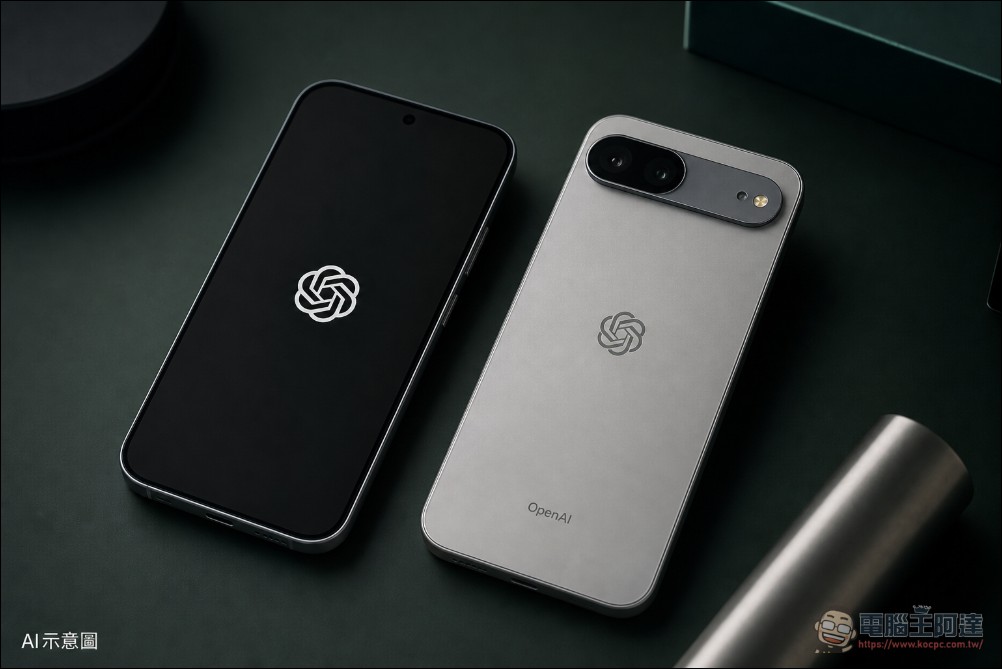
There is still no official answer as to whether OpenAI will actually launch its own mobile phone. However, with OpenAI acquiring io, a hardware company in which Jony Ive participated, the outside world has begun to imagine more and more “OpenAI devices”. Recently, Jason C., a well-known whistleblower on the X platform, shared a spy photo of the appearance and disassembly of the OpenAI Phone that was suspected to have been leaked from within the foundry, and listed the rumored hardware specifications. However, this information has not yet been confirmed by OpenAI, MediaTek or the relevant supply chain.
It was revealed that MediaTek’s customized Dimensity 9600 may be used
The news mentioned that the so-called OpenAI Phone may use the “Custom Dimensity 9600” chip, with the participation of MediaTek, and the manufacturing process will point to 2nm nodes such as TSMC N2P. In addition, the list also includes LPDDR6 memory, UFS 5.0 storage, and enhanced HDR output, which is consistent with what well-known analyst Ming-Chi Kuo said a few days ago.
What is special is that the leaked content focuses on the “Dual NPU architecture” dual NPU architecture and describes it as layered AI processing. If this direction is true, it means that its selling point may not be traditional mobile phone benchmarks, but to go deeper into device-side AI reasoning, image understanding, voice and real-time perception. The leak also mentioned “real-world visual perception”. It seems that the hope is that the mobile phone can better understand the real world in front of the camera, rather than just taking pictures or executing apps.
What to Expect?
OpenAI Phone
Updated May 6, 2026• Custom Dimensity 9600 (MediaTek)
• Built on TSMC N2P (2nm-class)
• Dual NPU architecture (layered AI processing)
• LPDDR6 + UFS 5.0
• Enhanced HDR output
• Focus on real-world visual perception
• pKVM + inline hashing pic.twitter.com/T94oZuWERF— Jason C. (@_TheJasonC) May 6, 2026
Security and privacy may also be a focus
The leaked specifications also list pKVM and inline hashing. pKVM is usually related to virtualization isolation and secure execution environments, while inline hashing can be understood as a mechanism related to data verification and integrity checking. If OpenAI really wants to make a mobile phone or device that relies heavily on AI Agent, security and privacy will inevitably be parts that cannot be ignored, especially since the camera, voice, personal data and local AI computing will be used intertwinedly for a long time.
Still treat it as rumors first
What is relatively certain at present is that OpenAI has indeed accelerated its layout in the hardware field. OpenAI previously acquired io, a company co-founded by Jony Ive. It is generally believed that this means that OpenAI wants to create a new AI device that breaks away from the traditional screen and app operating logic. However, this does not mean that OpenAI will definitely launch a traditional smart phone, nor does it mean that the various specifications currently circulated must be accurate. In addition, now that image 2 is so powerful, it is possible that this photo is faked by AI.
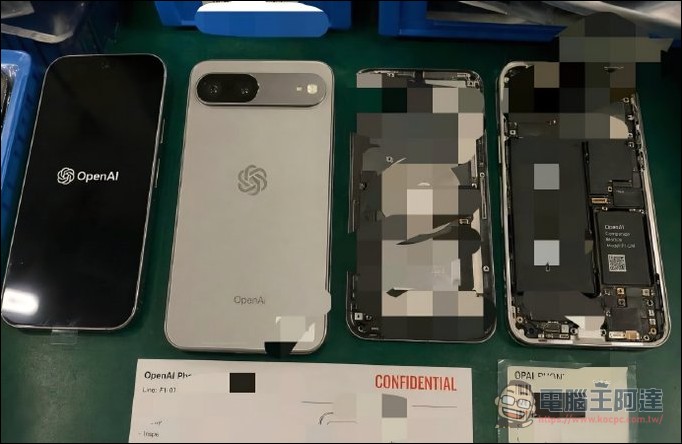
In other words, this picture and the specification sheet are more like the current market’s first wave of imagination about the OpenAI Phone. If OpenAI really wants to deeply integrate ChatGPT, camera, voice, personal assistant and device-side AI on one hardware in the future, then its real challenge may not be a single Android phone brand, but the App-centric usage of smartphones for many years.
Source: KOCPC Chinese