


A shock bomb is coming to the design community! After Canva acquired Serif last year, it has now officially launched a new integrated creation platform – Affinity App, which integrates Designer, Photo and Publisher, which were originally divided into three independent software, into one application. The most surprising thing is that this professional-grade tool not only retains an efficient and accurate design experience, but also announced that it is “completely free and permanently open.” Whether it is illustration, photography retouching, or multi-page layout design, it can be completed in a smooth environment, making it the strongest challenger in the Adobe series.
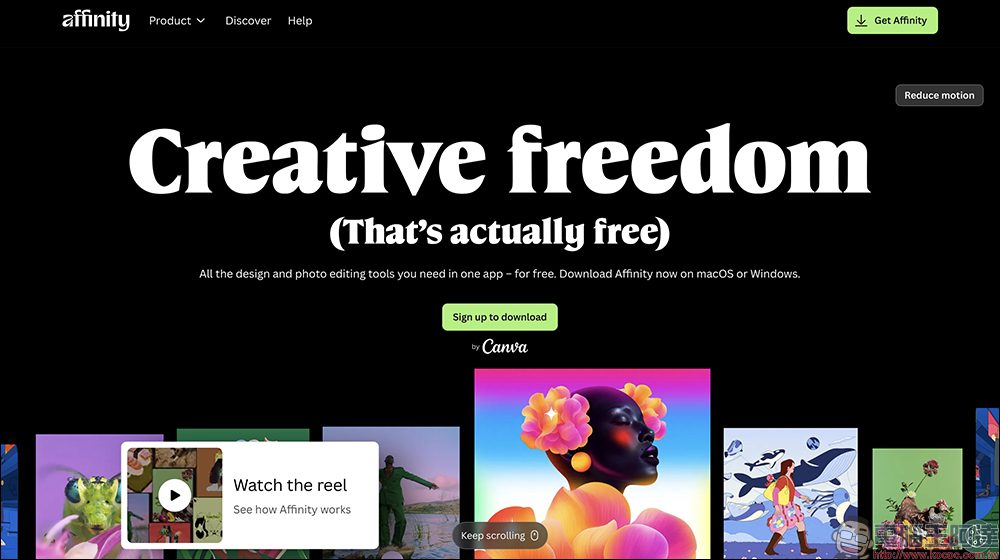
The best all-around alternative to Adobe! The new Affinity is completely free and open for download, integrating the three main applications of Designer, Photo and Publisher (macOS/Windows)
In the past, Affinity launched three software, Designer, Photo and Publisher, respectively responsible for vector design, image editing and layout. These three sets of tools are deeply loved by creators due to their user-friendly strategy of “buyout, no subscription”, and are also regarded as the best alternatives to Adobe Illustrator, Photoshop, and InDesign. However, although the functions of the three are powerful, in the actual workflow, designers often need to switch between different programs, import files, or adjust formats, which inevitably interrupts the creative rhythm.
The new Affinity App is designed to solve this problem. Canva fully integrates the three major functions into the same platform, eliminating the need to purchase or activate separate software. Designers only need to open one application to handle illustrations, image post-production and multi-page layout at the same time. More importantly, the new version adopts a unified “Universal File Type”. Any design work can be seamlessly opened, modified and exported in the same environment. There is no need to worry about conversion or format conflicts.
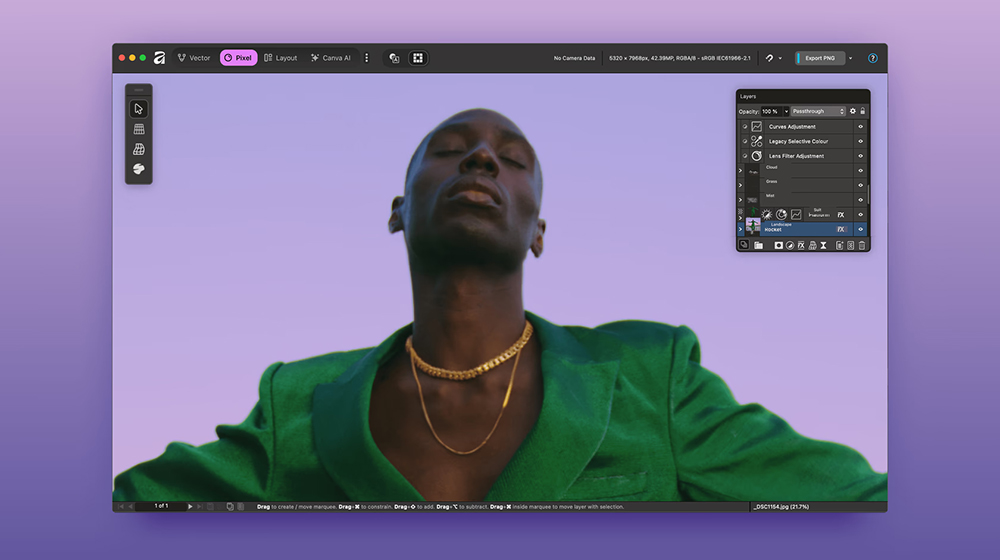
Such integration not only makes Affinity’s operating procedures closer to the actual needs of professional creators, but also symbolizes that the brand has officially entered a new era of “integrated design.” Affinity supports a variety of file formats, including PSD, AI, PDF, SVG, TIFF, IDML, etc., allowing you to easily bring in past works, open and edit them directly.
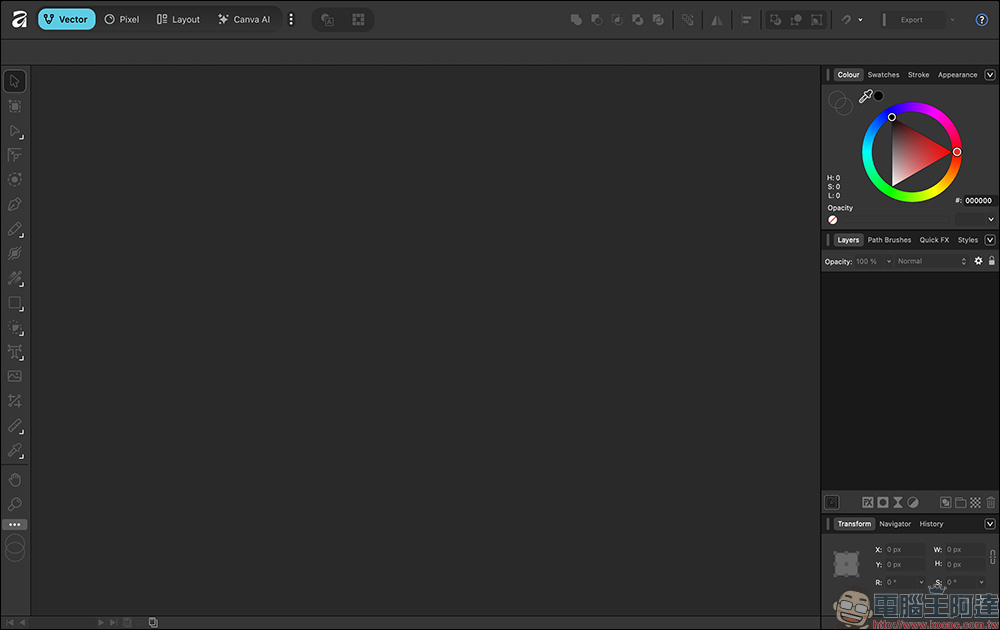
Affinity’s next-generation platform is built by the Canva team. The core concept is simple, so creators no longer need to switch between multiple software. This new app integrates three major functions: vector drawing, image modification and layout. Users can complete the entire process from brand identity design to printing and publishing in a single interface.
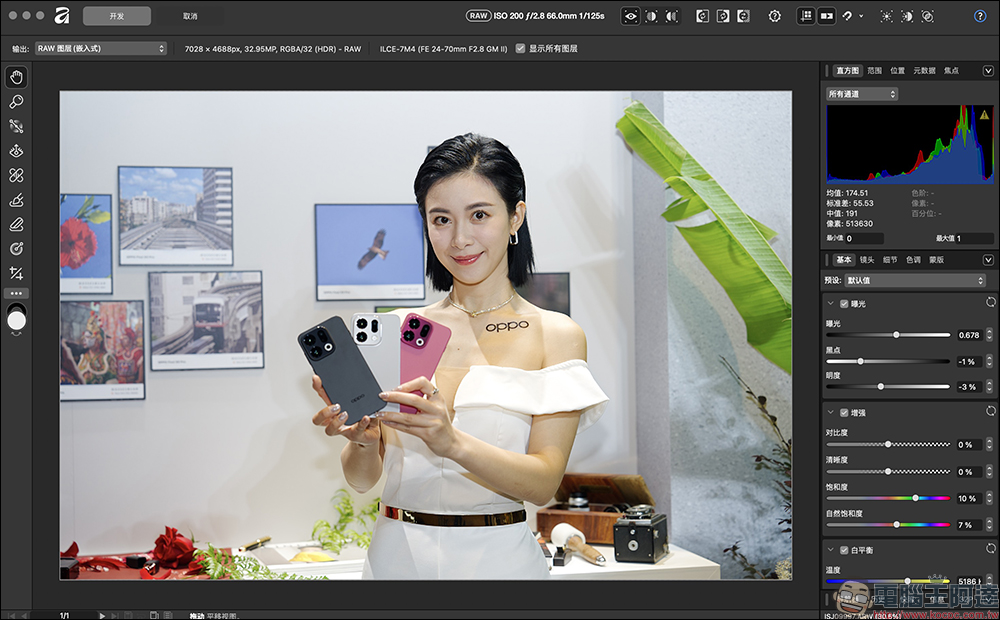
For illustrators and visual designers, new vector tools provide extremely high precision and instant feedback: curves, shapes, and brush strokes can be fine-tuned in real time, and even panning and zooming in large files remain smooth without lag. In the field of image editing, Affinity continues its award-winning image editing engine in the past, supporting RAW file development, layer synthesis and batch processing. All editing is performed in a “non-destructive” manner, ensuring that the original files will not be overwritten.
The typesetting tools have been fully upgraded, allowing structure and creativity to go hand in hand. From presentations, catalogs to multi-page reports, images, text and graphics can be edited directly in the document, and all changes will be updated simultaneously. Combined with Smart Master Pages and advanced font control functions, the overall layout not only maintains consistency, but also allows you to freely experiment with various creative layout methods.
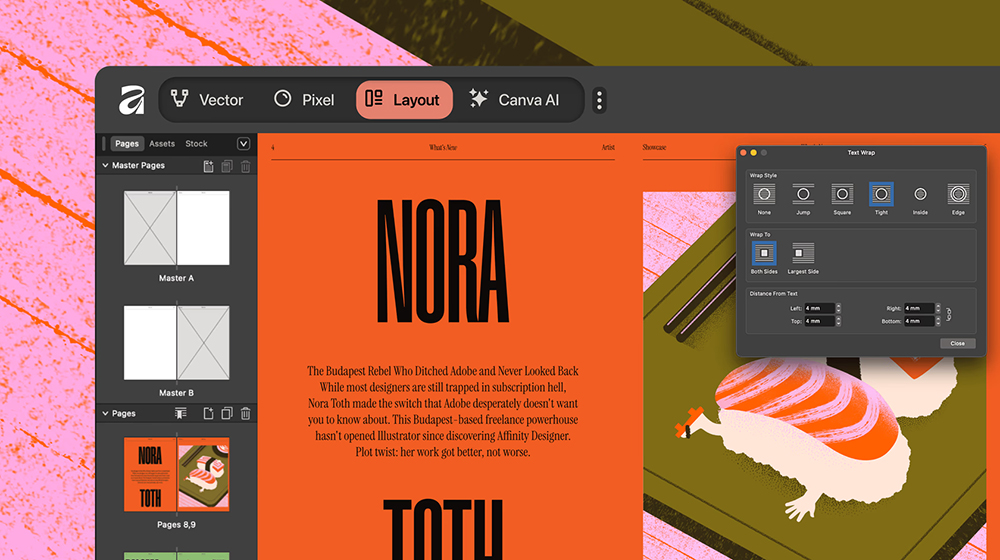
Canva officially emphasizes that this time Affinity is a product designed “for creators, by creators”. Affinity has been a trusted tool for design professionals for the past decade. This new version has evolved based on thousands of feedback and suggestions from the user community, with the goal of creating a work environment that can truly keep up with the pace of creation.
In terms of performance, the new version of Affinity uses a GPU-accelerated architecture that can preview changes in real time, supports super magnification up to 10,000,000%, and can maintain smooth operations even in projects with thousands of layers. Canva says that every feature is optimized for “creator efficiency,” allowing designers to focus on inspiration and composition rather than software delays or limitations.
Another highlight of the new Affinity is the custom studios. Each designer’s workflow is different, so Affinity allows users to freely adjust the interface and freely combine tools from the three modules of “Vector”, “Pixel” and “Layout”. Want to keep only the commonly used brushes and editing functions? No problem; want to create an exclusive layout template for brand design? OK. These custom studios can even be saved or shared with team members, making it easy for design teams to establish a consistent collaboration process.
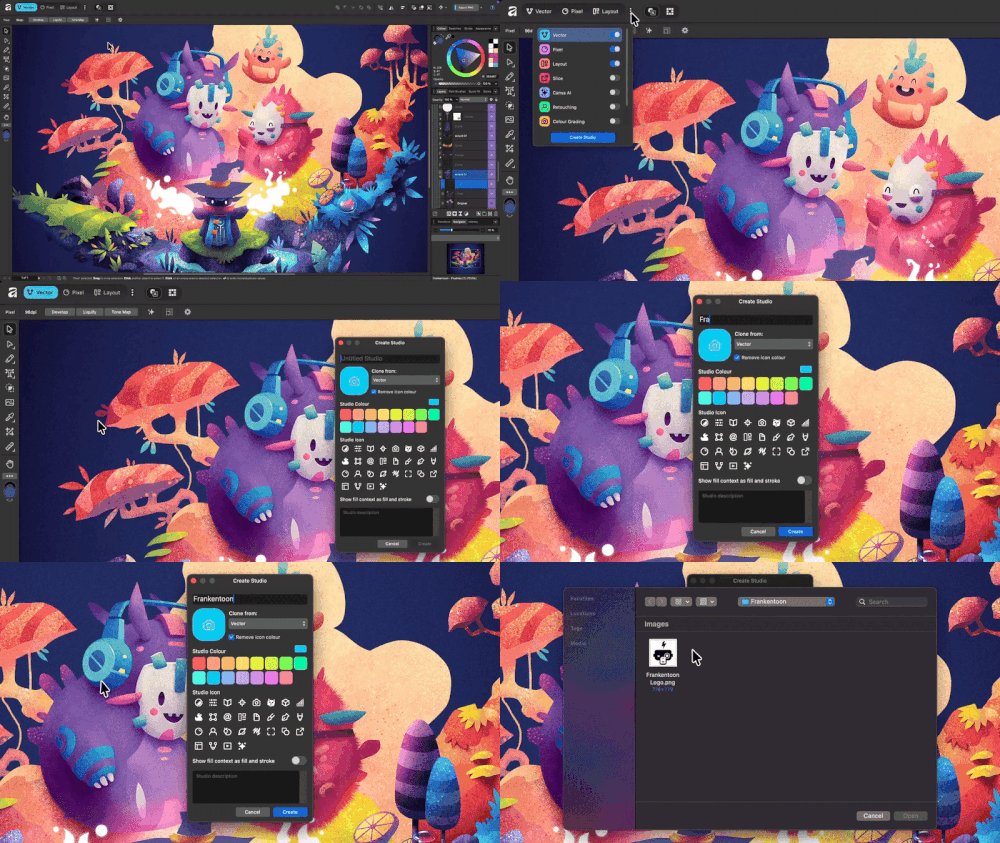
In this highly flexible environment, creators can create a work interface that best suits their own pace and focus on the work itself without being distracted by the interface. Whether you are an illustrator, photographer, layout designer, or a small studio, you can find your own rhythm.
For long-time Affinity users, the new interface will still be familiar. Commonly used tools, shortcut keys and work logic are retained, but they have been greatly upgraded in terms of performance, speed and stability.
Old versions of Designer, Photo, and Publisher can still be used if they have been purchased, but the official website removed the V2 version a few weeks ago. Although Canva has not made it clear whether the old version will continue to be updated, from the current direction, all development focus has been fully shifted to this new all-in-one platform.
Redefine “free”: no discounts, no restrictions on functions
Canva clearly understands the question that everyone is most concerned about—is such a powerful tool really free? The official made it clear: Affinity is “completely free now and forever.”
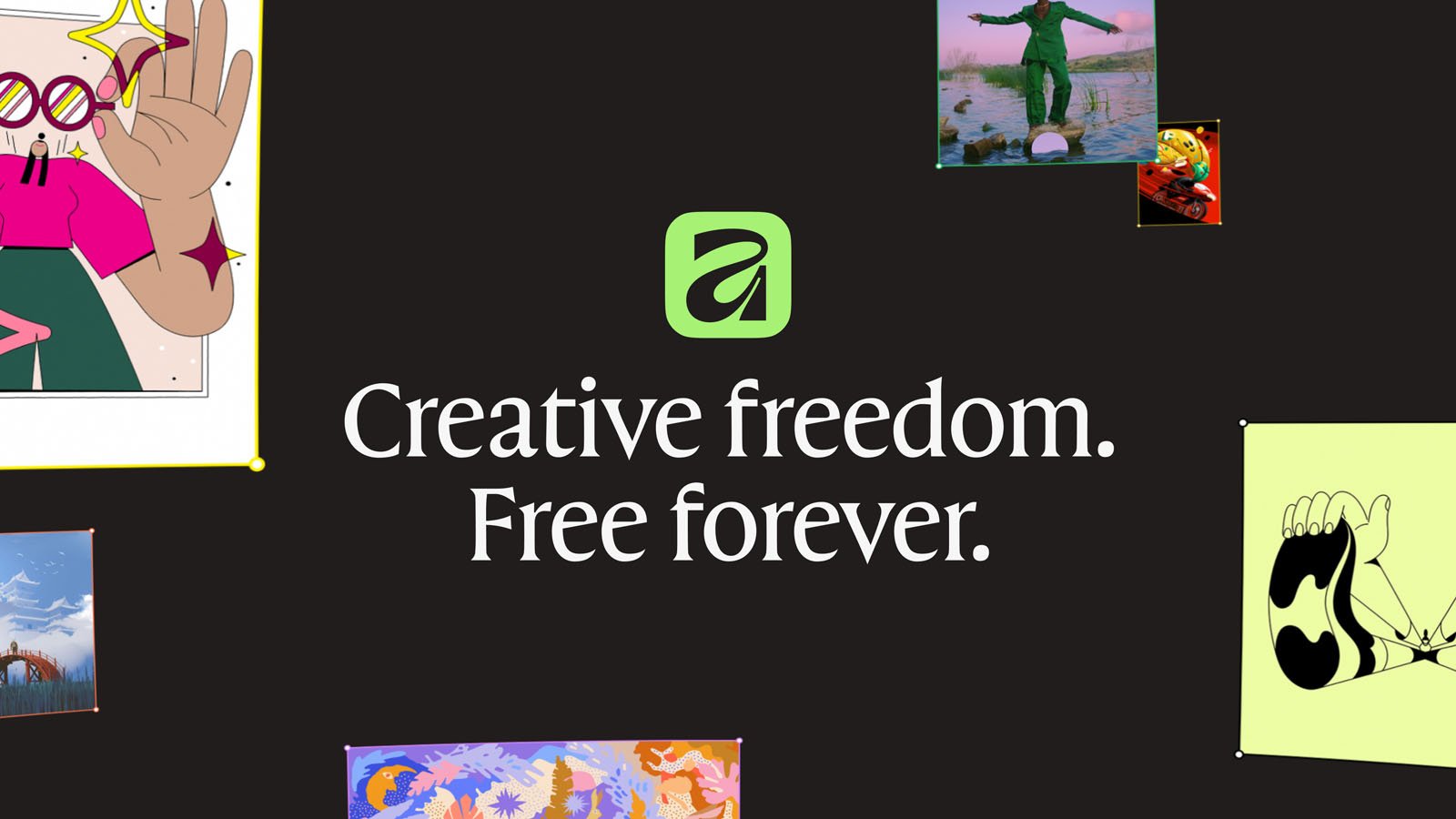
This isn’t just a trial, or a “lite” version with limited features, but a full version of Affinity, including all professional-level features. Compared with Adobe’s subscription system that requires monthly fees and scattered functions, Affinity takes another path, so that professional creation no longer requires high barriers to entry. This decision is also seen as a major change in the entire creative software market after Canva acquired Serif.
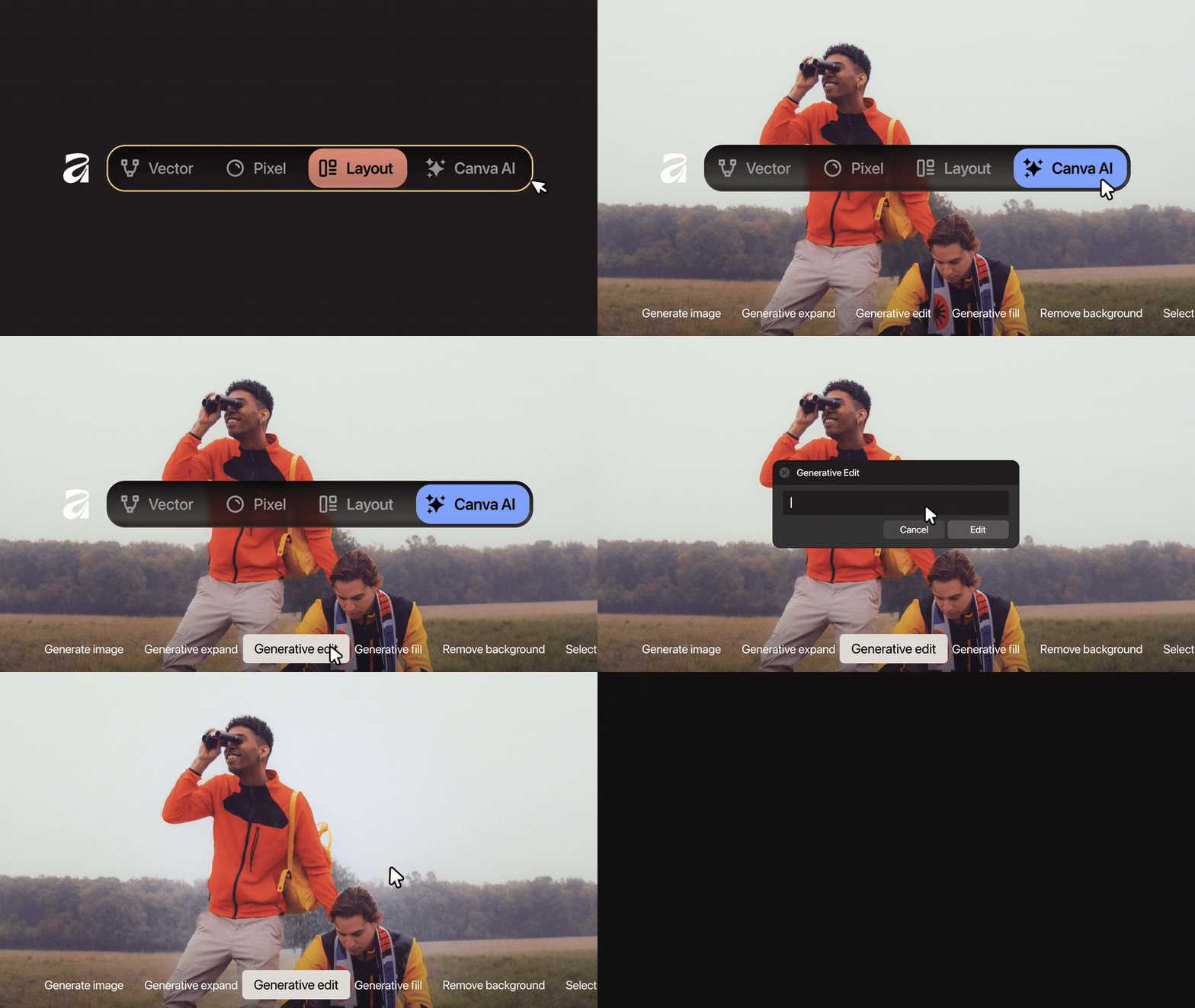
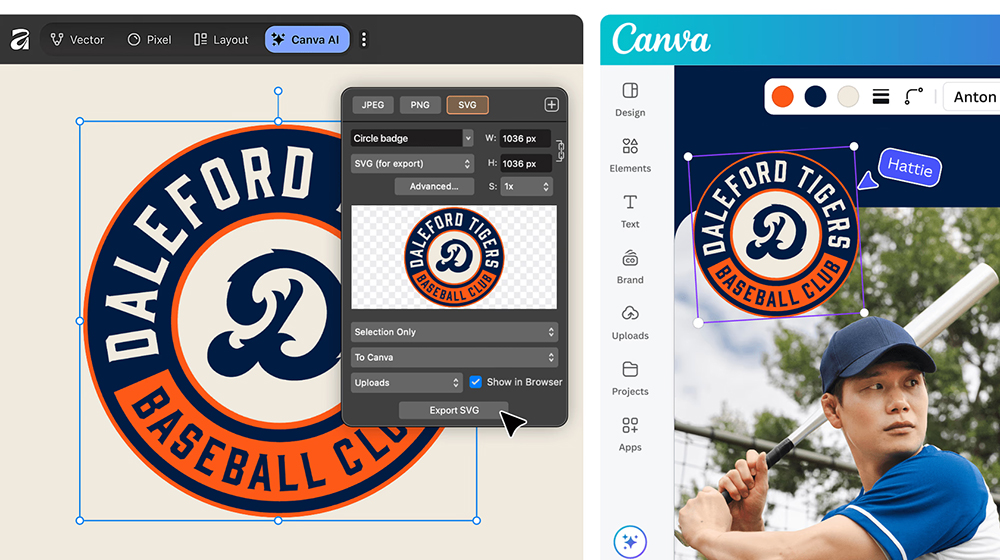
However, if you are a Canva Premium user, you can also enable Canva AI’s enhanced tools directly within Affinity, such as AI image generation, background removal, smart repair and other functions. These artificial intelligence tools are mainly auxiliary and will not interfere with the creator’s detailed control. They will not use personal works to train AI models to ensure creative privacy and data security.
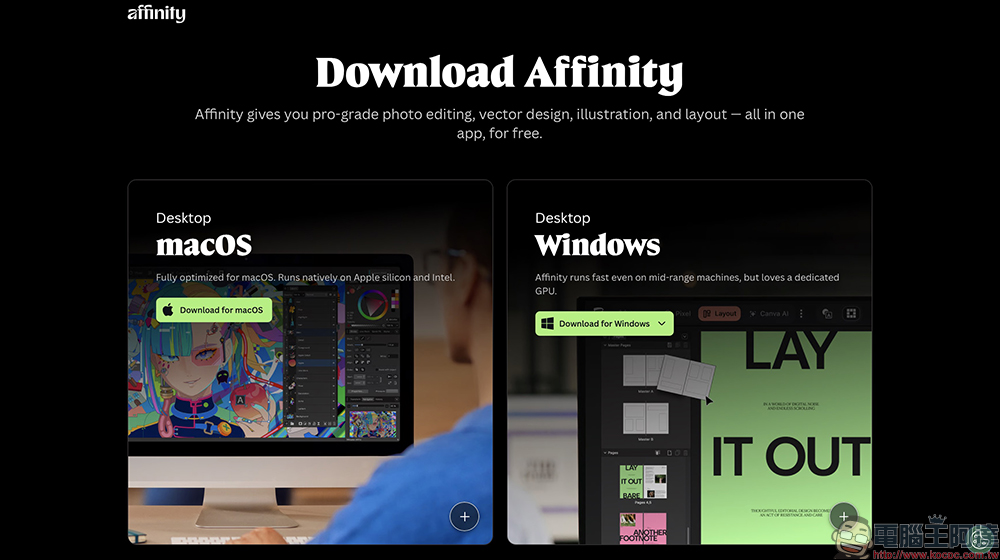
The new Affinity is now available for download on Windows and macOS, and it’s completely free.
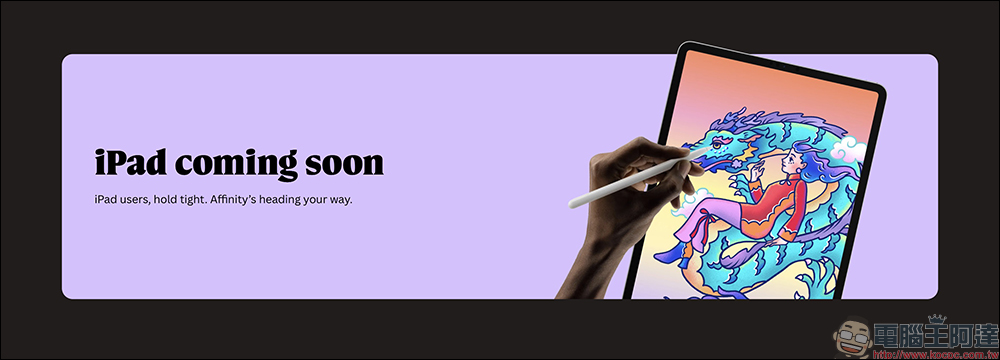
The official also announced that the iPad version will be launched soon.
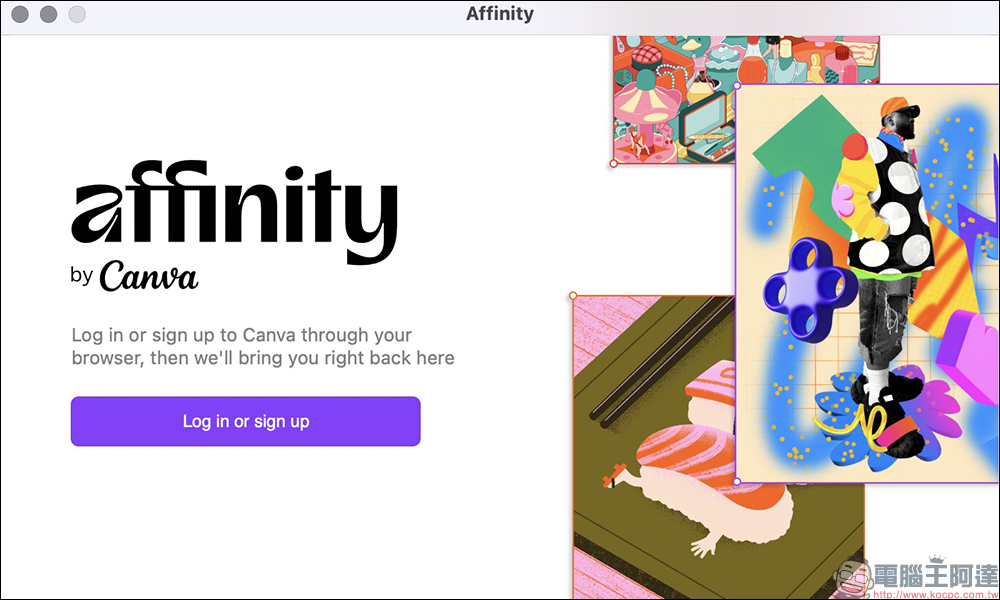
Just log in to your Canva account (or sign up for free) and you’ll have all the features up and running immediately.
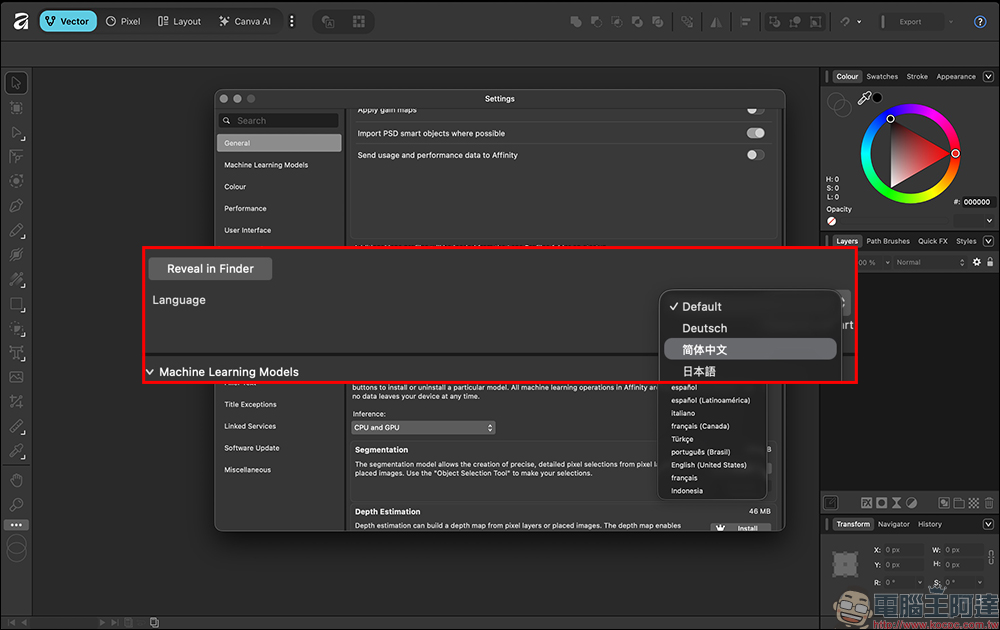
After turning on Affinity, the default language is English. To change it, click the menu in the upper left corner to find “Settings”:
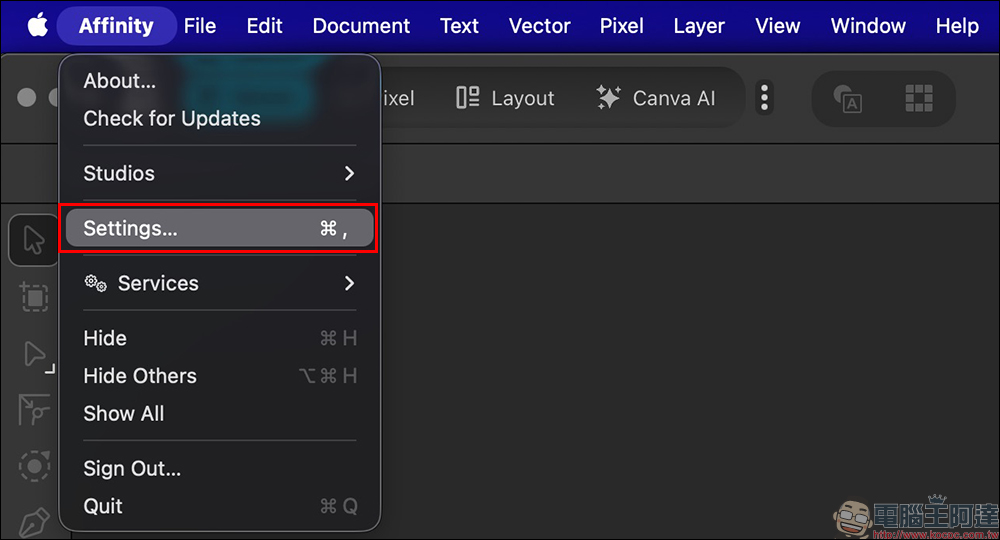
Then find Language under General. Currently, it supports Simplified Chinese and other languages. You need to re-enable Affinity after changing the language.
For the global creative community, this is not only a software update, but also a reversal of concepts: “The power of design should not be hijacked by price or subscription.” Canva hopes that with the new version of Affinity, “everyone can create their own wonderful works with professional-grade tools” and truly realize the era of creative freedom.
Affinity free download (official website)
Conclusion
The birth of Affinity symbolizes the freedom of professional creative tools. The transformation from a high-priced subscription system to completely free is not only an innovation in business strategy, but also responds to the long-term expectations of designers around the world: speed, stability, and freedom. The addition of Canva makes this ecosystem more complete. On one side is an entry-level platform for the general public, and on the other side is an in-depth stage for professional creators. The threshold of the future design industry may be completely rewritten due to this change.
Further reading:
Source: KOCPC Chinese