


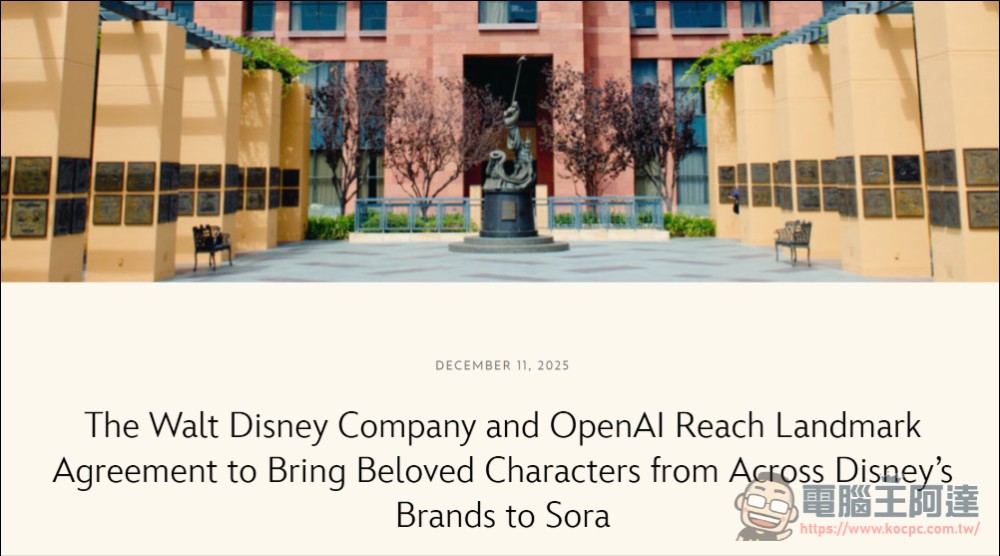
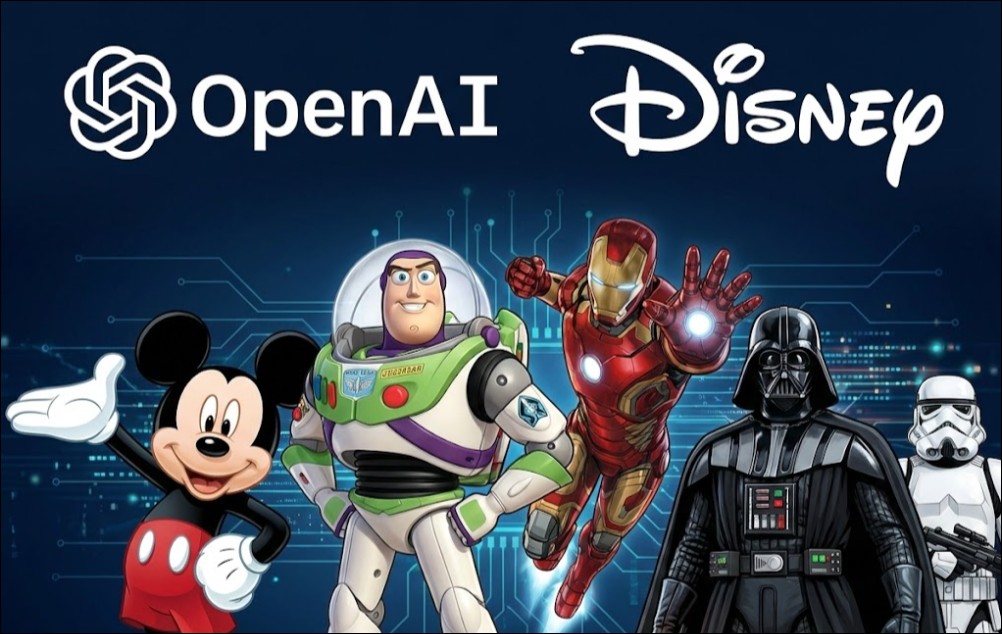
Owning the most famous IPs in the worldDisney(The Walt Disney Company) announced a landmark cooperation agreement with artificial intelligence giant OpenAI last night (the 11th) Taiwan time. This century-old entertainment empire will not only OpenAI Making a $1 billion equity investment, and also licensing its treasured IP vault, including Mickey Mouse, Marvel, and Star Wars characters, to OpenAI’s video generation model. Sora Use.
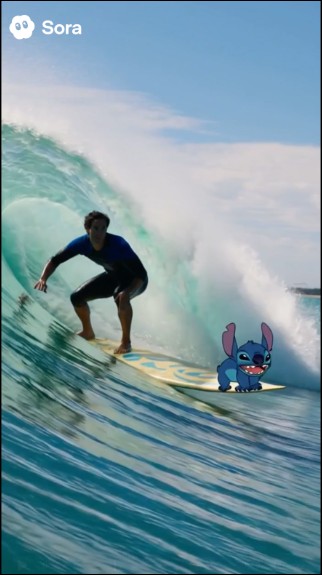
Sora will open up the use of Disney’s well-known IP to generate AI videos.
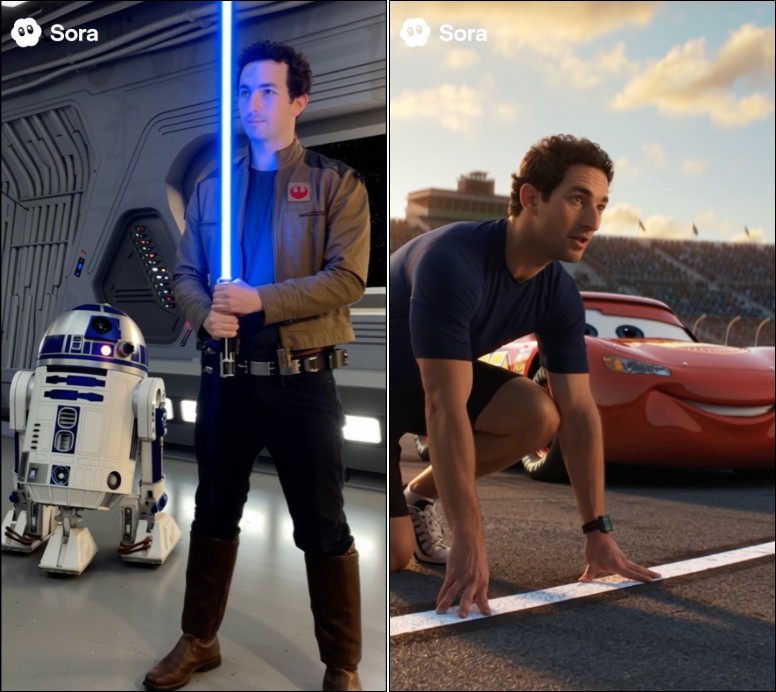
According to the joint statement released by both parties, this three-year licensing agreement will allow OpenAI’s Sora users to create content using more than 200 classic Disney characters. These characters span core brands including Disney Animation, Pixar, Marvel, and Star Wars. Starting in early 2026, Sora users will be able to generate short videos featuring characters such as Iron Man, Queen Elsa, Master Yoda, or Mickey Mouse through text prompts. The scope of the agreement extends beyond the characters themselves, also covering iconic costumes, props, vehicles, and scene environments (such as the town from *Encanto* or the interior of the Death Star from *Star Wars*).
However, this “marriage” is not without reservations. To protect the integrity of its live-action productions and the rights of actors, Disney has drawn a clear red line in the agreement: strictly prohibiting the use of any live-action actor’s likeness or voice. This means that while users can generate animated videos of “Iron Man,” they must never feature Robert Downey Jr.’s face or voice. Additionally, generated content will be subject to strict “brand safety” mechanisms to prevent inappropriate content or anything that could damage the characters’ image.
Disney CEO Bob Iger said in a statement: “The rapid advancement of artificial intelligence marks a significant moment for our industry. Through our partnership with OpenAI, we will use generative AI in a thoughtful and responsible way to extend our storytelling capabilities, while respecting and protecting creators and their work.”
Building an “officially certified” fan creation platform
One of the most striking innovations of this collaboration is Disney’s plan to bring high-quality fan content generated with Sora back onto its streaming platform, Disney+. Disney has stated that it will launch a dedicated section on Disney+ to showcase officially curated and reviewed fan-created videos. This move is widely seen as Disney’s bold foray into the creator economy. For years, the internet has been flooded with countless unauthorized Disney fan works, from TikTok to YouTube, and fan enthusiasm has proven impossible to fully suppress. Through this partnership, Disney is attempting to channel these scattered and legally ambiguous creative energies into a controlled, legitimate ecosystem that adds value to its platform.
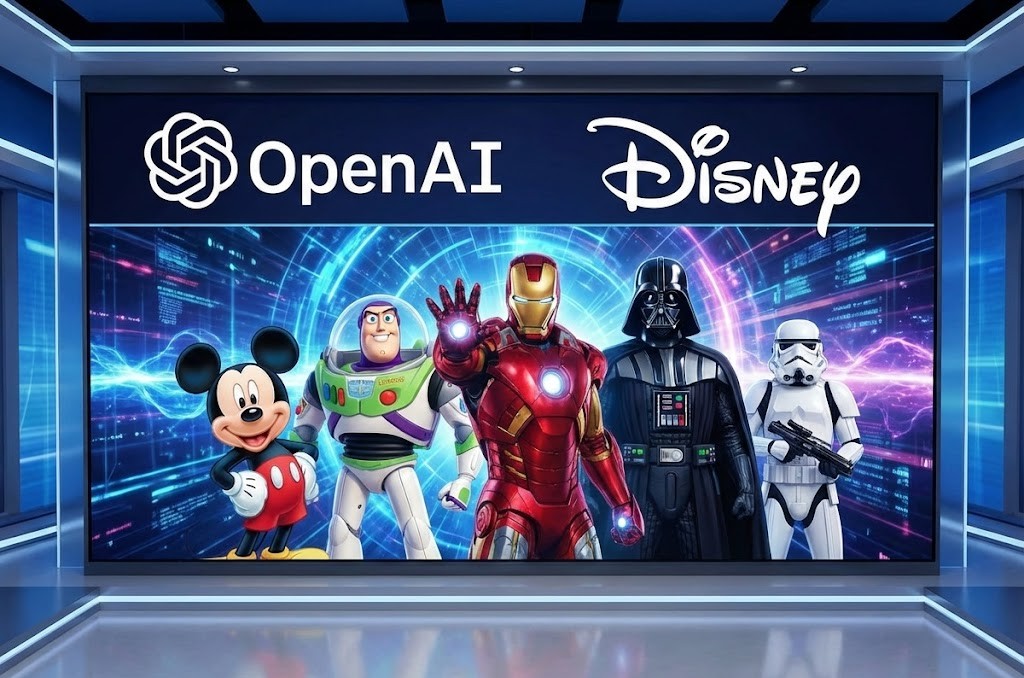
For OpenAI, this is unquestionably a massive victory. OpenAI CEO Sam Altman said excitedly: “Disney is the gold standard of storytelling in the world. This agreement demonstrates how AI companies and creative leaders can collaborate responsibly to drive innovation that benefits society.” Securing Disney’s endorsement and IP licensing not only resolves part of the controversy over the legality of Sora’s training data, but also gives it an insurmountable moat in competition against rivals like Google and Runway.
Carrot in one hand, stick in the other: Disney’s dual strategy
Notably, on the very same day Disney announced its partnership with OpenAI, the entertainment giant also sent a stern cease-and-desist letter to Google. According to reports, Disney alleges that Google’s AI video generation models (such as Veo 3) and image models (such as Nano Banana) have extensively used Disney’s copyrighted content for training without authorization, and demands that Google immediately cease such activities.
Analysts noted that Disney’s choice of OpenAI over Google may be based on two considerations: first, Sora still holds a leading position in video generation quality and realism; second, through an equity investment in OpenAI, Disney is not just a customer but also a shareholder, giving it more say in future technological development and rule-setting.
Anxiety and Turning Point in the Creative Industries
Despite senior executives’ enthusiasm for the partnership, the deal has elicited mixed reactions within Hollywood’s creative community. For many screenwriters, animators, and visual effects artists, the powerful capabilities of AI video generation tools like Sora have always carried the fear of being replaced. Disney emphasized that it will deeply integrate OpenAI’s API into its internal production workflows to help employees develop new products and experiences. While this signals greater efficiency, it also hints at a dramatic transformation of traditional film and television production processes. Disney has pledged to “respect creators’ rights,” but how to safeguard the value and income of human creators in a future where AI-generated content (AIGC) becomes widespread remains a key focus for unions and the industry.
Additionally, concerns about “AI Slop” are growing louder. Critics argue that opening up classic characters like Mickey Mouse to the public for video generation, even with review mechanisms in place, could still lead to a flood of low-quality, repetitive content that dilutes the brand quality Disney has carefully cultivated for a century. How to strike a balance between “open creation” and “quality control” will be the biggest challenge for Disney and OpenAI over the next three years.
Source: KOCPC Chinese