


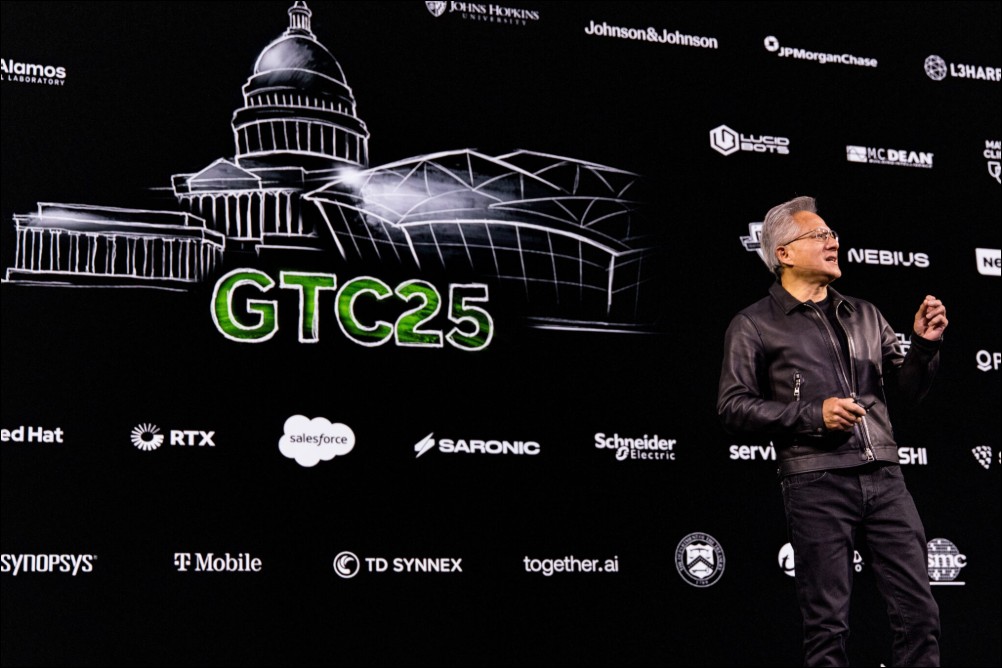
At the GTC (GPU Technology Conference) held the day before yesterday at the Walter E. Washington Convention Center in Washington, D.C., NVIDIA founder and CEO Jensen Huang delivered his annual keynote, covering topics from large-scale GPU deployment and quantum breakthroughs to secure government AI factories, robotics, and autonomous driving, and announced the next AI backbone and future for the United States.
For this Washington GTC conference keynote, we also provided a full bilingual Chinese-English translation. If you’re interested, you can check it out directly:
Full Analysis of Jensen Huang’s GTC Keynote: AI and GPUs Will Drive American Technology to Greatness Again
Over the past few decades, the performance gains of central processing units (CPUs) have been as precise as clockwork, but with the collapse of Dennard Scaling and the slowing of Moore’s Law, traditional architectures can no longer meet the enormous computing demands of science and industry. NVIDIA’s answer is accelerated computing.
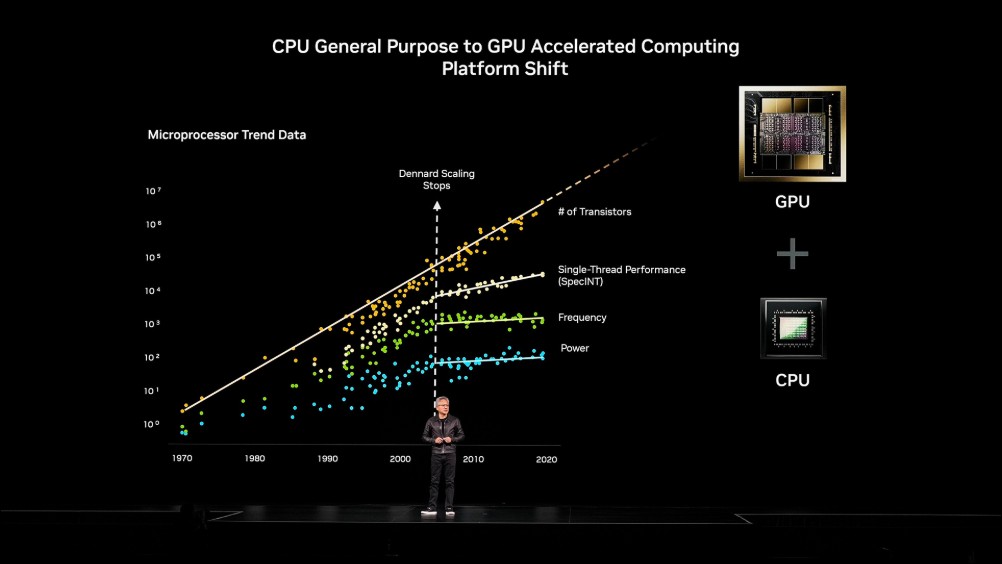
“We invented this computing model because general-purpose computers couldn’t solve certain problems,” Jensen Huang recalled. “If we could add a processor that excels at parallel processing alongside the CPU, we could push computing performance to new heights.”
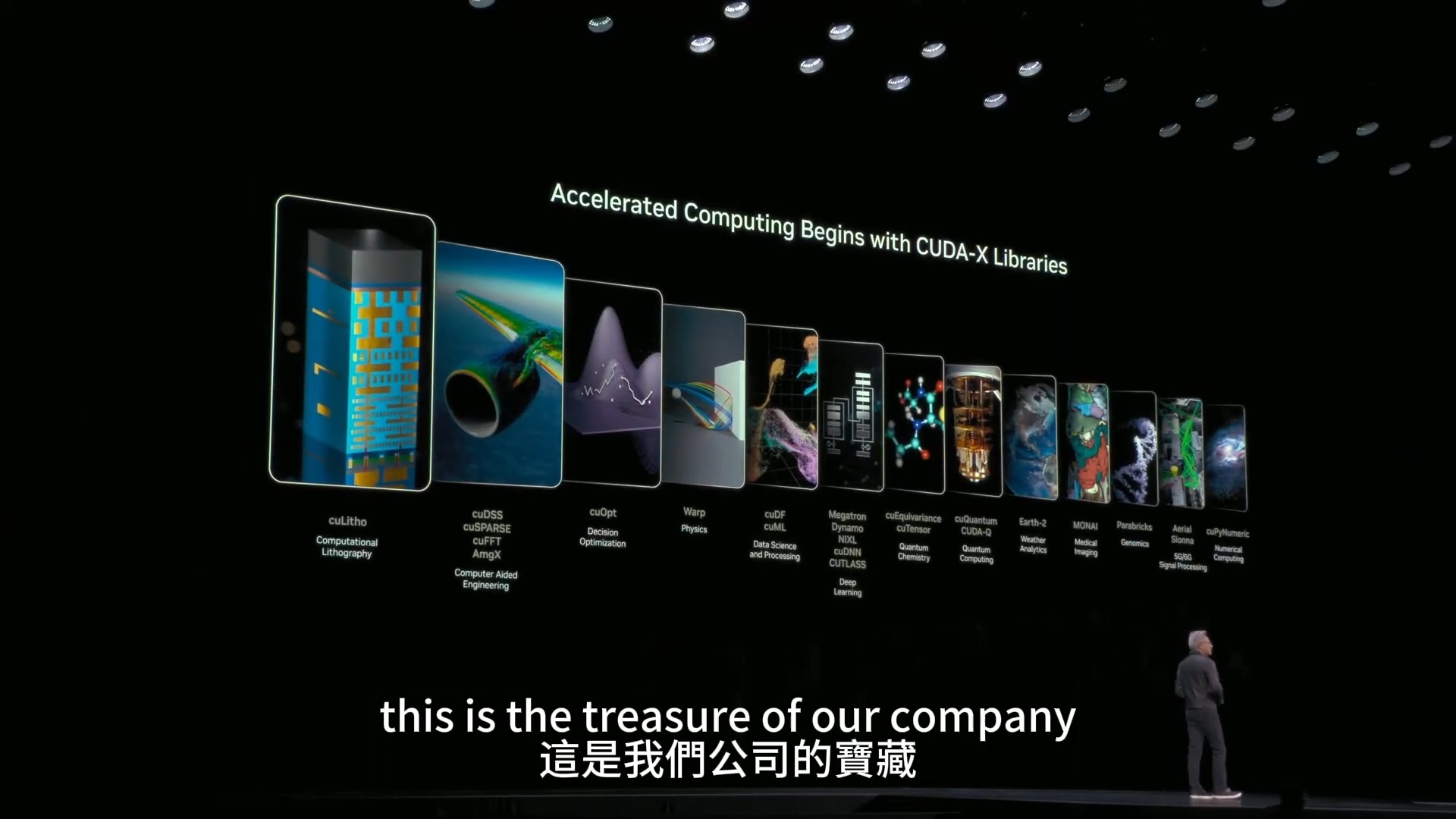
The core of this new model is CUDA-X platform—covering deep learning (cuDNN, TensorRT-LLM), data science (RAPIDS), optimization decision (cuOpt), semiconductor optical simulation (cuLitho), and even extending to quantum and hybrid quantum computing (CUDA-Q, cuQuantum). Jensen Huang described: “This is our company’s treasure.”
AI-Native 6G: Restoring America’s Telecommunications Dominance
Next, Jensen Huang turned to a national-level issue: communications. “Communications are the lifeblood of the economy and the foundation of national security,” he warned, “but today the global wireless infrastructure relies heavily on foreign technology, and this must change.”
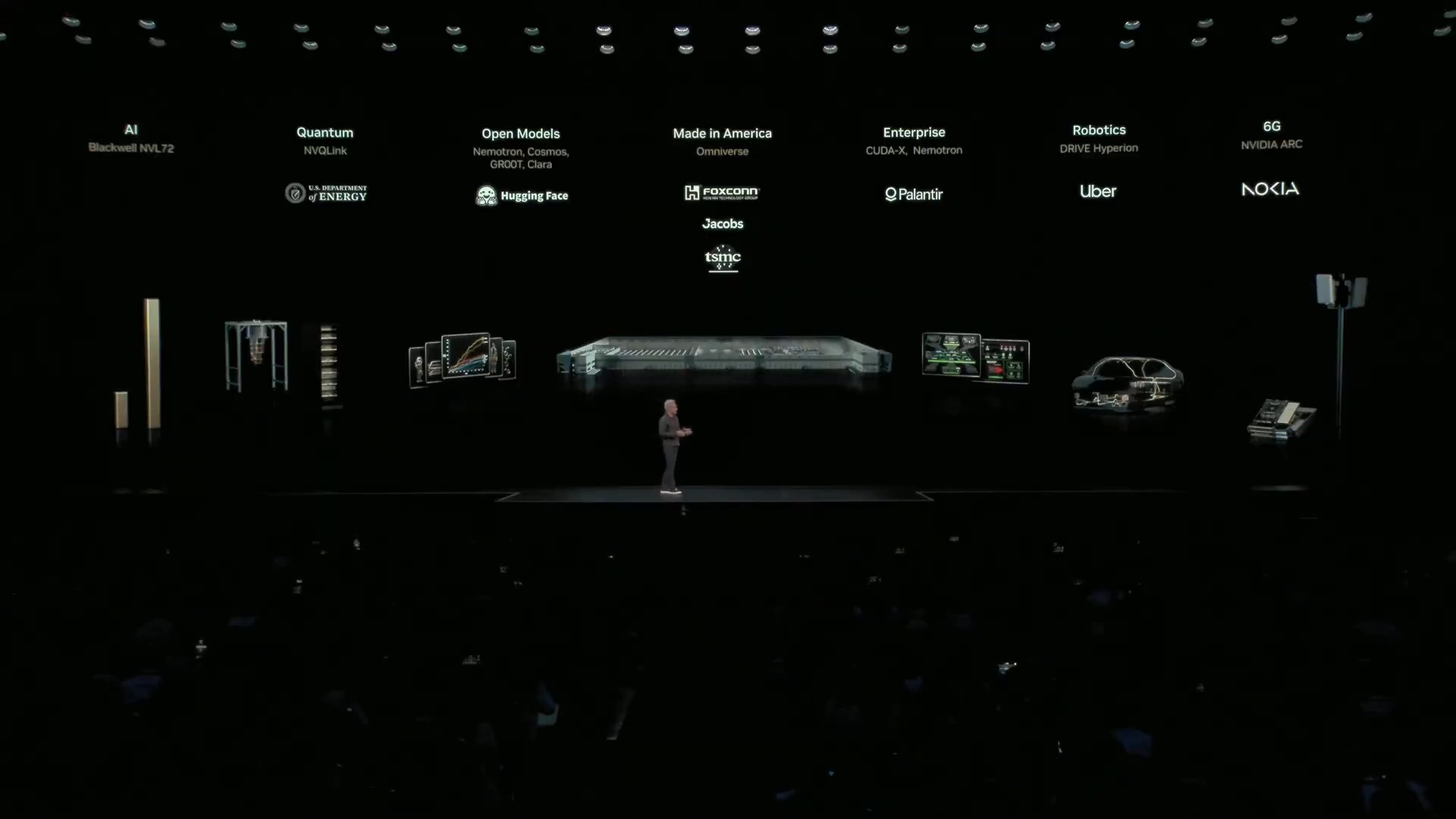
To this end, NVIDIA introduces AI-centric US-native 6G wireless stack:NVIDIA ARCBuilt on the Aerial platform, driven by accelerated computing technology, and announcing Nokia cooperation, integrating ARC technology into future base stations.
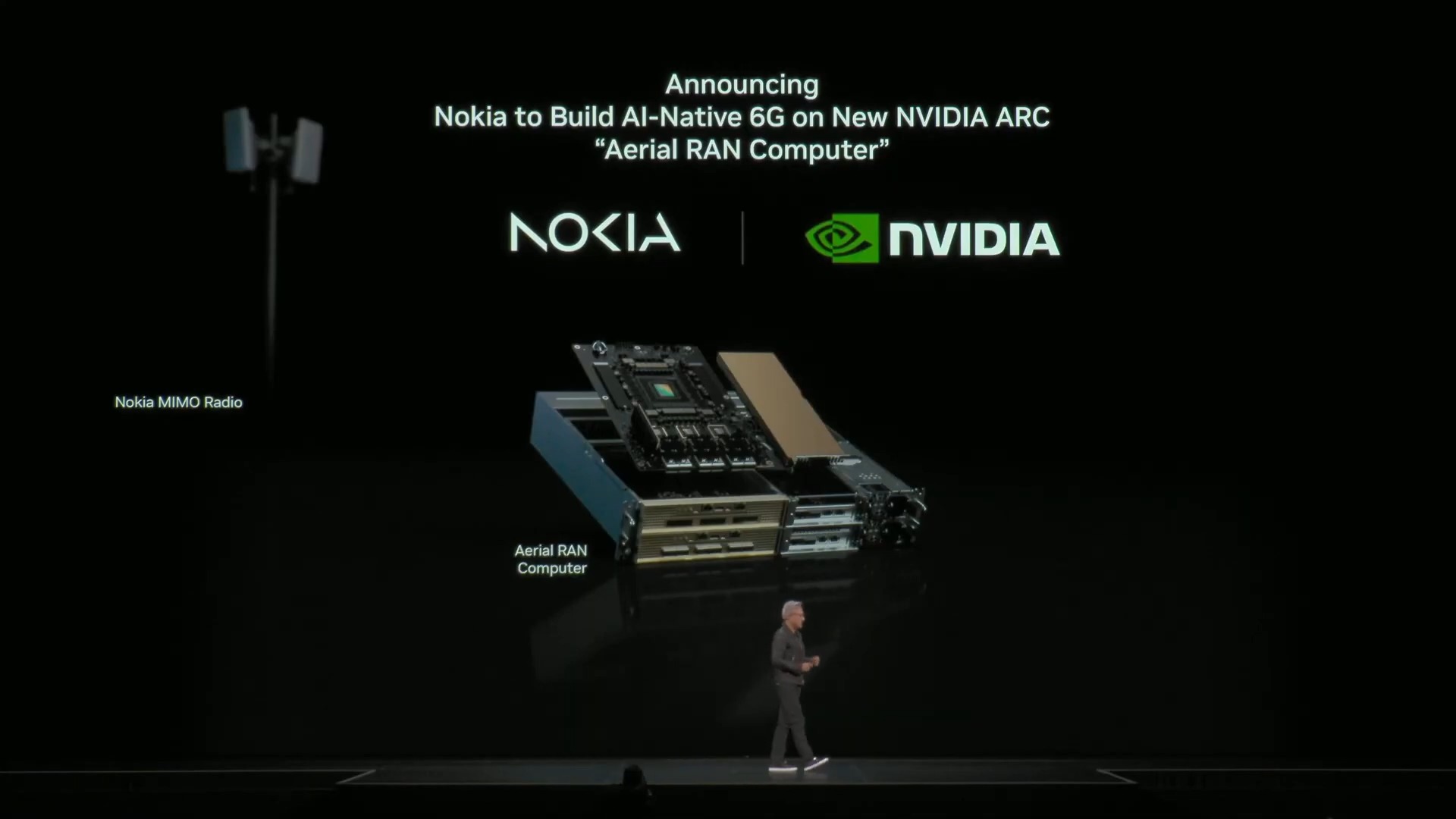
“It’s time for America to get back in the game,” he emphasized. This is not just a business move—it’s a redefinition of technological sovereignty.
Bridge of the Quantum Era: NVQLink
Jensen Huang cited physicist Richard Feynman’s vision: a quantum computer that can directly simulate nature’s operations. Today, stable logical qubits with error correction capabilities have been born, but they are extremely fragile and urgently require new technologies for real-time error correction and reasoning.
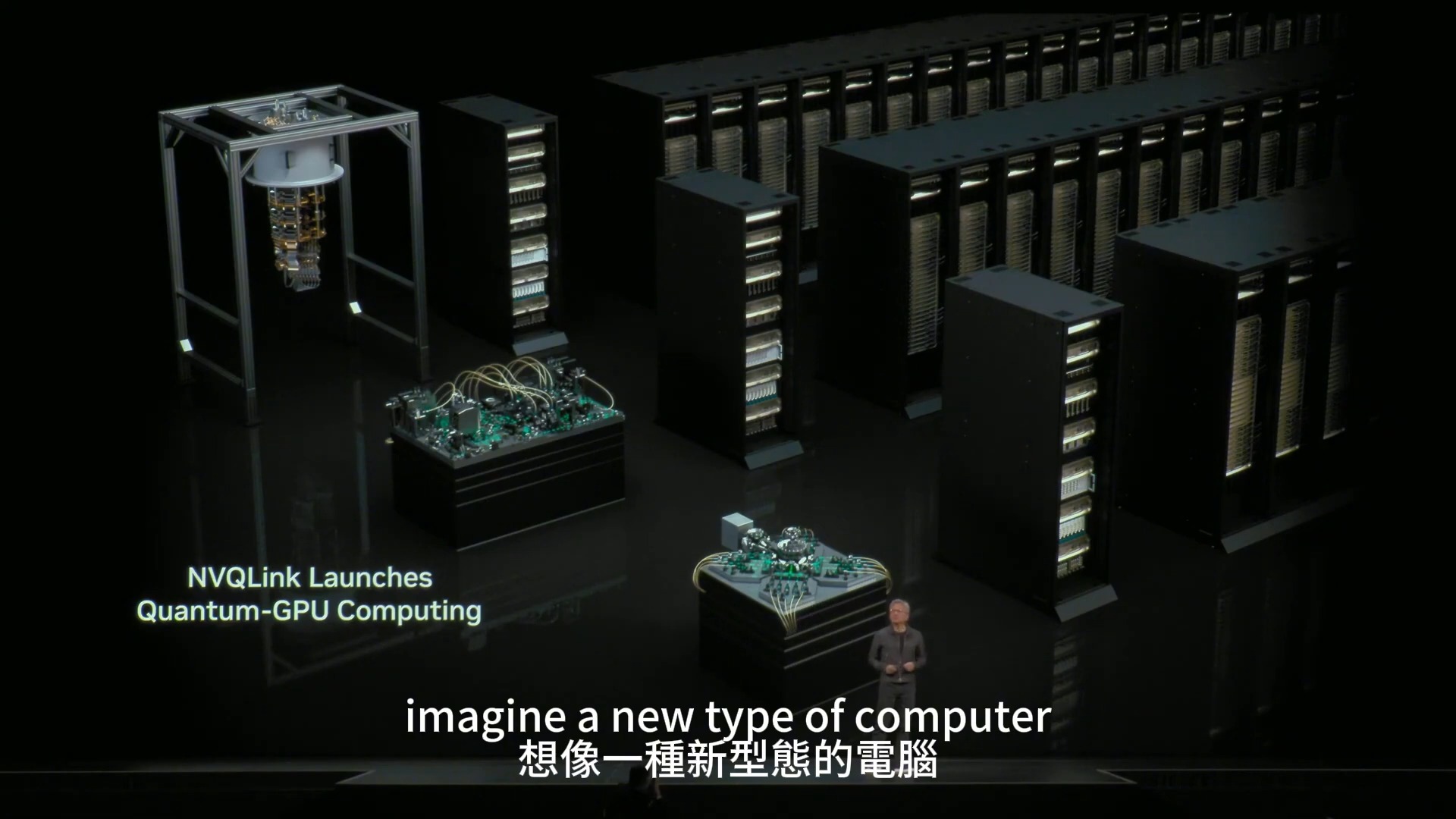
To that end, NVIDIA introduced NVQLinkThis is a quantum-GPU interconnect technology that enables quantum processors (QPUs) to make CUDA-Q calls with latency as low as four microseconds. It is the first bridge connecting quantum and traditional computing.
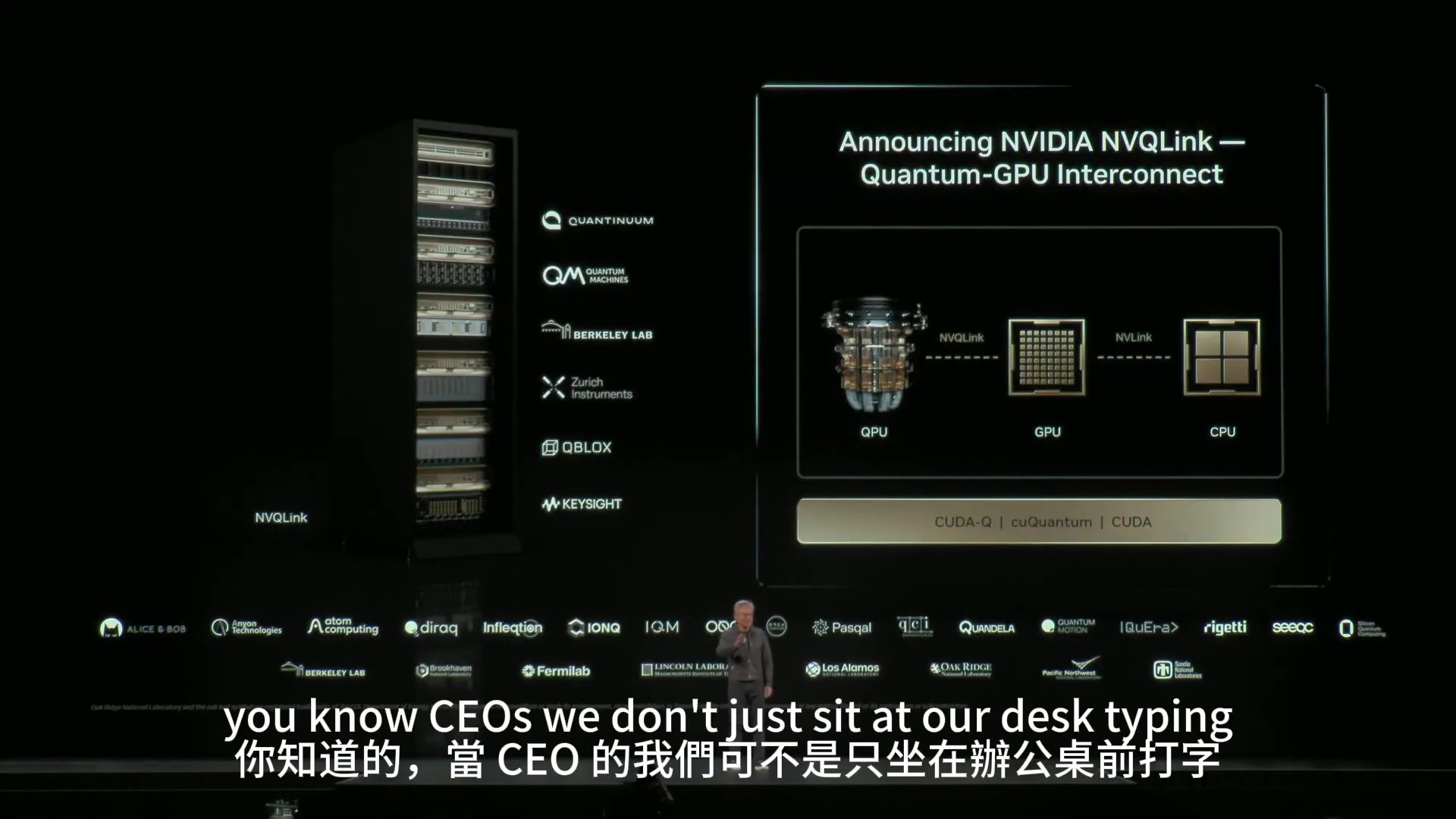
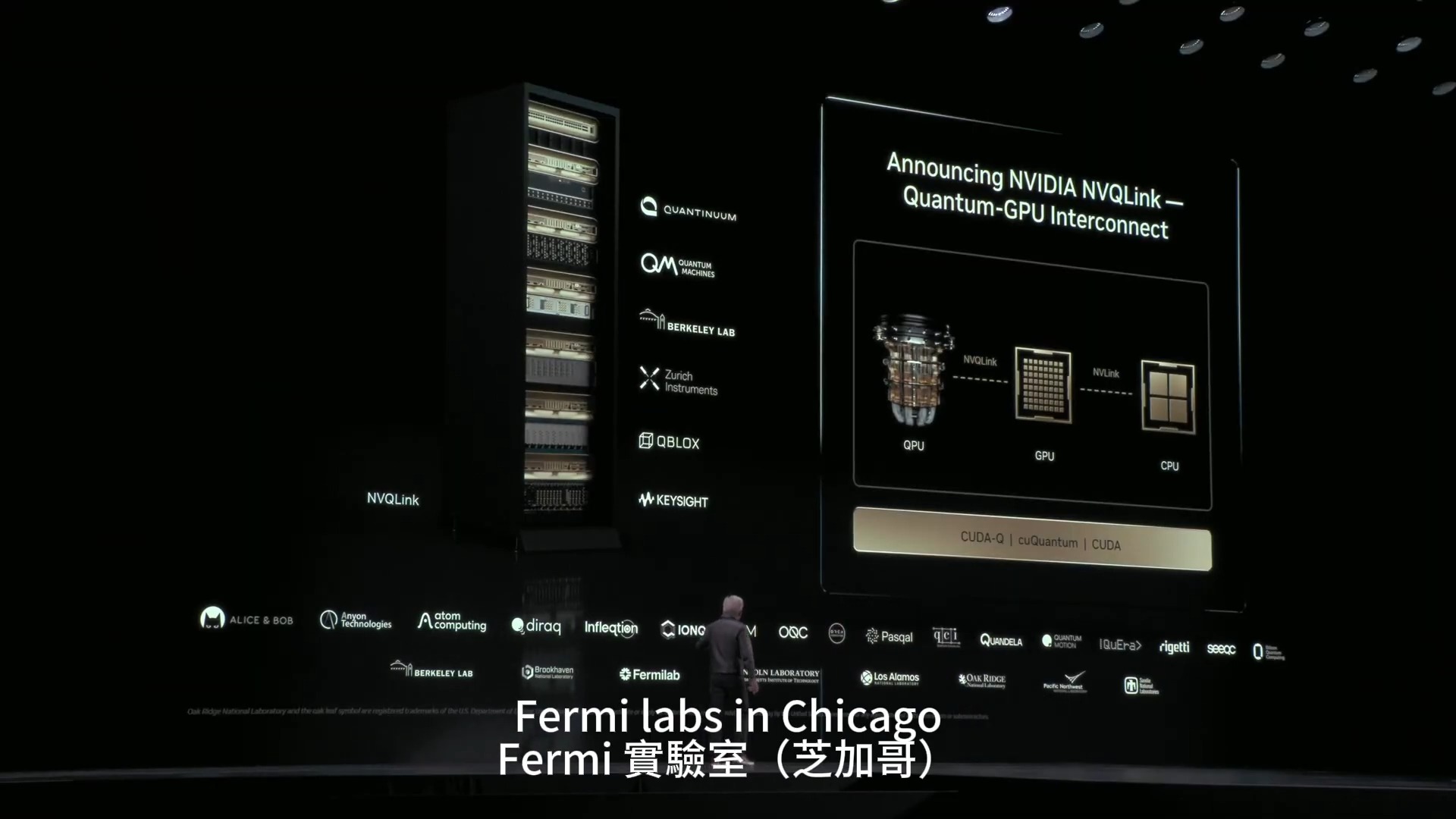
Currently, seventeen quantum research partners and multiple laboratories under the U.S. Department of Energy (DOE) have collaborated with NVIDIA to advance the next step in quantum science. “This is the beginning of the symbiosis between quantum and AI,” said Jensen Huang.
AI Supercomputers: Driving the Next Acceleration of American Science
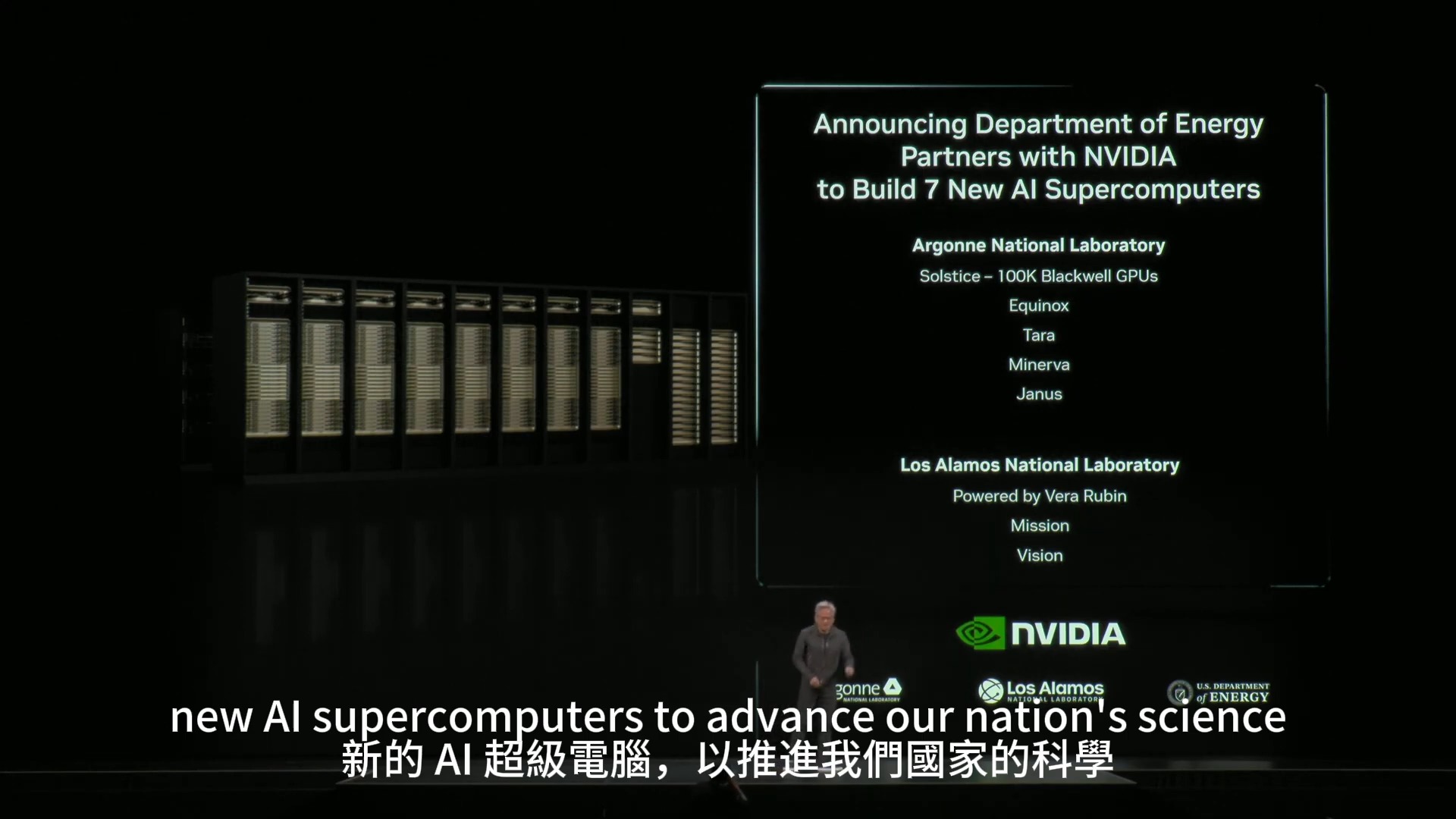
Jensen Huang announced that the U.S. Department of Energy will collaborate with NVIDIA and Oracle to build the largest AI supercomputer in history at Argonne National Laboratory:Solstice system。
This system will be deployed. 100,000 NVIDIA Blackwell GPUs, becoming the world’s largest and most advanced “agentic AI” scientific platform. At the same time, another one named Equinox The system will be equipped with 10,000 GPUs, delivering up to 2,200 exaflops of AI computing performance for energy, defense, and open scientific research.
AI Factory: The Shift from Tools to “Workforce”
“AI is not a tool. AI is the job.” Jensen Huang hit the nail on the head.
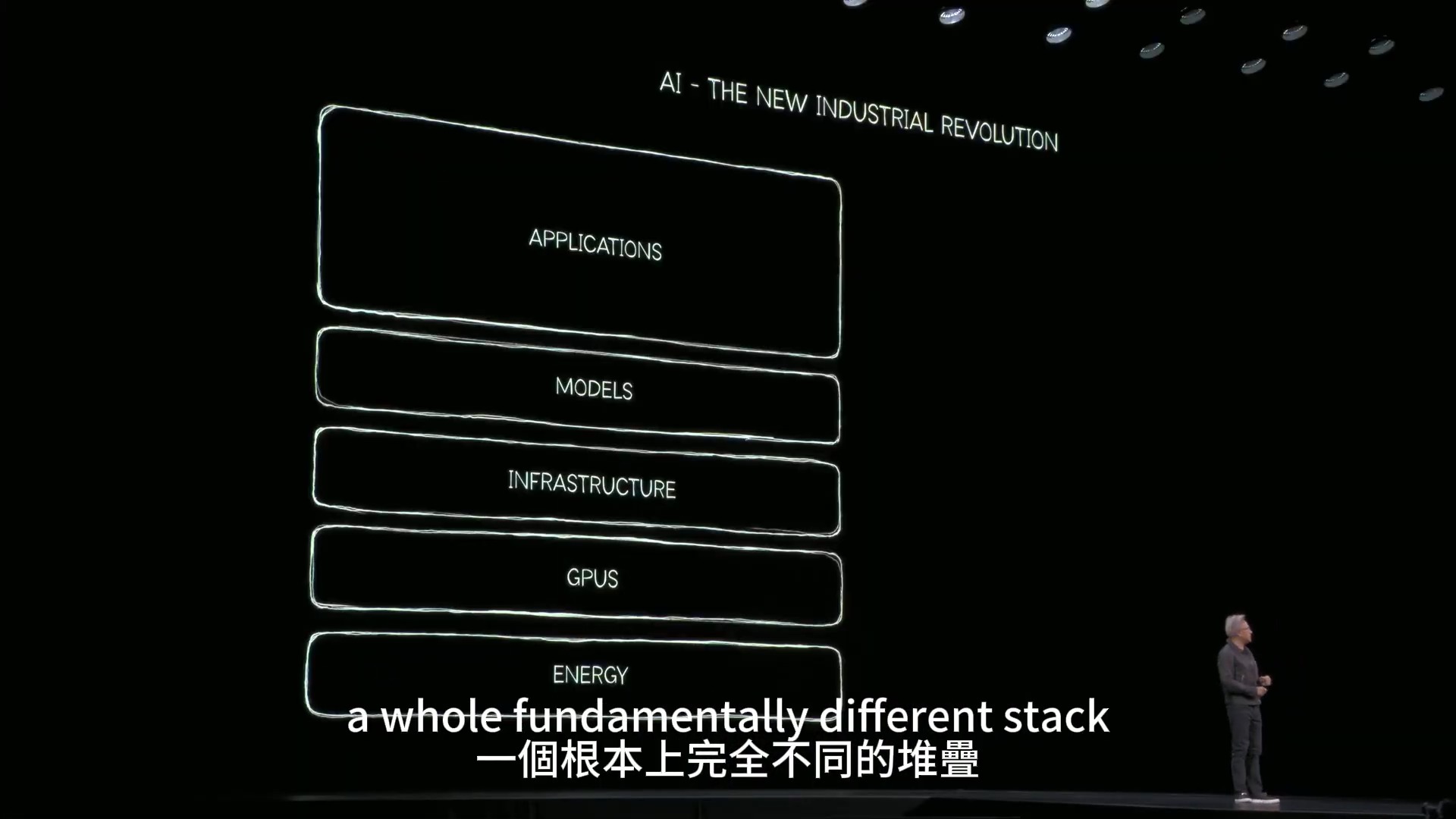
He pointed out that an AI Factory is not just a data center, but a production facility that can generate, transmit, and provide “intelligence.” These facilities leverage “Extreme Codesign” to integrate co-innovation across chips, systems, software, and models, enabling the entire computing stack to evolve in sync.
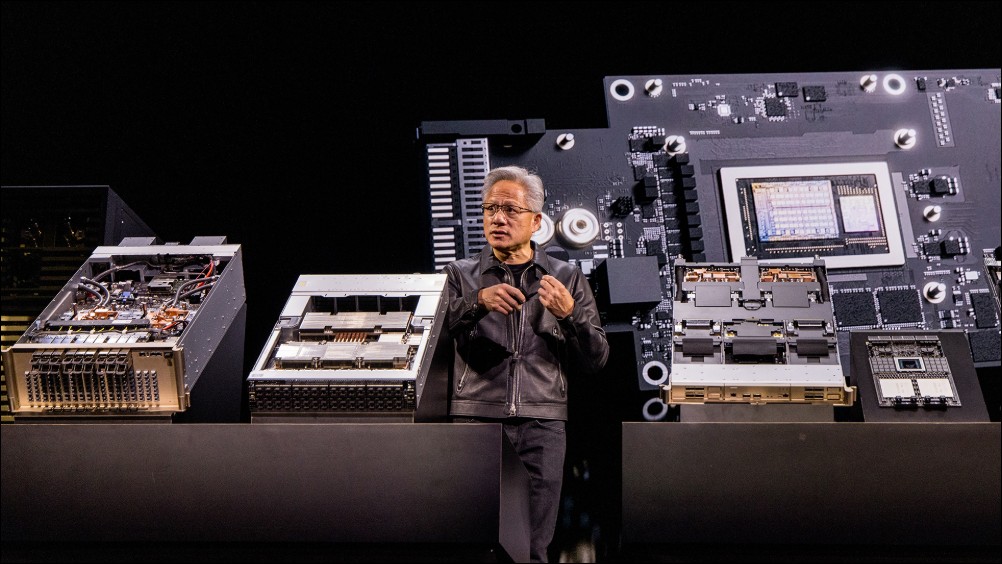
NVIDIA’s announcement BlueField-4 DPU This is a concrete embodiment of this concept: featuring a 64-core Grace CPU and ConnectX-9 network architecture, it delivers six times the computing power of the previous generation.
Additionally, NVIDIA launched Omniverse DSX, as a blueprint for building and operating “hundred-megawatt-class” AI factories.
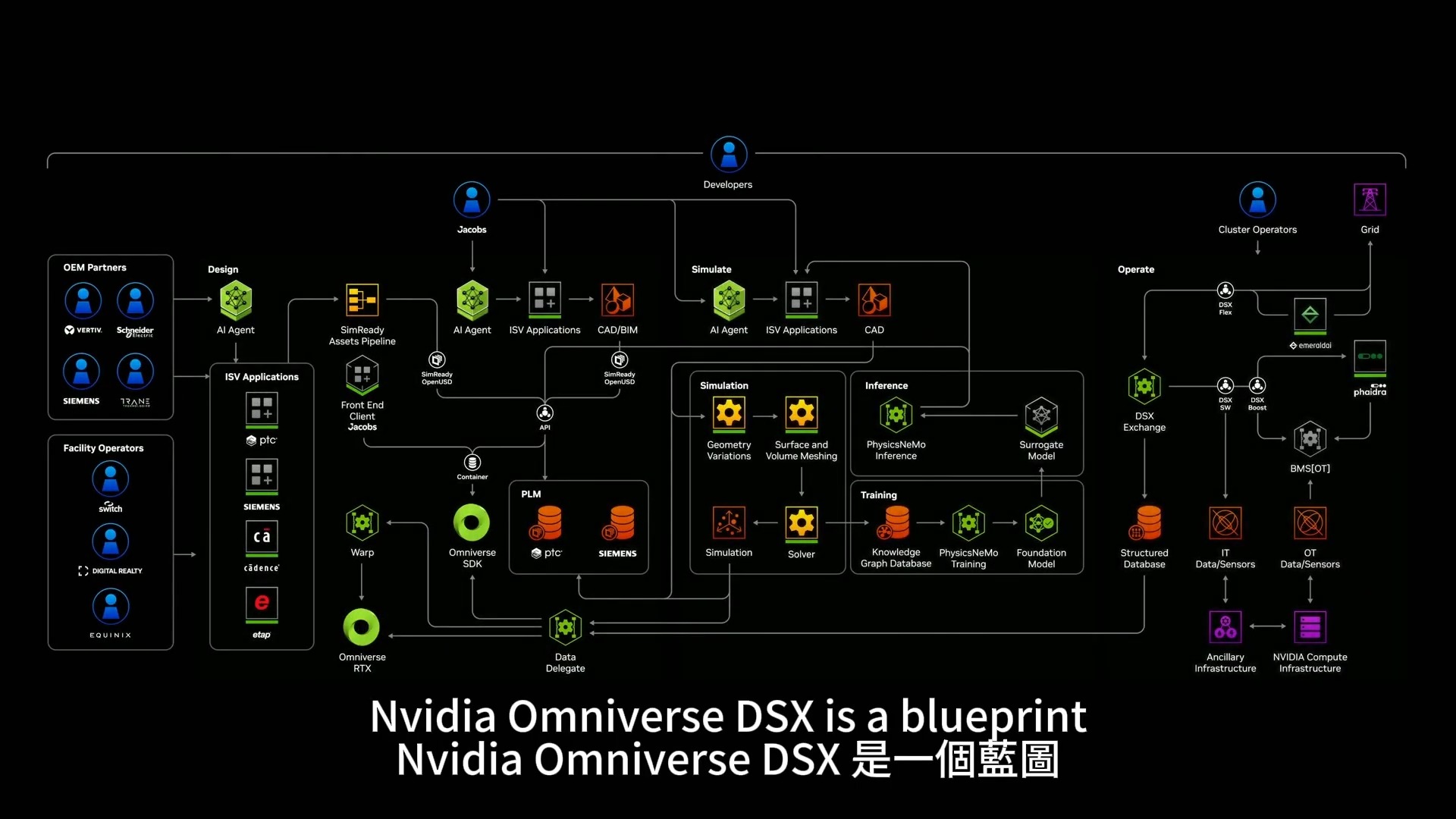
It contains:
-
DSX Flex: Supports dynamic grid collaboration;
-
DSX BoostOptimize performance per watt;
-
DSX Exchange: Unified IT/OT system integration.
“AI infrastructure is an ecosystem-level challenge,” said Jensen Huang. “Omniverse DSX will enable global partners to build AI factories at unprecedented speed.”
Open Models and Data: Driving Global Innovation
NVIDIA regards open-source code and models as the core of AI innovation. This year, the company has released hundreds of open models and datasets covering multiple domains:
-
NemotronAgentic and Reasoning AI Models;
-
CosmosGenerating synthetic data and physical AI;
-
Isaac GR00TRobot skill and generalization learning;
-
ClaraBiomedical workflow and image analysis.
Huang Jen-Hsun emphasized: “Openness is crucial for researchers, startups, and enterprises, because science needs it, and innovation needs it.” Another round of applause broke out in the audience.
He also announced partnerships with several major companies, including: Google、Microsoft Azure、Oracle、ServiceNow、SAP、Synopsys、Cadence、CrowdStrike and, with, to give Palantir。
Especially CrowdStrike, will leverage NVIDIA’s Nemotron Model And NeMo tool, achieving “light-speed cybersecurity defense.” Palantir will also integrate CUDA-X and Nemotron models, enabling its Ontology platform to process data at greater scale and higher speed.
Jensen Huang showed a video, emphasizing that “physical AI” is driving the reindustrialization of the United States, combining robots and intelligent systems to reshape manufacturing, logistics, and infrastructure. “The factory itself is a giant robot that commands other robots,” he described, “and such complexity would be almost impossible to achieve without Digital Twin simulation.”
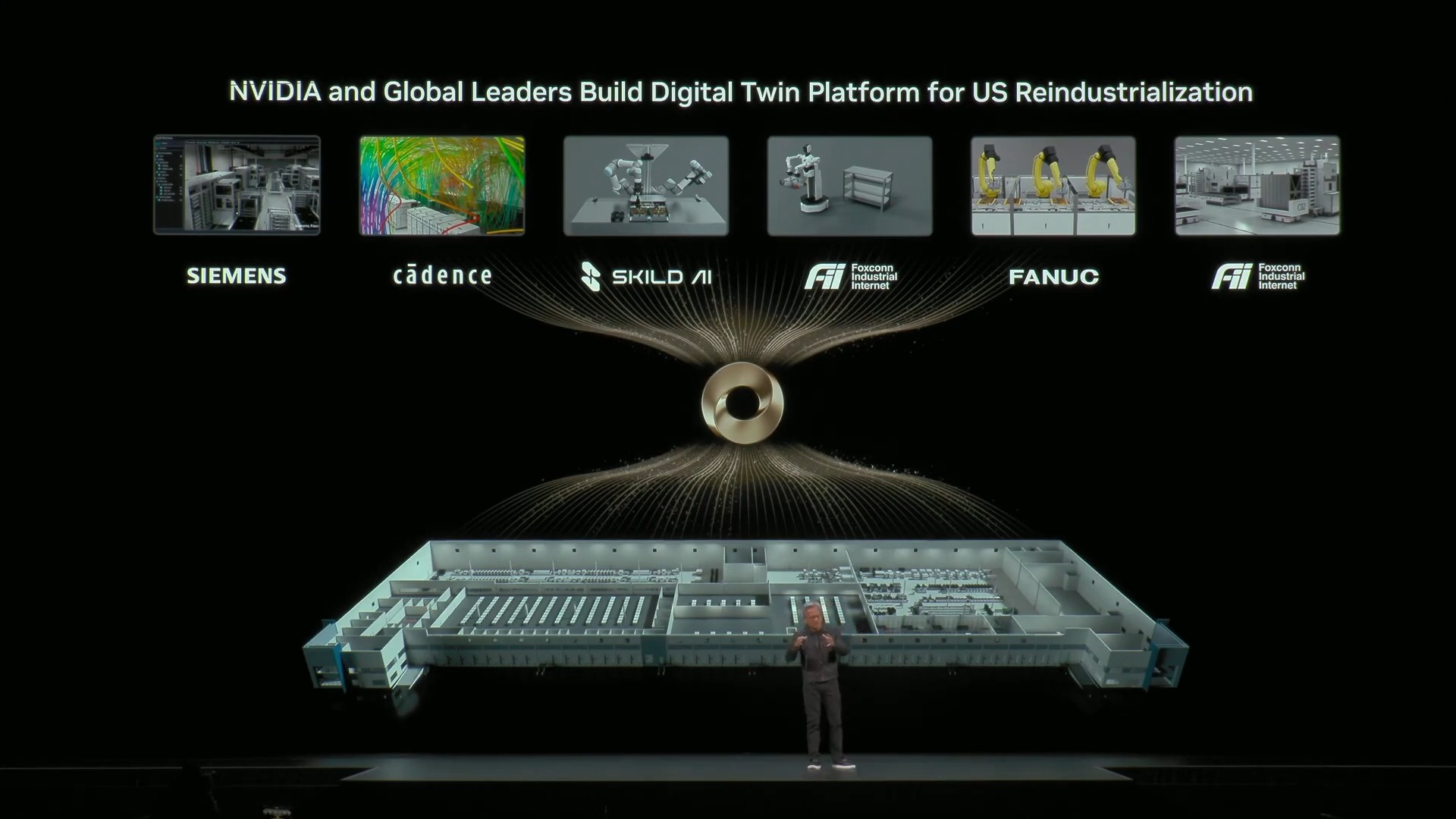
He mentioned including Hon Hai (Foxconn) Using Omniverse tools to build a new AI equipment factory in Houston.Caterpillar Introducing digital twin manufacturing technology,Figure AI Building a home humanoid robot (valued at nearly $4 billion),Johnson & Johnson and Disney are respectively applied to medical and entertainment robot training: the latter was jokingly called by Jensen Huang “the cutest robot in history.”
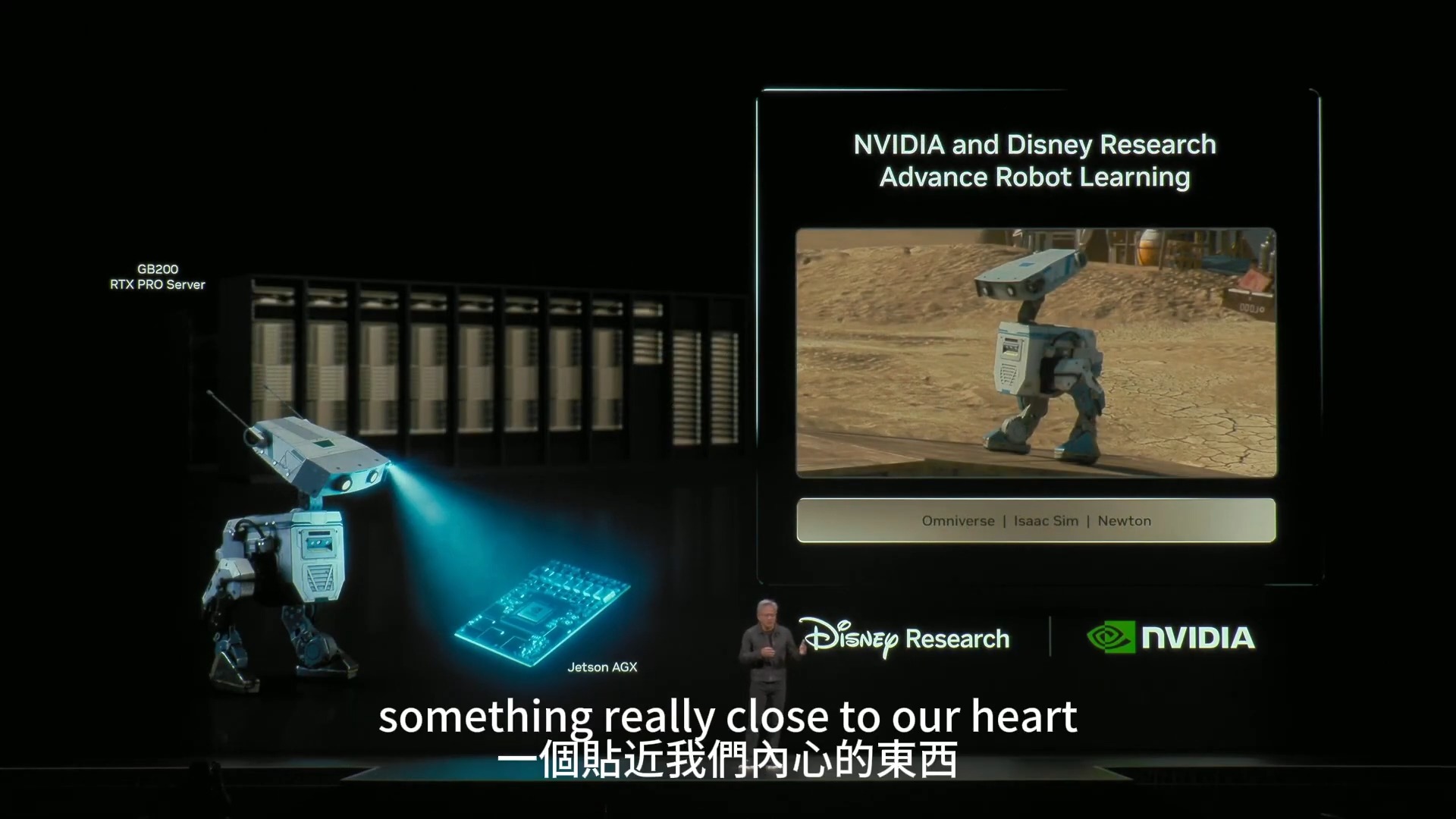
In addition to large-scale projects, NVIDIA also showcased an open-source project:Newton, jointly developed by NVIDIA, Google DeepMind, and Disney Research, and managed by the Linux Foundation.
Newton is an extensible physics simulation engine that enables robots to learn real physical interactions in a virtual world. It integrates NVIDIA Warp and OpenUSD, compatible with platforms such as MuJoCo Playground and NVIDIA Isaac Lab.
Newton supports multiple simulation solvers:
-
Cloth simulator: : Training robots to handle flexible objects, such as folding clothes;
-
Granular material solverLet robots learn to operate on sandy soil or loose ground;
-
Rigid body simulatorSimulate mechanical structures and coordinated movements, such as picking up a cup of water on sandy ground.
The emergence of this technology signifies that AI is no longer just learning language and images, but has also begun to “learn” to understand the physical rules of the world.
Partnering with UBER to build an autonomous driving platform
Autonomous driving was the climax of Jensen Huang’s speech. He announced that Uber and NVIDIA They will jointly build autonomous driving infrastructure, with scaled deployment expected to begin in 2027, targeting the construction of approximately 100,000 autonomous vehicles。
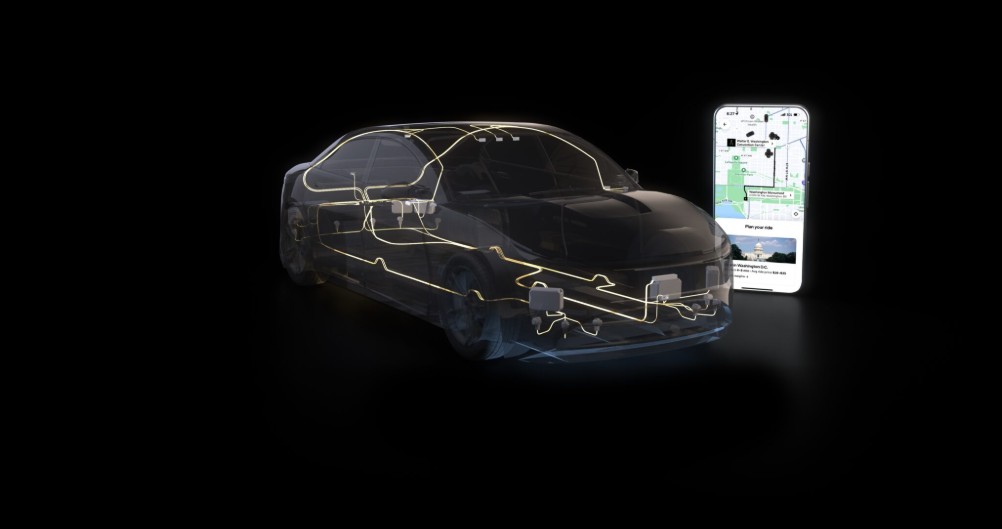
The core supporting this plan is DRIVE AGX Hyperion 10 Platform: A software-defined architecture for Level-4 autonomous driving that enables human driving and machine driving to coexist on the same network.
Currently Lucid, Mercedes-Benz, and Stellantis All have adopted the Hyperion platform.
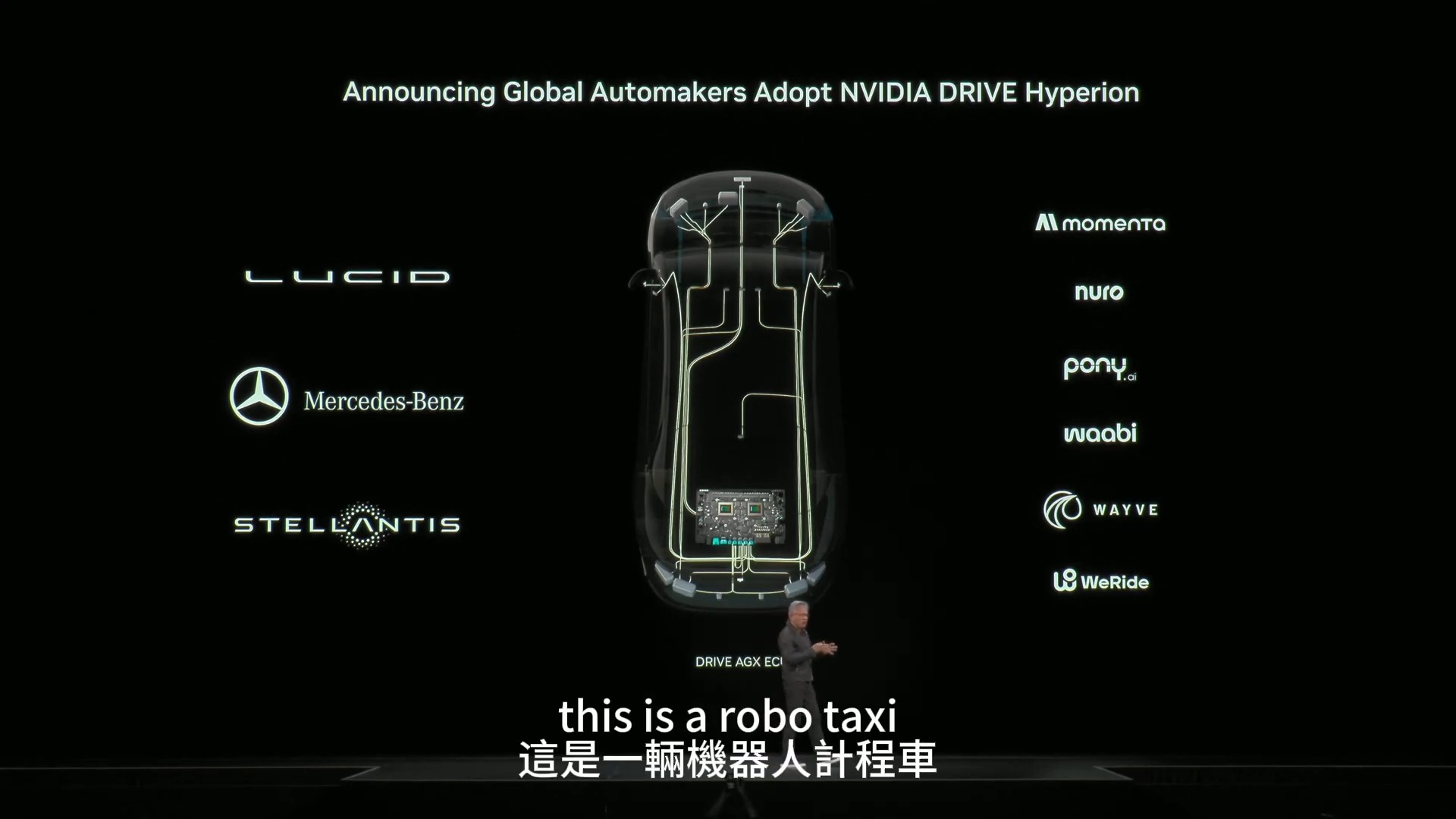
Jensen Huang said: “In the future, you’ll be able to summon these autonomous vehicles at any time. Hyperion’s ecosystem will span the globe.”
Jensen Huang ended his hours-long keynote amid applause, his tone brimming with confidence: “The era of AI has begun. Blackwell is its engine, built for America, born for the world.”
Source: KOCPC Chinese