


Sony was also sued for reciprocal tariffs, following Nintendo’s lawsuit for similar reasons in April this year.After a class action lawsuit from players, PlayStation 5 buyers also launched a class action lawsuit against Sony Interactive Entertainment, accusing the Japanese gaming giant of charging consumers the price increase premium during the tariff period and applying for a tariff refund from the government after the U.S. federal government initiated a refund process due to IEEPA tariff violations, which is tantamount to a “double recovery windfall.” This case was formally submitted to the U.S. District Court for the Northern District of California on May 6, 2026, with case number Walker et al v. Sony Interactive Entertainment LLC. This lawsuit is not only one of the chain effects caused by the Trump-era tariff policies for U.S. game companies, but may also become an important precedent affecting future international trade and consumer rights.
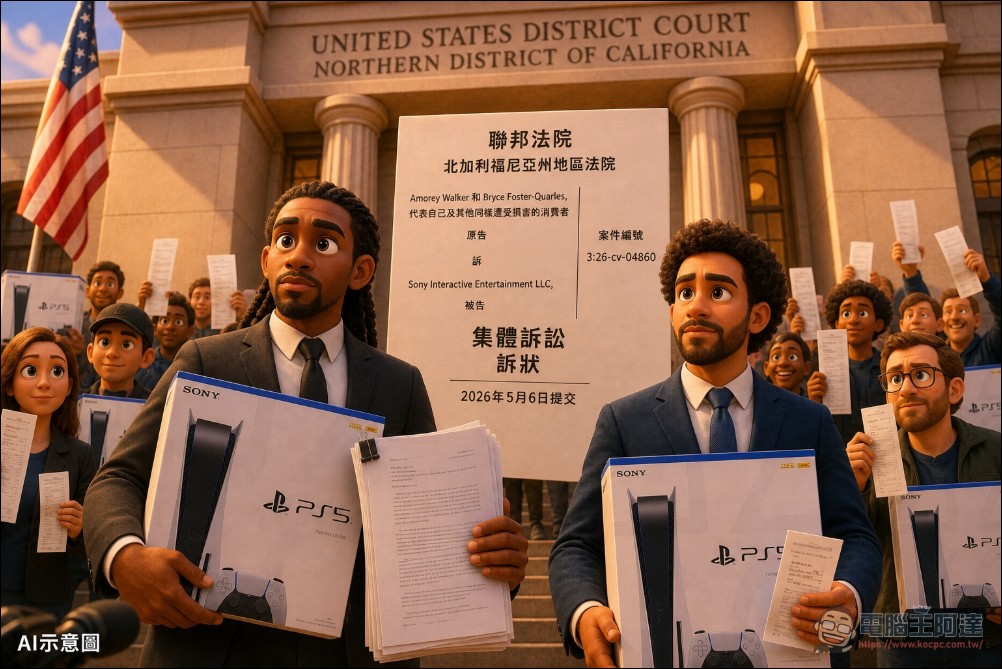
Case details: Sony accused of obtaining “double benefits”
according toforeign news reports, the two lead plaintiffs, Amorey Walker and Bryce Foster-Quarles, represent all U.S. consumers who purchased PlayStation consoles after August 1, 2025, accusing Sony of using illegal tariffs as an excuse to increase prices and completely pass on import costs to end consumers. Now that the U.S. Supreme Court has ruled that IEEPA tariffs are illegal, the U.S. Customs and Border Protection (CBP) has also set up a tariff refund website to assist importers in applying for refunds. Sony has no plans to return this refund to consumers.
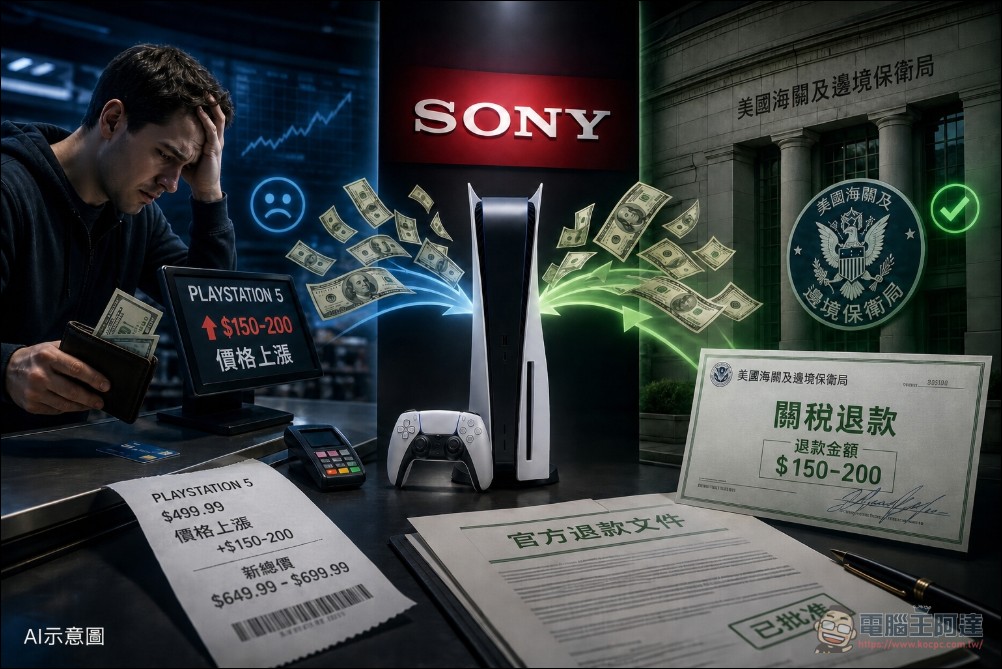
The plaintiff clearly stated in the complaint:
「若法院不予制止,Sony 將得以就同一筆關稅獲得兩次補償,一次來自透過更高售價向消費者收取的溢價,另一次來自聯邦政府的關稅退款,包括政府為這些退款支付的利息。」
In other words, consumers are paying twice for Sony’s tariff costs at the same time: one is the price of the PS5 console after the price increase, and the other is the government tax rebate Sony received. This tax rebate should belong to consumers who originally bore the cost of the price increase.
PS5 price increase timeline: From August to April, the increase is staggering
The lawsuit documents detail the price changes of the PS5 during the tariff period, and the data shows that the increase is quite significant:
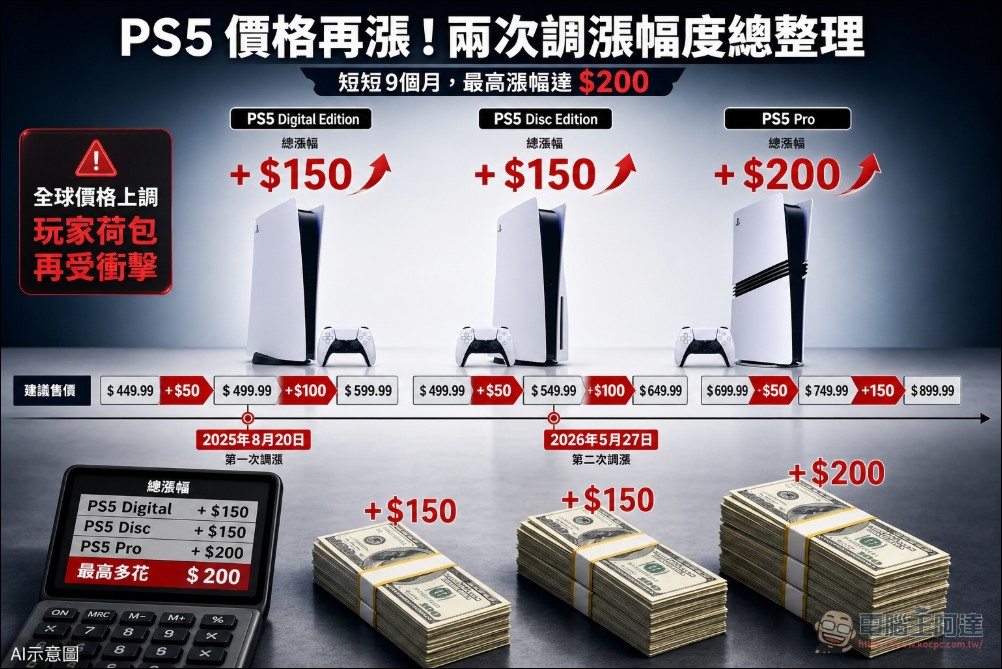
- August 20, 2025: Sony announced for the first time that the price of the entire PS5 series would increase by US$50 in the United States. Officials at the time explained the adjustment on the grounds of “challenging economic environment” and “increased manufacturing costs.” However, the industry generally believed that Trump’s IEEPA tariffs were the main reason.
- May 27, 2026:Sony raises PS5 price again, the second wave of increases is even greater
From August 21, 2025 to April 2, 2026:
- PS5 disc version: Cumulative price increase $150(approximately NT$4,800)
- PS5 Digital Edition: Cumulative price increase $150(approximately NT$4,800)
- PS5 Pro: Cumulative price increase $200(Approximately NT$6,400)
If we estimate that Sony has sold more than 70 million PS5 units globally by the beginning of 2026, the sales volume in the US market alone during the price increase period will be in the millions, and the amount of this “double benefit” may be as high as hundreds of millions of dollars.
Tariff background: IEEPA was overturned by the Supreme Court, and the government must withdraw US$166 billion
The source of all this goes back to the comprehensive tariff policy implemented by the Trump administration on global imported goods in early 2025 in accordance with the International Emergency Economic Powers Act (IEEPA). Sony immediately raised the PS5 price after the tariffs took effect, and officially announced a $50 price increase in August 2025.
However, in February 2026, the U.S. Supreme Court ruled 6:3 that the Trump administration did not have the authority to implement such tariffs based on IEEPA, finding that it was an illegal measure that exceeded administrative authority. Immediately after the Supreme Court’s decision, the U.S. Customs and Border Protection officially established a refund website on April 20, 2026, launching a refund website with a scale of approximately $166 billion(approximately NT$5.3 trillion), this refund covers all tariffs that were illegally collected during this period.
It’s not just Sony: Nintendo, Amazon, Temu and Shein are all accused
However, Sony is not the only company facing such lawsuits. In fact, similar cases are sweeping the entire U.S. retail and consumer electronics industry. In April this year, two American consumers, Gregory Hoffert and Prashant Sharan, took the lead in filing a similar class action lawsuit against Nintendo of America, accusing Nintendo of raising the prices of Switch and Switch 2 due to tariffs on the one hand, and applying to the U.S. government for tariff refunds on the other, which is like a double benefit. However, Nintendo took action earlier than Sony. As early as March 2026, Nintendo’s US branch took the initiative to sue the U.S. Treasury Department, asking the government to refund the paid tariffs plus interest (in fact, Sony has not yet publicly confirmed whether it has applied for a refund to CBP).
In addition, Amazon has been hit with a class-action lawsuit over its refusal to apply for tariff refunds for third-party sellers’ goods, accusing it of passing on the cost of tariffs to consumers without reimbursing them. Chinese cross-border e-commerce companies Temu and Shein were also sued in court over excessive profits after tariff increases. Even Toyota has reported that it may face pressure from consumers for refunds, indicating that this tariff refund lawsuit is spreading from the gaming industry to the entire consumer market.
Prospects and subsequent development of the case
This case is currently classified as a “Nationwide Class”, and any consumer who purchased a PlayStation console in the United States during the class period (August 1, 2025 to the date of judgment) will automatically be included in the scope of the lawsuit. According to Notebookcheck , a California federal court has scheduled a preliminary procedural hearing on August 3, 2026held.
Legal analysts pointed out that the plaintiff’s claims have a certain legal basis. There are indeed similar cases in American history. When the government refunds taxes that have been deemed illegal, the end consumers who originally suffered the tax have the right to claim for refund. However, the complexity of this case is that Sony may claim that the reason for the PS5 price increase is not only tariffs, but also factors such as component shortages and soaring storage and memory prices.
Additionally, some legal commentators believe the plaintiffs’ claims may be premature because Sony has not yet publicly confirmed whether it has applied for a refund from CBP and may even choose not to apply, much like some businesses forego tax refunds to avoid legal trouble. This also makes the direction of the case uncertain.
Source: KOCPC Chinese